
Wes Hodkiewicz - Journalism, Packers, Relationships & Telling the Story - Episode #75
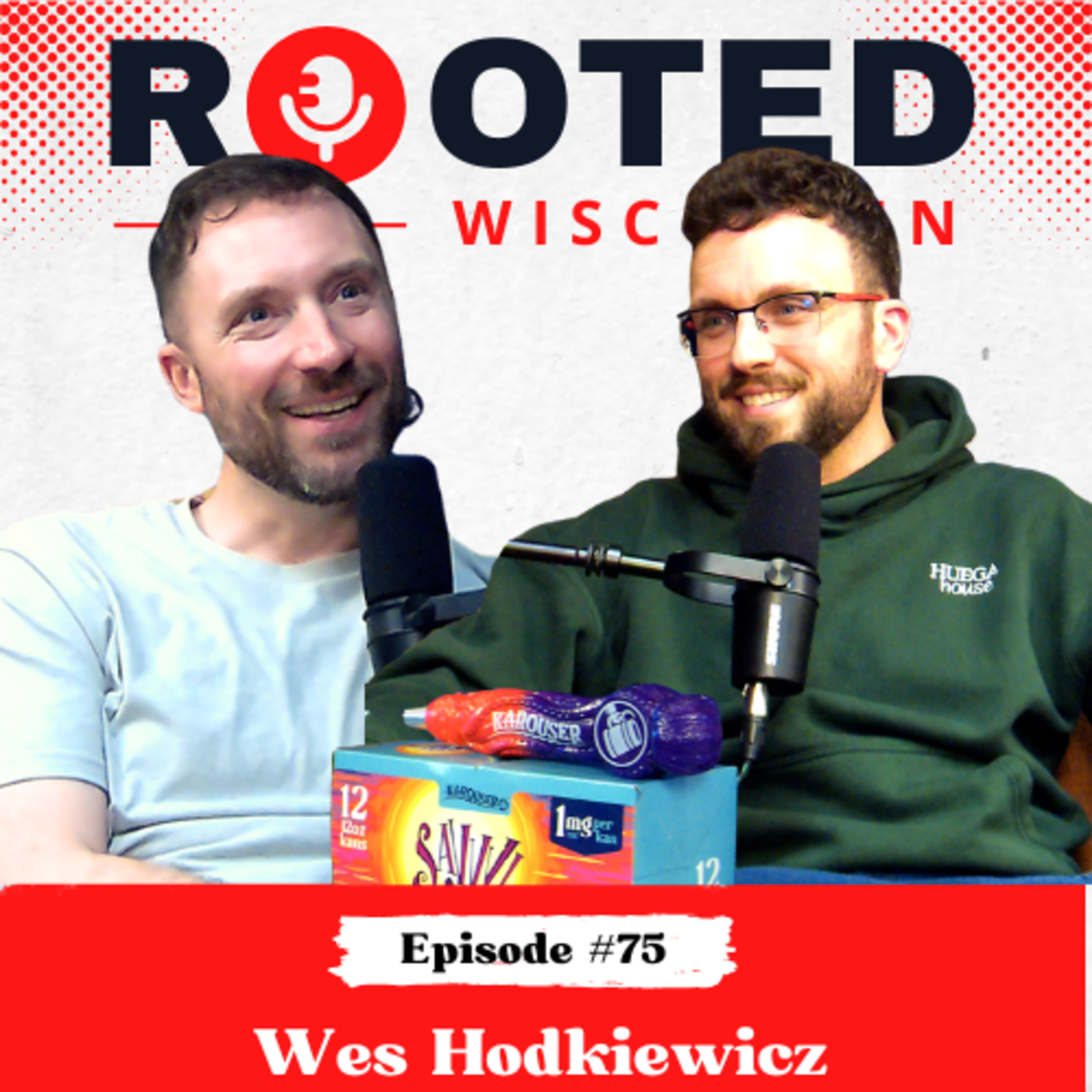


Wes Hodkiewicz is a Senior Writer for the Green Bay Packers and a lifelong Wisconsinite who has spent his career documenting the pulse of Titletown. A 2006 graduate of Bay Port High School and an alumnus of UW-Green Bay, Wes worked his way up from taking calls at the high school sports desk for Gannett to becoming one of the most trusted voices in Wisconsin sports journalism. Before joining the Packers organization in 2016, Wes spent nearly a decade as the Packers beat reporter for the Green Bay Press-Gazette. Today, he is a primary contributor to Packers.com, known for his insightful game analysis, his popular "Insider Inbox" column, and his ability to "humanize the player behind the facemask" through long-form storytelling.
In this episode, Brad and Wes talk about his career, paying dues and the value of hard work, realizing mistakes are inevitable and growing from them, his passion for telling the story, "working in the toy store" covering the Packers, finding points of connection, the value of the human voice in the face of AI, and, Aaron Rodgers (at Brad's request, obviously).
https://www.packers.com/author/wes-hodkiewicz
As always, a massive shout out to our sponsors at:
Karouser - NA social bevvies delivered to your door
https://www.karouser.com/
Epic Mortgage – Your partner in homebuying, empowering communities and supporting home ownership
https://www.yourepiclender.com/
Genuine Lynn – Custom apparel, decorative engravings, and one of a kind pieces where Lynn brings your vision to life!
https://genuinelynn.com/
0:00 What's up friends, Welcome back to Rooted Wisconsin. Appreciate you for clicking another episode. Always grateful to have you here. Today's episode is with Wes Hodkowitz, senior writer with the Green Bay Packers. I've known I've wanted Wes on the pod for a while, mainly from seeing his LinkedIn game. If you're on LinkedIn, make sure you follow Wes. Hilarious. Great follow. Even though admittedly he's toned it down a little bit. Still great. Even better conversation. We talked about his journey to the Packers. A longtime writer with the Press Gazette. Before getting there, he said his dream job was to be the sports editor of the Press Gazette. And plans change, life changes. And here he is, 10 years later with the Packers. His 10th anniversary is coming this week, I believe. Great conversation.
0:44 And we talk about the value of hard work. We talk about accuracy and perfection versus getting the job done, being a dad, all the circular things of life. You know how we do it here. Awesome conversation. Great to have you here for it. Shout out to our sponsors. They keep the episodes coming Carouser non alcoholic beverages delivered to your door, epic mortgage human centered mortgage services and genuine Lynn custom apparel and one-of-a-kind designs. If you dig what we do, please support our sponsors. They keep us going. Let's get into this episode with Wes Hodkowitz.
1:46 We're almost back to draft season, but yeah, it's like it. The Packers stuff is like you get to the end of the year. It's like man. Yeah, you've got to have a deep breath. Time, right. Yeah, yeah, I mean, that's I always said it took me like 10 years to figure it out. But like when the season ends, that is actually like the not that I want to be vacationing in January or early February, but it's like that's actually the peak time to be off. Because when you want to win a Super Bowl every year, but when you lose like fans completely check out, it's almost like they need like this little bit of a, you know, reprieve from it. And I didn't take enough advantage of that when I was younger. I'm like, OK, well, we got final locker room, so I got to run like 8 story. No, dude check out as much as you can and and the other thing is to our vacation resets on April 1st, we go on the fiscal year.
2:32 OK. So which I actually really like because when I was at the newspaper it was December 31st. But once July hits, you can't really take time off anyway. Yeah. So now it's like, OK, well, get as much as I can in the spring, in the summer, but then whatever else I don't have left. Well, there's all this time and winter where I can not be there. So that I've, I've learned as as I've gotten older, I'm like, I've taken a better advantage of that now. That's an interesting thing to think about. I I never like I wouldn't have thought about it that way either, but it makes sense. I mean, NF LS a long season and people are, I think of all the sports, probably most emotionally invested in it. It's like a going through a tumultuous life, you know, like you get to an end point. You're like who? I need a minute here. I've only covered, I guess tech it was an 8 and 9 season, but like they were competing for the playoffs in 22 right? But I've only really covered 2 losing years in 17 and 18 Sick. But what was weird about it was still like the fan even in November and December those years. Now 17 Rodgers had the collarbone, could potentially come back, make a playoff run, but 18 didn't go very well at all.
3:34 And in that regard, like people still there is like this insatiable desire still for content, Like people still read. And it seems to me, and I don't cover the Brewers or the Bucks, but it seems to me like if they're out of it, fans kind of check out like they might I from everyone I know at the Bucks this year. I think that was kind of a thing. You know, it's like if you're 32 and 50, like everyone just kind of OK, cool. But like this freaking little town up here, man, no matter what happens, they're always interested in it. So. Yeah, man. Yeah. Until, until the whole Giannis thing came about. And then it kind of, you know, back to ESPN headlines and stuff like that. But for a while there, yeah, it was radio silence. Hell, that's most of my life as a Bucks fan. He's been radio silence. Dude, it was, I got to go.
4:15 I got a chance to go to game six of the Eastern Conference finals. And as a lifelong Bucks fan, like, what else was better, dude. Like, even though that was the game that Giannis had to miss because of the knee, but then like, he makes the superhero comeback and we win the championship. It's like, man, he's forever ingrained in me. I mean. Dude, like I grew up so like I, I couldn't really watch the Bucks in the 90s. Like it was hard to, there wasn't like an FSN or whatever it is now. So like I grew up on the Bulls a lot with WGN. You can watch Jordan every day of the week pretty much between that and NBC in the national games. And like, but I was super invested when like Ray Allen and everything happened and and they got on that run and then when they lost and then they traded Mary Allen, then I completely jumped off for like 10 years.
4:59 But then it was like they got Giannis here. And it's like, oh, OK, well, this is cool. Like we finally got somebody that this is a superstar league. I mean, every league needs superstars, but like, that one specifically does. And this has just been so cool. And I have some buddies and some friends of mine that work down there and just have had a blast with it. So yeah, it's cool, like sports are cool. And then for this little state to actually have as many cool, you know, sports teams and relevant sport teams that they do like. Our little town. Yeah, yeah. Pull the mic a little bit closer. You got it. But yeah. And so that's kind of a funny way to start our our episode because talking about like how you've done other pods, but it's all Packers related and stuff like, I love your Packers content.
5:40 It's good. But when I initially reached out to you, like, I have a completely different motivation of reaching out to you to be on the podcast because I came across like, I came across your content on LinkedIn and I thought it was hilarious. Dude, it's so funny. And you're the second person I've had on the podcast because I found their content on LinkedIn. Really. Yeah. Because it's just such a stuffy, stingy place sometimes. Like I it's got so much value, but like it's not a place that I scroll frequently because like I it's it's a place to go with intention. Yes, with something definitely. And you are such a breath of fresh air on LinkedIn, dude. I love like ribbing your boss and just like all the funny posts you make crack me up and I was that's what was the initial that was the main motivation I have.
6:29 Having you on the pod is just making me laugh on LinkedIn dude. I think it's. Hilarious, and I've kind of toned it down a little. Bit it's like. Why I just, it's like, you know, I, I was making a little bit too much fun of it. But here's what happened. Like the whole story with that is I had a LinkedIn account a decade ago, like, and I lost access to it because stupidly, my previous job at the Green Bay Press Gazette, I tied my e-mail to that account. So I, I didn't have a LinkedIn account from like 2013 to like 2024. And it was wild, like you talk about like opening up like a time capsule when I finally, I, I don't know what made me do it, but I was like, you know what, I actually want to get this back because I had like 300 connections on there. I had friends that aren't on any other social media platforms. So I wanted, you know, to see what they're, what's going on in their lives.
7:13 And I log back on and it was literally like 10 years of messages from people. And I started scrolling through this and I'm like, gosh, this is so silly. Like I think it's really beneficial for young people, especially when you're trying to make connections. You try I I wish I would have something like that when I broke right, because it's it's a really neat Ave. to see opportunities, see what people are doing. It's just the the I'm thrilled generation is just I I've kind of struggle with that. So it's like I, I sort of found a couple different ways to sort of playfully jab at that, but I'm maturing in my old age and I want to make sure I don't like go too far over in any specific directions. But yeah, it's it's like 10 is so funny.
7:55 It's it's a silly little thing. It really is. What do you mean about the I'm Thrilled generation? What do you mean by? That just the like I'm thrilled that you know, I such and such, you know, I think you should have, you know, you get a promotion. Absolutely, you know, I get all that. But it's like, it's that it's that like just constantly raising your hand to tell people what you're doing. And I, and this is probably where I'm now showing like my true like millennial sort of sense is like where I broke into the industry. It was so much based on like I worked the first like 3 1/2 years of the newspaper, like my face, my, my face never appeared. I was a byline. And then I think I did like 1 like training camp type preview thing where we did like a pole and they actually had to take my headshot for it.
8:38 And I was like, I still have the paper. Like my mom, my grandmother both saved it where it was like my first time my face appeared in the paper. But like when I got a promotion or I got full time at the press because that it wasn't like there was like this, you know, marching band behind me to kind of like, it's like, Hey, congratulations, kid, you're making $30,000 a year and you can afford, you know, some health insurance. It's like, fantastic, let's go. I'm in. But I didn't really have like the rest of it that goes with it. I, I think that's probably just one thing in general. It's not just exclusive to LinkedIn. It's just in life. Like it's just like, I think we're right now conditioned to people and it's, it's not that I don't think you can be proud of what you're achieving. I, I think that's really important, but I think it's the people that look at that and say, well, why am I not doing that? You are doing it like everybody's doing it.
9:19 We're all clawing through this thing, trying to find a way and support our families and, you know, have success and, and you don't be able to make car payments. I think all that stuff is really important. But I, I think sometimes it probably whether ties into mental health or whether whatever it goes back to, we're just always in this measuring stick sort of mindset. And I just that that's what makes me laugh when I log on to LinkedIn and it's like, OK, I'm going to get 12 updates on, Hey, I'm thrilled that today I went down to the water and threw a Rock, You know, across like it's just, it's like great, you know, so. Yeah, it is a it is a very measuring stick area. And I, I definitely agree with that concept. Like we, I mean, social media in general has created all of these things, like all the way back to like the Instagram thing, how filters changed our lives.
10:05 Like that isn't particularly real life, no matter what lipstick you try to put on it. And I think LinkedIn almost breeds it like because they make those canned like do you want to post this? And they write the whole damn thing for. You and it's like you just click. The button and they all look the same. It's like, yes, OK, this does nothing for your personal brand. But yeah, man, that's that's why I reached out. It's funny as hell. And it's you go back to the press because that I've been such, I was such a laggard with social media. John, myself and my colleague, my best friend to this day, Scott Vincey, he's still there is one of the prep writers there. Our general assignment, he does a bunch of different stuff and we push. So in 2009, the press cassette wanted us all to get on Twitter.
10:48 Everyone's got to get on Twitter. And me and Scott were both like, oh, come on, this is silly. We don't want to be on Twitter. Well, they made us. So then we kind of made a mockery of that at first. Then. And then at one point they're like, well, you got to get verified. And I'm like, I don't want to get verified. They're like, you have to. And it's like, well, how can I block it from getting verified? So I put my buddies, you need to put the press cassettes, e-mail in order to get like the big check mark, whatever. This is like a big thing for Gannett. So instead of me doing that, I put my buddies photography business instead is my thing. So it purposely would not verify me. I gave them so many headaches with it. So then twenty 2015 comes around and we go to Instagram and I'll never forget this Kyle Bursar, God bless him.
11:29 Great guy, works down at UWM now and he was the one that was like kind of put in charge of he's a photographer for us at the time, but he was put in charge like teaching us how to use Instagram. And I'm like, I had no interest at all. It's like I write stories, buddy. Like I, I mean, what, what do you want me to do with all this stuff? And the amount of push back at. So I guess the LinkedIn thing is like the most, it's like the most recent thing. I think some people are kind of trying to, if you don't know me, you're trying to sort of figure out what my personality is. But I mean, there's a track record of 15 years of me just continually going against the grain. I'm basically any type of social media. But the other aspect that I have to appreciate, especially as a writer is it's just what we got to do. You know, you have to be different. My, my degree is not in broadcasting at all.
12:10 It wasn't. I never took a single class in front of a camera. I'm not saying I'm any good at it, but like I have to do it. And that's all just from adaptation and evolution and adjusting to what my job is because unfortunately, like, we just, we don't read as much as a society anymore. We don't write as much. And I love it. That's what I do. That's what gets me up in the morning. But I have to be able to do these things. And the last thing I'll say is I made a stance after the whole Instagram thing. I'm like, I will never go on another social media platform again. This is my last one. And then sure enough, two years ago, I end up having to get a TikTok to, you know, so I'm not dancing on it. OK, I was going to. Say it. I'm still trying to figure out exactly what kind of content to put on there, but I'm not.
12:50 I'm not going to be dancing anytime soon. But that was a that was a mandate. It wasn't it wasn't it wasn't. It was from the nobody at the Packers told me to do it, but I work arts department is digital and social media. So I'm with our entire social media department. So there would be times where they're asking me for my opinion on like grammar or just the way things are worded. Or what I think about this are the Packers pro shop use me in one of their ads and then I couldn't watch it because I didn't have a TikTok account. So then eventually I'm like, all right, fine, I'll go on there and do it. And then what happens? I go and do a stupid tasting video. Not stupid, but I go and do a they did the new menu at Lambeau Field for tasting like what the new items are going in the upcoming season. I do a silly video of that, and then that ends up getting however many thousands of likes.
13:37 It's just, it's it's funny what pops off. Yeah, what pops off in this era is, like, really fascinating. Yeah, I remember there was like a there was a brat thing in that video that sounded. The brat egg roll. Yeah, yeah, yeah. And I don't even eat. I don't like cheese, but yeah, that thing, I was like, oh, you know, got to do it for the gram. So we're just going to, we're going to do it anyway. Yeah, that one I would have had a tough time with because like you, you look at it from a tactical standpoint, Twitter made a ton of sense. Like for what Twitter did at that time and and what it is making the making the journalist get an Instagram that's. That was a tough one and the and you got to remember this is after we're doing like they gave us. What were those contraptions called?
14:19 Like basically before iPhones where they would give you man, I wish I could remember what it was. It had Ausb in it and you take video and then you could just plug the the USB in and it would download the MP3 or MOV file. And then we would post that to like our YouTube account and things like that. There were all these little things that can that was trying to, you know, kind of do the the next advancement in media. So I think that was just a part of it. And they they wanted us to be doing more on those social media platforms. But yeah, I mean, like at this point too, it's like 2015. What is that the iPhone 4 or five? I don't even know what they're on at that point. I mean, I'm getting these potato type photos, you know, compared to like what Evan Siegel and and Kyle and all our actual photographers are getting. But that was just the era and trying to learn how to use that and Twitter and adjusting the print mindset to, you know, that next generation.
15:10 So the cool thing about it is though that I think is really fun is, you know, you fail, you have success, you just try it and some stuff sticks, some stuff doesn't. But I think that one thing with my personality too, is I've never really been afraid to just do different stuff. And if something works, great, and if it doesn't, on to the next. You have to be in your space. You you have to be like that. That's a precursor to success in most senses. I think we've got quite a bit of overlap probably in that sentiment. So you coming in as a journalist? Sounds like you started as a journalist in like 2008, 9006, six. OK, So I started in radio broadcasting in like 2009, yeah. Yeah. Similar thing, right, like you, you dive in really passionately to this area that you get in and all the old heads are like it's dying, the world is on fire. This we're not, you know, it's all, it's all, it's a sinking ship.
16:01 And I think that causes complacency in that thing. And that's what I used to separate myself in that career too. I was just like, I'll, I'll try something new and if it doesn't work, like I sounded like an idiot one day, nobody's going to remember anyway. It doesn't matter. My to use one more of my analogies or one of my stories from my buddy Scott 20 So I started when I was 18 years old, I was writing when I was 18. So I actually started working at the Press Gazette before I was even in college yet. So I was really, really bad at first. My whole job was to be a score taker. So like Bayport High School plays a Schwabenon in soccer. They would call that in.
16:41 I would get the results, who scored the goals with the assists were saves, all that stuff. And I'd write little, you know, descriptions. Well, my boss at the time, Mike Vandermoss, he wanted me to start writing other stories, going out and covering like the Green Bay gamblers or, you know, sectional cross country. Like I'd have to cover all these little events and I didn't have the tools yet to do it. And there was couple errors that I made, some spelling issues that I had had. And this is back in the day of print. So like, you can't just make it a Boo Boo. And then, oh, I'll just go back on and adjust it on, you know, our Word doc or pocket or whatever. No, it's like, no, it's, it's out there and everyone got to see it. You're a complete moron. Yeah, I got plenty of emails from Saint Orbra college professors telling me that, you know, what are you doing?
17:23 But be that as it may, the cool thing about it was I had a chance to really start to get into the business and just learn while I'm doing it. And Scott had told me he got, he said to me, I was, I was 19 years old. And I remember this, I had this literally written down somewhere in a notebook where he's like, Wes, you're 19 years old, you're not going to care about some story you wrote way back when. You're not going to think about what the person's name was or what the issue was with it. When you're 80, you're going to think, oh man, I'm 80 and I'm going to die soon and none of this other stuff matters like, and I've just always kind of brought that with me. It's going to be really depressing, you know, good Lord willing.
18:06 If I actually do get to 80 where I'm like, oh crap, now I'm actually here. But back then, which is now a half a lifetime ago for me, like that was really salient advice because it was like I I took everything to heart and it really bothered me if I made a mistake. And after that, it was just like, it changed my whole mindset because it's like, yeah, you know what? All this, by the way, press, because that's paying me $8 an hour at this point. Like they're, they're, they're getting just, I mean, I'm making nothing, right? I went broke twice while I was in college where I went to zero. And my dad's like, what's going on here? Because I'm driving myself around to these various high schools and state cross country and Rapids or state wrestling and Madison, I had no money so. I'm paying the proverbial dues. Paying the proverbial dues and and taking my lumps while doing it. So for Scott to give me that advice I think was really important because it's like, yeah, I didn't to to that to being completely honest with that. I don't remember any of that stuff now, you know, 19 years later, I was like, I all that stuff happened. I learned from it and we adjusted. Yeah, absolutely.
19:05 It's funny that we went this way. I you're the second writer I've had on. I had a writer on a couple. We in in like the past month and actually you might have crossed paths with him. Did you work with Pat Durkin or was? I can't. Pat Durkin, Yeah, Outdoors reporter. Yeah. Yeah, Pat was not in our he didn't work in The Newsroom with me. I mean, he, he did a column every week and he worked for us, but like, it wasn't like I had a desk set up with him. But yeah, Pat was, yeah, he was our outdoors guy. Yeah. His career was in a little different spot at that time, but he he told a hilarious story about missing the missing the stock market crash. So all the other head papers headlines, yes, weren't the crash but or were the crash but his wasn't, Yes. And he got to have this interesting conversation with his boss.
19:47 But yeah, it's you. Can you work through that stuff? And I mean, everybody makes mistakes. It's just that yours are so much more visible in your industry. And it wasn't my fault, but we I was also on staff too when we had the whole on to Chica Co Fiasto fiasco. If you remember that, maybe not when the Packers beat, I think that was what would they beat Atlanta to advance in the the playoffs in Super Bowl 45 and they went to go play the Bears again. And in our headline, it was on to Chicago, but we botched it. We did on to Chicico and occasionally all of them reference it my writing all reference in our little inbox. Q And AI think Jay Leno picked up on it, like got the paper and everything he had like bad headlines or something. Where is one of the sticks, you know, things he had. So, and then our executive editors, we all took it in stride.
20:35 I mean, it, it, there was like 4 people that passed through. This was on the front page of the Press Gazette. Go find. It's probably still like one or two, like on eBay every now and then, but it happens, you know, and I, I think that's the biggest thing, like, and it doesn't really apply just the journalism or writing or anything. It's just there's, there's always second chances. So it's like making sure that you don't let one set back, you know, as long as you can learn from it. And you hear that cliche all the time. But I mean, the best lessons that you're ever told are from mistakes. It's not from successor, you know, It's always from failure. For sure, yeah. And the most successful people are often the most persistent people because of that. It's because you can overlook that stuff. 100% on to chick ago. I dig it. Yeah, go find it out there somewhere.
21:16 So I want to linger on that a little bit though, because I think it's fascinating. You said, I think I heard you write earlier, you said your college degree isn't in journalism. You started writing at 19. Why? Yeah, so really weird story how it all worked out. I worked at McDonald's in Howard, WI up here and Velp Ave. and it just so happened. Very small group, but we all like 2 of my best friends in life ended up coming out of that. One is my buddy Nick Goddard, who is my manager there. He's now assistant video guy on the football tech side for the Packers. Just coincident. We both took our own little paths. We never really worked together again after McDonald's, but we just ended up both being at the same place. It's Green Bay. Yeah, certain amount of people end up working. It's not. 6° here.
21:58 It's just, yeah, it just happens 2 1/2. But then the other one was my buddy Dave, who I knew a little bit when I was at McDonald's, but then in later in life we became best friends and his dad was a sportster at the Press Gazette. Mike Vander Moss. And a week before the prep season in the summer of O6, the guy that was their part timer, 29 hours a week got a job and was going down to Louisiana. So they were in the 11th hour right before the start of the prep season. They were scrambling to find somebody that could take prep calls. And that's how I had heard about it. And I, I wasn't working at McDonald's anymore. I was then at this point at Maplewood Meats, but I was looking, you know, my, I was a year older than my girlfriend at the time.
22:43 She was still going to be in high school. We're both going to go down in Milwaukee together. She was going to go to Marquette. I was going to UWM. And I'm like, oh, it'd be cool to work at a newspaper for a year, like while I'm getting my Gen. eds and then have that transfer down. And I always enjoyed sports, I always enjoyed statistics, I enjoyed writing, but I wasn't necessarily sure if that was going to be my path. At one point at GBI was double majoring as communications and history because I want to be a history professor. I've always liked U.S. history and things of that nature. So it just ended up being that that opportunity opened up to me and, and after a lot of lumps and a lot of bruises, I got through that first year and I just fell in love with it. So then my girlfriend end up going down to Marquette. We kept it together but I ended up staying up here at GB. So I went to WGB, got my communications degree and end up being multifaceted.
23:32 So it was journalism, PR, organizational communication, and corporate communication was it sounds fancy but it was like 2 extra classes for each one and then. It was army knife. Yes, yeah. And in the entire time I like, I had a very awful college experience. It wasn't fun at all. Like, because it, I'm working the entire time, like every night, Monday through Friday, I always had to do something and then Saturdays I had to usually cover a game. So I would get done with school 5:00. I'd have to usually be in at the press cuz at at six or seven, I'd work till 11 or midnight and then I have to be up for school at 8 the next morning again. So I didn't like have like a like I always say, like I'm incredibly blessed and I love what I do. But man, like I, there was a lot of blood, sweat and tears that went into that just from kind of hoping that betting on myself that we would be able to.
24:21 And then the middle of my time there, we go through the recession, we go through everything else, The newspaper industry starts starts to take a dive. And fortunately I just always seem to find a life preserver. So here we are. And now people get to say, oh, you're lucky, you get to do what you do. There was one dude I'll never forget. We're at a pep rally for the Packers. I, I love when people say that stuff, though. It's cool. Like I totally get, I work in the toy department. I I got very lucky with what I do. But there was a dude, I'll never forget this guy. We were in Atlanta for a pep rally and I was outside. We were going in because these little pep rallies we do myself and my colleague Mike Spa for, we like, we have to go up there and preview the game. They usually have alumni that come in, Mark Murphy, the president CEO at the time, he would speak, but they would have us come up and do like an X's and O's kind of breakdown, try to get the crowd all revved up. And a guy comes up to me as we're walking out and he's like, hey, Wes, right.
25:13 I'm like, yeah. And he's like, hey, you know, I just want to let you basically let me know how lucky you are. I'm like, oh, Yep, no thanks. I appreciate it. And then he hit me with this. I'll never, I never forget this. He's like, I hope you appreciate it. And I've never punched anyone in my life. But like in that moment I could have like, I was so hurt by that because it's like, dude, if you had any idea of like what I put myself through to get here, like, I hope you appreciate it. I'm like, yeah, yeah, I do appreciate it, but it's like. I hope you. Appreciate you should you should have been around in my 20s. It was not fun at all ever. So I mean, I always tell people it's like so I started when I was 18 at the Press Gazette. Awesome experience.
25:58 I was able to be there like during the final hour of like a full bustling newsroom, right? Like I didn't there wasn't even enough desks for people at that time. And then 2019 hit. I'm 19 years. I'm sorry, 20 O seven hit. I'm 19 and I'm helping like our entertainment editor clear out her desk because she got laid off, right? Twenty O 9 hit. I'm going to state track and field with my buddy Corey. We're covering that. I'm coming back and we know we're going to have layoffs on Monday. We both went to bed like Saturday night after state track wondering if we're going to have jobs the next week. And then that week in The Newsroom, our executive editor went around basically at 4 O clock doing like duck, duck goose, grabbing people and laying people off Like it it so did have that moment happen really that that was that's like the only moment I think in my entire life where I was like enraged, like I was so upset. But it just, it comes with it.
26:54 So I just I've just been really lucky that I've had a lot of good mentors, a lot of good people have looked out for me. And in some way, I hope I've kind of been able to pass that on to some folks. Yeah, Yeah, that's interesting to think about. I, I used to get a little, I had AI felt the type of way about that stuff too. Like a, oh, you get paid to talk, how lucky are you? Like, OK, I get where you're coming from. I get why that sentiment exists. But at the same time, like the first radio job I took was running the board at six. I went in at 5 or 6. I can't remember running the board on Sunday mornings. I got to crack the mic for like an hour and a half and then I got and then I bored up the NASCAR race 6 O clock on Sunday morning as a 20 year old and I like you, you think about those dues paid and you're like, it's not luck at all man. Like it's, it's decisions that I made along the way and still I'm working for $35,000 a year.
27:50 You think this is lucky? No, it's, it's insane. And yeah, I, that part of it has always been I, I consider myself lucky that I wasn't laid off. I think there's some people that were much more talented, much more hardworking than I were that just were at a certain point of their careers or pay scale, those sort of things that they just, it was their time. And I, I was fortunate in that way that I've all along the way, other than a couple furloughs here and there, I never got laid off. No big issues there. But the other side of it too is it's like I, my dad always told me like as I was growing up, he's like, you always got to find ways to create value. Doesn't matter what you do. My parents both worked at the mill down here. And. He's like, you don't, you have to make yourself valuable. You're not entitled to that paycheck. Because I think I hate them mindset of like, well, you can be replaced.
28:32 I don't like that because that takes away the human element, right? You can be replaced. Well, good, not necessarily good luck. Eventually they will all we'll all get replaced. But it's like, what is the difficulty going to be in the interim trying to replace you? That's where the human comes in. That's where the worker comes in, right? So we're not just all avatars, like we all bring something to the table. We all, whether it's through our work or the way we interact with our Co workers, there's value laced and all that. But that being said, you can't ever just think that you're entitled to everything that you're going to get. And that I think having 10 years at the newspaper industry before I moved on with my career was a blessing and a curse in some ways. I think in, in, in the curse way it made me. So I'm like a little bit of a deer in terms of just my sensitivity to like, I just always think my job is in jeopardy just because that's the way I was raised.
29:17 And I've been around that for so long. But the blessing was, I mean, I worked with some such cool, amazing people and, and at that point of my career, like I was the youngest in The Newsroom in a lot of ways by 1015 years. And then I came over to the Packers in 2016. And then suddenly, like at that point I'm 28, but like I have now these kids coming out of college at 2223 and they're looking at me as like someone that's going to be able to impart advice and, and be a leader and, and that sort of thing. So that's been really cool because there's a lot of people that have been printed on me and then that I've tried to do that, you know, the same with people that come and spend their time with us. That's the best analogy. I'm a bit like a deer. That's why you do what you do, man.
29:57 That's a great analogy. Yeah, it's, yeah, I'm a little scatter. This is the times I'm a little bit. Little skittish. What's going on around here? Yeah, interesting. So there's two different routes I want to go. I want to make sure I keep them both in my mind. Sure. One since you just how did the Packers opportunity come up? How did that transition happen? This is what I always tell the people and I I say this all the time to kids when they ask for advice. I had to talk to John Anderson, ESPN green bag kid. He he has a class now AJ school class at Columbia in Missouri. And people always ask me for advice And I always say, well, it you have to if you get your foot in the door, you have to make sure you keep it there. And if somebody, if, if they give you an opportunity, whether it's an internship, whatever it is, make sure you capitalize on it because they may not be able to hire you. But once you get your field and you know what this is like you, you, you have your own network of people and what's if there's people that you are friends with, there's people that you know in the industry and you want to help them. So it's like, if I don't have an opportunity for you, hey, there's this kid over here that might be able to help you. And I always try to tell people that because I think there's so much tied into, well, if I don't get an internship here, it's over for me.
31:05 No, no, no, no, it's not like that at all. Like there this you could come back at some point. You could you don't go and spread your wings elsewhere. Sometimes it does work out. I'm I was blessed that I stayed in Green Bay the whole time and was able to to maintain a job. But I have some of my best friends in life left for 10 years and came back. You know, just nothing is you're not failing in any of that stuff. It's just a matter of when does the opportunity happened for you and when does that door open? So that that's the number one thing that I've always, you know, try to tell people and, and, and work with people on is that if, if you are able to get, you know, 500 interns, you know, resumes get sent in and you're the one that they picked, you've already accomplished something great. And that's something that is setting you up for all the other moves that come after it.
31:50 So, yeah, I, I don't know if I really answer your question the best, but I mean, in terms of like how I've just always approached things, It's just that I looked at it as there's some really good relationships out there and I'm going to try to capitalize on them. So what happened with the Press Gazette was to give you the the full background of it. The only job I ever wanted in my life is I wanted to be the sports art of the Press Gazette. That's all I ever wanted. And it's all the thing I don't ever attain to. And my boss, Mike, the one that gave me my opportunity, he got laid off in 2013. That changed my perspective completely because now it's like, OK, well, what I had a vision of what I want my career to be that may not be tenable anymore. And but what happened was I started building relationships over at the Packers and through working with NFL Network, could occasionally have me on to talk about the team. And they had this little box that they would set up. And you have to like, put your own USB and everything like, you know, talk to, you know, LA or wherever the show was. Well, the guy that helped me learn how to do that, his name is Duke Bobber.
32:56 He's the now currently the assistant director of Digital and social. He's my boss. When 2016 came around, Dick Ketchman, who was one of the two writers, he was the editor at the time of thepackers.com, he was retiring. So I caught wind from some of the people I knew over there, hey, they're going to be looking for a new writer. What do you think? And I always joke about this. I was like, I never was interested in it, not because it's not a great opportunity, but just it was like I grew up as a newspaper person. It almost seemed to me that if I went over to the team side, they would almost be like sacrilegious, right? But Pete Doherty, another one of my mentors over at the press, because that he was the first one that when he found out that Victoria was going to go, he's like, well, they're going to come for you. I'm like, no, they're not.
33:37 They don't need me. Like they're they'll find, they'll find somebody. Well, seven months later, basically to spare you all the details, that's what ended up happening. So Duke is a good friend of mine and became even better friend of mine, you know, once I got over there. And that was all just based on networking and just knowing people you know and you'll being in that environment, knowing the other writers, knowing the people that worked around the building. I think I was viewed in a lot of ways. Like I always say this, when I interviewed with the Packers, I think I had to do 7 rounds of interviews. I think is what it ended up being 7 different interviews I did with people. And like whether it was Mark Murphy, the present CEO, the head coach at the time, Mike McCarthy, they all could not have been cooler about it because I've covered them critically for five years before that, you know, for the paper. So I was kind of worried like how I'd be viewed the locker room.
34:25 It was a little weird at first, but within three years with how quickly NFL rosters turn over, I like, I didn't even know me as the newspaper guy anymore. I was just the in house, you know, writer. It's kind of the the proof of what you were just saying, leveraging relationships and the importance of them. It just, it just happenstance, right? Like it wasn't like I was like looking at like, hey, I got to know all these people and like develop all these relationships and see how that can better me. But it was just like, oh, you just sit in a locker room one day and you're talking to random people were waiting for someone, you know, a player or something. You just get to know people. Like interpersonal communication is such a strong asset. I think especially now it's being tested more than ever because we're so based on text messages and social media and that sort of thing. And there's still nothing in my world that I think is better than just honestly sitting down and talking to somebody and just getting to know people.
35:14 And that, I think is a lot of things that helped me kind of develop that luck, so to speak. Yeah, absolutely. It's hilarious. I so my first radio internship was with ESPN Milwaukee. Yeah, was super pumped up to get the gig. Did a terrible job. I just thought it was cool to be there. Yeah, I just. I just thought, I mean I didn't. Do it wasn't terrible. No, I did fine, but I didn't do, I didn't do it the way I should have. I didn't leverage the relationships. I looked at it as, wow, this is a neat thing to do. Like I got to, I got to be courtside to see Kobe hit a game winner and Kobe was my dude at the time. I was like, it doesn't get better than this.
35:55 And it was more about like the thing then using it to move forward. Like I, I didn't make those relationships the right way. It was all just about damn, it's cool to be here, like and. And by the way, that's tough though. Like people can beat themselves up, but it's not easy. It's not easy when you're 20/21/22 to like to put yourself out there like that. And you also don't want to be overbearing too. You don't want to. You don't throw too much of yourself at people and be like, oh God, I don't want to deal with this hot Kwitz kid. He's just, he's always on, you know, on my tail. Like it. It is. It's a difficult balance to strike, you know, And yeah. Yeah, yeah. It was I, I just could have, I, I could have worked harder.
36:37 And that's what I that's what I didn't do right, You know, like it was, I did fine, whatever. I did what I did, but I didn't I didn't do all the things that go above and beyond that did great work. It was just like, they're not paying me. But this is a cool experience. I get to do this thing and then after a year, the internship ends. And then I have this conversation. And I remember reflecting back on, I was like, I probably could have done some things differently because by then, like I didn't, I didn't know the job existed. I worked at a grocery store with a dude who had the same internship and he's like, you know, you like sports, why don't you try? And I was like, I don't know, I'm a marketing major. I could give it a shot. And I applied and got the job.
37:20 Probably be like, I was always good at being personable. I had that thing like I could talk to people. I can make relationships, did all that stuff. But with that, you also have to do the thing you do really well. And that was the part that I didn't take so serious that it was like, you know, caught the audio clip, did whatever I, you know, it was supposed to do, but never took advantage of the scenario in that way where it's like build a portfolio of work for a brand like ESPN that I could have leveraged into another thing. It was more like I was a 19 year old who coasted through it for a year and thought it was super cool and just thought that it was going to keep getting lucky like that. No, I think that's just the way we were sort of raised to. I think that we just always think like it's all going to work out for you.
38:04 Yeah. And and doors will just open because that's just how life is. That's. Kind of what we were taught, right? We were taught that you get a college degree and you'll get the job you want and then you can live. That's not real life. No, no, I mean, especially now when there's so many people that get the degrees right, there's so many people that do all those things. How do you separate yourself? So I, I think that was where I was lucky in that I had, because I, I don't think your case is rare. I think that's what normally happens. I just, I'm, I don't know if it's I, I grew up with like OCD and stuff and probably some form of ADHD. Like I, the way I, I'm just always wired that I keep pushing like it. I'll forsake everything to make sure it's 100% to what I feel like I can do. Like I, I just don't cut any corners. So I mean, that can be really time consuming and I'm sure there's certain aspects of my life that have wiltered because of, you know, wilted because of that. I'd that probably isn't a good thing. But like I just if I write a story or if I'm working on a project or something like that, I just, I always have to push and I just, I'd like, I don't mind. There's so many times that I've been like the last car in the Lambeau Field parking lot because it's like, I know I need to do this.
39:15 Like I'm just, I'm not a naturally talented person. I've always said like I'm a sweaty try hard. Like I just, I push and I grind and I have to do it. Like that's just, that's the only way. Because if, if I and I probably goes back to like not being a very good athlete. So like I recognize early on that, hey, things are just not naturally going to come to me. I'm going to have to outwork everybody in order to do it. And yeah, I think, I think if anything, that's probably what aligned me up to, to be where I am right now. That's an immense gift, actually. Like it might. I'm sure it doesn't seem like that in the thing because I had kind of the inverse experience. Like everything came very easily to me. And that almost set me up for failure because because it had because it's, that's not lasting.
40:01 Like eventually you're going to get to a point or with something that is going to take that hard work and then you have to learn how to do it like I had to. Now I'm an incredibly driven person. It's funny because Pat was ready to die on that hill. He talked for 20 minutes about how hard he works and how he doesn't regret a moment of work in his life and stuff. And that's an immense value because. Like that led to some significant turbulence in my life become transitioning from youth to adult and having things relatively come natural to me and easy where I so, you know, we all have regrets in life and we think about these little things we could have done differently. What I remember saying very confidently for a stretch of my life, if I'm not good at it, I don't want to do it. Yeah, and I look.
40:49 I look back upon it. How silly is that is to say like, what a dumb ass. That is such a silly thing to say. And and I said it with my chest. Yeah. And that like what a dumb ass like. You know, well, and I think it goes back to the way, I don't want to say it's the way people are raised, but we don't know any better. Yeah, it like it's also it it goes back to I think really the personality type that you are at a very young and impressionable age. And, and for me, I just, that's, that's just, it was a domino effect that never stopped going for me. And like, I, I don't think I, honestly, I, I wouldn't, I wouldn't be where I am today without it. Or if, or even I go back to my first year at the Press Gazette and, and I don't improve and I just keep getting worse and worse and worse.
41:33 I would have been out of the job. I would have been on to something else. I probably would have been a history professor if I've been lucky enough to be 1. But I just like, I'd, if I'm bad at something, I don't necessarily need to be the best at it. Like I'm not a good golfer, but I keep trying. Like, I, I like playing golf. So it's like, OK, well, I want to be competent at it, or at least respectable. I think that's just the same way I've approached my career. It's like there's we don't you have to callus yourself. You have to afford yourself in order to to be successful in any route, any job that you do. And if you don't do that, if you're not willing to fail and not willing to have error and learn from them, I mean, that's an important piece. You can't just continually mess up. You have to be able to make the corrections. But once you do like you, you touch the stove, you're not going to do it again.
42:18 You know, like it's just you figure out, OK, don't do that anymore. So yeah. Yeah, tremendously good advice. That's something I deal with a lot in the classroom. Obviously like with students. I I'm, as you were saying that I had a moment flash across my mind just the other day, very strong student was in class and she's very engaging. She's great at communicating and she's almost always right. Like the things she says are almost always gold. And the other day in class, and when I think about the timing, I had heard her talking with another student about how she was kind of struggling in another class right now. And that was a new feeling for her. And she said something in class. And I'm a very heavily discussion based person. Like we talked through things, I want you to say wrong stuff and we're going to talk about that's where growth comes from.
43:02 She said something that, you know, wasn't particularly right, like it wasn't the direction the answer needed to go. And I, you know, I frame it really softly, like I want you to look at this in a different way. And immediately her demeanor changed. It was like just another sprinkle on top of a heavy time in life right now. She was already feeling that sprinkle it on. And I could see like the light dim a little bit. And nurturing that thing is really hard because in that moment, that's a why in the road for that person. And it's do I give up or do I keep going? And this is a great reminder that I thought of an e-mail that I wanted to send in that moment that I didn't. And I have to send because it's an incredibly important one. That is, can be the difference between however you define success.
43:52 It can be the difference between getting to where you want to and not pivotal. I, I was lucky in this way too, because I grew up in a, in a newsroom with a lot of older folks and a lot of people that were in their 40s and 50s and some even their 60s. And I don't want to use the word bitter, but definitely hardened by the industry, by the business. And there were plenty of times that I got my butt completely chewed out. And I'm a teenager still at that point. That was important. Like, and I'm not saying that tough love always a soft society, but I'm just saying my own situation personally, that was, that was critical because it was like that taught me at that age, if you can get through all that stuff, you can get through anything.
44:38 And I and I don't, I don't manage that way. I'm probably too much of the, you know, the, the back stand back kind of parent father. I I give direction, but I'm not going to like stay on people about it. But for me, that that was really important for what I felt it to be important for my growth because it was just. Yeah. I'll never forget. There was one time I missed the deadline on Thanksgiving. I was covering the Green Bay Gamblers, and I thought I had enough time to run. Back then, we had newspaper deadlines 10/30, 11:00. Nowadays, they don't even really have deadlines. Like if you, if you're writing for Thursday's paper, your deadline I think now is, is it Wednesday at 11 AM or Tuesday night, something like that.
45:19 It's like you're so far backed up now with how things have gone with print journalism. But back then we would cover games and you would write as fast as you can and then you'd get that in the paper for the next day. I thought I had a little bit more time than I did writing up the story because Thanksgiving, we all go to print early because you got to get those Black Friday ads in there and all that fun stuff. And I end up holding up the entire printing press for like Gannett, Wisconsin because I missed my deadline, didn't have my copy because I tried to run downstairs, get a quote from the coach, and then run it back. And I that that's about, that's probably the second or third most scared I'd ever been in The Newsroom because of just what the reaction was to it. And to be fair to me, I did try to clear with my sports copy editor.
46:04 They told me I had enough time. But when I found out I didn't have enough time, they were all looking at me over it and. Falls on you, yeah. It went in afterwards. I kind of took my, you know, comeuppance a little bit and and then I learned from it. And, you know, then I was like, OK, well, just taught me a lesson. Running game stories, make sure I at least send something. And then if nothing else, we can send another thing afterwards. But yeah, that that's cool. And that's one thing I wish people are in journalism now or in writing now. I wish they could experience because like, the deadline writing is amazing. Like, it's tough. It's difficult. But like, you learn so much from all that. Everybody that calls himself pressure motivated and kind of the same thing, yeah. I love it like that's I always tell people those stories don't need to be perfect. They need to be accurate.
46:46 They don't have to be perfect. And there's too many people that try to be like perfectionist in that type of moment. Oh man, like we're all just, you just see me after a Packers Rd. game, like I'm on a bus trying to like transcribe and write this as we're getting back to the airport because we always fly back right away. I'm like, this isn't, I'm not saying everything I've ever written is great, but it's like you just got to kind of survive it sometimes, you know, depending on how the circumstances you're sort of thrust into so. Head above water. Yeah. Yeah. Well, that's awesome. So the second route I was thinking about going is the human element of writing and how it's changing and evolving and your thoughts on it. I'm sure you have thoughts on that. Working in that industry, seeing things change and shift.
47:30 You know, you could phrase the question in a lot of different ways, but start with that. What are your thoughts on the dynamic of keeping the human element in the face of AI, in the face of shorter intention spans that are headlines versus actually reading your story, all that stuff. What are you? What are your thoughts there? It's a balance, right? And for me, it's a challenge that I really embrace. I like sort of feeling like I'm the salmon going up the stream a little bit and trying to keep people engaged and and wanting to read stories and learn things and and feel something at a time in which I think we are just also programmed into instantaneous information, short headlines, you know, quick tweets like that type of thing.
48:15 No, I mean, like, do you still want to be able to actually give context and background and knowledge to things? And one of the main reasons I came over to work for the Packers in 16 is I felt like I didn't have enough opportunities at the Press Cazette to be a features writer, to do a lot of pursue a lot of things. I wanted to because I had to be the news guy. I had to, you know, if someone gets cut, someone gets traded, somebody's hurt, I need to be the person that's jumping on that. I was the lead beat writer at that point. That was my duty. But I wasn't able to explore a lot of the big features that I was interested in doing. I, I really enjoy the NFLI, really like the Packers. But what I enjoy the most is being able to introduce people to people to, to be able. I, I know they always use like the old get behind the face mask thing.
49:03 Yeah, you want to get behind the face mask, but you also want to make sure people understand the motivations of somebody, where they've come from that got them to this moment right now. Right. Think all the years that you and I had to live just to be here at this very moment. There's a lot that went into that and a lot of people that had to pour into you to make that happen. I'm so that that is what I like the most. I like getting to the center of that and getting to know players over the years like you do a feature like that, you only get to know people better and that's what motivates me now. By the way, the the storytelling mediums changed. It isn't always just going to be a 4000 words feature anymore. Now it could be a 2000 word feature with a 4 minute video that goes along with it or you know, doing a project that there's a written element and a video element to it.
49:51 Marrying those two concepts together, that's actually kind of exciting. That's sort of fun. One thing that I think AI and everything else won't be able to touch is that humanity side of things and making someone feel something. If I'm writing a feature, I want people to feel what I'm writing about. I want them to be invested into that person, into that story and, and go on that journey with me. The cool thing about the NFL, the cool thing about the Packers is you have this massive audience and people that are just completely invested with their every part of their soul into this team. And then winning in the players and having success and trying to project who the next big tight end is going to be or which defensive back is going to step up and have an 8 pick season for them.
50:32 Like those type of things are that that is what motivates a lot of people when they're thinking about the team in July and training camp and what they could become in six months from now. Could they win a Super Bowl? I love all of that and I want to make sure that people understand there's an actual human being that goes behind that. And that aspect of it is what that's what gets me out of bed everyday. I love talking about it. I love explaining the game to people. But more than anything else, if people aren't emotionally invested into my content, I don't feel like I'm doing my job. So I grew up like a pro wrestling fan too. And I, I've always made this comment that I feel like everybody that gets into feature writing, maybe not necessarily news writing, but feature writing, there literally should have like a six week class on pro wrestling and psychology. Because you, you think about pro wrestling, everyone's like, oh, it's funny, whatever, it's, you know, not real. Whatever you had, it's like a play, it's like theatre. You have to make people be emotionally invested. You have to be able to have that suspension disbelief. You have to earn it in order to do that. And I just feel like that background in being in liking that sort of thing, it made me realize the importance of storytelling.
51:46 And that's, that's what I do. Like I, I struggled with it at times because I'm like, well, what is my, what am I doing really right? Like, what is the, what is the good of this? And I've had so many people in my life talk to me about it. Like you, a lot of times, the content you created, the topics you discussed, that's, that's somebody's escape from a long work day or like, you know, the struggles in their life, like you are providing a resource and entertainment. And because I'm not curing cancer, like I'm not, I'm not save anybody from a building that's on fire or being a police officer, like put their life on the line. Like I'm, I'm just a little writer, but if I can make people appreciate their life a little bit and and appreciate their football team, and maybe when they do go to the stadium on a Sunday afternoon, just enjoy it that much more than then, I kind of feel like I'm doing my job.
52:39 I was going to say, yeah, you're not curing the cancer, but there's someone with cancer reading your story that doesn't think about their cancer for 10 minutes. That's a value. It's been important too because we have this little thing called the Insider Inbox. So we do AQ and A six days a week. It is crazy. I can't believe we do it. But I actually took the job back in 16 realized not realizing that was a daily Q and AI thought it was a weekly Q&A. So me and our other sport writer together, we, we balance this. We, we do, we alternate days. So we have like a 20 question, 2000 word Q&A every day. And my first few years I did it. I'm like, oh man, this is a slog. This is a lot of work in addition to all the other things I have to do on a given day. But what happened over the years? You get to know some of those people and then you get people's kind of opening up to you a little bit what they're going through in life, illness, loss, that sort of thing. And feeling a sense of community based on what you're writing, like that hits hard.
53:33 Like that is like, I don't think it, I don't think I deserve it, but it's like, thank you. Like, like I appreciate you. If, if, if there's, if I made one minute of your day better by something I wrote or by content that we provided you. Like that's, I think that beats any raise, any promotion, anything you could ever ask for, you know, so. That's awesome to think about. I would have like that wasn't immediately apparent or like that that wouldn't that's not the first thing that pops to my mind. Like the why is important. The why is powerful, but like hearing you say all that, it's it directly aligns with my drive for the podcast. It's all I'm trying to do.
54:14 I'm trying to connect people through other stories and we just our medium is different, but the angle is the same. That's fascinating. So it's life it is and that's what makes people feel human, right? And that's what AI is not going to replace. I have a question for you on that being how effective and tight I would describe it as and good at PR at the that the NFL is, is that is that like a point? Point of contention is strong. Do you struggle with that ever in your job? Because I'm sure there are times if that is your driving motivation, I'm sure there's stuff that you know that people would resonate with and move people and achieve that. Why?
55:09 But you can't do it. Your hands are tied. Yeah. Is that accurate? Yeah, and, and it's actually goes back to just being a reporter too. I mean, there was stuff that you'd be Privy to that people just don't want to share, they don't open up about. And you have to respect those boundaries. And I, I, I think the cool thing about what I do is, is that my goal when I got hired in 16 was I wanted to improve thepackers.com branding. Like I wanted, I wanted people to have a positive reaction to it when they heard, you know, packers.com. And yeah, there's going to be certain bridges that we aren't going to cross and there's going to be certain things that happen in the public domain that that we're not going to necessarily venture down. But like my goal at all times is like, I'm never going to lie to people.
55:54 I'm never going to deceive people. Like I'm always going to stay true to my principles, my character, my integrity. And then if there are difficult topics, those are the days where we have press releases to kind of handle things, where there's the days that, you know, we do take the if it's an NFL related matter, we take direction from how the NFL is handling certain things. That that's probably where my PR degree probably has come into play a little bit more. But I think the one thing I got to give the Packers a lot of credit for is I'm literally next week, I'll be 10 years there now. And not once in all my 10 years have they ever like come in and said, this is what you're writing, this is what you're going to do. I I think I know the boundaries in terms of, hey, if all of our media are kind of dogging on a specific player or ripping on a specific situation, I'm probably not digging down that same rabbit hole.
56:50 There's a lot of people already saying that sort of thing. But when you have a 53 man roster, there's a lot of different stories to tell. There's a lot of different people to talk about and there's a lot of different things to do. Like I mentioned early on, I mean, one of the most difficult seasons I covered was 2017. You know, that was the year first, where Ted Thompson ends up leaving as the GM Dom Capers, the defensive coordinator, is let go. And we turned to 2018. Everything's OK. Well, it's going to go a little bit better. And it it really does. And it kind of gets worse. And by December, Mike McCarthy was let go. And it were, there were some difficult times there. But I always go back to something that a very good friend of mine, Darren, Darren Urban, who does the same exact thing I do for the Arizona Cardinals.
57:30 When I was leaving the paper to go to the Press Gazette or I was leaving the Press Gazette to go to packers.com, I called him and he was a newspaper guy too. That made the move. His paper just so happened right after he was left, basically went under just coincidentally. He didn't know what was going to happen that way, but it did. And I had an hour and a half conversation with them about, hey, what do you think? Like, is this smart? What do I need to know? Like, how is this going to go? And he said to me, he's like, Wes, there's going to be a day where you are covering your football team playing at CenturyLink Field, Seattle, and they're going to be down 56 to nothing. And you're going to have to write a game story on it afterwards. You're going to have to go into the locker room and talk to people about afterwards, after your team gets shut out, doesn't put any points on the board.
58:14 And there's really not anything positive to point to. And when I was going through 18, I thought back on that a lot. I'm like, yeah, that he was exactly right. Like, you just have to know how to handle those things. And in those moments, you let the players talk, you let the coaches talk. There isn't a lot of, like, opining on my end about, oh, what's wrong or this. It's like, OK, let's just see what people have to say about this. And actually at the end of the day, Mike was like, Oh, I hate that. I, I love Mike McCarthy. He's an awesome dude. But that end up being one of the seasons I probably had the most fun covering the team because I just, I told a lot of the stories of the young guys that end up getting opportunities, the guys that came up from the practice squad that played late in that season. And, and just talking, it became less about football and almost more about people.
58:57 So I know it's probably kind of a wide-ranging answer to that question, but I, I, I just think as a reporter, as a writer, you always go back to who you are in terms of your character and, and how you approach things. And I'm a professional about it. Not going to take cheap shots. I'm going to do my best to paint within those lines. And, you know, if there's certain things and challenges that we have to attack and approach, we do that just like anybody else's job. And then, you know, you move forward. So, and the thing about the NFL too, is everything moves so fast. You know, it's very rare that you end up, I mean, look at the Green Bay Packers right now, right? I mean, Jordan Love, it seems like yesterday, you know, they were drafting him during COVID.
59:38 He's our longest tenured player now they got two players. Crazy. Yeah, two players from before 2022. That's so I mean, they're like literally we're down to like, was it 3 or 4 guys that actually played with Aaron Rodgers? So it it's, it's crazy how quickly all that stuff can kind of fly by. Yeah, yeah, that's interesting. I I have a shifting relationship with the concept of PR. Like there's, there's a really fine line between Polish and the value of the dust story, you know, and like you can tell by your work that you're like your, your morals, your ethics, that stuff.
1:00:22 You're not going to, you know, blatantly deceive the like I think of something like 30 for 30, like where they get a little gritty, you know, and get a little raw. A lot of times, you know, it's a it's always protect the shield, right? It's protect the shield and the human element often times is the gritty and raw and, and look how well something like 30 for 30 is received. It's a huge thing. And I just, I wondered if if that was a thing, like there's a, there's these things that you're like, God, I wish we could just share that because people will love it or people will resonate with this topic or concept And it just, it stays buried in the linger because there's this potential of, you know, if it's spun this way or people take it the wrong way, I don't know.
1:01:19 That's that's an interesting thing for me. Yeah, it's, and it's funny too, like because we always end up hearing stories about things, not just now, but even like talking to old reporters about things that have happened, that things, stuff that gets reported, stuff that doesn't get reported. And the, the little game that we play, you know, with information, it's just such a such a unique thing and sourcing and all that sort of stuff. I remember I had, I had two really important people with, with Pete Doherty and Rob Damoski were kind of my mentors at the Press Gazette. And they, I went from covering like preps in college, like small things where sometimes I'd be the only person there or the only person on the beat to the NFL where it's like you kind of had to learn how to handle things And in the, the sourcing and the levels that you go through with all that type of stuff.
1:02:04 The one thing that is cool though, about like with the Packers is, I mean, there's times like in our, our Q&A, like I'm me personally, I'm like, I'm fervently against an 18 game regular season. I'm not a fan of it at all. The NFL wants it right. But like it's not like a thing where anyone like gives me problems about it. Like I make it pretty well known. Like I I think there's a player safety component to it. I also think there is an aspect of you can only have so much dessert, like where it's like, I think at some point we don't want to push NFL fans into like an over saturation like you. Sometimes I think you can go too far and once you cross those barriers, are you ever going to be able to come back from them?
1:02:44 So, but then, yeah, there's a there's a lot of different issues the NFL has tackled over the years and we just kind of roll with the punches with it. And yeah, PR is an interesting thing, especially in today's day and age and the shifting landscape of it and, and the way information is presented and, and how all those things kind of come into play. But yeah, again, I I've just been really lucky in that like, I don't, I don't feel like there's like a veil behind me that I'm kind of trying to keep anything really protected from. It's just a matter of like, I think, how certain things are probably presented. That's awesome to hear. Yeah. I've wondered that about the NFL. I wonder everything finds its tipping point. Yeah. The NFL hasn't yet. And you know, the the old adage, eat like a pig, get slaughtered. Yeah.
1:03:27 When when does it happen? I mean, we've seen people try to build off the brand with spring leaves and and different things very unsuccessfully. And there's, you know, there's no one silver bullet answer to why. Yeah. But there has there is a Cliff somewhere. And it kind of builds on what you were talking about earlier about how at the end of the season everybody's ready for a woos off for a couple minutes. Like there's a point when that comes if you try to push things too far too. Yeah, yeah. And I, I think the NFL has a really good thing going. I I was a huge fan of the 32 teams, 16 weeks, 8 divisions, four teams for division. I mean that from a mathematical perspective, you couldn't ask for a better set up, right.
1:04:13 I, I will say I was wrong about the the seventh playoff team. I was really against that. I like the idea with, you know, the NFL being as physical as it is to give a team a buy, 2 teams a buy in each conference. I felt like that was a true advantage. Like, I think it's one of the things that's really hard about baseball right now, right when they start to increase the playoff seats for baseball. You're asking fans to pay for 162 games and then for a time there was a win and get in or, you know, best two out of three or win and you have played like that's a real small window to decide something that has been going on for the last 6-7 months. And I didn't want the NFL to get to that level. Now, I'm not just saying I like the seventh playoff see, because the Packers have benefited from it, from the. Last three years.
1:04:55 But it does, I think now truly give the regular season conference winner an advantage in addition to the fact that the the wild card weekend. You can't argue with it. It it's it's it's been box office for the NFLI. Don't, I'm not a huge fan of the Monday Night Football playoff game, but you have an entire weekend now that spans that you you are owning so many different markets and all you got to do is just look at the the ratings at the end of the season when they give you the top 100 shows and 9394 of them every year at the NFLI. Think the league has done an amazing job at taking something that they have in the interest they have in the live sports star of society and being able to capitalize on that and be able to create those revenue streams. What I'm always fascinated by and it's not exclusive the NFL, it's every type of sports media out there. It's every type of really entertainment. Ave. is figuring out how far you can extend that reach not and not just international.
1:05:54 I'm talking about very you know, NFL right now is pushing really big a flag football, right. I mean, you have, there's different areas, you know, where you look at, you know, Lays chips, they have like 90 different types now, right. OK, how far can we take this thing? And that's that's a fascinating thing because you have to stay ahead of the curve. You don't want your sport to be able to have all this momentum and then lose that in sales. There's always going to be that push to to, to keep that going and to build on it. And yeah, I mean, it's it's been a real high watermark now for the NFL and, and seeing where that goes 510 years from now is going to be fascinating to watch. Yeah, I really will.
1:06:36 Yeah, I could talk about that probably add nauseam to the folks listening to that's fast as from a marketing guy. That's fascinating to see where the line is consumer behavior and why we do and act the way we do and are either endeared to something or eventually pushed away. Fascinating thing. And it's at such a macro level that often by the time it happens, it's like an, oh, shit happened. It happened like when it's like a stock market, like when does a dip, right? And but I'll tell you what, like last year, we host the NFL draft and one of the night, it was the first night I was standing up there before I went back down to the we, we sit in the auditorium, the media to turn to cover all the picks when they happen, because then they bring out the GM, they bring out scouts. We'll get the picks on the intercom system. So my job responsibilities didn't really change too much even though the draft was here.
1:07:23 But I made it a point once it started last year, I wanted to go actually see what the sea of people look like. And I walked out on our third floor. There's like a little bit of a balcony and like, you couldn't find a pathway out there, right? It was end up being what, 600,000 people over three days, whatever the final statistics were. And all I could think about is my God, and wherever these people come from, whether it's from Door County or Chicago or Florida or however they got here, like the amount of love that they have for the sport and for this league to go through all of that, to come here for this moment, yeah, the NFL is very something very special. And I give them a lot of credit because they have been on the forefront of all of it. And there's a lot of people that originally kind of raise their eyebrows when they moved it out of Radio City Music Hall, the draft, and now you have half the league, 2/3 of the league clamoring to get it in their city. Genius.
1:08:18 Pittsburgh, how much they push to get it there. There were never been a Super Bowl in Green Bay, but man, we could host the draft. We showed we could. And then afterwards, I was hanging out with some people at the NFL at Lodge Kohler next to Lambeau, and they were mentioning like this was the easiest draft we've had. Like in terms of the access. We shut down blocks, you know, like, think about it like they have all those trucks, all that set, all that stuff. They're they're going into these big cities with that Green Bay. Come on in. What do you need? You know, and it's just again, it goes back to kind of what this community is all about and the love of football. It's just. I when you talk about feeling lucky, like that's what I feel most blessed by, like I, I was born here.
1:08:58 Right. And it's not just the cost of living, like, actually to like, have that football team, like, just like sitting smack dab in the middle of this thing that only 30 cities have. Like, wow. Yeah, it's amazing. Anytime I hear anybody even get close to like, complaining about something Packers related, I'm like, do you know what we would be or not be without the Packers here? Nobody would know what Green Bay, WI is. I mean, there's just and it's a very special community. We have awesome people here, but the older you get, the more you travel. There's a thousand of these size cities in America and it just so happens that the little engine that could up here just kept going and I I never lost sight of that even today as I still drive to work like it. I never take that for granted at all. Like just driving past Lamb and being like just how special it is, like you can you get down Ashland or you get down Lombardi.
1:09:55 You can let all that stuff you got a lot going on in your life. You can let things certainly just flow through your head, but then you pause for a second, be like, this is insane. Like this is crazy people. This is a bucket list thing for people to come to this town and just see the stadium, let alone whether it's just go there, watch a game, work there, what have what have you. And then to see how it is expanded. Just I remember being a kid with my dad, we didn't have, there was no Brown County tickets yet when I was little. So like my dad and I, we would try to like get to like a preseason game, you know, 40 bucks or whatever you try to get a ticket for. And that was the coolest thing in the world to me. Like I remember this is actually, I think after the actually the renovation, but we got tickets for one of the pre season games when Tim coach was here and you know, Farve played however long he played for, but then Tim coach is in there and I'm like, this is pretty freaking cool right now.
1:10:44 Like I don't know, I know this thing's all meaningless and what not, but this is fun that it's working out this way. And like it's just anytime I've ever had a chance to be here in that stadium, like it's special. And the other thing I do too, like when however the season ends and there's been some tough endings, but I always when the season ends, I always go like 2 in the morning, just go sit in the bowl for like 5 minutes and I just stare at it because it's like all the history of that specifics plot of land, you know, maybe not all the same dirt anymore, but I mean like that radius and this country, all that history that's happened in that spot since 1957. Like that. That's a historian to me though too. Like I, I love history. So valid, though, because like, you can't, you can't go to a Packers game without talking with someone who is checking it off their bucket list. Like most of the time you end up buy them in the bleachers. It's I, I always make it a point to ask people where they're from in it.
1:11:40 And you can't throw a stick without talking to somebody that flew here first time in Lambeau. And they've got that kids smile on. And they're they've been waiting their entire life. It's insane to enter that thing. Yeah, that's special moments, dude. You do that at the end of the season because it's almost, you know, we all have this ticking timer in our head at times right above how life drifts by without us really knowing. And at the end of every year it it's got to be sit there and think. Another one's done, man. Another, another one checked off the calendar. Yeah, yeah, and, and each one of them are fun because like one thing that's cool, like now with me being a Packers employee, like I actually get like tickets now.
1:12:23 So like my dad and I, we went to probably maybe 6 my entire life and now he goes with my season tickets. So like that's it's like you talk about like paying it forward or paying it back. Harvey want to rephrase it? Like that's pretty cool. Like my dad gets to go now bring his buddies. My mom will go to like one game a year but she's. Probably just like my son. Works here literally yeah. I do a pregame radio show on the North End zone and my mom like literally will just come and like watch me do that and then she's good. She could leave then she's fine. She was never the football fan. I she, she was never the sports one. She she was the board game person as a kid. She never wanted to do any of the sports stuff, but but my dad like it's, it's awesome. It's been a, it's been cool to share those experiences with him.
1:13:05 And and then, you know, my son, the first time he got to go to a game, like he's he's gone a couple now and like, or family nights to like that kind of thing. Like, yeah, that's special to be able to actually kind of share that with him. It's always kind of hits me though a little bit like assuming I do my job appropriately or I don't get a new one, Like I'm never actually going to be able to like go watch a game with him. That's kind of weird. But like, like it's just just because of, you know, game days as that's one of my busiest times for a season, you know, So I've always thought about that. I went like 7 years without even realizing where my seats were in the stadium. And then finally like one time I was doing a tour with my dad and I'm like, hey, can you show me where my seats are? Because I haven't actually like ever saddened them at all. And then when he brought me down there I'm like, oh, these are actually pretty.
1:13:50 They they hooked me up. These are pretty solid. I'm thinking I'm going to be like back up on the rail or something like that. Have all like the, the Miller lights hanging out on the like triangle pyramid right behind him. But no, he's like, he's literally like decent seats. I'm like, all right, nice. Maybe I should be like charging you for these or something like that rather than just give them to you. He's he's cool. That's funny as hell. How old's your kid? He's 88, second grader. OK, wild. Yeah, that's a that's a whole nother part of life, right? My my son has shown no inclination towards sports yet. Yeah, How old's he he's? 4 1/2 OK, cool. Be 5 in September. And I actually just talked about this with the last guest too. But like, I've always been big into sports.
1:14:33 Love playing sports. Love it. And like, I'll talk with people in there, like, all right, what sports does he like? Because it's a thing like with certain relationships in your life, you build them around different things, right? And I'm like, yeah, he doesn't really like, doesn't really like it so far. And it, there's often like this look like, like waiting for me to say that I like detest to that or something. Yeah. And it's like I actually kind of look at as a, as a positive in some ways. It's great. Yeah. He, he like what he wants to do with me right now. I, I play guitar too. And he he loves playing guitar. Isn't that the best? Yeah, no real right. Yeah. So like my wife, my son, they could not care less about what I do. Yeah, Killian thinks it's cool. I work at the stadium and he likes coming on the tours like he likes all that.
1:15:15 But he's not a football fan. If you ever saw the Hot Quiz, we are not football people. We're not built like my dad tried to play football. I mean, he's he's my height. What are you going to do with that? You know, nothing. But you know what's really neat? I'm. I'm glad you brought the guitar thing. I'm a huge Formula One fan. My son is a die hard Formula One fan because of me because that was my interest. That's where we bonded. So like Sundays, as many Sundays as we can or as late Saturday nights that we can. Throughout the course of the year. We watch Formula One together and I watch a lot of F1 crashes on YouTube and F1 TV. That's been the coolest thing about him getting older now is actually being able to shit when you find the hobbies, the commonalities. For me and my dad, it was golf, right? It was football, like that kind of thing. Like we were, we enjoyed it, we enjoyed sports, but he's really into this Formula One thing.
1:16:08 That's cool. So whether it's guitar, whatever it is like that, that's Achilles is an only child. So it's like, that's the thing where it's like, holy cow. Like, yeah, sweet. Yeah, you know. Ribs going to be an only child too. We're we're done. So he's going to be the only one. And that's exactly the way I look at it. Like anybody I've ever met that was pressured as a kid to like like something or do something, they end up hating it. So I'm never ever going to do that. Like, and hell, it's going to save me a lot of money and stuff throughout the years. I might have to buy him guitars instead of sports gear. But, and who knows, maybe he likes and he's only four, like he's got all kinds of exploration left. But whatever it is, I just, I'm think my lucky stars, like I'm a serial hobbyist. I'm interested in so many different things that there's going to be a thing, and it just happens that up until this point it's been books and music.
1:17:00 Yeah, that's what he loved. Cool dude. Let's play some books or read some books, play some music. Yeah, and I don't know how your parents were with you, but like one thing my dad was always really good with me about is like he never pushed me in anything. We tried stuff and if I liked it, I liked it. If I didn't, I didn't. We moved on. And like, I've kind of tried to take that same route with him and it it allows you one to have a really good, you know, reach on what potentially could, like, you know, what your interest might be. But my father and I could not be more different in terms of people. He's a dude that rebuilds like antique Harley Davidsons. I brought him to Pokémon the movie in 1999 and he slept through the entire thing. OK. Like, I've always been more of like the nerd type, you know, person. He's been more like the traditional like, I will fix your car.
1:17:44 I will rebuild your car like type of dude if I ever have an issue with like a furnace he knows exactly what to do and if he ever has an issue with a computer I know exactly how to help him too. I want to mention that does go both ways, but that that's the neatest thing is it does. It doesn't have to be that or every single thing falls in like, no, it's, it's where do you meet, right? And I think that taught me a lot about life and how to deal with people too. Absolutely, yeah. It makes you more empathetic. It makes you see things through a different like because same, same, exact same. My dad is blue collar worker, can fix anything, can build anything out of anything. And it takes me a lot of work to like try to do that stuff. Like I try to fix something in my house and I'm like, OK, YouTube mess up a couple times, figure it out. And my parents were both of neither of them were sports people.
1:18:32 But the part that matters is they weren't sports people, but they never missed a game. They were still there. They like it kind of like your mom watching the pregame show. They didn't give a shit about the actual game. They know they don't care. They're just there to support me. And that does teach you a lot about life and it sets you up to do a lot of different things to wow all the way to being a dad, right and and trying to do the try to find the right thing to do. It's never always right, but trying to be good at it. Yeah, and that and The thing is need to is like, I think my mom doesn't fully understand what I do, but she takes a lot of pride in it. And like same thing with my dad.
1:19:16 Like they they're like they're they're proud. And I think for me, being an only child, I was an only. Child. Oh, you were only me too. Yeah, yeah. Rock on. Yeah, older I get, the more I realize that was a huge blessing. Oh, yeah, siblings can be great, but I, I didn't realize until I got older. It can't always be great. You know, sometimes it can be real sticky. But when I was younger, I always wanted someone to, you know, someone to play with. And I think it in the long run, I think that helped me with a lot of my creativity and my imagination because it was a lot of myself. But yeah, for me being their only child and then and then fortunate enough that I was able to actually stay here like they didn't have to. I didn't go to like Chicago or East Coast, West Coast or anything like that where they had to come and find me. Like I'm, I live, I live 2 miles away from my parents. So it's like pretty good, pretty good gig.
1:19:58 Yeah, I raid. I still raid, you know, 38 years on, I'm still raiding their fridge every once in a while. Dang, you're 38 too. Me too. Yeah, man, that's I've had people has said a lot to me in my life and I never, I never had that feeling. I never had the feeling of like wishing I had someone to play with. And I, I've never thought about it through that lens about how that's advantage me in my life because I seldom feel lonely. No, I'm great with it yeah like I, I think technically on my Myers Briggs, I, I definitely skewed towards it being extroverted, but I think I I'm like one of those guys that can be extroverted, but the needs like to recharge like I got to I got to bring the Tesla back into the electrical, you know, band for a little bit and like get myself back to where I need to be.
1:20:41 But I I that I love it like I love AI, love a busy household. I love hearing my kid laughing, everything like that. But I wake up in the morning, it's quiet. It ain't the worst thing in the world. It's like I there's something about that that I think sometimes it's like Zen. Yeah, and you're certainly right. I've seen a lot of relationship sibling relationships go a bit wayward. Yeah, yeah. Not everybody's got their own thing. And there's some I know my wife has a great relationship with her sisters and stuff, but like I know sometimes like the way things can go and how complicated family stuff can get, but. It is funny watching them communicate. It is. It is interesting watching siblings communicate as a person without siblings.
1:21:21 Yeah. Because it's a whole different dynamic, Yeah, of conversation and just seeing how they navigate and operate around each other I think is fascinating. I don't know of how you felt about this when you had a kiddo, but like, I think that's the neatest thing about on my end. Maybe it's only my perspective on it, but when I when I we had kill Killian. You call him. Kill let's. I call him Kill. Yeah, I love that. Or Killy, but sometimes Killy sounds a little too. I'm like, yeah, I'm A1 syllable person. So I guess I could call him Ian. What's up? Kill is what it is. Yeah, I've done that. But what was cool about it is that I didn't get to experience by having a sibling or younger sibling is when he came into the world, it's like, oh, man, like this is a little human. It's not just that I created this little human. It's that my mom and dad were here well before I got here, my aunts, uncles, grandparents, all that type of stuff. I actually found somebody now that is younger than me that is brought into this world because of me, but is now my person like.
1:22:18 And I think that's where if I would had a sibling, I probably would have picked up on that earlier where it's like people come into this world and yeah, you have friends and things like that, but there is something different when it's like it is you, you know, and, and I think that's been really a neat experience for me, like actually being like, oh, dude, like 10 years ago, this little dude was not here. But now it's like, this is like my best friend, you know, this is the guy that I want to, like, spend all my time with here and, and do things with. But yeah, yeah, it's, it's been fun. Yeah, it's a trip. It's a trip like you don't you never force change so quickly as happens when they come out. And it's like I couldn't even cut the umbilical cord. I was overcome with emotion.
1:23:05 I couldn't even move. I was like I was tears pouring down my face. And I remember the nurse like going to hand me the scissors and I couldn't like I'm I'm a pretty gregarious like extrovert too. And I couldn't even get out of word, like all I could do was. I think I made a lot of sounds. I, I, I didn't cry a lot, but I made a lot of. I'm guessing if someone would have been throwing like a GoPro on me, it would have been like a lot You, you watch those videos on Instagram, Like it would have been a lot of that going on. But I, I loved it. It, it was, it's the coolest thing. Yeah. And yeah, yeah, it's awesome. Yeah. All right. Well, I got to wait. I want to wrap up kind of a roundabout way, not something I do very much, but I have to try to. I have to try to selfishly clip farm with you because I don't know when my next opportunity is going to be. I am.
1:23:59 I don't know where I land in the spectrum of Packer fans now because people are weird, but I am a massive Aaron Rodgers fan. Like I love Aaron Rodgers, and throughout the years it's been fascinating. Back to the PR thing actually, to see the way like the different angles people have tried to paint on him and portray him as and like the we like. I know the vast majority of them aren't true in all directions. Like what is your experience with Aaron? I I love Aaron and I really enjoyed my time covering him. I understand how things went at the end for him and Green Bay, but he no, again, I don't know what he thinks of me, but he he could not have been better to me at every turn, especially. And I made that transition to packers.com. And I've always said this, I, I think if you covered Aaron Rodgers every single day and you are around the football team, all those sort of things, you, you have a pretty deep understanding, not necessarily who he is away from the field, but you always knew who you're dealing with in terms of the personality and how he, how he was giving with his time. And I think he's a really interesting case too. And I think he's talked about this in the past where there's probably some stuff in him that's more introverted than extroverted.
1:25:14 I think sometimes that's that can lead to how he gets painted in certain lights. But he, he's an incredibly well meaning dude who I felt always like he's one of the very few, there's, there's very few of these types of people where you can go in with a particular topic and he's going to add to that. You can't do that with everybody, especially in today's day and age with people being careful what they're going to say or how they're going to say it. You could go in with any topic, any part of the offense, any part of the defense. Another player we had an opportunity to talk with them with, they set up a Zoom call in in Pittsburgh before they played back in October. And the the Green Bay media had a chance to talk to him for like 15 minutes.
1:25:55 And, you know, I asked him about Keyshawn Nixon because earlier in the day I've been talking to Keyshawn about his experience. He's one of the few guys that had played with Aaron at that point and gave a really good story about how, hey, yeah, we always want to hug me. He's like, I, I and I don't let anybody hug me, but I, I let, I let Aaron hug me. And then I go and I, I, I before I could even get out the last. And on Nixon, Aaron goes, did you mention that I hugged him all that? I hugged him a lot. And I'm like, yeah, yeah, he did. And then he proceeded to give a great answer on just just their relationship and who he is. And I, I know a lot of people, some of the people I'm closest to, players that I've covered, absolutely adore him. And I think there were certain aspects of his history and off the field, on the field, whatever it was, I just think the way that he put himself out there once he finally start doing that, cuz he didn't do that early in his career. But once that happened, I think what ended up being proven right is some of the reasons why Aaron didn't put himself out there initially.
1:27:00 Because when that is there, it's how do people take your celebrity? How do they take your stardom? How do they take what you say and how do they generate interest off of that? I'm not just saying clicks. I'm not just saying money. I'm not saying any of that type of stuff. I'm just talking about when you have that type of cachet with your name, you're going to be in the public conversation if you're saying things that that people are going to gravitate towards. So I, I had a great experience covering our Rodgers and it, it was really cool. I'm I'm glad it it feels like bygones have been left as bygones and we've moved forward with it, not only just with him and the organization. I think him and Mike McCarthy. I think Mike and the organization like it just feels like everything is in such a better place. And the one last thing I'll say too is for As for as difficult as things got, not difficult, but for as ugly as a turn for a minute with like Brett Favre and and and the Packers back in the mid 2010, you know, mid 2000 tens. I never thought he would ever get to that level and it and it didn't get that level with Aaron because I I felt like at the end of the day that there was a professionalism there between all those parties, that they understood what everybody meant to each other.
1:28:17 And maybe that was based someone on how things ended with with Brett. But also I just think it's the type of dude that Aaron is And and he's an incredibly this gets, it's almost become a cliche at this point. But I mean, he's probably one of the most intelligent football players that's ever lived. I'm not even talking about how he plays the game. I'm talking about what his knowledge base that his brain. I mean, like the guy, I, I, I don't have a photographic memory. Like I can remember stuff and you can bring me back to old games and show me the box score, show me some clips and then everything comes back. But I can't just, I'll pull it out. You can ask Aaron about some random play in a practice at training camp in 2012 and he's going to be able to give you the blow by blow on it. Like that's very rare. So yeah, I'm thankful for my time covering him. I ended up getting him from what, 2012 to I got 10 years with him until 22.
1:29:04 And yeah, it was, it made me a better reporter, maybe a better writer. And, you know, his voice, you know, helped me in crafting a lot of stories I'm very, very proud of. Yeah, that's awesome to hear, man. I because like, unlike a lot of Packer fans, I think like my, my fandom of him isn't just because he brought us a bunch of success on the field. I share a lot of similar sentiments about life with Aaron. Like I, I, I loved that he became comfortable sharing like his ayahuasca journey. And like, I, I agree with you, though, like that was that reservation that he had probably was with cause. And we saw it play out about how, you know, they're close minded is easy to find and judge mental is easy to find.
1:29:52 And then when it comes with the cachet you talked about, about like, oh, and if we add on top of it, everybody knows this guy's name already. It's it, it, you know, it can lead that direction. And I, I just, I don't know, I, I don't like when a Packer fan disparages Aaron's name or something because it's just like, man. But like back to the human element thing that we were actually talking about earlier. It's been what, 18 years of his life in game Bay, something like that. And that that is a that's a gift that he gave to folks to because it doesn't come without effect and it doesn't come without ramifications. And sure, he made a lot of money doing it, whatever. What's money?
1:30:35 Who cares? But just I find it always so refreshing hearing him speak so seemingly authentically. And my degrees of separation. I'm probably never going to get a chance to meet Aaron Rodgers, but like my sentiment towards him, I just can't see changing. And I, I, I had to try to clip farm to someone that was closer to it to try to, you know, find the either poke holes in it or reinforce, you know. One, one thing I really wish and and this is just, it'll never happen. There's just you can't have a million people inside a locker room will never work. But there's so much that we see not just me as a Packers employee, but even like the other writers, like the way guys interact with each other, the way guys come in.
1:31:20 Like you just realize it took me a year to realize, I mean, these are just all humans And like they're just, they're just all doing their thing and trying to make money and support their families or set up their futures. Like, and I think what happens is we get such a small viewpoint, right? Rodgers during his time here, he would talk for 15 minutes at his locker a week, 10 minutes after a game and that. And then you saw clips of him doing the same drills at practice and some some of his heroics on the game day field and maybe a quick appearance on Game of Thrones. And then that's it. Like that's our jeopardy, you know, like that, that's how everyone knows Aaron Rodgers. But then you get to see these guys when they're the cameras aren't on and sometimes when the media isn't in there yet and how they interact with teammates and how they kind of, you know, rib each other and and get on each other. And that's that's the moment I think where if people could see that more, I think they would understand the humans behind the helmet.
1:32:19 And you can't. It just doesn't work that way. We're not going to have just a 24/7 camera just in Packers locker room for a lot of different reasons. But I mean like that, that I think is what if you're not intentional thinking about the fact that you're dealing with another human being and there's a brain inside your head and a heart and blood Now that side. We just take that so much for granted. That was just we are the show and everything else is just happening around us. It's like the dance, monkey dance thing, yeah. And there's just so much more to it. Yeah, and that's been often my my response when I get in those conversations is like, I mean, the proof is kind of in the pudding with you see the deep relationships he's had with the people that are close to him. And he said what, 3 teammates maybe talk some jazz about them. And after all those years, in my 18 years, I got some people that will talk some shit about me, right? And like justified or not, it's going to happen. So it's going to happen to everybody. But at the at the scale that the media tried to paint it into this thing is, it was always interesting to me. And then of course, it bleeds into the fans and we hear him talk about, you know, with their thoughts and opinions, but. I I one of the big blessings in my life is that I don't have a camera on me, you know, 24/7 or whatever, 2 hours a week, whatever you want to call it with Rogers. But like if, if people saw the way that I can be at times at work, whether with my boss or with my Co workers, I'm not belligerent or anything like that, but we all have weak moments, right?
1:33:50 Yeah. And they're not broadcast to millions of viewers and, and then have to then I have to a press conference about it afterwards or anything like that, right. The one thing I and again, this goes back to something that Lucas Patrick, a good friend of mine that was a guard here for many years and actually just signed with the Giants. Salt of the earth, dude. Former trial player in Green Bay from Duke end up making it as an undrafted free agent in 2016. And here we are 10 years later. He's going into year 11. Unbelievable guy, unbelievable player when he was one of those guys that I, I can't remember if it was because he did get chewed out on camera by Rogers, but then we were all asked, this is during COVID. We're all asking about it afterwards.
1:34:31 And he had this amazing analogy about how like you invest into people and there's a bank there that you are constantly you don't making deposits into when in a relationship, in a friendship. And yeah, you might see for three seconds Rodgers lash out at somebody or there's something happens in front of the camera. What you don't see is them sitting at the kitchen table in the lunchroom. You don't see them in the the meeting room. You don't see at the moments where Lucas was question himself as a player and Rodgers is picking him up like those type of things. Like there's so many of those things that happen. And trust me, there's plenty of I'm sure around the NFL, there's plenty of bad stuff that happens too. But that's why I think you've seen so many people come to his defense because there's there's all those individuals that he's touched beyond what happens inside those lines on a Sunday afternoon at Lambeau Field.
1:35:21 It's the other, you know, hours of the week, you know that, that he's also. Yeah, 80 hours they put in. Yeah. Yeah. Well, that's a perfect segue to wrap it up. Thanks for making a deposit with me today. This is fun, man. I appreciate it. I, like I said before, I, I don't, I've never really done a sit down before. I don't know how interesting I am, but hey, I've, I've always this, my, my standpoint's always been like, I as a writer, as a reporter, I'm asking people for their time constantly. Like I'm begging you for 5 minutes to discuss a game or I'm asking for 15 minutes or family photos or whatever, you know, for all these different things.
1:36:01 And it's like, if somebody actually wants to talk to me or thinks I'm somewhat interesting, who am I to say no? Yeah, yeah, Appreciate it. Flip. It's nice to flip the script. I, I, I place a lot more precedence on 2000 impressions that genuinely change something or some something in someone's mind or maybe see things a different way or something like that. Then 30,000 that I can definitely get. I mean, I understand marketing, I know how to get that stuff, but I place so much more emphasis on the the 3000 that are what I would perceive as mattering. So. Interesting is relative, my friend and I, I thought it was fantastic, so I appreciate your.
1:36:46 Time. No, I appreciate, dude, this is a lot of fun. And yeah, world of sports, it's crazy. Yeah, I just got to make sure I say your name right in the intro and we'll be all good. Ready. Yeah.