The Maple Dude - Maple Syrup, Social Media, and Albert the Amish Man - Episode #60
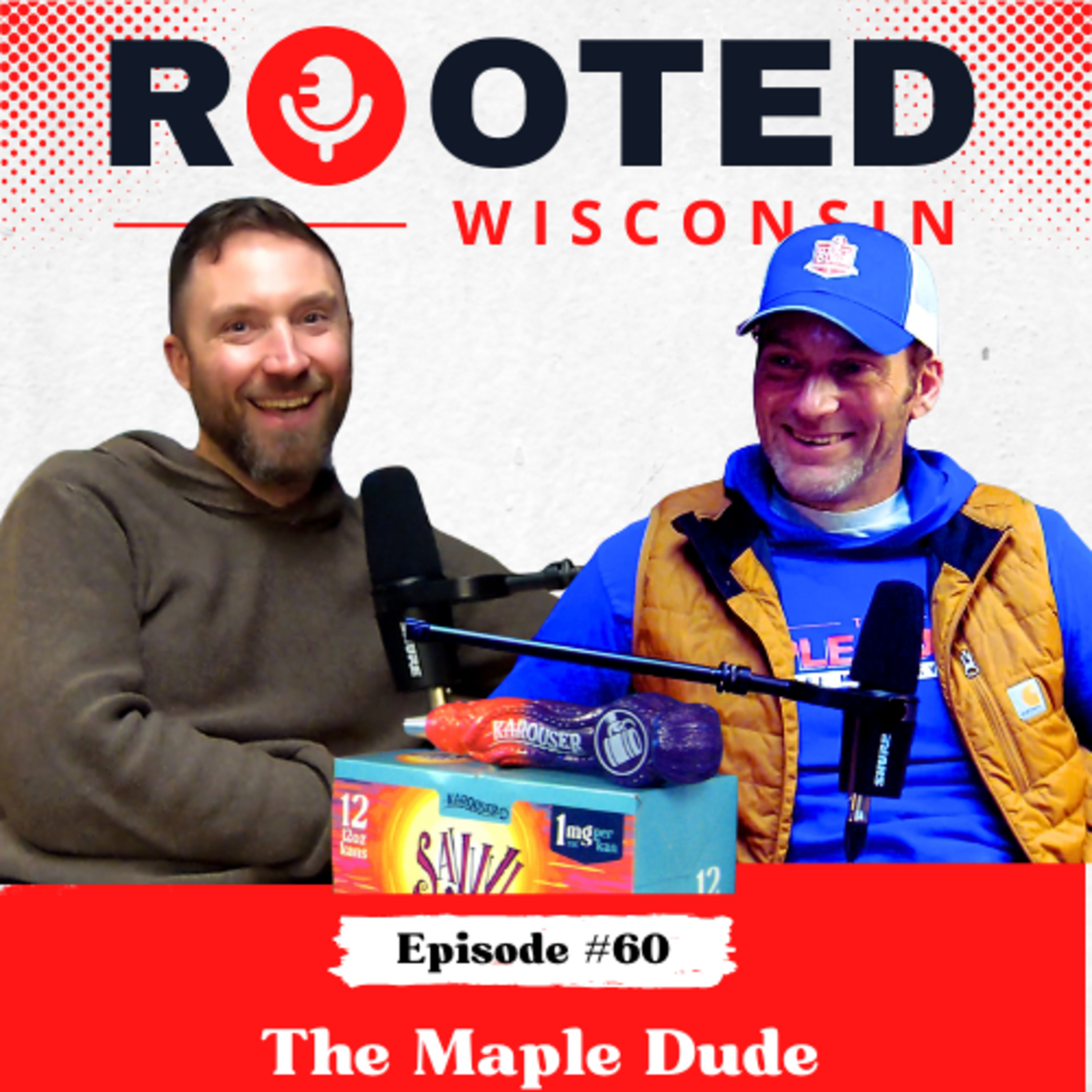


Tim Sternitzky, aka "The Maple Dude", is a Wisconsin based entrepreneur and maple syrup producer harvesting and distributing some of the finest liquid gold Wisconsin maple trees have to offer. In this episode, Brad and Tim discuss harvesting maple syrup and taking it from a hobby to a full-time business(of course), the positive and negative impacts of technology and social media, being an entrepreneur and the mindset that comes with it, raising bison, the connection between the dairy industry in Wisconsin and sugar making, creativity, and much, MUCH, more.
https://themapledude.com/
As always, a huge shoutout to our sponsors at Karouser delivering a non-alcoholic social beverage right to your door. The new year is a PERFECT time to switch up your norm, try something new, and improve your health!
https://www.karouser.com/
Also, a welcome to our new partners at Epic Mortgage! Helping Wisconsin communities navigate home buying and real estate investment, visit their website to learn more about their innovative spirit!
https://www.yourepiclender.com/
Finally, a BIG thank you to our friends at genuineLynn for our new Wisco Roots apparel. Hoodies and tees now available! Lynn's mission to serve her customers shines through her great communication and dedication to making your vision come to life through apparel and products. Check out her site to learn more!
https://genuinelynn.com/
0:00 What's up friends? Welcome back to Rooter Wisconsin. Appreciate you for clicking another episode. Grateful to have you here. Today's episode is with the Maple Dude, AKA Tim Sternischi. I hope I said that right. I've been watching Tim stuff on social media for a while. I make Maple syrup as a passion of mine and it's kind of a little family project to that. My dad and I do. And that's how it started for Tim and it's grown to a whole lot more than that. You might have seen the Maple Dude Maple syrup in grocery stores near you. You might have seen him making funny videos on social media with his daughter making fun of him and a whole lot more. It's grown. It's awesome to see a Wisconsin based Maple business doing really well. He uses smoke Smoky Lake Maple equipment, which I'm really partial to to Jim and Angela have been good friends for a long time now and great to see what he he's grown his business into.
0:55 And we talked about how daunting it must have been to decide that he was going to make Maple syrup for a business. Because as someone who makes Maple syrup and as someone who is slightly addicted to entrepreneurship, I wouldn't consider doing it as a full time job. It's always something goes wrong. You make $0.10 an hour doing it. It's, it's really laborious. And the cool thing about it is the fruits worth the the reward at the end. So we talked about his Maple business. We talked about his path to entrepreneurship growing up on a dairy farm in central Wisconsin and that being his connection to Maple syrup.
1:36 And we end up kind of getting into a bunch of conversation about reconnecting with the outdoors and how that importance, how important that is and how tech is changing society and how we live and our connection to food and a whole lot of really fun topics. So hope you enjoy. As always, shout out to our sponsors at Carouser. Non alcoholic social beverages delivered right to your door. Hopefully your New Year's revolution is drinking less alcohol. And if it is, let Carouser help carouser.com make your order and take the next step away from alcohol. Also big shout out to Epic Mortgage. Appreciate them coming on board.
2:22 Epic mortgage care and community is what they're all about. Looking to help you get into your next home. Home buying process is wild right now and having someone in your corner can be super helpful. Epic mortgage can definitely do that for you. And one final shout out coming on board is Genuine Lynn, based out of the pier, but can make all different types of promotional material and apparel for your business. Genuine Lynn, actually a colleague of mine and his wife run the business together and just fantastic people doing an awesome job with apparel. They make a bunch of apparel for their local high school and a lot more.
3:07 So check them out. Genuine Lynn. They made a bunch of cool rooted Wisconsin gear that you can get. All you got to do is hit me up and we'll get you set up. Without further ado, though, let's jump on in. Here's the Maple, dude. so my go to lately is to start the episode. I've been telling the story about how I used to do this, like intro.
3:53 Did you watch any of the episodes of the podcast? Yeah, OK. Did you see anywhere I used to look in the camera and do the intro? Yeah. Yeah. That would make people so nervous, man, so nervous. And you're looking at that camera or whatever. That's what I would do, but then I would, I would start the episode and I would come to the guest and every time they'd be just sweating bullets, man. So I don't do it anymore. I record the intro separately and then now we just kind of start talking and wherever it, wherever it naturally starts, the episode is where we'll come and go. But yeah, I don't know. I'm, I'm excited to chat with you, man. I've been watching your social stuff for a while. Oh, really? Well. Thanks. Yeah, I mean, I've been trying doing that for quite a while.
4:37 I mean, you know, I just, I didn't even actually have any social media until I started to use it for my business. So, you know, I just was something that I played around with and you know, I've found that I kind of liked it overall. I mean, I feel like I don't want to spend too much time on social media myself though, but I have fun making the content. So, you know, it's been a learning curve like that, like you're being here today learning about the podcast and everything that was. It's stuff I'm interested in. People, was it a big part of your business growing?
5:19 I do believe that social media, probably without that, I don't know if I'd be doing what I'm doing for a living. You know what I'm saying? In some regard, I feel like if you have a very small business like like me, you know, it's a small business you how else in today's world are you going to market yourself really? I mean, you know, like radio or print or TV, you know, that's kind of it's just not what The thing is now. And it does give you an Ave. for anybody to, you know, put put yourself out there and you know, get seen and stuff like that. I mean, you can talk about I'm sometimes frustrated with the amount, you know, of followers or subscribers I have where how many actually see the content, you know, like what the the the companies let go through without. I think they want you to want me to pay to get a lot more, But you know, that sometimes can be a little bit frustrating, but you know, it's some do better than others. And I mean, I, I feel like it's helped give my the Maple due to brand.
6:32 I mean, and that's kind of way I came up with that name to start with was, you know, Tim's Maple syrup. You know, like nobody's probably going to really remember that. And there's a lot of Maple syrup being made in Wisconsin. So I just was like originally trying to think of, you know, something unique something. And actually that was probably my I, I think, well, the reason I came up with that name was it was back in the day, it was a password that I was using for like online accounts. And stuff like that. Yeah, I mean, there you go. Everybody just hack in there and you won't get rich. So that's how you came up with the name. It was a password and that. Yeah, I mean, that's just kind of yeah, like I called myself the Maple dude. Or it was like a handle on see, like back in the day. I grew up on a how I got into it. I grew up on a really small dairy farm in Clark County, Wisconsin.
7:29 Clark County, Wisconsin is still the biggest dairy farming county in the United States. And I grew up in Clark County, Wisconsin, very rural area back in that time, everybody. And this was the early 90s. I'm I'm getting old. Me too. Me too. I mean, every kid that I went to school with almost we're dairy farming kids. We grew up, you know, on the farm and these are all these small dairy farms, which there aren't a whole lot of those left. There's very, very few of those left. Few out there, but not many. And part of that whole culture was Maple syrup production as part of a little thing offshoot of the farm. You know, every farm had a woods, you know, a wood lot in the back 40 or whatever.
8:18 And that's kind of how I, you know, learned about it because my dad and my grandpa, you know, I, I just very primitive. Like very, very, very primitive. You probably would have thought we were maybe making something else out in the woods, you know, like cooking something illegal. But I mean, it was nothing fancy about this setup. But that's kind of how I learned how to do it. And, you know, over the years, it just kind of evolved slowly from that level. I mean, like I was playing around with it at that level for, for a while until I, you know, figured, you know, I wanted to do more with this. And then I guess kind of getting back to my background to the password thing.
8:59 This was back in the day before social media, before Facebook for, you know, like where you can go on there now and see these groups, you know, and talk Maple surf and stuff. There were these websites that were kind of essentially message boards and that's kind of where I started trying to learn more about it beyond what I knew. But I mean, my dad, my grandpa taught me the basics. So that's how I got started. And that was my, I think that was like my, my handle on these old websites, you know, back in at round, you know, around 98992000, something like that. Talk about invaluable though, because something a lot of people don't know about Maple syrup is it's very hard to learn the process from start to finish is a lot. And I mean, at that time you're probably cone filtering with your folks on the dairy farm.
9:44 And like, how do you how do you learn how to do it professionally without having access to something like that? You know, it's super interesting what you said, though. That's something I've never thought about is, is the Maple syrup industry in Wisconsin. But it makes so much sense. One of the guys that helps us out on our operation does it because it reminds him of his childhood on his farm. Oh yeah. And man, I can think of more than a handful of people in my head of Maples producers that I know that started on a farm. I've never put that together. Oh yeah, I think it's it's a very not everywhere. I mean, northern Wisconsin, there's going to be less farms, you know, then kind of central where I grew up.
10:28 So maybe it's not entirely all tied to it there, but definitely a large part of it was it's kind of got a hassle, a dairy farming culture behind it, you know, which is what I grew up in and. So what was that first set up? The one out in the woods? What were you boiling on? Yeah, I mean, it was like a oh gosh, like a four foot by 8 foot tin pan. You know, this thing wasn't even stainless steel sitting over a homemade, you know, actually there was one out in the woods that was built into the ground. Like there was kind of dirt piled up and like cinder blocks in there and so you can just throw wood in underneath it. There was one of those.
11:11 And then we had some, you know, very primitive, like, well, steel arches, you know, that weren't anything fancy. They were made with like I beams and, and stuff like that, you know, and I, and that's all that my grandpa and dad wanted to do with it. You know, it's just kind of let's make some for ourself and the family members. And, you know, there really wasn't any regulations in, in regards to that type of thing if you know, but if you're. So that's how it. Yeah, it was very primitive. You know, we didn't even have a roof over our heads. It was out in the open. I mean, if it was snowing or raining, we'd like get a big old piece of like sheet metal and put it over the pan. And it was pretty rough.
11:56 One of my that's one of my favorite questions to talk about with other folks that make Maple because it's really fun to talk about the the new cool stuff that we have, but I like keep hearing people's first set up with it. Oh. Yeah, we would. We throw, don't tell me we throw tires in there in the like a freight train. Yeah, one of my favorite stories from starting Maple Syrup. We had a similar thing where I went and bought my first rig from this guy in the middle of nowhere UP his name was Huey LaRue. Really cool guy, super interesting. And I brought it home and I put it under a like a freestanding. It was pretty much like AI mean. I I had an outdoor wood boiler.
12:37 So it was, it was for my firewood, but it had no walls and I can't remember if the first or second year I did it. My, my, it was something my dad and I were going to do together and he drove up and it was going to be a terrible weekend of weather. 40 mile an hour winds 15° just cold as hell. And I had to work on Friday but we had a shit load of SAP to boil so and at this we were on like a 4 by 6 flat pan so 7 gallons an hour like can't boil anything off. And I had to work on Friday. And I'll never, ever forget coming home from work. And my dad was a pretty old school, like, tough guy, cuddled in his overalls next to the Maple syrup evaporator. And he gives me this look, like, what kind of hobby did you pick up for us?
13:26 And we've come a long way since then. But I think it's that roots of Maple that I think draw us all in, man, thinking about those first setups out that we had and how we learned to do it, you know? Oh. Yeah, I mean, it's a yeah, it's a lot of memories with it, you know, I mean, just lot of memories with that. And again, you know, with my grandpa, who passed away many, many years ago. But, you know, my dad still alive and kicking and in the current operation, he still tries to help how he can, you know. So that's carried on to today. I think you made a, you made a video about that this year. You you made a video about your dad still helping. I can't remember what's his. It was about his part of the process. What does he do on? His labels, I mean, he gets up there, if we're running the bottling machine, he'll, he'll be at the end of the line putting on the labels and taping the boxes, you know, and, and actually during the production season, he will still like sit at the evaporator and as the syrups, you know, coming out, being drawn off as it's finished, he'll basically add the filter aid and, you know, and, and to the syrup and run it through the filter press. OK yeah, so nice.
14:33 He can still, he can do that for me. That's awesome. Yeah. And, man, and in all honesty, for me, every year when it rolls around, I just think about not doing it because it's so much worse. It's a lot of work. And every year I think about not doing it. But what keeps me coming back is just spending time with my dad. That's it. Yeah. Like I don't it's fun. It's fun for a weekend that's. What I see a lot of with the hobbyists is, and I mean, I'm not saying I feel a whole lot that you get towards like about the third or fourth week you start, it starts becoming a little bit of a drag because it's, you know, unless it's frozen all day long. This is every day, you know, all day. Some, I mean, not all day, but sometimes if we have a really big, super big SAP run, you know, some of those times when it doesn't freeze at night and it runs all night long, those are the ones that kill you because you're there all day. And, you know, we go late into the night to keep up with it. And, you know, that's even with more efficient equipment and stuff, too.
15:34 So yeah, it's a lot of work for sure. People, I don't think realize how much work it is. Oh, man. Well, yeah, even now when I get to the fourth or fifth weekend, it's time to button it up. We're pulling these bags down like I need a break. You know, yeah, I hear that a lot from guys, Like they've had enough, you know, it's not even over with, but they're done. Yeah, we did that this year. I think we pulled probably a week too early this year. We could have had one more boil, but it just gets to the point where it's, and that's my ongoing joke people because like I'll sell them a jar or something and then people will say, well, you must make good money doing this. I said $0.10 an hour if I'm lucky. Like I'm definitely not doing it for the money. You're not doing it for the hourly rate that you received. For sure.
16:20 No, I'm doing it for my next my next pan I'm going to need or whatever. It is right? Which is that's another thing. It looks you use some Smokey Lake equipment, right? Yeah, yeah, I, I do. I sell their equipment too. Nice, yeah. So. They've they, I quickly moved to their stuff from that first setup I bought and man, Jim and Angela make some good stuff, dude. They know what they're. Yeah, very high quality. I, you know, I'd say for your, if you're a hobbyist, that's the way to go, you know, and it's a Wisconsin company here too, so. Yeah. What is it? What like how many taps do you do now? And what is your setup look like? Like I'd love to see it. Yeah.
17:01 I mean, if you're ever in that area, you know, or traveling through, you definitely come see it. I mean, you know, on the grand scheme of things, from a hobbyist standpoint, you're going to say, wow, it's really big. But from the standpoint of like if you compare to operation, say in Vermont, Vermont is the #1 Maple syrup state, you know, it's not by any means huge level on those regards. You know, we're boiling down around from like 13 to 14,000 taps in in that range. But you know, you can go and talk about really, I mean, in Wisconsin there's some pretty large operations larger, but like if you go into the Northeast lake, Vermont and stuff, I mean there's you know, 50-60 thousand tap and up operations. But yeah, so that's what what we're doing. And you.
17:53 Know so then what are you running for evaporators like how many do you how much pan space do you have to be even boil that off. We have a, it's a 3 1/2 foot wide by 14 foot long unit and it's natural gas so we don't burn wood anymore. So that actually does help with the labour, you know, a lot less work. Oh yeah. But we do that and then we also do the, of course you have to, when you start talking about those amounts, you got to do a reverse osmosis. So that's what we use as reverse osmosis machine, you know, and that we're taking like 80% of the water out of the SAP before, over 80% actually before it starts getting boiled down by that evaporator. So that's a huge time and, you know, fuel savings to do something like that.
18:39 Yeah, we haven't dipped into the RO yet, haven't done that. What you find with with the switch from wood to gas, is it it like is it's not crazy expensive with using that much natural gas? No, natural gas was pretty affordable the last several years that I've had this unit. You know, it wasn't bad. I mean, I think it got to be when we were still doing wood fired and I was buying the firewood because it was just so hard to make it ourselves and have time and. You must need so much boiling. Yeah, to where I don't think I could have. I think this was cheaper than buying the firewood.
19:19 Yeah. OK, So what did you sell? All your old wood evaporators. Yeah, I've sold that back then and and went to this unit. So if you're 3 feet by 14 feet, you've got to be pretty much that thing starts at the beginning of season and you don't turn it off. Yeah. I mean, it's not overly huge for what we're doing, but it gets the job done. I mean, it's probably can do with the reverse osmosis we're doing basically, you know, like a 55 gallon drum. Well, one of those an hour we can fill. OK. Yeah. OK. So. That's, that's amazing to me, man.
20:00 That's amazing because I can get, I can get probably 25 gallons an hour. Well. I'm saying 2055 gallons an hour of syrup. Oh yeah, yeah. OK, that makes a lot more sense. I was going to say, yeah, that's wild. Yeah, yeah, yeah, yeah. Like a 55 gallon drum of Maple syrup will fill that in roughly an hour. That makes a lot more. Sense close to an hour. Man, so how how long has it been a business for you? Well, I would say over the course of 20 plus years from a very small hobby sideline where I'm selling a few, you know, bottles here and there to a part time business to now I do it full time, which has been in January.
20:50 I made the leap to do that. I want to say I think it's three or four years ago, I can't quite remember, but yeah, if it's 3 or 4. But yeah, at that time I went to be like, I'm just going to do this full time. So yeah, it's been, you know, quite a, a gradual growing over those years, you know, as a sideline side business side hustle to doing it full time. OK. And to take it full time, you like you almost have to be obsessed with efficiency, right to to take this full time. I mean, yeah, you want to be efficient.
21:33 You definitely. It's kind of like at the level, you know, where I am at with a small business like this. It's I do have like I've got like seasonal help during the season. I have several, two or three other guys that'll help go to the different woods that we tap, haul the SAP in. I got to give a shout out to one guy. He'll never see this. He's an Amish man. His name is Albert Borntraeger, but he is 70 years old and he's been working with me probably about 5 or 6 years. And this guy, you wouldn't believe the way this man works at 7 years old.
22:14 No kidding. He's like 30 year old guy. I mean, he's he's incredible. He treats it like it's his own business. I'm not kidding. I mean, he cares about it that much and helping me out and we get in the trees, tapping, getting the line set up in the woods and just all that type of thing. Great guy, couldn't do without him. And then, you know, a couple other guys, Bobby and Oleg, and these are older guys, retired guys that help with it. And then my dad helps a bit and let's see my my son Jack when he just graduated high school last year. So now he's working full time, but in the winter time, he's Maple season. He's going to be freed up a little bit to help out a little bit more too.
22:56 So and then you know, I've had part time employees in the shop, in the world headquarters, the store I. Love how you call it the world headquarters too. It's so funny. So it's pretty lean, man. It's pretty. Yeah. I mean, you know, it's like you're at that level where you know, labor is a big expense. So you you kind of got to juggle a lot yourself and sometimes I'll be honest, it can feel a little bit overwhelming. You know for sure even, you know, even outside of the the Maple production season in March and April, you know, just getting the orders filled and, you know, getting getting that done and getting your doing the marketing of it. You know, with the social media, that's a whole nother. That's another job almost, you know, so there's a lot of different things to make a little a living in bat business, because I would say it's very rare for a person to actually make a living doing that them as the only thing. Yeah, super rare. 100% yeah, back to because of that $0.10 an hour thing.
23:59 Yeah, that's why I asked about efficiency, because you, like you have in order to be able to actually make money and live off of it, you have to like do all the things you just said. And that kind of leads me into another question. And it's actually two sides of things that I wanted to talk with you about. 1 was like getting like you're in a bunch of grocery stores and stuff, which is awesome. Like how did you learn and develop all those relationships to get that distribution? Let's start there. I mean, it was just kind of so I live in Marshfield, you know, pretty much right in the center of Wisconsin.
24:40 We had a festival foods or still do have a festival foods in the store in town there. And I remember I think that was like the very first store I approached and I just kind of went in there and went to the customer service desk. Hey, you know, talk, can I talk to somebody about this? Typically in store level, when it's, you know, more of a corporate structure, they can't make that type of decision. So I mean, I just got in touch then with somebody who was able to make a decision. They gave it a chance, started bringing it into that store alone, a couple different sizes of Maple syrup. And then from there, after a while, I don't know, I know I can't remember how long that goes. That was probably like 10 years ago, you know, or something like that.
25:29 But from there I had a contact within Festival Foods, within the the company. And then the guy was, you know, list. I had an ear that he would listen to me. And they expanded it to like 15 stores. And at that time when they went to 15 stores, I had to distribute it myself, you know, and oddly enough, most of the those 15 stores were over here in the Green Bay. Appleton, Mina, fine, all in this area over here, the Eastern Wisconsin Festival Foods and that's where they went with it. And so once a month I had to contact each store, get their order and then I and then the receiving at all these stores I think closes at like 1 or something like that. So I had to, you know, load it all up, you know, get that order together, run over here and hit all 15 of these locations before 12 or 1, you know, whenever that was. So, and I did that for a few years. I mean, that was, I'm glad I don't do it anymore. You know, I was fine letting that go right now. So then since then festival took it to all their stores in the state, which is like 40 some or whatever. But now I have a distributor that does that. So they pick it up for me at the at my location and then they take it along with other products that they distribute. So.
26:56 So that took a ton off your plate, yeah. I wouldn't want to go back to doing that way, no. Especially to 15 stores. That's, yeah. I mean, let alone I remember one time when I made the jump from the 15 to the 40, whatever, we didn't get a distributor lined up in time and I had to do all 40 some myself. One time was on the road 2 nights steaming motels. That's amazing. I figured that had to be a leap man because for growing from the, you know, where you did to where you are. Yeah, that seemed like in my mind, thinking about the business lens of it, that had to be one of the bigger jumps to make.
27:38 And then I think the next consideration that comes into my mind is like, have you had a, I'm trying to think of the last three or four years, Have you had a lean year yet where it was a bad run? The last few have been pretty good. I'm trying to, I'm thinking way back and all this one sticks out. My mind was 2012 and that's a long time ago now. But I remember that was a season where we didn't, there was really almost nothing. It was, it got to be March and it warmed up to like 80°. And I mean, there was it was like over in three days. That was luckily that happened then when it wasn't something I relied on for.
28:21 It was just, you know, very much hobby level at that point. And so I remember that it was very, very, very almost non existent that year. Since then. They're they've been pretty decent since then. I mean, always, you know, and part of that reason why that can hang it kind of happen is because of some of the advancements in the technology with Maple production, the vacuum, the vacuum tubing essentially, you know, you're, you know, you're creating the conditions for SAP, the flow are officially, you know, if the trees don't want to run, you'll get it from vacuum, you know, where they don't want to run on the old fashioned dripping method, you know, So that's why that's helped that too, you know, being able to have that type of system to overcome problems maybe with, you know, it won't totally overcome it, but it will definitely, definitely give you a lot more than you would otherwise. 100%, yeah. I've heard a lot about it.
29:25 I have. I've never even looked at a vacuum set up. What, like that has to be one of the. Just thinking through how it would work. Airtightness has to be a crucial Yeah, right. So squirrel chews a hole in your line, something like that. That's got to be headaches. Oh, it's terrible. I mean, yeah, I mean, that's what we're doing right now. And this winter start to this winter has been kind of cold. I mean, it's we've been the last couple weeks going out into these sugar bushes, you know, and fixing up lines and all that type of damage. I mean, it's kind of crazy when you think about it. You're put in this network, couple of lines all over in the woods that you use for four weeks out of the year in a place where nothing but stuff is going to fall on it, you know, and critters are going to eat it. But so yeah, it's it's a lot of maintenance, but during that time it's a huge ton of Labor savings and way more increased production.
30:23 So, you know, that's the trade off. Yeah, yeah. And then what are you doing? You're, you're vacuuming that to big holding tanks and then you just probably drive around with a truck that you can transport hundreds of gallons. That's pretty much it, yeah. It's fascinating, man. I love how everybody does it a little differently. And you probably still find that even like have you, you've probably gone and like saw some other big old facilities, right? And there's probably intricacies that even at that level, people do it in different ways, right? Oh yeah, I think there's everybody's got their own practices and methods and stuff like that. You know, definitely seen some. You don't really see him during the season too much because you're busy, you know, yourself.
31:04 But you know, I visited some different places in the past and you know, I think it's like you kind of went back to what you're saying, affordable, being efficient. I wouldn't say that I am the most techno. I guess what I'm trying to say is I haven't spent money on every latest new thing. I've been like kind of selective on what I think I really need versus do I really have to have that? Because you can spend a ton of money on that hobby and or business.
31:45 You can just spend you can you spend money endlessly on it. It's incredible how much money you can spend to make Maple syrup. Stainless as high. Yeah. And I feel like I've been able to, that's what I've done to a degree is kind of spending on stuff that I really need, but not maybe so much stuff that I don't and still be able to get the job done, you know, so I'm not super in debt over this whole operation. Yeah, I think of more of efficiency, like the equipment is great, but there's always the next best thing. There's always this next great thing that comes on. I think of efficiency in process because there's always something that you can do to increase your yields, make your boiling faster in process. I think so.
32:34 Like one thing I did this year is I started making my warming pan run lower, like I ran my level lower in my warming pants. So it warmed up hotter faster when it and it didn't kill the boil as much. A little thing like that can make a big difference. That could be a couple gallons an hour, right? Like that's what I think of of efficiency and that's what kind of keeps me coming back to it because I love. Solving a problem. Try to do it better. Yeah, I love solving a problem, you know, so I don't know what what area like where have you seen your hurdles in scaling to where you have what's been the biggest like, oh shit, this is a lot more work than putting in a couple 100 taps. Is it that tubing or is it something else? To the what's the most work?
33:22 What? Was the biggest hurdle that you ran into that maybe you didn't expect when you when you scaled to where you are now compared to that couple 100 taps in solid to your neighbors? I mean, I would say honestly going back to the distribution of the product, I would say that is actually was probably the biggest hurdle or the hardest one. I found that since then. I mean, we did get, we do have distribution into the Meijer stores too in Wisconsin and in Chicago area and in the UP. But it since then it's been, it's hard to find the right person to talk to in these bigger companies when you're a small guy. That's what honestly, I would say that to anybody who wants to, you know, maybe has ideas of wanting to do something like this, that is the hard part.
34:17 That's what I saw as the hard part if you wanted to get your product distributed to a bigger level there. I feel like there's a lot more competition in this tiny little niche industry of Maple production then there used to be. It had a big growth in the last like 10 years, 10-15 years or so. Maybe that 15 is a little far back, but it did really have a lot of growth of people getting into it. And there's a lot of people out there trying to sell it, you know, this, that or the other thing. And some people are on the level of going to the farmers market. So you know, this and that. And I, I did that too back then. But yeah, I mean, going to another level, if that's what you want to do, is get to distribution in the stores.
35:03 I found that very hard to get people to call you back for sure to even want to talk to you. Yeah, I can't even imagine. The funniest part about that, I think, is I don't even know if you know you did it, but when you were explaining it, you said if anybody wants to try this, like there have to be days when you wake up in the heart of Maple season and you just think, why did I bite this off? Oh, yes, I definitely think that. Yeah, for sure, for sure, yeah. It's just one of those things, man, that like, you know, there's the adage like the if something, if there's something that can go wrong, it will. It just seems like that's Maple syrup. Like you, you got to be able to ride the wave and and go with it because there's always going to be something that you didn't even think of that's going to potentially wreck your day. Oh yeah.
35:52 There's one this year. Go ahead. Well, I was just trying to think of a funny little story. This is back like one of the first years when I got into the world headquarters. That's my current building, like you said. And we, we were bottling glass quarts of Maple syrup and I didn't even have good like storage racks or anything back then. I think I maybe robbed one out of my garage. You know, those plastic ones with the, the plastic poles and the different. I I decided it was a good idea to put a whole bunch on that. Oh no. Nice. And then left the room, came back, and I think we had like, about 2 or 300 bottles just collapse and fall over the floor. And it was glass and Maple syrup everywhere.
36:35 So yeah, yeah, yeah. That was like one of those days. What the heck am I doing? But yeah. Boy, the liquid gold you walk into when you're looking at that is that that's enough to make a guy quit right there. So man, this year we had one. I still don't know what happened. It was our last, our last filter of the year and somehow it ended up with these little like probably and it wasn't many, it was maybe two dozen, three dozen jars, something like that. So it's not a ton, but our last boil of the year ended up with like these little floating goobers in it. And I just have no idea. It has me perplexed. Like I we take a lot of pride in clean, good tasting product. I don't know if it was, maybe the brand of jars didn't seal on the top or something.
37:23 After you filtered it. Well after I filtered it looked crystal clear and it wasn't nighter like it didn't happen in a week or. Two, maybe it's mold. It's got to be a type of mold, yeah, but I don't know why or how. Possibly not quite hot enough going into the bottle. That's about the only one of the main things. Yeah, maybe. Yeah, maybe it was, well, you know, 170 going into the. Bottle that might be a little low. Yeah, well, that would be way low if it was a little. Low. Because I I wasn't there to oversee the operation this. Plan. It's probably just some bacterial mold growth or something like that. Yeah, little low going into the bottle could be I don't know, but that's every year there's something in and for the like the starting hobbyist, I think most of the time it's filtering right like.
38:10 That's the hard part. Yeah, if you can't, if you can't dial in your filtering, you're not destined for. Yeah, that's that's a big headache. It can really be a big headache. So are you still? Did I hear you earlier? You're still like even at that scale. You're running through just a big old filter press. Yeah, OK. Yeah, just a bigger one. All right, more plates. Electric. Yep. Yeah, actually air pump on it and and pneumatic pump. OK, Yeah, OK. So yeah. Man, and that, that's one of the, that's one of the most fun things I was excited to talk with you about. Like I knew there had to be days where it's just like, holy cow did I get myself into. For sure. Yeah, yeah. Well, I mean, back at the smaller level, yeah, lots I could say as we've gotten bigger and more efficient and better equipment, it's gotten a little better. But like back in the original days, yeah, there's a lot of that getting stuck with four Wheelers and, you know, tractors and all kinds of stuff like that, you know, just just, I mean, even burning pans.
39:09 And that happened in the transition to, you know, at the building I'm in now versus I had a small shack after I was actually out in the open, but we burned a whole evaporator pan up in there once. So yeah, yeah, all that happens. The whole you burn, the whole thing torched. It the front one, Yeah. Yeah, the syrup one, yeah. Yeah, I, I scorched mine. This would have been two or three years ago enough I can still use it, but it twisted a little bit and there's a little bit of stuff that I couldn't clean out and it just, it happens at the snap of a face. Oh, it happens real fast. Yeah, yeah. Boy, you got to love it though. You got to love it to wake up in the morning like you. You still find joy in it.
39:55 Yeah, I do. I mean, I still even this like past week, you know, we've been out in the woods working on this is a little cold, I'll be honest. I mean, one of those days, my feet. My feet are the first thing that starts bothering me. I can go out there almost without gloves on, I don't know why, and work in cold weather and doesn't really bother me that much on my feet. And then I just kept going and powered through that till I couldn't feel them anymore. And then I just, you know, kept working. But yeah, I mean, the feet, you know, the cold. I don't love the cold as much as I I'm going to say I ever loved it. I don't. I like it less and less each year, like getting out there and trying to, you know, maintain all this stuff in December and January. That part, yeah, I'm getting a little wimpier. Yeah, for sure.
40:40 What was your what was your career up to before you decided to do it? What you do? So basically, I've kind of had an interesting path. I've basically done a lot of different things in order to not really have to ever work for anybody. That's kind of what I've done. So like I said, I grew up on a dairy farm, small dairy farm, and, you know, worked with my dad, helped my dad and that as long as I have two brothers and a sister and my sister and I were older and then there was a gap. So my sister and I were more farm kids before the dairy farm, you know, my dad got out of that like a lot of the smaller ones did.
41:22 But before that happened, I actually liked it enough to want to give it a try myself. So I rented it from my dad and dairy farmed and milk cows and everything for two years, for about two years. And at that time, I, it, it helped me determine I didn't want to do that for the rest of my life because that's a whole different lifestyle, especially at a small level, like there used to be so many of them. You, it's your life. You are tied to it. You, you know, that is your life. And it's take a special person in this day and age to want to do that as their life. You know, I realized I wanted more time away and wanted to, you know, do different things and, and, and stuff like that. But so, yeah, I did that for a couple couple years, but that was way back in 2000 when we got rid of the dairy herd then. And then, I mean, we still have the farm out there, the the land.
42:27 What I did after that, though, was kind of interesting. Went from a very high maintenance animal, the the Holstein dairy cow to a very low maintenance. I thought it would be interesting to raise bison. Yeah. So I bought, it was like, you know, we got rid of the dairy cows, but we got this land in this past year. I thought, why don't we try some bison Buffalo. So I bought like 7 bison from a a guy that had a bison farm and I had bison on the farm for nearly 20 years. Yeah, it grew to about 40 some animals. And basically what I did with that was I just sold the meat. You know, we had them processed and sold the sold the bison meat to people and they're very, very almost hands off like the one we had to do.
43:23 We had to put a bunch of time in the building fence. At the beginning, I was a little bit worried about that. I thought, you know, I heard all these stories, if you got to build a really tall fence for them, well, the stuff close up to the farm buildings is very, very tall. But then we realized that this isn't not that bad way out to the farther reaches. It's literally like a normal barbed wire fence. And as long as they have stuff to eat and they're fine with it, they're not going to try to get out. But so, yeah, that we, I had that for a long time. Like I said, very easy to take care of. They pretty much just grazed. That's all they did. Good Hardy winter creatures. Too they they never went inside. I mean, they just would sit out the coldest night of the winter. They're they're they, they had never been inside in a inside a building and, you know, fed them round bales in the in the winter time round as A and didn't even we used to mess around with feeding them or giving them water. It was such a pain in the butt because the water would always freeze up and stuff like that.
44:26 We found out they got by just eating snow and I mean, they're that much on domesticated that they still can live, you know, survive that way. But yeah, I had that for a long time, about 20 years. Got rid of them and sold them in 2000 to focus more on the Maple syrup business. But during that time I had a small business where I did mobile auto body repair. So I had an equipment trailer and stuff like this and I went to mainly work with car dealerships and I did auto body repair on lighter stuff on their inventory and stuff that they wanted to recondition and sell.
45:11 And I did that for quite a while until I was able to jump from that to where to to the Maple dude. So yeah, I had, I actually had, I should mention this, for a few years back in the day, I was partners in a with, with my sister and brother and we owned a couple 24/7 gyms too. Nice. Yeah, it's a whole bunch of stuff. I love it. Yeah, entrepreneurship runs through your veins. Yeah, yeah, yeah. Yeah, there's something to be said about not wanting to work for somebody, though. Like we've all, yeah, everybody can understand that. Whether no matter which path you take, there's days where it's just like I'm going to be my boss.
45:54 Yeah, and that's been kind of me for my whole life, so. Yeah, yeah, I've I had AI never knew the the mobile like the mobile auto body people existed. I didn't know I. Was busy kind of familiar with it, yeah. I am now the last car I bought. I drove it home from the dealership the day I bought it and it, it's got like a lift gate. Yeah. And I lifted the gate and I drove in my garage, but it was too high. So I got these two big scuffs. So I called the I called the local dealership here and I was like, hey, I did this. I'm an idiot. Like, is there any way I can fix this? They're like, oh, yeah, we got a guy. He's actually out in the back of the lot right now come and see him. And he was exactly that. He had his van full of tools and he was just, he was taking care of the little minor dense sting scratches.
46:41 And I, I was like, hey, man, you think you can fix this up? Like, here's what I did. He's like, yeah, yeah. I can't even remember what he charged me it for, how good he made it look. It definitely wasn't enough. I feel like it was like 100 and 150 bucks and he's like. It sounds all right. Yeah. And he's like, yeah, come on back in an hour. Came back, car was fixed, and I was. That's the happiest I've ever spent spending 100 bucks, Yeah. Yeah, I know. That's I did that for a long time. Man, that, that had to put a lot of smiles on people's faces. Like friends of yours, Like oh Tim could. Yeah, yeah, yeah. I still get that to this day. It's like, can you fix this? And I'm like, I don't do it anymore. I don't do that anymore, sorry. Yeah, you got enough headaches and you're too. Busy with what I'm doing so.
47:25 That's cool. What What do you think draws you to entrepreneurship? What? What is your resistance to not want it to work for somebody else? I mean, I like to, I think probably my farm background, you know, so I grew up, you know, a farm is a farm and it's a small business, you know, and you're working for yourself. So I think that probably really instilled that into me. But also I also think that for me, I don't care so much about money rather than experience like enjoying what I'm doing. I definitely, otherwise I wouldn't have done all this stuff that I've done.
48:12 I made the decisions I've made if I were trying to make a lot of money. I've enjoyed. I've always been more about like, like enjoying what I'm doing and, you know, experience and things like that. The experience of it, you know, and it being able to set my own schedule, you know, not really having to, you know, go by someone else's schedule. And that's probably just, that's probably how that started was the growing up on the farm type thing. But and then just innately in me, I just feel like I enjoy, want to like what I'm doing more than anything else, you know? It's really important, man.
49:00 It's really important. I have a real tough time punching a clock too. There's like, my living hell is the last like 30 minutes of a clock punch job when everybody's checked out but they're like waiting for the clock to strike the number when everyone can leave. Talk about a waste of breath. Yeah. You pity me of my living hell and I had one of those and it was brutal, man. So there's a lot of things that can drive you in that direction, but I don't know. I have. I have one buddy, a real fascinating conversation with. He said something almost the same way you did it about, I can't remember exactly how he put it, but it was something along the lines of I've done a lot of work to make sure that I never had to work for somebody.
49:48 Else love that that Yeah, it's a great saying. And I had a long conversation with him about it and a lot with him, it came down to 2 things. It was 1 he didn't like. He doesn't like to answer to somebody. He doesn't like to, you know, he yeah, he like, he likes to make the decision and then that's what's going to happen. And he doesn't want somebody where where he doesn't have that control of the decision. And the second part was that he hadn't thought about as much was he was obsessed. Obsessed is a strong word. He found enjoyment in the the knowledge gained of something new.
50:30 So like, I guess you could go back almost to the obsessed with efficiency thing from earlier, but just like knowing that every part of the process, and I guess it's kind of a control thing too. Is this back to like if there's something, if I see something here, I can make it change, I can fix it, I can make it to something that I think is better. And does it always go well? No, but as long as satisfaction comes with it, who the hell cares? Because you're not going to boss Bob and saying, hey, this is broken. Right. Yeah. It's all, you know, you made the decision and now you got to, you know, deal with the consequences. But you know, it's yours. Does that resonate with you? Yeah, definitely. What you all just said right there kind of almost sounds like what I think, you know, I mean it, it, it is. It's very much the way that I would think you know, and the reasons why I do what I do so.
51:21 Yeah. How do you, I think maybe one of the harder parts in that and I think I saw a video, this is a couple months ago, maybe two months ago, you were given a tour of some buildings. You sell, you sell some. Buildings too, right? Yeah. So what's the tell me about those first? Yeah, I should. I didn't bring that. It's kind of a little bit of a offshoot of of my Maple business I got into over where I live, or I live in Marshfield, but that's like 15 miles east of where I grew up. But I go out to my my shop and everything that that's back on the family farm property, the world headquarters on the family farm and very, very big Amish population out in that area, very big Amish population. And I just, like I said, I have one guy, Albert, that works with me and I've just gotten to know some of those people. And I ended up kind of linking up with a builder who builds cabins and sheds.
52:27 And I've essentially taken on the role of the salesman for his company, for his cabin building company. And so, yeah, I make videos, you know, to show them and show how it's done or show what people can get and buy and the features. And so, yeah, I I sell solemn quote people show them kind of like a salesman for Amish cabins is what I do in that regard to. So, yeah. And it's another thing I've thrown into my hat and, you know, everything I do, they're nice cabins. I mean, I would like to buy one one day. They're great for like putting on a, you know, an up north property or a vacation home somewhere or even some people who have looking to downsize and just want something small or live in them. I mean, it's, it's a little house is what it is. And with really super great quality. Yeah, the craftsmanship is awesome. Yeah.
53:22 I was completely unaware of the Amish cabins until I have a buddy who put a couple of them up down in the Driftless area. And I love trout fishing. So I stayed in his, I stayed in his Amish cabins a couple times. It's like, dude, I need one of these. This is this is got to be in my future plans somewhere. I kind of figured it was that and then hearing you tell the story about the Amish guy who helps you out. I was like, OK, this is starting to come to life. But that leads me to my ultimate question. Although I could talk about how cool Amish cabins are all day long because they do such a good job. Actually, one, one story about that before we let the Amish thing go. That buddy, he was on our last trout trip. He was going to have an Amish garage put up across the road from his Amish cabin. And I got to go along for the experience. I got to go along to talk to the Amish and do the do the down payment and the plans and stuff.
54:13 And it is everything that I would have expected to be the most wonderful, informal thing that I've ever seen. Dude, we, they're drawing up plans on a chest freezer. He cuts some, he cuts some, the check and they're talking about like what? Like if you talk to like a whatever, quote UN quote, normal home builder, like these conversations are going to take 6 days and seven people are going to have to sign off on it. And this dude is writing in pencil on his chest freezer. He's like, Oh yeah, you want it this length, This length. Yep. My buddy cuts him the check and we leave. And the best experience, I was like, so this is it.
54:54 Was it. Is this how you built your Amish cabin too? And he's like, yeah, this is the, the, the process. This is how you do it makes me want an Amish cabin even more. And it was awesome. But my main question back to where I was getting at with this is now how do you determine? Like I, so I'm cut from a similar cloth where like I'm entrepreneurial in mindset. I see opportunity and everything. How do you determine which ones you say yes to and which ones you don't? Is it back to the enjoyment thing you were talking about earlier, or how do you decide where to put your energy? That I think I have a hard time with because kind of the way that I grew up and was raised, you want to help everyone out, you know?
55:44 So I have a hard time saying no to people. And that's something that I've had to work on and probably still need to, you know, just like, OK, you're putting too much on your plate. You know, you're you're you're doing too much. So, yeah, I mean, that's been difficult for me over the years, is doing too much or trying to take too much on. And I've kind of gotten to the point where, you know, I'm at this point in life, I'm trying to, you know, eliminate a little bit, get better with that. Yeah. I mean, I guess it would be. I wouldn't want to do something I don't enjoy. I mean, like, right now I am. I have a hard time finding time for my hobbies outside of my work, you know, And I wish I'd had more time for that. So that's something I think in the going forward here, I'd like to try to figure out a way to spend more time doing some other things besides working, you know? Yeah.
56:47 Isn't it weird how that comes with entrepreneurship? It is. It's a very much probably everybody that is an entrepreneur would say the same thing. It's weird though, because you do it with these delusions of grandeur of being like, OK, I'm going to set my own schedule. I'm going to, I'm going to be able to do this, this and this. Well, I'll tell you what, I I got way more time away when I was a nine to five. Yeah, Yes, that's it. That's true. Like. And I don't know, it's, it's, it's weird to think about, but I think it's, at least when you do it, the way you're talking and describing, if you do something you're passionate about, it makes it less, you don't need to get away as bad, right? You know what I mean?
57:32 What are those? What are your? What are your passions that you wish you did? With my hobbies outside of yeah, for most people the Maple syrup is a hobby, but for me it's it's my job. I guess like I, I like traveling a little bit. You know, I'd like to do more of that. You know, one of the things I'd, I'd love to do this is something I want to do is eventually drive, road trip all the way to the Arctic Ocean up at the, you know, I think it's barrel or whichever dead horse Alaska. Yeah, Like I want to go. I would love to do that. Go all the way up there. You can do it, you know you want to do it during the winter, But that'd be something I'd like to, I like kind of trips like that.
58:13 So that'd be something I'd like to do. And then I have a really crazy, stupid addiction to 1980s and 1990s, three Wheelers and four Wheelers. Nice. Yeah, I I love those machines. I grew up around riding them and to guys my age. And if, if you were a country kid, I would say a lot of people that was a big thing back then. You know, that, that culture and that, that whole little niche sport of, of riding ATVs. And I just, I have a, a big addiction to collecting them and not getting to ride them a whole lot.
58:55 But you know, there, there, there's a whole little thing behind that, you know, like people, some people collect cars, you know, and into the, you know, muscle cars or whatever, or people are in the motorcycles or whatever. There's a whole community that are, is into these, you know, they're called vintage now. You know, ATV is, you know, 2 strokes and that type of thing. And I like working on them. I like doing stuff like that, but just don't, I don't have enough time to do it. I, I would like to do more of that and be able to ride them. Me and my son like to go trail riding a little bit, you know, and stuff like that. But take them out on the trails. We're always the most popular people when we go out there because everybody's like, whoa, my uncle had one of those or my dad had that when he was, you know, because this is all stuff from the 80s mostly.
59:39 I flipped one of those 3 rulers one time. I broke my arm. The death machines. My brother died on that. Yeah, man, that's cool. Yeah. You ever get in the outdoor boys, that first hobby? You know, the Outdoor Boys on YouTube? You ever seen that? Oh, he stopped making videos. Oh, yeah, yeah, yeah, yeah, yes, a couple. He yeah. It was a guy who quit a little while back. Yeah, he did the wild excursions across the Alaska. He would build those little houses and in the snow and stuff. That's what I I think of because he would always have his he'd always have his video going. Driving on this two lane Rd. just straight north of Alaska. We beaten down snow. Something about that's attractive to me. I want to. I like remote places, me checking them out.
1:00:22 Me too. That's man. I've said that a lot in my life. That's where I feel most alive. That's that's what initially drew me to Maple syrup actually is what initially drew it to me was another excuse to get outside in the wilderness. And the deeper I go outside it's weird but it's the more I feel like it's where I should be. Yeah. I don't know. Yeah, I love that, that whole, that whole feeling. And just like you're, you've been somewhere going somewhere that not many people have. You know, I like that. I like just those types of things. You know, like most recently here, I, it became a kind of a popular thing on social media, the 50th anniversary of the wreck of the Edmund Fitzgerald. But I've been obsessed with that since I was a kid. You know, I, I love the Edmund Fitzgerald, you know, everything.
1:01:14 I always like learning about it, reading about it and stuff like that. So yeah, always those types of things I have always had an interest in. Yeah, Yeah, man, I don't know. There's a, there's a feeling unmatched. And you know, what kind of comes along with that might be relevant to this conversation is I think, at least for me, being like, like I said, cut from a similar cloth. I'm always thinking of how I can be an entrepreneur in a different way or like do something else that can sustain my life. For some reason that completely shuts off when I'm in the wilderness, like that little ear thing in my mind.
1:02:00 And maybe, you know, I've never really thought about it before, but maybe that's part of the reason I love it so much is that it does shut off. And it's like, I don't feel this incessant need to make progress anymore. I just comfortable with being there, you know what I mean? Oh, totally. I mean, I think kind of what you described, maybe I'm a little bit different tangent with what I'm going to say here is, yeah, I feel like we've gotten away from that so much society so much. And I totally understand that because of this thing, I'm able to really help me make a living and all that stuff.
1:02:42 But I I think we need to get off our phones more. I mean it in get back in the nature and get back into, you know, just experiencing life in front of us instead of through a screen. And, you know, I'm going to sound like an old guy now saying stuff like this. But I mean, you know, I grew up and, you know, graduated high school and became a young man before even at Internet essentially, you know, like my whole life brain was kind of formed in that era. And I just sees it's so different now, like the way the world is now with like with my kids who really never known anything.
1:03:32 But, you know, having all this media and all the time. And it's good for, you know, information and stuff. But I feel like, you know, we've gotten to where we need to limit it, you know, and, and like one-on-one, you know, talk with people, experience life with people and just, you know, get out in nature, get out, do what you enjoy. You know, that's, I feel like we've lost a lot of that. You know, that's the type of thing is not not as common anymore. And I feel like we just need to live in the present, in the moment more and and not through a device, you know? Yeah, yeah, I think about that a lot, man. I think about a lot.
1:04:27 And it's probably even more so now I do with the rise of AI and I like combined with that, I think about it a lot how it's changing how our brains work. Like the A, a good example is I was talking about with my wife about this the other day where one of my, I call it one of my dad's superpowers is that like he can drive somewhere and just like know the road names and where to turn and landmarks and stuff. And my brain just doesn't work like that because I've always all I do is put it in Google Maps and then it takes me there. I follow the blue arrow and like that at scale happens too, right? Like I'm sure we can our recall is worse as a society because of Google and like our problem solving and creativity is going to become worse because of AI because it's it can do things for us.
1:05:21 Yeah. So it's any it's like any it's like a muscle man. If you don't work it, you're you're going to adapt and do things in a different way. And I think about that a lot. I mean, we have a four year old right now. And I think that that like it's like warp speed development, right? Like you get to see these things in front of your eyes, right. And I like, I can see him if we go, if we do is we, we try to limit screen time a ton. Like he watches little Bear from the 90s once in a while, that's about it. And I get to see him develop into this like curious little problem solver that's like engaging with the world around him. And then it's not to disparage other parents because I know how it is.
1:06:07 And it's, it's completely fine. Like my way isn't the way, you know, it's just how I'm doing it, right? But I see like kids on tablets and like you remove the tablet and it's like a paradigm shift of like they're in the third dimension, you know, And I don't know, man, it's, it's certainly important to find whatever balance is there with that because it's not going away. We need it. And once I thought, I actually think about it the opposite way. I think about the opposite way sometimes of like, OK, Fast forward five years from now on, my little dude's going to be not as adept on navigating a little tablet because he doesn't use one. And maybe that becomes relevant in his job and he's behind because of that.
1:06:58 So it's like, you know, 6 in one hand, half dozen in the other. I don't think you'd have to worry about that too much. I think they'd pick that up pretty quick. I mean, yeah, no, I get what totally get what you're saying, though. It's, it's, yeah. I mean, like, I, I go to the gym and work out three or four nights a week and I go in there old school. I don't take a phone, I don't take any music, nothing. I'm just sitting there working out, listening to the weights and this, that the, you know, the clanging and all that. But it's like everybody in there is on a device or, you know, it's like, man, you just, you're just making my workout take longer because between your sets, you're sitting there like this all the time and, and it's taking you twice as long.
1:07:39 You know what I'm saying? You know, just get in there and get out. That's what I do. But yeah, everybody is looking down, looking at something, and it's just like, I don't know that I still feel like that's too much. And I, I wish it wasn't that way. Yeah, yeah. Yeah, it's a really interesting thing, man. There's no silver bullet answer, but I think, and you know what's weird is I would venture to guess that the the majority of people agree with the sentiment. I do too. But there's this like, I don't know if it's in there's certainly an addictive quality to social media and technology in general, but it's almost like it's like cake or anything else, man. It's like, you know, it's not good, but you just do it anyway, right?
1:08:31 You know, if you don't make the conscious decision not to. And I don't know man, with with AI, how that could change how we function as a society is really, I don't know if concerning is the way it is concerning to me, but it's uncomfortable, no doubt. Yeah, for sure. I mean AI, you know, you see stuff that's AI generated and I, I mean, I don't know how much stuff, how this is accurate, but it's like it's got all these people liking it and all these people commenting on it and stuff like that. And it's like, that's AI people, you know, like you're going to at least like something follow something real or it's original.
1:09:18 It's a creator, you know, it's a real person that that is scary, you know, it's just like this is, you know, creating all this fake accounts and people are following that. And I, you know, I don't get that. I just, I don't understand why you would want to, you know, but you're talking on a larger level. AI literally like changing society, replacing jobs and yeah, all that, you know? Yeah, changing how how our brain. Works oh, for sure how our brain works and yeah, I mean, I've heard people talk about it, you know, and it's it's kind of you hear all these different predictions and you know the way things are going to be it's it's scary will it all come true? I don't know, but it's, it's a lot there that unknown and it's coming at you so fast.
1:10:07 Yeah, everybody, it's all coming at us all very, very fast. Oh yeah, you guys are not going to tap a tree. Yeah, no, I think, I think I'm safe for a while. For a little bit, yeah, it's at. Least I'll be gone before from the Earth before that happens. Yeah, man. And that's what gives me some comfort in it. It's funny. It's kind of, it's kind of morbid, but like, I don't even care for me, you know, like whatever, I'm almost 40, like life's going to happen to me now. But I think about what's going to happen to him. You know, he's 4. You know what, what's what's he going to develop into and, and what's, you know, what's the world going to be like?
1:10:50 And are we still going to have people that yearn for that connection to nature? Because I think it's really important. And actually that's kind of a fun thing we could talk about today too, because not only have we become removed from that, we're removed from how we get our food. Like we're removed. It doesn't happen much anymore, thank goodness. But like, I've had a handful of conversations in my life with people. Like, I'm an avid hunter. I like hunting a lot. And I've had conversations with people that aren't vegans or vegetarians that don't support hunting. OK, and I'm like, well, that's a really wild stance to take. And it's almost always because of the the connection. They're comfortable with it, but it's because they don't have to see it, you know?
1:11:36 Well, I mean, I want to be careful with my words here because we need to we need to make food too. But if you have a being that is a a chicken in a 6 by 6 cage that lives its life in there until it's eaten, and a deer that lives its life out on the landscape that I harvest with the best intentions that I can ethically, which one of those lives lived a better life? And that's a hard question for that vegan or vegetarian to answer. Or the non vegan, not the meat eater that doesn't hunt to answer. OK, you know what I mean. Yeah, for sure. So I don't know we and I think that that circles into Maple syrup because how many people like it's not take for granted because they don't know, but like how many people don't know the hours of Labor that went into that jar of thing. Right.
1:12:36 I don't, you know, most people don't, especially when you get out of the upper Midwest, around the Great Lakes region here where it's produced or up in the Northeast. I mean, a lot of people wouldn't have a clue, you know, and again, you know, it's a it's a small industry, it's a niche product. So that even makes it more so kind of you know, I know, and I mean, hopefully I'm hoping that out a little bit with, you know, we do have our website, so we, you know, get website sales and I noticed that the orders, a lot of them will go to, you know, different all over the country really, you know, different places. So you know where it where it's a non local product, it's easier in my opinion to sell it because I mean, obviously you just don't have as much competition. Yeah, yeah.
1:13:27 Yeah. And yeah, because you're certainly right from earlier you talked about like the exponential growth of the Maple industry. Even when I started, man, that was but not all that longer when not as long as you. It was probably like 9 years ago I started making Maple syrup, something like that, that it was kind of a weird thing to do. That not a lot of people. Knew about it and now at pretty much everywhere I can go, it's become a talking point for me. Like I'll try to weave in Maple syrup if I'm in a group conversation and somebody will have a brother that does it. My brother does that or my uncle. Yeah, it is. It's very much that way now, especially, you know, in Wisconsin, Like I said, it's a pretty common, fairly common hobby, you know, at all levels from a few trees up to, you know, much bigger. Yeah.
1:14:19 You know, that's kind of a cool thing, scaling how you have. I know you said your dad still does it with you, and it seems like you have your family around a lot. Do you still get as much of that as you would like? Like that communal togetherness of what Maple syrup is like? Everybody, it's a very connecting thing. Like everybody chips in, we're dumping buckets, we're boiling. It's a, it's actually kind of what you were just getting at a little while ago about it. It really connects people, I think. Do you still get that as much as you would? Like the way we are now, not as much. I mean, I'll be honest, it's more go, go, go and try to, you know, keep ahead of it from where it was when it was just the buckets on the trees and hanging out with grandpa and dad.
1:15:07 Not it's, it's not that way, but you get a little bit of it with my dad still there and doing as much as he can, my son when he can. But it's not very leisurely paced anymore. You know, it's, it's more, you know, this is the go time we got to take advantage of it. You know, we got to get every bit we can, you know, 'cause it's season only lasts sometimes, sometimes less than four weeks, you know, 353 to five weeks probably on average more or less, probably a little bit over a month. So yeah, no, it's not that way anymore for us. But you know, it's still a family run operation for the most part, and, you know, a small, small business with a long history. Yeah, the mindsets.
1:15:58 Just changed a little bit, right? Yeah, yeah. And I, I think you, you'd be tough to get away from that because it kind of comes with it. There's just more riding on it. It becomes more, there's more pressure on it. One more, one more thing I, I want to talk about. Have you, have you like thought about, or is it crossed your mind to make it exponential? Or do you do this already? Like does anybody come and look at your Maple operation to just just because they're interested about how Maple syrup is made or do you curate that experience? Yeah. I mean we, we do. I mean, it's kind of a thing where during the season we are right on Hwy. 10.
1:16:40 So if you know, you look us up, we're right on Hwy. 10, which is pretty well travelled Hwy. US Hwy. 10. So we'll just get a lot of people stop. I wouldn't say we get people that stop in during the season. They see the steam rising from the stacks and they kind of want to take a look around. And you know that the last year we did not did not do this, just it was hard to put it together and we just had to postpone it. Hopefully we can do it this March, But prior to that we had had something called Maple Madness and it was just a one day, you know, open house where people could come in and check out the operation and see how it was going. And my son even took people that wanted to, to like one of the sugar bushes and show them the, the, the set up, you know, and how all that works.
1:17:29 And it was just a little. We actually, it was kind of nice. We had some other local vendors in there selling their stuff, you know, like candles and you know, pottery type stuff and things of that nature. And we had free samples of foods that included Maple syrup as a ingredient. You're a Maple as an ingredient, Maple sugar, Maple syrup, whatever. So we do do that. You know, one thing that's kind of cool with being on out there in the public, I guess you know it with my business putting out the content and stuff is had given me opportunities like this. You know, today that what we have, and I've also, you know, had opportunities to go talk to like 4H groups and be a guest reader at elementary schools and you know, different things like that. Talk to you know, business groups or whatever more in my local area.
1:18:24 I'm actually one time I went to Kentucky, to the Kentucky Maple last year, the Kentucky Maple Syrup Producers Association annual meeting and I was, I was the keynote speaker. Really. Yeah. So that's. Awesome man. Yeah, You don't think of Kentucky as a huge, it's not a huge state, but it's not. But they do have a little Maple syrup industry going on there. But it's given me those opportunities, which is cool. And like I said, that kind of goes back to the like, experience and stuff, you know, like I was excited to come over here and do this because, yeah, I've done my, you know, like these Facebook lives, YouTube lives or whatever. But I've never like been to a real like, podcast like this before.
1:19:05 So I was excited to always try something new, something different and, you know, learn about it. And so that's, that's been, you know, a cool thing is I've got opportunities to do things like that, you know, talk to other people, teach them about it. You know, I've had videos I don't do the bit the YouTube contents a little bit. It started out really Maple related where I was just showing how to put up tubing and how to do this and that. And those were some pretty well viewed videos for that. I know a lot of people learned how to put up Maple tubing from some of my videos back in the day.
1:19:45 And they still still I get people contacting me asking me questions about it, you know, because of that, you know, like advice or whatever. And that's kind of cool, you know, to see that people enjoyed what you did. Absolutely. Yeah. So you get to share it frequently. Yeah. With the world. Yeah. And I think that's like, that's just as valuable. And it's so hard. Like I always, that's something that's just crossed my mind since I started doing it because like I always have buddies that are like, let me know when you're boiling. They want to help you all. Yeah, they want to see. They want to see what happens. So I know there's like AI know there's a draw for it there, but I think a lot of it just stems back to like it's, it's a month of chaos.
1:20:28 Like how are you going to try to add more chaos into the chaos? And that's what's tough, that's what's that's why this last year, that open all event thing that we had been trying to establish as a yearly thing, it didn't happen because we just felt like, oh man, we couldn't take it on this year. You know, it's just like got too far behind, didn't plan ahead enough. Would have been nice too, but hopefully we can start getting ahead of the curve this year and have it again. Yeah. But I mean, I'll put the word out there for that, you know? Yeah. Yeah, I think that'd be cool. Like I see the, you know, whatever it is, the apple orchards. There's a lot of apple orchards here around Green Bay that very exponentially. They do a little corn maze and they make cider doughnuts and just all this little stuff together.
1:21:10 Maple could certainly do that, but it takes an apple all summer to grow, you know, it takes it takes one overnight for that SAP to drop out of the tree, and then it's running over if you don't have enough storage, Right? So you better get it boiled, man. Well, it's cool. I appreciate you coming on and sharing your story, man. Yeah. Thanks for having me, really enjoyed it. I do have to say one thing. Yeah, what's up to? I can't. I didn't mention my daughter Haley. I got to give Haley a shout out. You know, I said Jack, so I got to say Haley. And she always does a great job with the little, the videos that she does with me. She's probably she's better than I am. Didn't I think, didn't I see one that the God, didn't she make a video about joking about how she knew something about social media and you didn't want to do it, but she was like, no, this is the right thing to do.
1:22:00 I can't remember. Yeah, probably, yeah. Yeah, I think that's got to be, man. You want to talk about living the dream? What does the dream mean? And enjoying what you do. I think that's what it is. That is it dude. That is. I think so. It's. Kind of weird calling you dude because you are the dude, but it is man. Like that's what life is about whether whether it's around a 2 by 4 flat pan that 20 God, we used this flat pan was a death trap. We used to use it. I just had a flashback of it. Like me and my dad.
1:22:40 We we boiled in batches and we would lift this thing off 1 wrong move and one of us is torch. They did the same thing, like, yeah. Whether it's that or what you do that thing, that thing of like your daughter joking about, you know, this is the video we should make, Dad. It never would have came to life without Maple, you know, without the thing. And I don't know, man, but I do know that you're right. That's what we need more of. Yeah, I know that. Exactly. Exactly. Yeah, so you had to get give her a shout out too.
1:23:22 Yeah, yeah. I I couldn't not do it. Yeah, well, I wish you the best of luck. I, I, there's, there's probably, if there's 365 days in a year, there's probably 180 of them that I envy what you're doing and there's probably 180 of them that I'd be. So no way in hell would I bite that off. For sure. Good luck man, Thank. You well, thanks for having me in today. Really enjoyed it and I mean anytime. Cool.