Samantha Benish - Hotdoggin', Kwik Trip Marketing, ASMR & Conspiracies - Episode #86
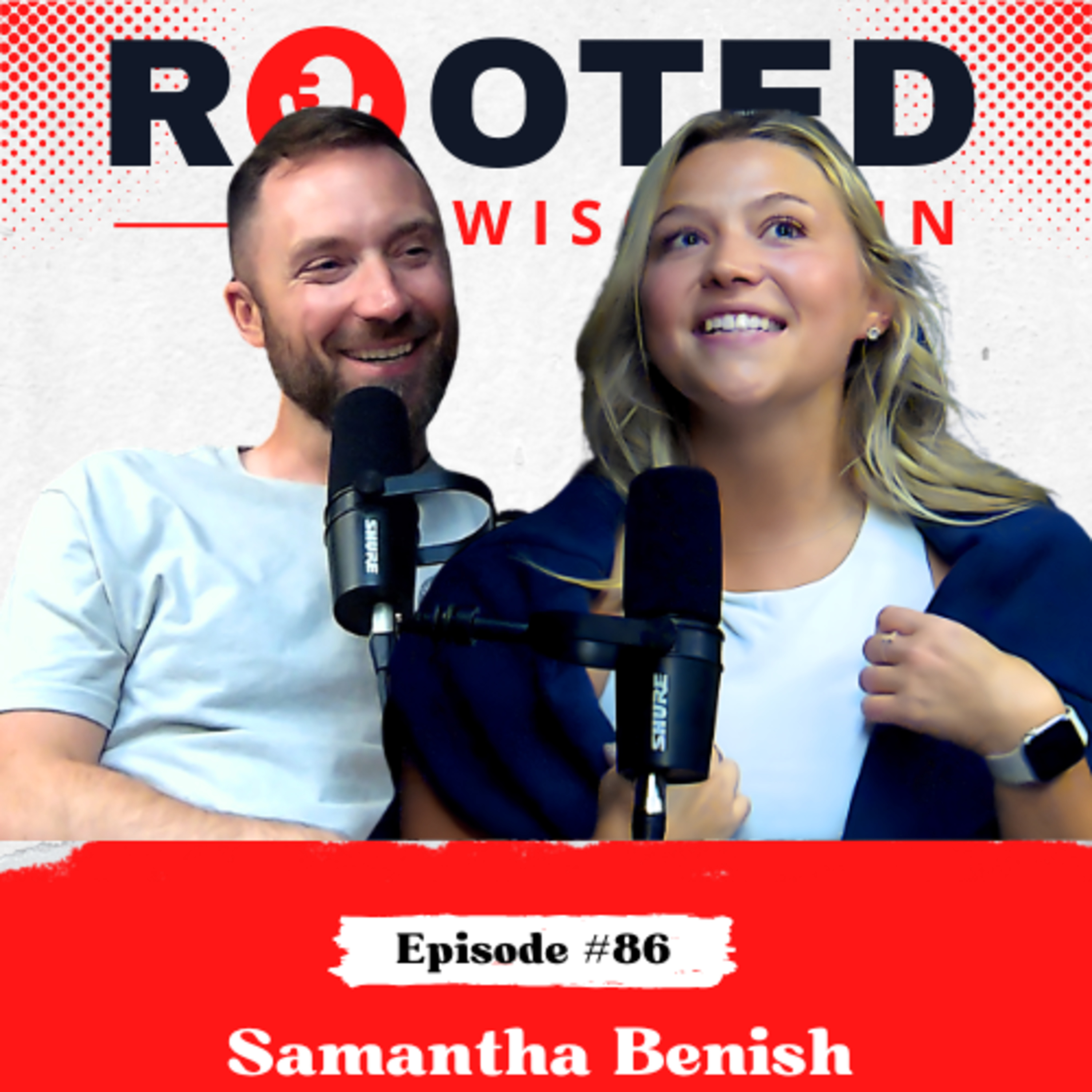


Samantha Benish is a social media marketer for Kwik Trip, ASMR content creator, and former Oscar Mayer "Hotdogger." Raised in Nelson, Wisconsin, Samantha graduated from UW-Madison with a degree in Journalism & Strategic Communication, where she served as the Life & Style Editor for The Daily Cardinal and contributed to Curb Magazine. After graduation, she was chosen as one of just 12 people nationwide to tour the country driving the iconic 27-foot Oscar Mayer Wienermobile.
In this episode, we chat about growing up in small-town Wisconsin, travelling the country in the Weinermobile and working in marketing for Kwik Trip, amassing a huge audience with her ASMR content, and we discuss our shared passion for journalism and our inclination toward conspiracy theories (and our personal favorites).
https://www.instagram.com/smbenish/https://www.tiktok.com/@sammerasmr?lang=en
Big shout out to our sponsors:
Epic Mortgage – Your partner in homebuying, empowering communities, and supporting home ownership!
https://www.yourepiclender.com/rootedwisconsin
[0:00] Intro
Brad Zima: What's up, friends? Welcome back to Rooted Wisconsin. I appreciate you clicking on another episode; I'm always grateful to have you here. Today's episode is with Samantha Benish, a social media marketer in many capacities. She works for Kwik Trip, doing some of the amazing marketing work you see all the time, and she's also a creator in her own right on her personal accounts, and so much more.
I originally reached out to Samantha because of how impressive her resume is for a young professional. I knew it would be a great conversation, and it certainly was. We talked about plenty of marketing, but also conspiracy theories and humanity. She drove the Oscar Mayer Wienermobile around the country, so we talked about that experience and a whole lot more, including growing up in small-town Wisconsin. She graduated in a class of 19, went to Madison and kick-started her career from there, starting with a passion for journalism and moving into a lot of different spaces. I'm excited to help share some of Samantha's story, and excited to have you here.
Big shout-out to our sponsor, Epic Mortgage — human-centered mortgage services, helping you into your next home. Let's jump into the episode with Samantha Benish.
[1:40] Betty Crocker and the psychology of consumer behavior
Samantha Benish: Do you have a favorite class that you teach?
Brad: Hands down, Consumer Behavior.
Samantha: Oh, yeah. That's kind of why I was interested in marketing in the beginning too — the psychology.
Brad: That, and a lot of my career was brand building: perceptual maps, unique value, how you're going to set yourself apart from a crowd. That's always been the thing I clung to. It's always the most fun class, because I think I see students change the most in it. Even if a certain percentage of them aren't going to be marketers and find a different route, they'll never be the same consumer. Once you're a marketer, you buy things differently.
One of my favorite activities in that class is about Betty Crocker, and I'm pumped to tell this to a seasoned marketer. In the '50s, I think, they made an all-in-one cake mix, and it wasn't selling well. It wasn't flying off the shelf. So they did a bunch of consumer behavior focus studies to see what people's perceptions of it were. There was a researcher with more of a psychology background named Ernest Dichter, who's kind of the founder of consumer behavior psychology. In his focus groups, the target customer was obviously the female head of household, especially at that time — different time, different culture. They found that those women found a lot of fulfillment in providing for their families, and their perception of the product was that it was too easy. They didn't have to work hard enough for it.
Dichter took that back to product development, and they came up with the idea of adding an egg to the mix. All you had to do was add an egg — and it started flying off the shelves, because the consumer was involved in making the product. They didn't just dump it and go.
Samantha: That's crazy.
Brad: Isn't that wild?
Samantha: Yes.
[4:09] Teaching social media marketing
Brad: So that's hands down my favorite class to teach.
Samantha: That's awesome. Are there any other classes that stick out to you?
Brad: I love marketing, so I like all of them, but obviously some more than others. Social media is kind of a double-edged sword. I teach Social Media Marketing, and I like it, but it's really hard to meet student needs, because everybody has a different angle they're taking it for. I teach in career and technical education, so people come to my college to learn a skill. Not much of it is theoretical. The foundation of being a marketer and thinking like one is theoretical, but then it's day-to-day implementation: algorithms, platforms, how you drive engagement, how you calculate engagement rate.
It's fun, but one, it's constantly changing. Two, it's so cryptic that you never really know. And three, it's hard to meet student needs, because one student is going to run social media for a local landscaping company, another wants to start their own soap business, and another might work for a place like Kwik Trip. How do all those things come together, and how do I provide the best experience for such a wide-ranging audience?
Samantha: That's really interesting. I'm curious to see your syllabus, because it's like you said: social media is constantly changing, and it's really hard to fully explain it in 2026 — but it was hard to explain 10 years ago, too, when it was first starting. Honestly, I feel like every marketer is just guessing. Truthfully, for real. I've only been in the industry a couple of years. I'm 25, so I'm fairly young in the corporate setting, but I've been in social media since it first started.
[6:26] Saying yes to everything
Brad: The resume is crazy for a 25-year-old.
Samantha: Thank you. I have this bad habit where I say yes to everything, and it's led me to incredible things, but I am booked and busy. I know you've been following my personal accounts for a bit. Every single Sunday I do a weekend recap of everything I did, and I'm all over the place. I'm going to Nashville next month, I was in Boston, I'm traveling 24/7 — but also with corporate, saying yes to career opportunities. I'm always on the move, seeing what's coming up.
Brad: And the time to do it is earlier in your career. There'll be a time when you get comfortable, or start saying no on purpose, but it doesn't have to be early in your career. When I reflect on my marketing career — "regret" is a strong word — I could have said yes more often and done other things. I was more about "work equals money," and life was outside of that. It took me to great places, and I'm still having a successful career, but it certainly would have looked different if I'd taken a different approach.
Samantha: Interesting. I know you're supposed to be interviewing me, but I keep asking you questions.
Brad: I love it.
Samantha: So you said no to a lot of opportunities. Reflecting back, what's one you wish you'd said yes to?
Brad: That's an awesome question. I wish I had taken on more at my first internship with ESPN, which I was telling you about earlier. It was a really cool opportunity — pretty much the sky's the limit. If you stand out from the crowd, you can do some really cool stuff. It was an unpaid internship, which rubbed me the wrong way at the start, but I needed internships to graduate, and that environment seemed cool to me, so it was worth the trade-off. But I didn't look at it as the same kind of opportunity. I looked at it in a more selfish way. At the time, my favorite NBA team was the Bucks, and I loved Kobe. Kobe came to Milwaukee and hit a turnaround game-winner, and I got to be in the courtside media area. That was awesome. That was my payment: "OK, I'll do this for free if I get to do these things." But if I'd taken advantage of that opportunity differently, my career would look different.
There's the adage that everything happens for a reason, right? I firmly believe sports radio wouldn't have been the place for me anyway, so I'm glad I didn't. But purely through the lens of career trajectory, I should have treated that situation way differently. It all comes out in the wash, I suppose.
[9:42] How the Wienermobile found her
Samantha: What you said about everything happening for a reason — I believe that to my deep core, and there are so many examples of it in my life. Jumping into my career, the really cool story I always share about the Wienermobile is that I had no idea what the Oscar Mayer Wienermobile was growing up. I'm from Wisconsin, so everyone is always shocked to hear that. When I was young, I never wanted to be a Hotdogger, which was the job title.
Brad: That's what it's called?
Samantha: It's on my resume: I was a Hotdogger. A lot of my fellow drivers grew up always wanting to drive it. I had no idea it was even a possible career. Senior year of college, I was walking in Madison, leaving a social media marketing lecture, in the dead of February. I looked up from my phone and saw this 27-foot-long hot dog driving in front of me. I looked around like, "Did anyone else just see that?" It was the first time I'd ever seen the Wienermobile.
I walked back to my apartment, and my advisor had emailed me that day: "Sam, they're recruiting for something called Hotdoggers on campus tonight. I think you should do it." I went that night, and I don't think I would have gone if I hadn't seen the Wienermobile in that moment. That has brought me to where I am today, three years later in my career. It's small things like that. You could look up from your phone, see a giant hot dog and change the trajectory of your life.
[11:28] Fate, déjà vu and "do it scared"
Brad: And the act of saying yes to something is a barrier for a lot of people, because they're scared for a bunch of different reasons. I think about that a lot — how much of life is written, and how much of it do I have autonomy over?
Samantha: That's the million-dollar question right there.
Brad: I'm the same way. I believe a certain percentage of this life is written in the stars for us already. It's really fun to think about. Have you had déjà vu at some point in your life?
Samantha: Multiple times.
Brad: How do you explain déjà vu if things aren't written?
Samantha: Fair enough. It's crazy. You're so right.
Brad: To continue down that story: does your natural personality lend itself to being OK with something uncomfortable like that?
Samantha: Absolutely. I grew up in a really small town called Nelson, Wisconsin — exactly 322 people. A lot of people in my hometown are very OK with being comfortable: living there, growing up, having a job there, which is totally OK. But from a really young age, I always knew there were more things you could be doing and more opportunities, and that requires you to put yourself outside your comfort zone and say yes to things that are really scary.
Someone told me something when I was 16 that I've never forgotten: it's OK to do it scared. Being scared doesn't mean you're not betting on yourself. It's OK to feel those emotions — to be really nervous about what you're about to do — and still do it anyway. I was the first person from my hometown to go to UW–Madison in six years, and it was very scary. The first lecture I ever sat in could hold my entire hometown. There were about 400 people, and I was looking around like, "Oh my gosh, my whole town could fit in here." Even that was scary. But I take that into everything I do now: it's OK to do it scared.
[13:34] You take up less space in people's minds than you think
Brad: Absolutely. That's such a good mindset. One of the things I coach students through a lot, and have used in my own life a copious number of times — when something intimidates me, or it's a big audience — is that your perception of how much you occupy other people's minds is so much bigger than reality. Outside your very close circle, the mind space we take up in other people's brains is so minuscule that it doesn't particularly matter.
Samantha: People are more concerned with thinking about themselves than about you.
Brad: One hundred percent — and how the situation or relationship relates to them. So I live by the idea that any time I come into contact with somebody, if I can leave them thinking about that interaction somewhat positively, and I treated them with respect and kindness, what else can I do? I'm just going to be me.
Samantha: Exactly. That's something I really resonate with: leaving a positive impact on whoever I meet, wherever I go. It's such a core value of who I am as a person and everything I do — career, travel, friends and family.
Brad: I think Wisconsin made us that way. I really do. It's built into our culture, and it's such a good thing.
[15:19] Midwest nice vs. Southern hospitality
Samantha: It really is, and I've seen it all over the country, especially in the Wienermobile. You cover two regions in your year. For the first six months I traveled in the South, and for the last six months I was in the Midwest. So I was deeply rooted in Southern culture for six months, and there's a very big difference between Midwest nice and Southern hospitality. I would take Midwest nice every single day. Nothing wrong with the South, but who we are as Wisconsinites is amazing. There's truthfully no one like us in the world.
Brad: There isn't. I'll take the "you betchas" over the "bless your hearts" any day.
[15:54] Learning how to learn at UW–Madison
Brad: I have a question there, because we have a bit of a shared experience. I remember my first lecture too. My high school was a little bigger — I think I graduated with about 100 kids.
Samantha: Wow, that's big.
Brad: Not to most people. But I also remember sitting in that first lecture and how classes went from there. I saw that you were valedictorian of your class. I had a similar trajectory: I graduated near the top of my class and got an academic scholarship, but I didn't know how to learn in that environment. I started as an engineering major, and it just didn't fit me — I thought it sucked. Beyond that, the self-direction you need, the way you absorb learning, is so different. It's much more on you to find the answer than to hear and remember it. I had never thought about that. Everything had come super easily to me. I never brought a book home in school, ever. I don't know how, but I was fortunate that way. Then I got to college, and talk about an awakening: I had to relearn how to learn. Did you experience that, or did you work harder in high school and already have that base?
Samantha: That's a really good question. No one's ever asked me that, so I really appreciate it. It was a mix of both. For reference, I graduated with 18 other people, so being valedictorian isn't a super big flag, because they were all extremely intelligent.
Brad: Top 4%.
Samantha: Yeah. But being from a small town, we didn't have the resources some of these D1 schools have. We only had two AP classes available. Thanks to my teachers, we learned how to study correctly, so going into UW, I did feel like I had the tools. But to your point, you have to have a fire in you to go the extra mile — to study, to go to the library when your friends are at a party, and vice versa. Madison specifically was very work hard, play hard. I was fortunate to have friends who were competitive academically, so we pushed each other to make sure we got our work done and did well. I graduated with academic distinction from UW, which was pretty cool. I got to wear the red stoles at graduation. That was a testament to my teachers back home, and to my family, who supported me and encouraged me to be the best version of myself in every sense. Long-winded answer to your question.
Brad: That's what we're all about here: long-winded answers. I should have had that awakening earlier, because the lowest grade I ever got in K–12 was in AP pre-calc. That was the scenario where you have to study differently for an AP class versus a regular one, and I just wrote it off as "calc isn't for me." But the writing was on the wall. I wouldn't change it, though. It was a great time in my life. My order of operations was wrong — the balance of partying versus work was flipped, which is not the way to go — but I needed that to become the person I am.
Samantha: I wouldn't want everything to always come easy, otherwise I never would have learned the value of hard work.
Brad: Exactly right.
Samantha: Another one-liner I live my life by is "work hard, but stay humble." That was very apparent at UW: working all these jobs and internships, putting your studies first, but doing it all humbly, with a smile on your face, and giving credit to those around you.
Brad: That's another thing Wisconsin gave you. They're going to put your face on the Wisconsin flag or something.
Samantha: Oh my gosh.
[20:37] Why journalism
Brad: So why'd you pick journalism?
Samantha: Like I said, I'm from a really small town, and most of my friends and family didn't want me to go into journalism — especially my dad. I'm calling him out here, and he knows it. He wanted me to go into business, especially marketing, because I knew I wanted to go to Madison, and it has such a world-renowned business school. But I knew my heart was in journalism, because, like we were talking about before we started recording, I believed I had the power to use my voice to share other people's stories. I've known that from a really young age. My first published article, at 18, was in my local electrical cooperative's newsletter, Riverland Energy. From there, I knew I wanted to use my voice to uplift others.
Freshman year, on my first day of classes, I walked into the Daily Cardinal, one of the student newspapers on UW's campus, and said, "I want to write." I was there for four years and was lifestyle editor my junior year. Not necessarily fluff stories, but not hard-hitting journalism either. I found joy in sharing other people's stories, or local businesses' stories.
With journalism, I didn't know which route I wanted to take. So I worked at an ad agency in Madison for a summer, and I worked at Channel 3000, a CBS affiliate in Madison, as a reporting intern for six months. I was front-facing on the news, which was really cool at 20 — seeing myself on TV sharing local community stories. The reason I chose journalism comes down to sharing other people's stories, which I was able to do. Even now, as a marketer, it's a little different. I'm not doing long-form or video journalism, but I'm still sharing a brand's story or my own story. I won't lie, though: I miss journalism a little bit.
Brad: How could you not? I share the same passion; that's one of the reasons I started the podcast. I want to share other people's stories and be the conduit. Maybe you can add some depth to this, but I think you had incredible foresight, because journalism has changed. It has compressed, and social media as the outlet for journalism is by far the most important funnel to people actually taking in content. So you're more nimble now than you could ever be.
Samantha: Exactly, 100%. Madison's journalism school is one of the best in the Midwest and among the top in the country. The number one thing I took away from my four years at UW is that they taught us to be autonomous in every position. One of my really good professors, Stacy Forster [verify spelling], said that what you do at your first postgrad job will change five years after you're there, and it will change again at 10, 25 and 30 years. So they taught us to be flexible, to learn and to adapt in every position moving forward. And to your point about social media: it changed five years ago, and it changed yesterday. The algorithm is constantly changing. A good marketer is really a good learner, who will adapt and keep moving forward with that ever-changing landscape.
Brad: Absolutely. It's awesome that you remember what your professor said. I hope my students remember my stuff like that, because I don't remember anything any of my teachers ever told me. That mind space shifted. But if you continue on the social media path, and you ever have another interview, and your core sentiment is, "I want to use this as a conduit to tell stories," you can't have a better interview answer. If the rest goes well and you're a fit, you're going to get the job, because that's what people want to hear and what you really need to do with the platform.
[25:00] Award-winning stories: nurses during COVID
Brad: Do you ever get a chance to scratch that creative itch these days, with more hard-hitting or more robust stories?
Samantha: Not as much anymore in my current position at Kwik Trip. But back when I was doing journalism in college, some of my best stories came from that more hard-hitting side — not politics, but real, raw stories that needed to be told. I was lucky enough to receive the Milwaukee Press Club's 2022 collegiate journalism award for the state of Wisconsin for two of my stories. One was a video I did for News 8000, and the other was a written piece for a local online publication.
The written story was about nurses during the COVID-19 pandemic — how they were in the weeds doing the hard work and really struggling, and weren't given the recognition they deserved from the public, the news and the media. I was able to write a really powerful story highlighting nurses in the field, from CNAs and nurses to nurse practitioners, and then up a level to their management. I wrote that story four or five years ago, and I still bring it up in conversation, because it's near and dear to my heart that I was able to tell it and highlight those individuals. It's important to keep bringing people into the spotlight where they deserve to be. That was a long answer again.
Brad: That's amazing. Keep them coming, as long as you possibly can.
[27:08] Telling coworker stories at Kwik Trip
Brad: You guys are obviously crushing your marketing at Kwik Trip, so you certainly don't need me. But for your benefit, you could see that coming to life with quick but deep interviews with employees who have cool stories. Talk about social media gold. You'd be scratching your itch of learning and sharing people's stories, and it would still be social media–friendly, because you could clip it and have the long form somewhere else. Everybody wants to hear that stuff.
It's funny — I wish we'd met earlier, because I had a student who works at one of the Kwik Trips here. She's a phenomenal student, so smart, and wherever she goes, she's going to absolutely crush it. One piece of advice I gave her when she was looking for an internship was to leverage her current opportunity: "Go on LinkedIn, find who does marketing for Kwik Trip and say, 'I work here. Can I do my internship with you?'" That's how you make things happen in your life and impact your trajectory. But I didn't know you then; I hadn't seen your stuff. She ended up getting a different internship, and it was really good. It's just that flip of the lens: how can I best use my talents to positively impact my surroundings?
Samantha: Absolutely. And to your point, within the Kwik Trip realm, we have the Kwik Trip and Kwik Star pages, but we also oversee the Kwik Trip careers pages [verify page name], where my AV team and I highlight coworkers from around the area. So we're kind of doing that at scale. But that's a really cool point, and it's something I do to use my journalism background.
Brad: Awesome, so it already exists. See, I told you you don't need me.
[29:07] From going viral to corporate social
Brad: I don't remember your resume's timeline, but did getting into the weeds of social media — seeing everything behind the curtain — start around the Wienermobile?
Samantha: I did a bit in college on my personal channels, receiving PR packages and casually posting. I had a mega-viral video when TikTok first started and gained around 11,000 followers overnight, so I had a very small following in college. But on the corporate end, that's when the Wienermobile started. I had an understanding of social media before that role, but not in the context I have now — a full social calendar, scheduled content days and so on. Personal is a lot different from doing it for a business.
Brad: And it's so much harder to do for a business. Did you find that?
Samantha: I did. It's a learning curve, for sure. To our earlier point about social constantly changing, the same goes for your workload and how you work in a corporate setting. With the Wienermobile, creating content was a very small part of what we did. It was more of a PR firm on wheels.
Brad: Experiential marketing.
Samantha: Exactly. A lot of it was doing interviews for radio stations, interacting with consumers and creating a memory for them. Social came after the fact, and we worked closely with our team at the Chicago office to facilitate that conversation. I really got into scheduling and the behind-the-scenes work in my role at Kwik Trip. That's what I live and breathe now. The Wienermobile was dipping my toes in, and now I'm jumping into the deep end, doing it all.
[31:16] What social media work is really like
Brad: It's a different type of work, right? A lot of people get into social media marketing thinking about it through the lens of their personal use. But when you get into content calendars and influencer contracts and everything else, it's not always what people picture. I don't want to ask whether you find satisfaction in the work, but — does the vibe of the work match what you expected and what you enjoy?
Samantha: One hundred percent, and I have to give kudos to my entire team right now. Social media can be very isolating, but when you're on a really dynamic, engaging team, it's a breeze, because you get to bounce ideas off one another and you're not in it alone. In the space I work in at Kwik Trip, I have a really awesome team. We do website, influencer marketing and social, and we all help each other. Without that incredible team, I wouldn't be where I am today. To your point, yes, I find it to be exactly what I thought it would be.
[32:41] Dealing with haters
Samantha: That's not to say there aren't a lot of challenges with social. I've listened to previous episodes with your guests, and the negative side of social media is very real and not talked about enough, in my opinion. Bringing light to that conversation is really important — not just talking about all the good things.
Brad: For sure. What are some of those for you?
Samantha: The number one thing — and I've gotten pretty good at combating the haters — is seeing what people say about you online when it's negative. That was a really hard pill to swallow when I first started posting on my personal account, and it bled over into the corporate setting. Being from a small town and knowing the same 18 people my whole life, it was a big transition to open my life up to the entire internet. That's very scary, and dealing with backlash from just posting online was really intense.
Even with the Wienermobile, it was a big learning curve, because sometimes we had guests who weren't happy with Oscar Mayer as a company — not me specifically — but they'd take it out on me. I had to learn to take people's comments with a grain of salt. I learned from that, and now I can help guide my team when we get a really negative comment about us as individuals on the corporate account: "It's not a you issue, it's a them issue. Don't let it get to your head." But it's really hard, especially for people new to this industry.
Brad: The old "hurt people hurt people" adage.
Samantha: Absolutely.
Brad: They're reflecting themselves. And your space is unique, because you have a lot of team members in your content. You almost have to coach around that — especially if you get someone from finance who doesn't usually do videos: "OK, just don't look at the comments, dude."
Samantha: Exactly. Like I said, it's a muscle you have to exercise to be OK seeing those comments, because we're all human. I have a lot of empathy for the people on the other side of the screen making them, because something is going on with them too that they probably need help with. Take everything with a grain of salt. I always choose to see the good in people. At the end of the day, we're all human, and we're all trying our best.
Brad: And that comes out in your communication back to them, and that's what builds the brand. You turn lemons into lemonade. A page like Kwik Trip's is almost a magnet for the ones you don't want to deal with, because it's this big brand. I think a lot of times people feel like they're not talking to a person when they engage with a business, so they lack empathy, because empathy mostly exists for humans. "There's not a human behind the screen; I'm talking to Kwik Trip."
I found that when I worked in radio. A couple of my jobs were in relatively small communities where I knew people, and when I'd see the comments they made, I'd think, "This doesn't reflect the person I know." But it's obviously in them, because they're letting it out. What's the differentiator? That's what I came up with: they're talking to the establishment, not to a person.
Samantha: No, it's the social media strategist answering you. I'm here to debunk it: when you message Kwik Trip, a real human behind the screen answers. At some large corporations it might be an AI bot or whatever. But I think that for smaller businesses starting their own social pages, making customer service your top priority will set you apart from any business that's using AI or not taking guest complaints seriously. At Kwik Trip, we take every guest question, comment and concern into consideration, and a real person reads it and responds.
[37:55] Patience on "hot dog time"
Brad: As long as you have that lens. Like driving down the highway when someone cuts you off: "That person's a dickhead." Well, maybe they're a dickhead today because they got in a fight with their kid that morning. Who knows what happened?
Samantha: Exactly. I have a fun example based on what you just said. I've always been a really good driver; I passed my driving exam with flying colors. In the Wienermobile, you go through a two-week training program called Hot Dog High, and two of those days teach you how to drive the Wienermobile. We liked to say we were on "hot dog time" — slow down, be a defensive driver. I learned patience driving the Wienermobile. It's one thing when people are waving and taking pictures of you on the road. But if someone is going really slowly in front of you, instead of getting angry or upset that you'll be late, remember they might have a cake on the way to their daughter's birthday that they need to keep safe in the back seat. It's having that mentality of empathy. We can always have a me-me-me mindset, but if you put yourself on the other side of the curtain and see it from their perspective, it might drastically change things.
Brad: One hundred percent. I didn't even think about driving the Wienermobile. People are probably always trying to look at you and drive next to you and take pictures.
Samantha: Oh my gosh, yes. And you have to be sure not to scratch your buns. There were a lot of puns. I have buns and buns of them, if I'm being honest.
Brad: I guess you had to have good puns at the ready when people were around. You've got to have good small talk in the Wienermobile.
Samantha: Absolutely. Frank-tastic comments, talking about the dog mentions of the Wienermobile, et cetera.
Brad: Who were the people who weren't pleasant to the Wienermobile? I can't imagine being mean. Vegans or something?
Samantha: We had a couple of run-ins with people like that. But it was very rare. I'd say 99.7% of the time, people were excited, because how can you not smile when you see a giant hot dog outside of a Walmart, or at a festival or in a parade? Some people are going to be upset based on their own situation and day, but leading with empathy and grace is the best you can do.
[40:28] Starting an ASMR account
Brad: I love that. Let's switch gears to your personal social media. I don't know a ton about the ASMR space, and I might not have found all your content or pages. How did that start, and what do you do in that space?
Samantha: Great question. ASMR, if people aren't familiar — I'm going to botch the name — is like a sensory meridian in your brain that kind of helps you relax. [Editor's note: ASMR stands for autonomous sensory meridian response.] I've watched ASMR to fall asleep for years, all through college. I got broken up with last October, and I did two things. I woke up one morning and said, "I'm going to start running, and I'm going to start an ASMR account. Why not? Life is too short." So I started it, and it kind of blew up overnight. I just hit 53,000 followers yesterday, which is so exciting.
Brad: On Instagram?
Samantha: On TikTok. On Instagram I'm just under 2,000. Instagram has been pretty hard to grow, especially with ASMR.
Brad: People are stingy with the follow button on Instagram.
Samantha: They are, for sure. My views are up there on Instagram Reels, but it's slow. I had a couple of viral videos, because I cross-post all my content to Instagram, TikTok and YouTube Shorts. On Shorts I have about 5,000 subscribers, but most people go to YouTube for long-form content, and I've only posted a couple of long videos because it's so time-consuming with my super-busy life.
Ultimately, I created the ASMR account because it goes back to wanting to help people. It helped me through some pretty dark moments in my life, so if I can do that for others with my content, that's 100% what I want to do. I'm Samantha Benish to some people, Sam to others, "ASMR" to others. But at the end of the day, I just want to leave a positive impact on people's lives.
Brad: That's awesome. I didn't find that page. There are a bunch of different kinds of ASMR — what's your shtick?
Samantha: My niche is personal attention ASMR. It's hard to describe; you'd have to look at the videos. Another thing: a lot of my friends and family had no idea what ASMR was before I started posting it, so being able to educate people on what it is and what I do has been helpful. I've had lots of conversations explaining it to my parents and friends. All my accounts are public.
Brad: How familiar are your parents with social media? Like, a nightmare story on ABC News, and "Oh my goodness, is this what Samantha is doing?"
Samantha: Exactly. I love my parents, but they're very protective and just want to make sure I'm being safe in everything I do. They didn't even want me to drive the Wienermobile, because I'd be away from them for an entire year. I was like, "I promise I'm going to be OK, guys. I'm in the Wienermobile. What could go wrong?"
It's been an awesome journey, and I have individual content goals for my ASMR. My goal is to hit 100,000 by the end of the year. My numbers have been doing really well, and it's only been an upward trajectory, which is really exciting. It's been fun to explore that side of social outside my personal pages and the corporate side. I feel like I have three different realms of social media. With ASMR, it's been really fun to crack the algorithm and see what content does well, what I can repeat and which hashtags perform. I feel like I kind of have it figured out, which is exciting.
[44:35] Followers vs. views
Brad: Cool. There are a couple of things in there I want to dig into. We'll get into the marketing weeds a little today.
Samantha: Perfect.
Brad: I don't get to do this very often outside the classroom, so this is cool. One: Instagram followers being stingy with the follow button. TikTok changed the game algorithmically. We all know the For You page changed how other platforms operate. Meta is in a position where it can be a follower: it has all the money, so it can let others figure out what works. I'm surprised it hasn't followed that more. Maybe it's on purpose, because it differentiates the platform; using Instagram is significantly different from using TikTok. If you follow someone on Instagram, you'll still get their stuff pushed to you more, whereas on TikTok it really doesn't matter who you follow. Your For You page is what you watch, and they know you inside out and backward. So people know that following on TikTok won't inundate them with your videos, whereas on Instagram it still happens a bit.
But it's amazing: in October, the podcast's Instagram did over a million impressions, and it has 1,700 followers. It's weird when I'm pitching a business for sponsorship and everybody still asks, "How many followers do you have?" In some spaces it matters, and in some it doesn't.
Samantha: Followers don't matter in 2026. Views and impressions matter the most. How my team and I talk about it: 50,000 or 10,000 followers in 2026 is realistically maybe 500 followers. Like you said, people are so picky about what they interact with, because they know the algorithm will keep pushing it. It always comes back to high-quality content you want people to see. If they like it, they'll let you know, and if they don't, they'll make that very apparent.
Brad: One hundred percent. If you want them to click follow, it better resonate with them and meet who they are as a human.
Samantha: One hundred fifty percent. Instagram Reels has been a slow roll. People have said it for decades, but consistently posting is so true. Your audience knows you'll be there for them. That's what I've been trying to do on Instagram Reels: making sure I post daily and use hashtags, because hashtags are so important.
[47:28] Do hashtags still matter?
Brad: That was the next thing I was going to get into — I'm glad you segued us back. That's a really interesting discussion among marketers right now, because opinions range from "hashtags are completely dead" to "hashtags are more important than ever," and everywhere in between. Where do you stand as a social media marketer?
Samantha: Hashtags are so, so important. I probably would have been in the middle, or on the "hashtags don't matter" side, before I started my ASMR account. I can't speak to Facebook or Instagram as much, because like you said, Meta is still figuring it out. But on TikTok specifically, the algorithm pushes a niche. When you start a page, you have to have a niche, because that's what the algorithm will push.
For example, on my personal TikTok, I post a bit of everything: food I'm trying, coffee shops, living in the Midwest.
Brad: Vlog-type stuff.
Samantha: Exactly. The numbers are OK, not great, because the algorithm is confused by what I'm posting. But when I created my ASMR account from zero followers and zero likes, my goal was to post only ASMR content — and that's the only content I engage with on that account's For You page, too. So the algorithm is crystal clear that I'm an ASMR creator. I like that the platforms have limited hashtags to five, because it really narrows down where the algorithm pushes your content. If you're all over the place with #food, #Ohio or whatever, it gets confused, and that's why your videos aren't performing to the best of their ability. Take this with a grain of salt; it's just my experience.
Brad: Like you said, we're all guessing — but it's your guess.
Samantha: Exactly. That's what I've seen work well, and I'll do it until it doesn't. Then you adjust and find a new method.
[49:31] Long-form stories vs. viral clips
Brad: One hundred percent. That's one of the things I struggle with on the podcast, because by intention I talk to a diverse blend of people about a lot of different things. I'm interested in a lot of things and I love learning, but social media–wise, that's not helpful. About four months ago, as more of a test, I stopped using hashtags on most of my content. I'd guess they're probably still effective; I probably saw more reach with them. But I think they're less important for the podcast because it's so diverse. One episode would be #marketing, and the one two hours earlier was #farming. The algorithm's very confused.
Samantha: Very confused.
Brad: At the same time, I've found some success circling in — and this is a bit of a bummer, so let's go on a deep dive. My intention with the podcast is shining a beautiful light on Wisconsin through the lens of our people, because we're so much more than beer, cheese and brats, even though those things are awesome. I think that comes with deep conversation — talking about things that actually matter to the person. I love hearing you say, "When I was going through a tough time in my life." I've had people cry on the podcast. We talk about real stuff, real life, and that's super important. That's not what social media rewards, unless it's to the nth degree. I'm not going to cut together a reel of someone describing their worst moment in life for views. I'm just not. If somebody wants to see that, they need the full context and need to listen to the conversation. Then I'm comfortable sharing it, because it's from the person, not, "I saw 30 seconds of this, so I understand this whole human."
I've spent a lot of time putting together 30-second to one-minute reels — which is already too long — because I want to tell the whole story, in a journalistic sense. Some of them do OK. But recently I said, "OK" — it's kind of why I started Curd Your Enthusiasm, actually. I can have an awesome hour-and-a-half deep conversation, then spend 10 minutes on jovial, funny stuff I can cut into clips for Instagram that will do better than the other stuff anyway. Then it's a funnel to people taking in the whole conversation.
That's a long way of saying — speaking of long answers — you have to work with the tools you have in your pocket. I had to come to terms with it: my mission is to connect people through long-form content. If I have to bite the bullet and post a reel about where "up north" is in Wisconsin, which I don't care anything about, and it does 100,000 views, OK. That's going to lead to 1,000 more people listening to the podcast, and those 1,000 people are who I'm trying to reach anyway.
Samantha: Exactly. You just hit the nail on the head for a good marketer. I applaud you, because that's fantastic. It really is.
Brad: It's hard to push the ego aside sometimes, though. Part of me knew the whole time that would work, and the whole time I was thinking, "I'm going to do it my way." That's dumb.
Samantha: It's so hard. But the fact that you understand that and can explain it so clearly is so awesome, and I feel like not many people understand it. Ultimately, people's attention spans have gotten so short on social media, and the world is hard enough as it is, so they want to see fun, lighthearted content. But to your point, at least you're getting the people who actually want it to the long form. You're doing fantastic, I'll tell you that.
Brad: Some of it was a case study for me. Everybody says their algorithm is weird. Mine will feed me two- or three-minute reels, because it knows I'll watch if it's the right hook. Some of it is a case study for the classroom — what works and what doesn't — so I'm up to date and active when I teach students about what's happening in the space. Part of me wanted to give it a solid two-year effort from the beginning: can I do it without doing this? It took me about two and a half years to finally say, "OK, it's time to make some social content," while the vast majority of what I make is still the conversation I set out to have. It's worth the trade.
It's funny: I was on another podcast in Wisconsin, and they've done really well on social media specifically.
Samantha: What podcast is it, if you don't mind?
Brad: I don't want to air them out, because I'm going to talk about their content. But they have some pages that have done really well with social media content. When I went on their podcast, the questions were weaving; there was no continuity. Looking at it through a journalistic lens, the way you and I would, I didn't know where it was going. I never talked with them about it, but I think their intention was similar to what I'm doing with Curd Your Enthusiasm: how can we lead into a viral moment? In a lot of ways, that's very smart, because eventually it's going to work. Their aesthetic is really good, their studio is unbelievable, and they'll find those viral moments that go ham.
That's part of the ego thing. And even pushing ego aside, missions are different, and what you're trying to achieve is different, which is completely cool. I love those guys; nothing against their pod. They're super nice. Actually, let's just give them a shout-out: their podcast is called Fridge Brick Time [verify name]. The content of theirs you might have seen is, I think, called It's Wisconsin — two guys with big old beards who do a lot of Packers content. Super nice guys.
It's just interesting to think about the two different angles. I'm looking for an hour-and-a-half weaving conversation about a person's life. And in reality, their angle is probably smarter for growing and building an audience: aim for viral moments and lead into them with very specific, pointed questions — this or that, your opinion on blah, blah, blah. The gem of that whole time period is the five minutes that went viral, which has a couple of clips in it. It's hard to navigate, but it's the life you live in.
Samantha: Exactly right. And to your point about posting unique or lighthearted content, that's the trial and error I've had to do with my personal content. I've lived a really incredible life in these 25 years, and a lot of my viral moments on my personal TikTok have been about sharing cool experiences I've had. That's really fun, but it's trial and error: what will do well, which format will do well. Editing is really important in short-form content, too, to keep it engaging without overwhelming the user. It's been a ride, for sure, and I feel like I'm still trying to figure it out.
[58:42] How brands became more human on social
Brad: We always will be. It changes way faster than we do. As soon as you get a good grip on something that works, it's on to the next thing. That's been a fun part of it for me, though. I like learning, and that's one of the things that has kept my attention on social media marketing over the years. When I started my first marketing agency, people were just starting to use Facebook for business instead of personal use. The changes from 15 years ago to now are astounding — how you operate is so different. And it's going to be way different tomorrow. That's fun, because you get to learn about it.
Let's talk about this before we move on, because I think about it a lot too. We talked about the positives and negatives of social media from the creator side. Let's talk about it from the user side. You mentioned that attention spans are shorter than they've ever been, and some of the vitriol on social media is harmful at times. Here's a personal example of my algorithm being weird: it knows it's going to suck me in with fight videos — people fighting on a sidewalk. I don't even want to watch them, but they come up, and the algorithm knows I'll stop on them. I would never go to YouTube and type in "fight videos." So from the user side, how do you see social media affecting society?
Let me add another layer: I'm fortunate that in my youth, social media wasn't really a thing. It was Myspace. Not everybody had a camera in their pocket at a high school party. So you probably have an interesting lens on this from that angle too. How do you see social media use by the general public swaying society? It's kind of a deep question.
Samantha: It's a very deep question, and a pretty complicated answer that will depend on who you ask. To your first question, I think social media has evolved, especially in the last five years, post-pandemic. Not to go back to the brand side, but brands are appearing to users on a more human-to-human basis. They're more personal than ever. Accounts like Kwik Trip, Duolingo, Lionsgate [verify brand] — all these huge brands are coming at social from a more personal perspective, which I appreciate as a user. It makes a brand seem more human, more like an individual. If I see very relatable, funny content from a brand, I'm going to hit follow because I resonate with it, and then I look at the product afterward.
It's like what you said you're doing with social and cutting clips. Brands post relatable content, and people ultimately go to their pages and see their products. That's how social has changed from the user perspective. Ten years ago, brands only posted nice, pretty photos and very generic graphics, and they quickly learned that wasn't working.
Brad: That's going to get two likes.
Samantha: Exactly — maybe even zero. When I see brands still doing that now, it hurts my heart. But with all these brands being relatable, that's eventually going to get worn out, and users are going to start seeing right through it. I feel like there'll be a turn in the next year or so in what brands do and how they approach the user. It's an ever-changing landscape. That answers your first question, about how I see brands as a user. What was your second question?
[1:03:06] Social media's impact on society
Brad: The societal impact of it. So many positive things have come from social media and come from it consistently. I bounce between net positive and net negative. About 80% of the time I'm in the net-positive camp. There's so much connection — I wanted to say relationship, but I think relationships on social are sometimes surface-level compared to deep human ones, so I don't want to go that far. But the societal impact: it obviously affects youth, and I have strong feelings about that. And how our brains operate, and what short attention spans mean — that was the second half.
Samantha: It's a really hard question to answer. I'm 25, and I luckily grew up with a childhood without social media, so I'm very fortunate, specifically for Gen Z. That being said, I'm very quick to adapt to social media. I think it will be interesting when my generation starts having kids, which we already kind of are, to see how that affects youth growing up. No one really knows for sure. Social media is good and bad, and truthfully, I don't know how it's going to affect us. When I'm 60 or 70, we don't even know what social media will look like.
It's hard even to guess. I keep saying "10 years ago," but 10 years ago we never would have guessed TikTok would be a thing. There was Vine, but it's evolved so much more from there. And weaving in my journalism background, so many people get their news not from broadcast but from social media. No one saw that change coming. First it was newspapers, then television, and now it's our phones and Facebook. I don't even want to go down the AI route and how that's going to change everything — but it is going to.
Brad: It already is.
Samantha: I was fooled by an AI video this morning, and I feel like I'm pretty good with that stuff. It's going to be very interesting over the next 10, 15, 20, 30 years. Truthfully, I don't know if it'll be negative or positive in the long run.
Brad: It's hard to prognosticate. Was growing up without social media a family rule?
Samantha: I was born in 2001, so it wasn't a big thing. My parents didn't have Facebook, and no one really used it. My first phone wasn't even an iPhone; it was the classic flip phone in sixth grade. The first account I made was Snapchat, in 2011, I want to say. We just never grew up with social media. Electronics, yes — the DS, the Wii — but nothing like what 14-year-old girls have now. That was not me at 14. It's crazy to see.
This is a bummer, too, and one of the negative things I don't like about social media: I feel like it's making people grow up really fast, because our brains aren't supposed to take in this influx of information we see with every scroll. It's overwhelming, and I think that's why it contributes to short attention spans. We see a video on CBS and then a funny dog video, and our brains can't keep up. It makes me sad for preteens and young kids in elementary school seeing all this information and having to grow up really fast. But to your point, there are positives — connecting people and building relationships and friendships.
Brad: And information access. I think that's been an incredible positive. We have more transparency than we've ever had. You have to dig through it and find what you believe is true, but there's more information than ever. I love the internet sleuths who get into the weeds of different issues, because those are the stories. Everybody can be a journalist now. Everybody has a platform to tell a cool story or shine a light on something. That amount of information is why I'm usually on the net-positive side — because I'm kind of a conspiracy theorist sometimes.
Samantha: Oh God, I love that.
Brad: There's no doubt some weird stuff has happened where the wool was pulled over the public's eyes in the past, and social media kind of squashes that, because eventually it's going to come out.
Samantha: One way or another, for real.
Brad: So I think that's good, but there are certainly a lot of downsides too.
[1:08:44] Conspiracy theories: Kandahar giants and megaliths
Samantha: OK, not to switch it up from marketing, but what is your favorite conspiracy theory — one that lives rent-free in your head?
Brad: There are so many good ones. Let me start with one I watched yesterday. Rogan recently had a guest on for an interesting conversation about the giants in Afghanistan — the Kandahar giants. Have you heard about them?
Samantha: Please tell me. Maybe I have.
Brad: It's wild. They're 9- to 12-foot-tall humanoid beings with six fingers and six toes — massive entities that live in the remote mountains of Afghanistan. There are biblical references, like David versus Goliath. I'd vaguely heard of these giants before, but the new part to me was how many different cultures have written records of witnessing the same type of giant: red hair, humanoid but not quite human, maybe a hybrid. This guest on Rogan — I can't remember his name right now — claims he's run into several people throughout his life, high-ranking military members, people who did tours in Afghanistan and high-ranking government officials. He's also an alien guy, and he says they'll talk freely with him about aliens. But when he brings up the Kandahar giants, they say, "Be careful what you're doing."
Samantha: Oh my God, I just got chills.
Brad: Isn't it crazy? So that's my flavor of the month. But most of my favorite stuff comes back to megalithic things: who made the pyramids, Machu Picchu, the sites in Peru like Sacsayhuamán. What about you? Do you go down the conspiracy holes?
Samantha: Yes, very much so. As a journalist, I'm inherently curious and always questioning everything, because you can't fully believe something when everyone's guessing.
Brad: Everyone's guessing, and people have motives.
Samantha: Exactly. I'm also very into true crime. I listen to true crime podcasts every day. And going a little deeper, into mythological creatures, my favorite case study is the Appalachian Mountains. There are so many weird things going on in deep Appalachia, and personally, I've had things happen to me very deep in the mountains of Kentucky.
[1:11:21] A haunting in Hazard, Kentucky
Brad: Spill the beans.
Samantha: OK, buckle up, because I have very strong feelings about this, and everyone knows it. We were there with the Wienermobile, staying in an Airbnb in a really small town called Hazard, Kentucky — smaller than Nelson, Wisconsin, a couple hundred people. The community was super excited we were there, and they were nothing but amazing. But the whole time I was in that town, I was very unsettled. Sometimes you just have that feeling that someone's watching you, and you can't describe it.
The Airbnb was a very, very old house. The neighborhood was busy during the day, but it was dead silent at night — no birds, no animals whatsoever — and that's always very unsettling to me, when there are no other signs of life. Interestingly, there were no curtains in the house. So we're sitting in the living room with all the lights on, and we can't see what's out there, but anyone out there can see inside. At 10:30 at night, my partner, who I drove the Wienermobile with, and I heard a very, very soft knock on the door. We looked at each other: "Did you hear that?" We both heard it. We crept around the side to peek out, and there were motion-sensor lights out there, but they weren't on, which we thought was very weird.
So we went upstairs, and at 3 a.m. we heard loud knocking — loud, loud knocking on the door.
Brad: I'm getting chills.
Samantha: I'm getting chills even thinking about it. I've heard many things about doppelgangers and very scary creatures that live in deep Appalachia. When I talked to some locals and explained what happened, they said, "Do not go to the door. Don't go outside. Don't answer anyone. Just stay in your room, because you won't return," essentially. I was scarred by that. I don't know if I'll ever set foot in Kentucky again. There's some creepy stuff out there. I believe in aliens, ghosts, all of it, because the world and the universe are so big that, truthfully, it's not just us here.
Brad: I have an astrophysicist coming on next month to talk about quantum entanglement.
Samantha: Oh my gosh, I'm so excited. That's going to be awesome.
Brad: Did anybody speculate on what it was?
Samantha: They didn't say explicitly. There's a certain kind of creature in Appalachia — I'm blanking on the name right now. It's not a skinwalker; is that in Arizona, in the desert?
Brad: I've only heard that term. I don't know what it is.
Samantha: They're six- or seven-foot creatures that roam the deep woods of Appalachia. Very creepy. I don't recommend looking up a photo. They thought it might be something like that, or doppelganger activity. Thankfully, we didn't hear any voices or anything. Maybe it was just a ghost; it was a really old house.
Brad: I know a doppelganger is something that looks like something else. What else is a doppelganger?
Samantha: That's exactly what it is, and typically it's a demonic spirit. This is crazy that we're talking about this right now. It's typically a demonic spirit with so much energy that it can take the form of someone you love and trust. There are so many stories of this happening: it's usually your loved one — your son or daughter, your sibling — and it tries to lead you away from wherever you are, like a party or a house. Obviously the people telling me these stories didn't go with them, because they knew something was off. They'd call the real loved one, who'd say, "I'm actually downstairs, not upstairs in the living room." But you can just tell something is a little off about them.
[1:16:01] Remote viewing, Roanoke and the pyramids
Brad: Interesting. I've never been down that rabbit hole.
Samantha: It's a good one. I'll send you some podcasts.
Brad: Please. What about remote viewing? Have you gotten into that at all?
Samantha: No.
Brad: That extends from the quantum entanglement conversation. One of the more recent high-profile ones was when the plane went down in Iran and they talked about finding the pilot by detecting a heartbeat from something like 20 miles away — I can't remember, but it was far.
Samantha: I think that's a complete cover-up.
Brad: The remote viewing story I'm thinking of happened a long time ago, also about a plane going down. I can't remember which president it was — it might have been Reagan, but I feel like that's wrong. A plane went down somewhere, and supposedly — this is a conspiracy theory — the military had a remote viewer with the ability to see things in other places. They don't teleport there, because they're still here. In the plane scenario, they gave a person a blank sheet of paper, had them draw a map and mark where the plane was, and then the military went and found the plane in that spot, just because the person was a remote viewer. It's a really fun rabbit hole, because if you're into aliens, you probably know about the orbs. The orbs might be the operating end of a remote viewer, if you know what I mean.
Samantha: So cool.
Brad: Conspiracy theorists to the max. There's some weird stuff out there, no doubt.
Samantha: There is. And truthfully, I'm kind of OK not knowing the answers. It makes for fun conversation and fun thinking. I think most things are cover-ups, and you don't want to poke around too much either. Have you heard of the Roanoke Colony? That's another one I love.
Brad: That sounds familiar, but I can't place it. Give me the CliffsNotes.
Samantha: Super brief: it was the 1600s [Editor's note: the Roanoke Colony disappeared in the late 1580s], a Jamestown-esque colony of probably a thousand people. The main individual — I don't remember his name — went back to Europe for supplies. When he came back after the winter, the entire village looked like everyone had just up and left in a second. There was food being made, and fire pits that had just burned out. They found mysterious symbols carved on trees and in the dirt for miles around, and the whole colony vanished without a trace. I've listened to podcasts that try to debunk it; some think they integrated with the local Native American communities, but that's never been confirmed. You'd think they would have found bodies somewhere, but they never found anything.
Brad: Before we move on from conspiracy theories: who built the pyramids? How'd they do it? Any theories?
Samantha: I do, granted it's something I haven't gone deep on. They did not have the power to build those on their own. Let's just be honest — that's a fact. Especially in those ancient times, with the voodoo they were doing back then, I don't know who they were working with, but they didn't have the technology to do it. I'll leave it at that.
Brad: I think there's so much evidence pointing to an advanced civilization that got wiped off the planet. It's so fun to talk about.
Samantha: This could be a whole other hour of conversation.
Brad: If I were going to have a niche podcast, that might be the niche — just conspiracy theories. Then again, maybe you'd run out of material. Speaking of going viral on TikTok, one weird thing I didn't expect to do well: I just watched The Age of Disclosure. Did you see that documentary?
Samantha: No, I haven't.
Brad: Pretty well done, with some relatively notable figures in it — I think Marco Rubio was in it [verify against audio] — and everyone seemed credible, high-ranking officials. I'll preface that by saying you never know if those people are agents spreading the story they want you to hear, but this one seems legit, because the filmmaker thinks the same way. But The Age of Disclosure — how did I get to that? We get on a roll.
Samantha: Nothing wrong with that.
Brad: I lost it. Maybe that's our hint to move on from conspiracy theories. That's so funny. I never get to talk about conspiracy theories.
Samantha: Oh my gosh, I'm happy.
[1:21:15] 50 States, 50 Dates
Brad: My wife's a big conspiracy theorist too, so we talk about them, and I love when she gets fired up. One thing I wanted to talk about before we wrap up, from the plethora of cool things you've done: 50 Dates, 50 States — 51st dates? 50 Days, 50 States? So close.
Samantha: There's the Adam Sandler movie, 50 First Dates, which gets confusing. And YouTuber Ryan Trahan did 50 States in 50 Days. So there are a lot of titles.
Brad: How did that scenario come about, and what was your experience? It's a really cool concept.
Samantha: It's one of the coolest things I've done in my life, and I can't believe it even happened. Right after I moved to La Crosse, I didn't really know anyone. I was single and looking to meet people, and my coworkers said, "Sam, you should apply for this dating show." I said no — then three drinks later, "All right, let's apply. Why not?" I filled out an application, and the next week Matt released a TikTok asking his followers to pick his Wisconsin date. In my application I was just my normal self, talking about the Wienermobile and journalism, and I was so flattered: the whole comment section was rooting for me. He ended up choosing me as his Wisconsin date.
I planned an entire 12-hour first date for us in La Crosse. He'd never been. We got to tour Kwik Trip's dairy facilities, which are super hard to get into —
Brad: So you had the in.
Samantha: I had the in, which was pretty cool. I still have a lot of friends in broadcast journalism, so we were on the 5 o'clock news on News 8000 in La Crosse. We got drinks and dinner and did a whole little ordeal, and it was awesome. I was so honored to represent our state. Even last week in Madison, I still got recognized from it. All I wanted to do was paint Wisconsin in a good light, and I feel like I did — I'm just hard on myself. Matt loved Wisconsin and loved La Crosse. He said he wanted to move here after; he lives in the Twin Cities area now. It was a crazy experience, and I can't believe it happened.
Brad: Did you do the application that night, when your friends told you to?
Samantha: Yes. It took me 10 minutes, and it opened up this huge can of worms and so many opportunities. I got many brand deals from it, because I gained 12,000 followers over three or four months. I was probably one of the front-runners that season. I'm not sure if you're familiar with the show at all.
Brad: Just when you were on it. I didn't even watch the whole thing; I saw your social content talking about it.
Samantha: In season three, Matt could only keep five dates' hearts at one time. At the end of the show, five girls made it to the finale, and he'd pick the winner. I was pretty heavily one of the favorites that season, which was so flattering. But I ended up dropping out, because I was talking to someone and it was getting pretty serious. Matt and I were never going to date; it was just something fun you do when you're 24 and single. It ended up being an awesome experience. I'm still pretty close friends with Matt and some of the girls from the season. Next month I'm visiting the Tennessee date from season three.
It was a fun way to represent Wisconsin and show off La Crosse. When people think of Wisconsin, they think of Madison, Green Bay and Milwaukee, and La Crosse gets pushed to the side. So being able to show my home was really rewarding.
[1:25:14] Selling La Crosse and the Driftless
Brad: I've said before that if you were going to convince someone from another state to move to Wisconsin, there aren't many better places to bring them than La Crosse.
Samantha: It's beautiful.
Brad: It's a beautiful city. I haven't been there in a long time. I thought about going to college in La Crosse, and I've been there maybe four or five times since — the last time was probably seven or more years ago. But if you were going to give the best pitch for Wisconsin, as long as someone didn't want to live in a metropolis, can you think of a better city than La Crosse?
Samantha: Honestly, no. It has everything. We have McDonald's and Culver's, but we also have really great local restaurants, the river and the Driftless Area. I've been to over 35 states in this beautiful country, and there's nowhere else like the Driftless Area of Wisconsin. The hills of Tennessee are probably a close second, but they don't even compare. Bringing someone there is honestly the epitome of Wisconsin.
Brad: You're preaching to the choir. I love the Driftless. My wife and I hopefully will buy a Wisconsin cabin at some point. I say "Wisconsin" cabin, but I consider the U.P. Wisconsin. She wants it to be in the U.P. I want it to be in the Driftless. I think the Driftless is unmatched. I'm a little biased because I'm a trout fisherman, and the trout fishing in the Driftless is unbelievable. But in general, the vibe of the Driftless is crazy. Actually, my guest earlier today was a teacher in Viroqua.
Samantha: Oh my gosh, really? I have family from there.
Brad: You go to Viroqua, then one of the million little towns like Readstown, and every one has its own unique character. It's the most beautiful place in Wisconsin. If you get up on one of the bluffs and get a chance to take it in — crazy.
Samantha: Absolutely. I have a deeper appreciation for that area from growing up there, moving away to Madison and seeing the city outside my small town, traveling around the entire country and then choosing to move back. There's nowhere else like Wisconsin, and La Crosse especially. Wisconsin in particular is so special, and I'm so proud to be from here. I'll always take that with me, no matter what I do — especially those small-hometown roots, and La Crosse now. La Crosse is a quote-unquote big city, but it's really not, because everyone runs in the same circles, especially in my community. It doesn't feel like a big city.
Brad: How many people are in La Crosse?
Samantha: With La Crosse and Onalaska, which is directly above it and kind of like a suburb, it's under 100,000 total — around 80,000, I'd say. Not super big compared with Madison, which is probably over 300,000 now.
[1:28:49] Curd Your Enthusiasm: garlic dill cheese curds
Brad: What do you say — should we get into some Curd Your Enthusiasm?
Samantha: Let's do it.
Brad: I got garlic and dill. Are you a fan?
Samantha: I've actually never tried garlic and dill specifically.
Brad: I think you're in for a treat. Do you like garlic?
Samantha: I love garlic. And dill.
Brad: Perfect. Go ahead, dive in. These are Henning's cheese curds — I love the package. Henning's is a handcrafted cheesemaker from Kiel, Wisconsin. My only qualm — I said this in the last episode too, but it's worth doubling down on — is that I usually go the day before to a spot I like for fresh cheese curds. I didn't get to go yesterday, so I had to go this morning. I went to the Metro Market in Green Bay on the second day of Packers training camp. It's the Metro Market a mile from Lambeau Field. I walk in and ask two people, "Where are the fresh cheese curds? I found the ones in the fridge. Where are the good ones?"
Samantha: That's so Wisconsin of you.
Brad: Two employees had no idea. The third person I asked said, "We usually get them on Fridays. Let me look around; sometimes they're right here." No fresh cheese curds. Second day of Packers training camp, people from all over the world in Green Bay, and no fresh cheese curds at the closest grocery store to Lambeau Field. Who's the buyer? Who's doing this?
Samantha: I don't know.
Brad: I was perturbed. So these were refrigerated until at least four hours ago; I remembered to take them out of the fridge for this episode.
Samantha: I love it.
[1:30:34] Lightning round: Wisconsin ASMR, first dates, Kwik Trip Hot Spot and more
Brad: Curd Your Enthusiasm is a little more rip-and-read. Answer short or long, whatever comes to you. Starting with your ASMR content: if you made Wisconsin ASMR content, what would the sounds be?
Samantha: Oh my gosh, great question. Number one: squeaky cheese curds. That would be a really good first ASMR trigger. I'm going to be completely biased: visual ASMR at a Kwik Trip — acting like you're tapping, then overlaying the sounds in editing. Outside a building, drinking a beer — I feel like Spotted Cow. ASMR can be anything. I don't really get into food ASMR, but going that route would be appropriate for Wisconsin, because we have so many food staples.
Brad: The crunch of a cheese curd, maybe, if you go the breaded route. You're not going to get a squeak out of these, because they weren't fresh.
Samantha: They're delicious. I'm a garlic fanatic.
Brad: Those are all very good answers. My brain went to an outdoors theme. The first thing that came to mind was standing in a stream just past some little rapids, with that gurgling. I'm biased; that's one of my favorite things about trout fishing. I'll just stand there, look at the trees and listen to the water — I don't even have to fish. Second was my feet crunching leaves walking through the woods, since I like hunting too. That was about as far as I got, because then my brain went to "Go Pack Go."
Samantha: Yes. Or "Roll Out the Barrel."
Brad: Those are good.
Samantha: I didn't even think about deer hunting. That's so true in the Driftless. I'm originally from Nelson, in Buffalo County, so we're known for our trophies, and hunting's a big part of my family's life. I'm ashamed I didn't think of that. Am I even a true Wisconsinite?
Brad: I had a friend in college from Alma, and I actually misdid my research, because I thought you were from Alma. I found that somewhere. She always used to rub it in, because she knew I was a big hunter: "My home's in Alma."
Samantha: This is a weird question, but what's her last name?
Brad: She's married now, and I can't remember her maiden name — which is funny, because she obviously had it when I knew her.
Samantha: No worries. I always like to ask because it's so small.
Brad: After the pod, we'll look it up. She's a really nice person. I've got to get in here for a second. Second one: since you were on 50 States, 50 Dates, where in Wisconsin would you take somebody for the perfect first date?
Samantha: La Crosse is going to be the first answer, because that's what I did for the first date. But digging a little deeper, my second would be anywhere up north — Hayward, Minocqua, some of those small towns. The Driftless is beautiful, but northern Wisconsin is a different kind of beautiful, a different landscape than most people are used to, especially in a city. I'll say Minocqua, because you can get the outdoors aspect, a good burger and a good beer.
Brad: I like that. That's why I haven't completely discredited my wife's preference for a Northwoods cabin. There's a more serene beauty in the Northwoods. There are also mosquitoes that'll carry you away, which pushes me away from it.
Samantha: Fair.
Brad: But one of the things I get the most pleasure out of in life is being in true wilderness — where if I hurt myself, it could be a bad situation. I get pleasure out of that. It's hard to feel that in a lot of places, but you can easily do it in northern Wisconsin or the U.P. There are huge tracts of public land, and if you want to go get lost in the woods, you can — and you don't have to worry about the skinwalkers in Kentucky.
Samantha: Exactly.
Brad: I knew that was going to be a tough one. Next, a Kwik Trip shout-out: what's your go-to item from the Kwik Trip Hot Spot?
Samantha: The million-dollar question. People ask me this all the time, and you have to bear with me, because it's a little controversial and not the common answer. People will say the cheese-filled breadsticks or the chicken, which are really good. I'm confidently going with the pork rib sandwich. Very specific, but so good — 10 out of 10. The perfect amount of meat and sauce, it's moist, and the bread is perfect. Please try it if you haven't recently.
Brad: I will. I've never even tried the cheese breadsticks everyone raves about.
Samantha: Really? You've never had the cheese-filled breadsticks?
Brad: No. I eat pretty crunchy for the most part, but at the same time I also crush tacos and food that's bad for you, so I can't stand on a high horse. My eye has just wandered to different places.
Samantha: What's your go-to on the Hot Spot when you indulge?
Brad: The burritos — the breakfast one with sausage and egg, and the daytime one that's pizza.
Samantha: Yes, pepperoni.
Brad: My conundrum with them is that I love the filling, but by the time I eat the top, all the filling is at the bottom and the top is just tortilla. I don't want just tortilla. I want the filling, and I haven't figured out how to massage it so it's evenly distributed.
Samantha: That's what you've got to do — that's the trick. My second favorite is any burrito we have, and I run into the same issue. You have to take one bite and unfortunately eat the tortilla, but then there's a way to maneuver it and open the bottom. I'll send you a video later.
Brad: I need it. It's funny you've gone through the same thing. Want to know what I actually do a lot? I take small bites off the top, put them back in the bag without eating them and start at the filling.
Samantha: Oh my God, that's funny.
Brad: If I had a baby bird to feed, I could feed the baby bird and eat the good stuff myself. I also like — I still don't know how to say it — tornados? The Buffalo chicken ones are really good.
Samantha: Those are good. That's probably a close second for me.
Brad: I assumed you got asked that a lot. I'm kind of upset with myself; I look for the heavy hitters, the ones you're not expecting. Given your journalism background: if you could interview anyone from Wisconsin, alive or dead, who would it be?
Samantha: That's a fantastic question.
Brad: Nice — I redeemed myself.
Samantha: Very difficult. There are so many. Is there a specific angle? What's the story — a profile? Like a true journalist, I need to narrow it down: celebrity, athlete, personality?
Brad: Let's make it representative of Wisconsin: a truly amazing person who's too humble to talk about the cool things they do.
Samantha: I believe she's this way: Andrea Boehlke. I'm not sure if you're familiar with her. She rose to fame on Survivor — I'm a big Survivor girl — and now she has her own podcast and lives in Milwaukee. She's a really fun personality, and she's the host of Discover Wisconsin. I'd love to sit down and have a conversation with her because of her journalism background, too; she was a reporter for People magazine right after Survivor. I feel like she really resonates with me, and she represents Wisconsin very well, down to her roots. I met her for maybe two minutes with the Wienermobile at a Survivor-themed event in Madison, but I'd love to actually sit down and talk with her. It's a tough question, because there are so many people. I'm a big Marvel fan, so Mark Ruffalo would be really interesting to talk to, but he doesn't truly represent Wisconsin to the core; he's just from Wisconsin. How about you?
Brad: This was a tough one for me, and I've done some mental gymnastics since I came up with it. The first person who came to mind was Aldo Leopold, who wrote A Sand County Almanac, if you're familiar. Then I started doubting myself, because so much of his life is already on paper — A Sand County Almanac is life through his eyes. Do I already understand him well enough that I should pick someone else, because I'd already know the answers?
Next I went to Aaron Rodgers. I'm a huge Aaron Rodgers fan. I quickly walked that back, because I'd much rather have a normal conversation with him than an interview. When his guard is up, you're not going to get anything out of him. But if it's just a conversation, I'd choose him, because I think he's a fascinating human being and we have a lot of alignment. It was awesome when he became comfortable talking about himself, and watching his development, to the point where he's talking about ayahuasca trips. I was like, "This is fantastic." Then for some reason my mind got stuck in sports, and I thought of Vince Lombardi, but I didn't think I could take much from that either. So I don't have a concrete answer. I'd probably still say Aldo Leopold, because he was the first person who came to mind and I could find ways to take the conversation where I'd learn something.
Samantha: That's very hard. I'll double down on one person who's my dream to meet. He's not from Wisconsin, but Clay Matthews is my favorite player of all time. I had a Fathead of him above my bed when I was 12. What 12-year-old girl has Clay Matthews above her bed?
Brad: Plenty, actually.
Samantha: But with Kwik Trip, I had the privilege of going to the NFL Draft in Green Bay, and that was so cool. I remember DMing him on the Kwik Trip account — "Clay!" — and he just didn't respond. So Clay, if you see this, I would love to meet you.
Brad: Hopefully we can get it to him. The last question — we may already know your answer, and I wrote it when I thought you were from Alma — is: of Madison, your hometown and La Crosse, which one's the top of the mountain for you?
Samantha: They're all good for different reasons. Truthfully — that's such a PR answer from me, but it's really true.
Brad: Thank you for acknowledging the PR answer.
Samantha: They're all amazing for different reasons. Short answer: my hometown — Alma, Nelson. Yes, La Crosse is beautiful, and yes, Madison is beautiful. But there's something about a small Wisconsin town under 500 people. It's a different kind of community and a different kind of welcoming and belonging. I owe everything I am today to that town and the people in it. That's my short answer.
Brad: I love that. And a bonus, given where our conversation went: what's the best Wisconsin conspiracy theory?
Samantha: Oh my gosh, there are so many. One thing I'm hyperfixated on, which we didn't even get to, is hauntings, and there are so many haunted places in Wisconsin. The one I fixate on is just south of Eau Claire: an old church in an essentially abandoned town that apparently has a very bad demon. I would never go there. But I think it's cool that it's so close to my hometown, and that Wisconsin has deep lore like that. You have haunted hotels all across the country, but hearing about the stuff in Wisconsin specifically is cool. It's not really a conspiracy theory, but —
Brad: I'd put it in there. So you're interested in the story, but you don't want to experience it.
Samantha: Absolutely not. No, no, no. I mean that to my core, because the second you start opening yourself up to that world, anything can come in, good and bad. The second you start exploring, you go down a very dark path. As much as I like to hear and learn about it, I would never go ghost hunting or try to speak to the other side.
Brad: That was the last thing about the Kandahar giants — I'm so glad you said that. There's another layer to that conspiracy theory: some say they take the giants' bodies, and you can communicate with their spirits after their bodies are dead.
Samantha: Are you serious?
Brad: Yeah. That was another layer I completely forgot until you said that.
Samantha: I'm going to do a deep dive on this after.
Brad: Super interesting. That's actually where I am with aliens right now, with the idea that if you investigate them, you let them in. I'm like, "I've got a lot going on. I don't have time for aliens right now."
Samantha: Someday. I can barely upload a full-length ASMR YouTube video. I can't be talking to aliens. I don't have time.
Brad: "Can't talk to the Greys yet, but someday I'm coming for you."
Samantha: Exactly.
Brad: Well, Samantha, this was an awesome conversation. I appreciate your time.
Samantha: Thanks for having me. This has been so fun.
Brad: I'm glad you dug it, and I'm glad you dug the curds. Keep on crushing it. Your resume is awesome for 25. I can't wait to see what it looks like at 45.
Samantha: Oh gosh. Well, thank you. I appreciate it.
Brad: Take care.
Samantha: Bye.