
Russ Nockerts - Steel Belly BBQ, Passion, Pride, and Trimming Brisket - Ep. #56
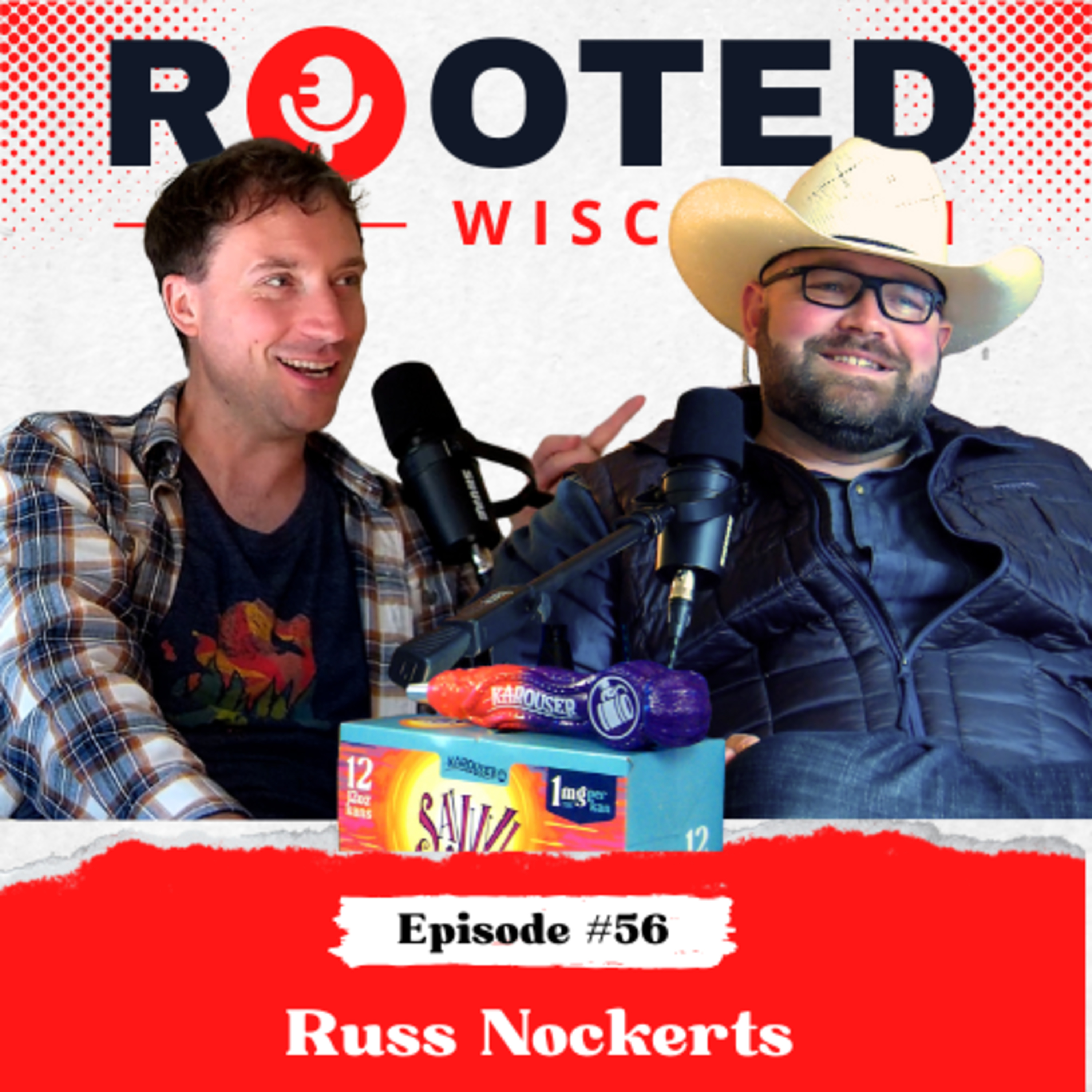


Russ Nockerts is a Pitmaster and the Owner of Steel Belly Barbecue in Algoma, Wisconsin. The decision to take his business full time stemmed from a lunchbreak phone call with his wife, halfway through his day as a welder, where she mentioned that they should talk about taking focusing more energy on Steel Belly. That "talk" ended up happening that night, with Russ giving his two weeks notice when he went back in to work. Today, they are stacking and racking the BEST briskets and barbecue in Wisconsin. In this episode we talk about those things and everything that's happened in between, the value of hard work and passion, Russ's favorite bites, and choosing 1 cheese for the rest of our days. As always, a huge shoutout to our sponsors at Karouser, delivering a non-alcoholic social beverage right to your door. They keep these episodes coming!
0:00 What's up friends, Welcome back to Rooted Wisconsin. Appreciate you for clicking another episode. Grateful to have you here. Today's episode is with Russ Knockerts from Steel Belly BBQ out of Algoma, Wisconsin. Best barbecue in Northeast Wisconsin, hands down. Probably a way bigger geographic range than that. His brisket is to die for. Unbelievable. Great conversation with Russ. He's such a cool dude. We talked about his path to his BBQ business. He used to be a welder and we talked about his path to entrepreneurship and how a conversation with his wife on his lunch break as a welder where she said maybe we do this full time, led to the business. When he walked in literally from that lunch break and told his boss he was putting in his notice. Fantastic.
0:45 We talk about his passion behind BBQ. All the folks that kind of pushed him into it saying you got to sell this. It's so good. We talked about his favorite. If he could pick one cheese for the rest of his life, what would it be? Got to stick around for that what's yours and a whole lot more awesome episode Russ such a cool dude so enjoy that couple other things check out our new rooted Wisconsin hats. These could be yours. Shoot me Adm we'll get you set up. Shout out to the folks over at wonder sign. Joel and crew did an awesome job wonder sign on Velp and Green Bay. Hit him up for any clothes you need and and signs of course. And of course, a huge shout out to our sponsors at Carouser bringing you a non alcoholic option, help keeping you in the game, help keeping you in the party and feeling great the next day to carouser.com. They keep these episodes coming.
1:34 Make sure you grab some of that too if you dig what we do. Without further ado, let's jump right into it. Russ Knockerts. But man, I think a cool place to start is this. This kind of past summer was the first time I've had a chance to have your BBQ. I've been following you on Instagram for a while and you know, the cliche question would be to where does BBQ start? But we've had a lot of chances to kind of talk about your craft, what you do and want, why it's so damn good. And that's that's the place I want to start. Like it not where did BBQ start for you, but when did it become to the point where you were like you had to come to this conclusion that you wanted to perfect it because your stuff is so good it that doesn't happen by accident?
2:19 When did that turning point start for you? Started as a backyard hobby really, and you just like anything super driven in everything that I did, I was a welder in my previous life. So like anything you create with your hands and you build something that's tangible that a customer is going to need or use, barbecue kind of follows down that same path and we craft something that the consumer is going to consume. So with that, you, you know, me personally, I'm just, I'm just super driven to be the best in what we're doing. So it started in the backyard, never thought it would turn into a business.
3:03 And as it kept getting better, the need for great BBQ does exist. So that's really where our, our business has grown and it's been all organic. It's just word of mouth and some people can find us, some people can't. And but we're everywhere. But it's, that's really how it started for me. And I'm just getting hyper obsessed with creating the best barbecue that we can. Was it that classic scenario of like you were cooking in your backyard and you people kept saying like you, you should do this for a business, you should sell this, This is so good. It wasn't that thing. Absolutely. Yeah.
3:43 Way to have people over backyard parties. You should sell this. I said no way. Absolutely not. And then got asked to do a friend's wedding. You know, that was like the first kind of dipping your toe in the pond per SE. They just wanted a bunch of ribs. So like. Did you have a big enough pit at that time to do a wedding or what? No. Yeah, I didn't. But you made it happen. Made it happen so we we stayed up all night, did what we had to do to pull off the wedding. I think the very first one was 30 racks of ribs. So we got it done and word of mouth travelled and then I just kept snowballing and now it's the full time gig to say the least. And yeah, and how many years full time now? This is your five.
4:30 OK, so. Yeah. And I think, you know, that story is always so fun to hear because there's so many businesses that started from that. Like a person just starts doing something they love and then externally they start feeling these pressures or hearing those voices say, you know, you could do this, you could do this. Let's talk about that a little bit because that leap, there's a lot of people listening right now that are hesitant to take that leap, ready to take that leap and haven't yet, or are scared to do it. What was that like? What was it like deciding you were going to do it? Do you remember? Well, to be very specific, it it started out, I was still welding and we started getting these bookings.
5:15 We partook in the Roar Off the Shore Brewfest out in Luxembourg. So there's 40 breweries, wineries, some craft food vendors. We signed up as a sponsor and we got to create. That was kind of the first public experience that people got to try our food. So they voted the the participants. It's about 1000 people there. The people got to vote on best food and we were the winner. So that was the first time that we kind of had received some accolades of creating good food and people really they they liked it. So we won best food. And from there the breweries and the wineries started reaching out to get us booked for their weekends.
5:57 And that's kind of where we got our start doing the public events. And we got to a point where I had 16 bookings in the month and. I was and you're still working full time. Still working full time. So working full time, staying up all night, cooking briskets and going to the event like incoherent from being sleep deprived. And I talked to my wife on the phone one day at work. I was on my lunch break and she's like, well, maybe we'll look at quitting, you know, she said, let's talk about maybe quitting. And I took it as I'm quitting today. So I literally came out from the lunch break in the text message and told my boss I'm done at the end of the month. So we didn't really get to have that conversation of let's talk about quitting.
6:51 I just quit. So I it was about a three-week notice, I think. Didn't have our full time kitchen, didn't have our food permits yet. Just trying to fit everything in. And the way it all worked out is we found a kitchen, we got licensed and we had an event the very next day. So it was like 3 days in a row I quit. I quit on a Wednesday. We got health inspected on a Thursday, we served our first public event on a Friday, and we've never looked back. What an amazing story. So what was what was the conversation like when you got home and said, well, there's not much to talk about anymore? I'd have to think about that. It was she's like, you did what?
7:35 And I was like, well, I thought you said quite at the end of the month. And she's like, well, I thought we'd talk about it, but I didn't hear it that way or read it that way. But yeah, that's how it came out. Well, life points you in directions, man, Like where your attention and your intention is. Yes, you can hear what you want. There's a lot of different messages floating through the air you pluck, At least for me, I pluck out the ones more often than not, more often than I should, that I want to hear. Yeah. So, you know, but I think, you know, regardless, the two weeks wouldn't have changed it. You know, if you would have went home and had the conversation, like it sounds like you were, you know, Destin's a big word, but you knew what the next step was you, you knew what was coming.
8:19 That's a that story. Like there's always this tipping point of people that start with a passion and then end up making it their career. There's always this tipping point. You never know what it is and yours was on a lunch break. It was probably a rough day dude. You probably like you did. You know, I was really passionate like like in BBQ with welding. I was passionate about welding and loved what I did. But I'm always up for more and I want more of a challenge in life. BBQ is no different. Every single cook, even though we've cooked thousands and thousands and thousands of cooks, it's every cook is different. The weather is different, the humidity is different.
9:00 It might be raining, it might be sunny, it might be windy. Every piece of wood that you put in the smoker has different moisture content. It ignites differently. Everything has so many variables and that's what the challenges of BBQ. I just keep chasing it. Yeah, so that brings something up in my mind. I I, I love watching your Instagram stories. I love the content you make. What are the little pieces of foil that you do around the tip of the brisket? What is that? So it's just, it's basically it's called tipping. We tip the briskets to protect the point end of the brisket or the fatty side of the brisket just from the heat impact. So like the airflow is quite violent inside of an offset pit. It's the old recycled propane tanks as if you've ever seen our pits.
9:52 So the air movement is moving quite violently through that chamber. So at about hour 4, we tip the we tip the points of the brisket just to protect them from burning or drying out. OK. So that's all that's for. It makes for a good Instagram picture and that makes BBQ sound even more bad ass than it is already when you say the air moves violently throughout the smoker. It's, you know, it's and we've, you know, no pun intended, guts thrown into the fire and just putting in those reps and cooking a lot of food. It's been an incredible journey so far. And we feel like we've, me personally, I feel like I'm just getting started, you know, so it's, there's so much more I want to do. It's been incredible.
10:41 Well, that's got to be cool even in like conversations within your industry, right? Because I've, I love brisket. I've eaten brisket from hundreds of different people and like, when you get a good one, you're like, man, this, this person knows what they're doing and like hearing that you've only done it for five years. A lot of the times when I've had that great brisket, I'll talk to the person and be like, yeah, I've been doing this. It'll be this old dude that's been doing it for 45 years and he's got it perfected. But I'm sure you can't give away too many trade secrets. But I mean, brisket is usually salt and pepper, right? What? How is here so much better than so many other ones like what ours is?
11:24 Ours is salt and pepper too. I wouldn't say that it's so much better. I think across the industry we have, I think there's a certain level that has everybody has risen too in good BBQ. So there's there's like I, I label things as OK, good and great. OK. So I think that once you get to achieve that level of great BBQ, I think that everybody's pretty much on a similar page and then you're splitting hairs on a personal preference of one that's better than the other. So how does it go from good to great though? Because there's a lot of good brisket out there.
12:06 Like I can cook a good brisket, but it how does it go? What is that? What's that leap? What happens with your degrade? Is it the foil around the tip? It's not the foil around the tip. It's just one step of the process. You know, we post, you'll see pictures on our Instagram of the stacking and racking. It starts there. It starts with the trim. Making sure your briskets are consistent, the trim is consistent, the seasoning is consistent. The salt and Peppers, you know that's what it is. So let me stop you there for a second because that's something I don't understand at all. Is the the trim. What happens when you trim that full, what you call it a full Packer or something? What happens when you trim that? What are you trying to do? So you're trying to make it aerodynamic as possible for the.
12:47 Violent. And it started with Franklin BBQ, which everybody knows about. He was like, you know, there's BBQ pre Franklin and post Franklin of that era. He really started the craft BBQ movement and now it's escalated with sides and different proteins and restaurant experiences and Michelin stars now in Texas. Craft BBQ has really changed a lot in the last 15 years. It changed a lot in the last five years. I think that it starts with that trim going back to that violent airflow. So we trim everything to be aerodynamic as possible.
13:29 So when the air is moving over it, it's not stopping abruptly as if there's a sharp edge that's going to be a burnt edge. So we try to make everything as round as possible for the air to move over it as smooth as possible to prevent that burnt edge. And you want every slice of that brisket to be servable. So that's that's part of that trim. OK, did mean to get sidetracked there. But I never understood the I never understood the trim. I thought like in my mind it was just like, take away the pieces of fat that were too thick. But there's so much more to it than that. It's it's, yeah, it's shaping it, rounding it, having the right thickness. I would say we run our briskets a tick on the leaner side on our trim.
14:13 It's just the way I like to do it. Me. Too. That's how I like eating. It so I don't like obviously you don't like unrendered fat. And we want to do everything that we can to have that perfect, you know, melted tastes like butter. And that's, that's what we're shooting for. Yeah, well, every time I've eaten it, that's what you've accomplished. So what's what's your like? You don't, you don't get into BBQ probably without loving eating BBQ. What do you like eating as a brisket? What's your like? You go to a BBQ place that you didn't cook. What's your thing? Everybody has a thing. So we go, you know, last year we went to Texas, did a 16 spot tour basically in nine days.
14:58 So I hit 916 spots with our family. We did a road trip. Everybody has their one thing that they're known for. Some places it's brisket. I always eat brisket. Of course, some people have really good, you know, pork belly, Some people have really good Tri tip, some people have really good ribs or the sausage. Sausage is kind of a game changer between all of these different high end BBQ spots. They're really crafting sausage, doing some wild things, basically casing anything they can into a sausage and it's it's sets them apart. So. The one you gave me this summer was kind of new on your menu, right?
15:42 You said that was a new thing you were trying how to go over. Good. We, we really pushed hard this summer crafting our Texas hot link. And then now we have a cheesy hot link. We call it the cheesy Texan. So it's similar recipes. One's got a lot more cheese in it and they've, they've been good. We've been selling quite a few of them so. OK. And they're fitting for the, you know, being a Wisconsin barbecuer, you got to get a cheesy one in. Yeah. And it, you know, we've had to educate our consumers. A lot of our consumers, they're looking at a sausage and they just think it's a Bratwurst because that's what we're known for. Why isn't it served on a bun? Why isn't it served with ketchup and mustard? That's not what it's intended for. The craft sausage that we make takes three days. It's a three day process.
16:30 It's smoked twice. They get ice bath. It's it's a whole process that it takes. There's a lot of Labor involved. They get ice bath. Tell me about the ice bath. What does that? Do so we once we case them we dry them overnight in in our walk in cooler. Then they get a what we call a cold cold smoke. So they get smoked under 200°. We take them to an internal temp of 150 then they get pulled instantly put into an ice bath to shock the casing and stop the cooking process. Then they all get hand dried and we re rack them back in the walk in cooler and they get smoked the second time the day of service. Really. So the you said the ice bath shrinks the casing? It shocks, shocks the casing, it does it, it makes it tight. So that's how you get that tights, the tight snap on the on the sausage.
17:18 OK. And well, man, and I saw. I've never heard of that, never knew that was a thing. But that makes complete sense because it it stops it from being the stringy like when you bite it doesn't. Yeah, I had a brat the other day, man. It's and it so I, I won't go too in, in far depth because I don't want to call anybody out here, but it's a fundraiser that happens frequently in in my space that I'm in that I can get these brats And every time I go, man, they it's stringy and I'm like, I want to support you, but I can't eat too many of these brats. So an ice bath takes that away. But it's, you know, it adds a lot of Labor to the process. I would say yeah, yeah. It's like I think of, I mean, you do that with hard boiled eggs.
18:01 I hard boiled eggs for my kid all the time and we put them in an ice bath. But like you're thinking, what? How many sausages do you make at a time 1000? No, not quite that many. We probably do a hundred 150 to 175 links a week probably is where where I and we're using all of our brisket trim for that. So like we're doing our best because of the cost is so high on the raw product. We're trying our best to use, you know, and have no waste and maximize everything that we can and yeah, profitable. Probably some of where the sausage concept was born from, right? Like, I mean, you have this quote UN quote waste, but turn it into something delicious. Yep.
18:42 OK, I. Mean for reference, we go down to Texas Crites market. They've been around since 1900, so over 100 years they're producing 6000 lbs of sausage a week down there. Dang crazy. So it's it's, it's a machine that never stops, but that's part of their culture. And we have to start educating people on the sausage culture up here. So it's been a slow but steady progress and it's we're making gains. You know, there's there's something in there though that's probably worth some conversation. Beef prices are super high right now, right? That's got to impact you as a business owner kind of getting away from the BBQ. But like talking about dollars and cents, you got to make some cash and and beef prices are high.
19:25 They are. I just read an article. The national average for ground beef is, I think $8.12 a pound. Yeah, it's not quite that high here in northeast Wisconsin, but it's it's high brisket prices. They've been, you know, they fluctuate everyday like the stock market. So we're always keeping an eye on it. It's up probably 30% in the last 3-4 months, which is a significant impact on our profitability. But we do everything that we can to not have that waste and we make sure that our venues that we're going to or the events that we're doing are at a higher volume, you know, so we're not wasting. Labor and product.
20:13 So we want to make sure that it's worth our time and investment. Yeah, absolutely. Because it there's, you know, you can raise prices, raise prices or whatever, but ultimately there it comes to this point where you like demand and supply fluctuate for a reason, right. And who knows, you know, whatever it could be, the next chicken or whatever it is, you have to choose because you get forced that way as a business owner. Even I've noticed in the grocery store the, the, the ground beef that I buy, it's probably that 30%. I I didn't really put a number on it. But yeah, what you said it's like 11 bucks a pound, the ground beef I buy now.
20:55 And how did that part develop? Because, you know, you talked about that cool story about, you know, quitting your job halfway through and halfway through the day after lunch break. And you you had to have an inkling at that time that the BBQ was ready. How quickly did the business owner come along with it? And what is that like? I think we've, we never stopped learning. Still to this day, we're in Year 5, we're still growing, you know, as a business, we've grown 50% year over year since we've started. So that's still holding true on your five. I would imagine at some point it's going to slow down, but I'm pretty driven and I want to like I have that number in my head and we want to keep hitting it.
21:40 So we do everything that we can to, you know, we have 10 staff now. They're incredible, all of them. And it's, you know, treating our staff right and doing everything we can to make sure they're happy. And a lot of them are part time. We have some full time help. Also, my wife is obviously in the background. She's full time in the business too, putting a ton of hours in. And we, you know, every year we add people that we think are going to be key people to help leave some of our time in the kitchen. But then we take on more work. So then we're still the ones ultimately creating the food.
22:22 And we, we do what we can to keep growing and we try to be smart in the growth. I think we've done a good job of it. Yeah, I'm going back to it. It, it made me come back to your question of what makes our brisket so good. I think at the end of the day, it's still my passion and I'm still touching every single brisket that gets served out the window. Ultimately that's what makes the difference is you go to a lot of places and you might not have a passionate brisket cook, right That that is hired on it where this is still my my risk it. So that makes a difference, yeah.
23:04 And you know, that's fascinating because we were having that conversation earlier. But you know, as you scale with anything, you have to decide what parts you can let go. And that's, that's such an intimate piece of what you do is, you know, just hearing you describe the intricacies of, of just shaping it and, and, and trimming it. It's tough to when you know that 50% year over year growth. I completely agree. It stems from a place of it's so damn good because you're passionate about it. And that's what makes things good. And at the same time, you have to weigh these areas that you can say, OK, maybe I have to miss talking to customers on the front end because you, you taught me about the, the carving station and how that can be a piece of the experience too.
23:57 But I mean, with the, with the ceiling that your BBQ has, which is through the roof, pun intended, eventually there's going to have to be these places where, OK, maybe I'm not the one at 4:00 in the morning throwing it on the smoker or I'm not the one at the carving station. How do you? Maybe you don't even have the answer yet, but like, how do you work through that? How do you decide? It's just, it's something that gets talked, you know, I, I shouldn't say talked about, but thought about. I think about this stuff all day. You know, I'm sitting at the pit running a fire for 11:50 hours and I have earbuds in. I listen to podcasts, I listen to music in the I just I think about it constantly.
24:48 It's going to take that special person to be the quote UN quote, pit master and pit master term gets thrown around loosely. You know, we're five years in and I think I have a pretty good grasp on cooking at this point. You know, we have a lot of outsiders that come to us for help on fire management and learning the process. We even do some one-on-one schooling with, with, you know, customers, they want to, they pay us and they come and we teach them. And we've had two people that have started their own businesses doing BBQ. So it's, it's been cool to see that trend, you know, the progression of, of us teaching what we know. We've also built some incredible relationships with other BBQ owners and food truck owners and establishments all over the country from California to Texas to New York. And it's, it's been incredible.
25:47 We, you know, we keep looking for the, it's not just the right person, but it's about the passion of what we're doing and our, our team. Now. You know, when we talk amongst ourselves, they say we and it's that we is important because it's, it's all of us. Obviously that they put the, that they say it's all him on the pit. It's not just me. It's, it's the staff that really make us what we are. Obviously I'm the, I'm behind the pit, but like it's without the staff, it's impossible to do what we're doing at the volume we're doing it so. Yeah. So just being strategic and the having the right people, Yeah, yeah, yeah. And it's, you know, towing the line, man, towing the line between what what you see can happen and what you know can happen.
26:38 And then in some aspects, you know, just being comfortable relinquishing some of that control. Yeah, because there's probably ma'am when I when I think of like if if you do a BBQ for a wedding or something where they're going to, you're going to do 200 plates or 300 plates or something. I don't know me from my seat. That just seems like an immense amount of pressure. Is that what you feel? I don't know if I feel the pressure per SE. I would say like every, every time we show up to do service, it's like Super Bowl. Like it's really how I, it's like we're playing in the Super Bowl seven days a week, you know, So we, we do all the work ahead of time, all that prep work ahead of time.
27:25 I feel we're very organized in what we're doing to do the volume that we're doing. And then when you show up, it's just, it's just game time. So I personally thrive in chaos. Maybe you'd call it? So you liked watching me set up the set up today you're like, it's not me for once. You know, as nervous as I was to to be on here and and talk, it's I do thrive in, you know, if we're not a line 75 deep with our hair on fire like I do strive, I, I thrive better in that in that situation. And that's not for everybody.
28:06 Like some people might step in the truck one day and be like this. This is a little intense. This isn't for me, but it's what I I love it. Yeah. So what's been, what's been the the day that it didn't go well? Since you're five years in, has there been a day that the brisket went too far or the pulled pork was a little chewy or what was the day that didn't go well? Han, I'd have to really think about that. Well, that's good. You know, we've had some, you know, being a mobile, we have two food trucks plus the catering operation.
28:46 We've had a couple days where we've had some truck mechanical issues, truck breakdown. You know, we blew a head gasket one day and we blew a radiator one day and you're on you, you have all this food prepared and you're on your way to an event to you have to sell this food because it's very expensive, right? We're fortunate that we have multiple units and we're very good at pivoting. So like make the phone call, get another truck to come and we offload 1 truck into another. We still get here, still get set up, still sell the food for the day. Those days are really challenging mentally just to make sure you can pull it off. Those have been the harder days more than the food, you know, food wise, we have our systems in place where we, we, you know, I, I chase everything and then we check it and there's times where like something just doesn't hit and I just, I won't serve it.
29:52 I throw, I'll take that, that hit on the chin and throw it away before I'll serve it to a customer. You know, or some days that are struggles where you expect a, a larger crowd and there is no crowd. Sometimes that happens, you're going home with a lot of food and a lot of cost, but we'll end up throwing it away and I'm not reheating it. I refuse to serve it to a customer. So that's, that's another aspect of why our food is what it is, is because I, I have that 0 compromise mentality on serving the best barbecue so. So how does so being like thinking of a mobile setup, it's really hard to forecast demand at times getting into those business X And also does that mean the your family's having a week long, you know, BBQ, BBQ for dinner?
30:44 No, there's you know, we after your five we've we've got enough data to support what we do. We really know kind of we have a ballpark and then I can, you know, if we need to bring 10 or 20% more, we can do that. I'm usually not bringing less because our growth has been steadily increasing. So we always try to bring a little bit more on a day where it just doesn't go to plan. Or the weather. You know, the weather is one thing. We're like our, our cooking process for every day that we're open is 2 days of prep ahead of time. So like if I'm cooking for a Friday event, we start on Wednesday, took on Thursday, serve on Friday.
31:27 So we have to make the food no matter what. And then if the forecast changes and all of a sudden you get a rain out, you're stuck with 15 or 20 risk. It's for that day. We have a big enough social media following. I can usually post them for sale and they disappear. Oh, OK. So we we do try to, I don't try to throw food away if we don't have to. And what, you'll just sell whole done briskets to people and just say come get them for 50 bucks or whatever? Yeah, OK, nice. Not quite 50 bucks but. Well, I mean for a whole brisket. That's cheap. Yeah, it's not bad. I think most, you know, I think we're we're about 175 for a brisket right now for a whole, OK, it should be higher, but it's there's a threshold that people just aren't going to, yeah, pay that price.
32:18 Yeah, so, so you get a rain out, you throw it on your Instagram story or something and say, hey, got these briskets first come first serve or whatever. OK. And. Then the phone lights up like a Christmas tree and. It's probably a bunch of smiling people that come through. Yeah, that's cool, man. And the so it sounds like to go back to the question, it sounds like a I don't know, you make it sound easy, I guess, but it sounds like it just kind of came along and you just address the issues as they arose. Like that stops business owners, people from starting businesses all the time. Something as easy as like how do I do my taxes or something is intimidating for some. And yet it, it is like I said, we're still learning as we grow. We've, you know, changed from, you know, on the business side of things, you're an LLC and then you're an S Corp and then you change things and, you know, figuring out trends on how to grow because not everybody's on social media, you know, so that's one thing that we've looked at this year is, you know, doing e-mail listing or text chains or figuring out how to get everybody to know where we're at because we still have consumers that don't know and they're not on Facebook or they're not on Instagram.
33:32 You know, we use that term local, world famous, locally unknown. And it's people really like where do we find you? And we, we tried to guide them to social media, but not everybody's there. So you know, it's one day at a time and you pivot and you just keep growing. Yeah. Do you have a set up like can you be in two places at once? Like, not obviously not you physically, but Yep. So we actually, I have two trucks plus catering. So comfortably we we surf 3, we can do 3 per day. We've done as many this last weekend we did 4-5. We. Did sounds that sounds.
34:14 We did 5 on Saturday and 2:00 on Sunday, so we did 7 for the weekend in two days. So it's, it's a big, it's a big undertaking, but it takes a lot of planning and forethought and staff and getting everything dialed in to where it's kind of on cruise control, but. Not yeah, yeah, there probably isn't really cruise control with you. There's maybe sometimes when you can take your foot off the gas. A little bit, but we're pretty full throttle. Yeah. So then does winter cool down a little bit for you? It does you know your day-to-day summer fun, vending stuff, the the farmers markets go away.
34:58 You know, we've been a proud partner doing all the home Packer games at Tidaltown fourth season with them. So it's been, you know, we do all the home games there. So that keeps us busy into January and then corporate catering picks up. So Thanksgivings and Christmas parties and dinners for for companies and that that rides us in. You know, it's, I say it does slow down, but it's been trending that it, it hasn't, it's been, it's been going and keeps growing so. Part of that 50% year over year, that's a pretty good #5 years in a row, 50% year over year, yes, that's good.
35:39 So another thing I had floating around in my mind earlier, the the connection between welder and pitmaster. You probably craft your own pits. You make your own. So I was going to it's, there's more science behind it than meets the eye. A lot of people see them and they're, oh, it's just an old propane tank. What I can tell you is our, you know, our thousand gallon cookers, they will cook within 5° across 20 feet. So they're very consistent in what they're doing and they're designed and built a very specific way to to cook what they're cooking.
36:21 So when I dug down that rabbit hole, I decided I was just going to buy it. So we bought pits that are designed for what they are. So who made yours? Ours are primitive pits and our next ones we got a couple things in the wings. We're trying to figure out what to do. Part of that is the brick and mortar space that we've obviously discussed. We've built a great relationship with Red Devil Smokers out of California. They've cooked at their anniversary party the last two years. Talk to them weekly. You cooked at the people who make the smokers anniversary party. Yeah. OK. Well, I think that gives a little tip of the cap to somebody, right? So no, they're doing incredible work out there. There's a couple different cookers that we're looking at without divulging too much information, but like it's, it's just as we grow, we keep adding the equipment that we need. You know, we're this last couple weeks of this year, we've, we've been at Max capacity with what I have available to cook. So it's, it's probably, we're probably at a threshold where we need to add some more, more equipment. And with that, though, you're trimming more briskets and wiring, more space and more equipment and. Looking for more of those unicorns that want to come work for you?
37:40 Yeah, yeah. Well, you even let out a little kind of nugget in there about the brick and mortar. You got a bunch of people salivating around northeast Wisconsin now, wondering where and when. Where and when? That's the $1,000,000 question. You know, it, it started out, you know, we laugh about it, but it's, it's become an everyday occurrence. And not just once a day. It's 30 times a day. When are you guys opening a restaurant? And it's I just say it'll happen when it happens. We've been patient. We're at a size in our business that we can't really downsize beyond what we're already at. Even though we're mobile now, our volume of proteins and everything that's going on with the catering side of business is already at a pretty substantial level.
38:27 So like, I'm looking for a very specific building per SE, or, you know, even if we end up building something, but I want it to be the right fit. It's not as simple as just going into a storefront and cooking off site. And I want the pits front and present. I want that cutting station front and present. I want to be there front and present and talk to every customer that comes through. Yeah, I recently posted a kind of a, not a catch phrase, but a motto like craft, culture, community. And I really want to focus our business moving forward through those three things.
39:08 Well, isn't that that's part of the thing? That's part of the thing of BBQ, is gathering around BBQ. Nobody barbecues to eat it themselves. No, can't eat a whole brisket alone. Yeah, and I think that's you have to have that. And it's funny sitting here talking about experience in both of our buddy 335 Chris's space, you know, the the master of experience. It's it's such a huge piece of it. And especially when I hear you say that there's hundreds of other people that can do brisket like yours. What's going to, you know, set you apart? Yeah, it's funny to hear.
39:49 Think of kind of a full circle thing too, though, because you started by saying, you know how you were smoking in your backyard and then people said, oh, you should, you should sell this. And now it's people saying, oh, you need a restaurant. You need a restaurant. It does. What's next? You need a chain. You got to turn the. And I don't know, you know, some of those people have chains. And I don't know that that's ever a route we're ever going to go down. And it's mostly because of the quality and the passion that is creating what we've already created. You know, you can put systems in place and processes in place, but without that true heart to really be creating the best barbecue that you can, I don't think what that model moves forward.
40:38 Yeah, well, a craft is a craft for a reason. And you know, if you're the heart of the craft, the more you try to scale, there's going to be misses and they're inevitably that's how life works there. There's there's going to be gaps and, and, you know, working around those things as you scale is one of the. Challenges it is. It's one of the things exactly what we were talking about earlier, man. It's, it's deciding when and how is the right way that the craft stays in it. Because we've always, we've all been in that place that is, you know, has turned into a chain or several locations or whatever.
41:19 And yeah, it probably started good. But then I would argue that, you know, they can remove the craft. This is a it's a chain now that's the mediocre. Yeah, absolutely. Yeah. And that's OK. We you need that in some places the, but I'm cut from a similar cloth that when I do something, I want it to be the best I can do in that moment. And sure, it's not perfect, but at that time it was the best I can do. And I think if you approach things with that mindset, that's why that 50% year over year growth happens, you know? You know what it goes down to just the process on the food truck.
42:03 You know, when we first started, we were maybe a three, three minute, you know, ticket time, adding order out the window, which is fast for a food truck. Now we are two to three orders per minute. So we're, you know, we've built that process in the system where their order is out the window on a tray, sliced fresh and prepared sub 30 seconds before they can even sign the credit card. So that's one of those things. It's it's how you do one thing is how you do everything. And it it starts, you know all the details matter. I love it, I love it.
42:45 What was it? What's it like? And that makes me it's a fun bridge into this question. You, you have some family help you have your kids help you and like, what did that? What was that like? Was it an ask or a tell getting getting that to come along and what's it like managing that dynamic with sharing that frame of mind with somebody? How you do one thing is how you do everything. It's been a like everything is slow progress, right? Like it's, you know, me and my wife work together. How she does certain things is not how I do certain things, but it all gets done at the end of the day with a high level of execution.
43:30 You know, our son is 13. He's been working on the food truck this summer, saving up his money. It's a constant reminder of what we're looking for and why we do it that way. And when you explain the why, they understand it might have to remind him again. But like, don't be so blunt to a customer. Like it's why we're doing this this way, you know, in the business of not only selling great BBQ, but selling the great experience, you know, in the customer satisfaction. Like we're in the business of selling BBQ to the customer. Like they're paying their hard earned money to to come to us, not only because the food's good, but their line experience was good. And everything we do is about them, you know, coming to us and creating that experience for them. So it's just we have great staff. Like I can't thank them enough.
44:30 It's that's what it's all about. Yeah. And in that specific scenario, I have to think that it's yours are a little older than mine, but it, it has to be really rewarding modeling that frame of mind and modeling how you care about things and execute things at a high level and provide the type of experience that you're talking about. Because that's what we all wish for our kids, man. Like whatever, whatever path they decide to walk down, if they do it with that frame of mind, and if they do it with passion and vigor and care about what they're trying to do, it doesn't matter what way they choose, they're going to be successful, right? And that has to be rewarding in that scenario. You know, and like Mason, for instance, it's, you know, I, he, he talks about taking over the business someday. I don't know if he ever will.
45:30 I'm not going to force him to. But it's having that conversation with the customer, explaining where the the sauce, the Pickles and onions, they can help themselves enjoy the football game at Lambeau Field. You know, having that conversation where you guys come from today, you know, they remember that, the customers remember that. And when they come back to Lambeau Field or if they come back to the farmers market, they're coming back to us because of that experience. And I said, like, if you end up taking this over, they're going to remember you taking an extra few seconds to ask them how their day was or where they came from or where they travelled from to come see us or how did you hear about us or just just a little comment and then you execute it with the great food on top of it.
46:15 It's I was like, those customers are your customers. If you're taking this over, those are your customers too. Yeah, so. Yeah, yeah. Well, and I mean, you're Pristina, though. I think of the first time I got to try the sausage we were talking about earlier. You, like, you waved me down at Title Town. You said you got something new and you gave me one to try. And like, stuff like that is memorable because, you know, I don't know why, but very few people take the extra step. Yep, you know, super memorable. I, I want to talk about sauce a little bit though, because that's a, you know, that's a really broad topic in, in barbecue and it's almost man for, for pros.
46:57 It's probably divisive at some points, right? Like what gets sauce, how you use sauce? What type of sauce you use? What's your sauce vibe man? So we have one sauce. Yeah, it's bottled and for sale on the website. You know, shameless plug, but it is, you know, the side of our, our original truck, the the old big box fan truck. It says BBQ is not a sauce right on the side of it, all of our proteins. You know, if I say BBQ is not a sauce because we take all the time and labor and skill to craft those proteins. And if they're done right, they shouldn't need sauce. Obviously you're going to have a rib glaze on ribs and pork belly burn insurance or sticky candy goodness.
47:41 So like, there's some sauce involved with it, but all the proteins that are served are served sauceless. If you want sauce, you're free to add it. That's my vibe. What's your sauce modeled after? There's a million different kinds. What would you? How would you describe yours? It's like a, I don't want to say it's just a Texas base. We're Texas BBQ, you know, that's what we're focused on. I don't put a ton of cumin in it. I do like a, you know, in Texas they do a lot of human sauces. So it's just a, it's kind of a sweet and smoky got a little heat on the back end, but it complements our BBQ really well with the salt and pepper finish. The, you know, I have a mustard sauce that we've did. Did I serve that to the?
48:27 No, I've never seen. That so we have a mustard sauce that when I have time, I make it, but we've we've been trying to serve that with the sausage. So like, it's just a nice accompany to the sausage. Gotcha. A mustard sauce that's like a Carolina 1. Is that the? Mustardy one, it's it's mustardy, yeah. So it's it's there's actually ketchup, mustard, brown sugar, apple cider vinegar in it, all sorts of spices. So it's but it's really good. It's great on pulled pork. I actually love it on the brisket. My favorite bite is a piece of fatty brisket with the mustard sauce and our pickled red onion. OK, that's that's my bite. OK, my bite's just your brisket.
49:08 I don't, I don't sauce your brisket. I like, I sauce chicken a lot. Like I like if, if I'm eating like some pulled chicken or something like that, I'll I'll sauce it. But I like, I like the spicy ones, but I'm also watering right now. I'm thinking about a good spicy BBQ sauce. But yeah, I mean, that's that's the thing, right? Like you probably, you probably when you get into rooms with people who are at the level you are of the type of BBQ that's probably like the fun conversations, right? Talking about the little nuance difference between your sauces and, you know, really the details of the craft, right. Yeah. You know, when we go to Texas, it's we've tried. I don't know a lot.
49:55 We've been everywhere and everybody starts, you know, there's some fusion stuff happening within BBQ now where, you know, there's some Asian, Asian influence or you know, the Mexican influence in the Tex Mex style of cooking. And there's, you know, there's German influence that's, you know, in the sausage making in Texas. Like there, there's German influence in, in the dishes and in the sausage and just different, everybody does something a little bit differently. So you can pick up different flavor profiles. And you know, a lot of places, I guess you'd call using BBQ as the method to cook and, and not just you're not cooking BBQ, but you're using BBQ as a method to deliver a product, right?
50:44 So it's it's just a means of cooking. Well, that's fitting for BBQ is not a sauce. That's why right there yes, two more things one in well, first. Well, let's end the episode on that. So one fun question I like to ask people that are around the the food realm. I think it's really interesting. If you could only eat one cheese for the rest of your life, which cheese are you picking? Cheese. I have to go with some like five or seven-year age sharp cheddar. OK, age OK. What's the method behind it?
51:27 Why? What's your reasoning? If just eat one if if it's the only cheese I could eat, it's just I like to feel the texture. That's the one you get the most satisfaction of. OK, OK, so here's here's where it gets so interesting, man, because I agree. Like if I'm just going to have like cheese and crackers, man, 7 year sharp cheddar, that's a cheese and cracker right there. But so many things in my life I eat with cheese. So I have to determine what I like. I think about what types of food I can make with the cheese and like pizza with seven-year cheddar, Taco with seven-year cheddar. Probably not.
52:08 So mine is always Monterey Jack. That would be my pick because I can put Peppers in it. I can make pepper Jack. Monterey Jack pizza would be OK, especially if it's like a flatbed vibe. I can make tacos with Monterey jackets. Versatile. But it's just one little question that I like asking sometimes. And then since I've gotten to know you and eating your BBQ a lot of times, one thing I noticed is that no matter how good it is, you're super humble. Dude. What is your what's the give somebody else a shout out? What is the best barbecue, or maybe even the best brisket that you've come across in all of your BBQ journeys? Best bite of BBQ has to be a pork steak at the Burnt Bean Company in Seguin, TX.
52:56 Pork steak, real or? Steak. OK, you got to fill me in. I'm not a huge fan of pork steak, so how and why was it so good? I'm going to make you one. Yeah, we're going to change your outlook on pork steak. OK, OK. It's just the first time I had it, I think was two or three years ago. Chef Ernest and Dave who owned Burnt Bean Company in Seguin, they welcomed us in with open arms and they said you got to try it. So I said, OK, let's do it. It's one of those bites where you, you close your eyes and like really have to experience the flavour profiles. Like it's, it's incredible.
53:43 Like it's an incredible. And then you know, the pork steak is cut from the pork shoulder. So like, it's like you're making pulled pork. There's different ways to do it. You can do it on a direct heat cooker. You can do it on an offset. They do them on a higher heat. You use a mop sauce. OK, so they mop it. Interesting. So it's and it's should be pork tender but not fall apart like pulled pork. That was my immediate question. What is the texture so it's slicable? OK, so you can actually slice it with a knife and it's but it's super tender and it's super flavorful. OK, interesting. With with like kind of your standard or traditional BBQ sides, it goes well with like with I'm envisioning like beans probably he.
54:28 Serves his with. They call it a Shiner rice, which is a German influence down there. So he makes a Shiner rice and remember if we did it like a like a ranch potato or something he served it with but. OK, so not really traditional BBQ sides. Yeah, OK you've you've certain I I mean I, I'm to the point right now where anything you cooked, if you gave me a bite, I would definitely take a bite of it. So. I'm not going to act like, like for me, that's my, that's my favorite bite that I've experienced anywhere. OK. And we've talked about the sausages. Everybody does something with sausage and you've. I've had some really incredible sausages. Straight up, man, best brisket.
55:16 I'd probably have to give it to Franklin still. Franklin's really got brisket dialed in. It's just in his own own little world there. So it's, and I think part of it is that experience, like it's just it's going there waiting in line for five hours and like getting a piece of Franklin brisket is still incredible brisket. That and that's usually the level changer, right? I think when I think of, I mean, this whole conversation really, I think of this place in New Orleans called Willa Mae's Chicken. And you get, you go there and it's a long line. They've got the stuff set out where the, you know, it's going to be OK. I'm standing here for two hours before I get my food or whatever.
56:01 But I, you end up in there and it ends up being the best chicken you've ever eaten. Is it just the chicken or was it waiting in the line for your friends? I. Think it's all of it. I think it adds to this. I think it's the whole experience. Yeah. It's, it has to be, it's part of it. It's the, it's the sights. It's the smell. You're sitting there smelling the post oak burning for 4 1/2 hours. It's you can smell it the whole time. And you're just waiting. And there's another 150 people in line waiting with you. You know, we've met people from Mexico and Argentina and Germany and all over the world waiting in line to eat a plate of BBQ.
56:46 Like, what's better than that? It's awesome. Absolutely. Yeah, yes, smelling The thing is kind of visceral right now. Isn't that the hard part about being a pitmaster is that BBQ is not ready till it's ready so you can't even sneak bites. No, you know, and that's one, that's one of the hard things of the experience in the food truck. We can't provide that smell. I mean, people still smell the food, but not having the pits front and center and that smell inside the building is, is something that we just can't present. And there's so much more that I want to do in the restaurant setting with BBQ than what we're doing with the food truck. How does that work in a brick and mortar setting?
57:27 What do you do with all the smoke? Where's it go? You exhausted. So the pits, yeah, the pits are out, would be outside. We'd have a separate pit room where you know, the, the guests would come by the pit room and we give pit tours and to show them how it's cooked and why we're doing what we're doing. If you're fortunate enough to have a, a pit inside, you do have vent hoods. So like, but the smell still permeates. It's still coming through the building and obviously the food still smells. So like that smell is going to be inside the building. Yeah. I just thought of one last question as you were talking through that I my the moderate BBQ skills are on a pellet grill.
58:11 Am I still a pit master? Could be, you know, the pit master, like I said, it's it gets thrown around loosely. I think if you're a pit master, you can cook it on anything, whether it's wood fire, you know, that's where I really dove in deep was the wood fired cooking. It's, I grew up out in California and that smell, I've, I've mentioned it on other podcasts. That smell permeates through the downtown area because everybody's cooking on red oak Santa Maria grills outside their restaurants. And that smell is, you know, you, you can't replace that. And once you experience that, it's, we really wanted to bring something special.
58:57 So like, that's what really motivated me to do what we're doing. Little back back story but like. Yeah, it's bring something special. You did, my friend. Thank you. You absolutely did. It's your food's incredible. And yeah, I use the I use the term pitmaster extremely loosely for myself. You would eat my food, you would eat it, but nobody's, nobody's coming for the experience like they do for you. You know, and it's, it's everyday, like I said, it's that everyday challenge. Every piece of wood you put in the pit makes a difference, and every way you trim, every brisket you handle, every brisket you touch, every brisket you wrap, everyone you slice is all different. So that's the challenge that I love about what we do. Keep doing it, man.
59:49 We can't. We can't lose it. You're the You're the best barbecue within 500 miles. Thank you. I appreciate that. Yeah, means a lot. Appreciate you, man. Thanks for the time. Thank you. Great hearing a bit of the story and I'll certainly be in line again and again. Sounds good. Thanks for us. We look forward to it.