
Russ Allen - Stray Voltage, Losing the Farm, EMF, WPS Lawsuit & the NFL - Episode #77
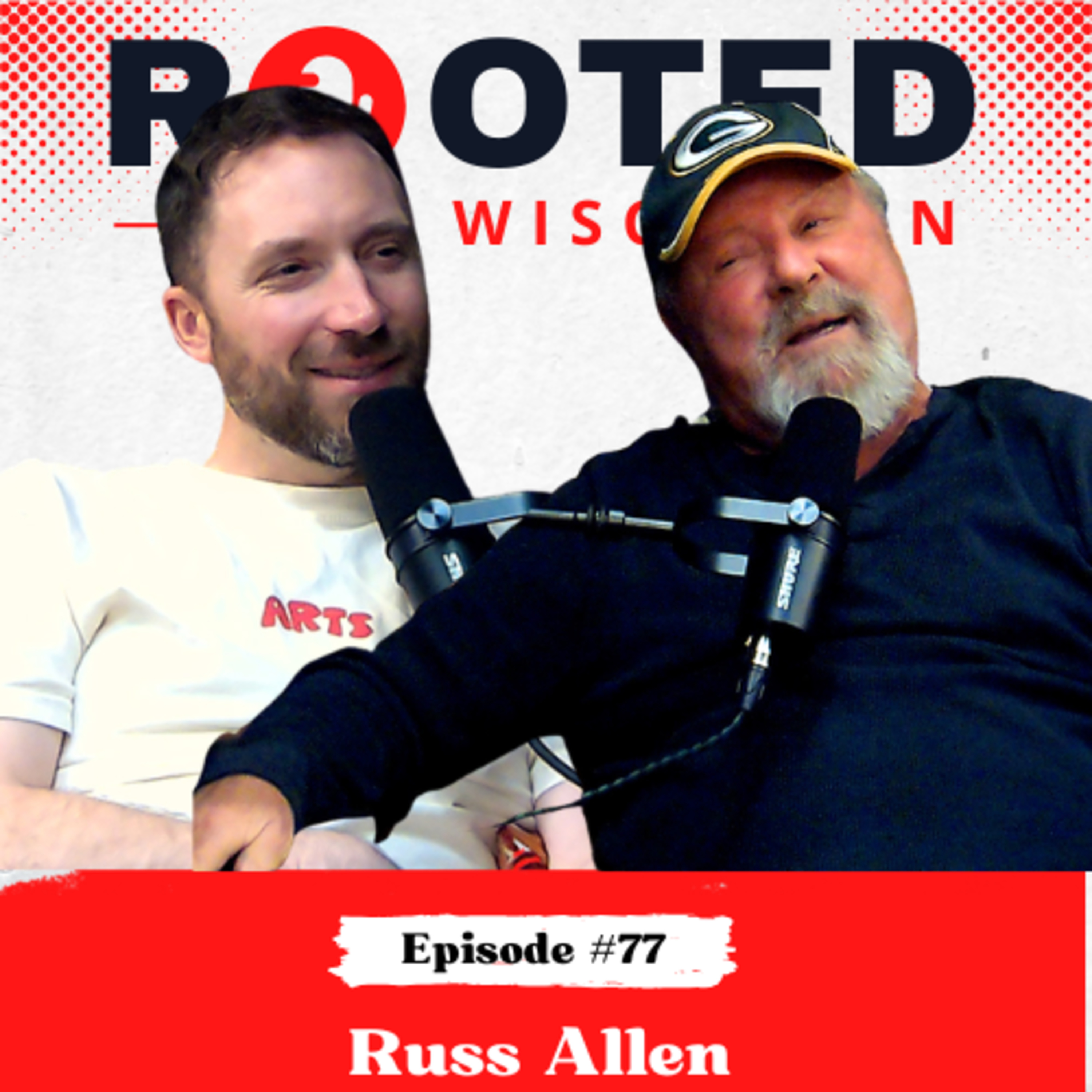


Russ Allen is a lifelong dairy farmer and the author of the memoir, "The Missing Wire". His story is a powerful testament to resilience in the face of unimaginable loss and a David-vs-Goliath legal battle that shook the Wisconsin utility industry. Russ’s life was upended when his cattle began to fall ill and die at an alarming rate (for decades). His search for answers led him to uncover an invisible assailant, stray voltage leaking from the electrical distribution system owned by Wisconsin Public Service. The impact of this "missing wire" extended far beyond his livelihood, manifesting in a series of devastating family tragedies that Russ details in his writing.
In this episode, Russ joins us to discuss his years-long fight for justice, "winning" the lawsuit but still losing the farm, the day his lender said "it's over", the landmark jury verdict that finally held the utility company accountable, and his mission to expose the "dirty little secrets" of the industry to protect other farming families. His story is a deeply rooted Wisconsin narrative about the cost of truth and the strength required to stand one’s ground. As a lifelong NFL and Packer fan, Russ also made the connection in the late 2010s between stray current, EMF, and NFL team performance. Maybe there is even more to the "December in Lambeau" advantage that has been talked about for years? A hot button topic at the moment, Russ may have a path to discovery started already.
https://www.amazon.com/Missing-Wire-utility-companies-little/dp/1963558154
Big shout out to our sponsors:
Epic Mortgage – Your partner in homebuying, empowering communities, and supporting home ownership
https://www.yourepiclender.com/
0:00 What's up friends, Welcome back to Root of Wisconsin. Appreciate you for clicking another episode. Grateful to have you here. Today's episode is with Russ Allen, long time Wisconsin dairy farmer and author. Fascinating conversation with Russ. First, he takes us through his three-year legal battle against WPS, all centered around the effects of electrical currents and stray electrical and the overall electrical service system on his cattle and potential impacts on other things. And that kind of leads into the second part of our conversation. Russ, a long time NFL football fan as well, and we've seen that in the news out in San Francisco and a few other places of how EMF and electrical current plays into team performance and injuries, something that Russ has dove into as well. Fascinating conversation.
0:49 Happy to have you here for it. Before we get to it, big shout out to our sponsors at Epic Mortgage, Human Centered mortgage Services and helping you into your next home. Let's dive into the conversation with Russ Allen. We did a road trip, done eating on a Tuesday afternoon and and then didn't eat anything since. OK, water low, right?
1:37 I do water coffee. OK, I think you can do coffee. I think so, yeah. I haven't done it yet. This is I'm going too soon. I've been reading a ton about the benefits of fasting. What what what drove you to fasting? Like what? What's what's the like? What's the thing that you decided to do it? Well, there's so many people that several people tell you that it's so healthy and I've done it in the past and, and it seems to correct a lot of things and so. Yeah. And if you do nothing, nothing happens. Yeah, yeah, Mental and physical. I've, I've done days where I haven't eaten anything, just water, but never with intention.
2:25 It was just like, that's how the day worked out, you know? So I, I didn't really have any cause or reason for it or anything. But man, the more I read about it, I don't know if I'll jump into a three day or right away, but man, mental and physical benefits are supposed to be do you, So you're kind of midway right now. Do you feel mental clarity right now more than you usually do? I feel, no, not necessarily. I feel good, but I'm a little. I'm a little drag, drag down a little bit, you know? Sure. Sluggish. Yeah. OK, yeah, but not real bad. Yeah, there's been a lot of, you know, power jostling and money that's driven to where we find ourselves today as far as health. And I, I like that we're here, but we're at this like tipping point or like point of realization of, you know, I, I yearn for the right answer, right? And, and the, and the one that's crafted because of or for the best of the people.
3:30 I, I yearn for that. I like to think, and maybe this is pie in the sky optimism, but I like to think that science today is in that place. I don't believe that science was in that place in the past for sure. And I don't know, maybe it's blind optimism, maybe it isn't, but it seems to me like it is. And and that leads to some of this, you know, knowledge power struggle, right? Because people, I firmly believe most scientists today dedicate their lives to the scientific method to answer questions that they have. And I'm sure money still rules the world a little bit, but I think it was much worse when we didn't have such Freedom of Information moving around.
4:17 Yeah, I agree. Yeah, that's a, that's a great segue into our conversation today. Lot of lot of directions will go. I kind of want to start with your farm, like your experience on your farm with your cows. I know enough to be dangerous about this. I I've read a few, listen to a few podcasts, read a few things about like EMF and and like stray voltage and its effects on cows. You have first hand experience on this. So I guess can we just start with that story? Sure, forever, you know. Well, I guess I'll back up a little bit in the mid 70s, in the mid 70s we were, we were expanding from when I was a kid. First we had first we had 32 cows, then we rented another farm and added 27 more than we built a new barn and added 100 and we're on the cover of hoards dairy men, the, the, the dairy magazine in Wisconsin.
5:39 Then in the mid 70s we built another new barn and that was a 500 cow set up. But, and I, I feel the need to explain this to you and, and what they did was they reconfigured their distribution system and and and and I'll, I'll use a tree. I'll use a tree to explain it. Picture the picture the substation down by the roots and it's feeding a couple 100 customers on all those branches, OK. Their own documents say that 60% of that current from all those homes on those branches, homes and farms on those branches, 60% is flowing back to that substation, skimming the earth. It's not on the wire.
6:47 And when I ended up suing the utility here in Green Bay, the judge allowed us to log their system and 80% of that current was missing on the wire. So prior to building the barn in, well, it took us three years to build it. We built it ourselves. We moved in and 76, but prior to that, we were on the top of the tree. There was no current flowing through our farm. We did everything with cash flow. The cows weren't sick. Life was good. My dad bought new cars, you know, all that stuff.
7:30 We bought new machinery. Well, when we built the barn in 76, they reconfigured, they fed. They fed the farm with electricity from a different from from a different direction, which ended up, you know, the tree is here, which ended up putting our farm in the middle. So we had all this current flowing through our farm. And so for 25 years, we got 6 sick cows, low production and we can't figure out what's going on. You, you know, and you, you, you look around and you hear about other people, they're getting all this milk auditor cattle. And there were times we were treating, most often we were treating 50 cows a day.
8:29 It was just, it was so devastating. And it's, it's, it's a, it's a wonder we didn't lose the farm. I mean, and, and you know, when you're operating with that much less cash, you buy used equipment, you fix, you do all of that just to stay around, you know. Yeah, stay clinging on. Yeah. And and now that was probably prior to this, but now that side of this is pretty well researched and peer reviewed about the effects of electricity on cattle. Like I, I think that's pretty agreed upon, right? Seems that way. That sounds funny.
9:17 Just recently, I would say within the last three years, it used to be in Wisconsin or the University of Wisconsin did their research on the effects of electricity and cows and they always went with, they always call it, it was the level of concern and they put it at a half a Volt, they said. They said that's what the cows can handle. Yeah, that's the 500 ohm thing, right? The 500 ohm was too high. The cows threshold is actually much lower. Well, yeah, yeah, they, they, they teach the utilities Reinerman that did the research at University of Wisconsin taught to utilities to use a 500 ohm resistor. And a lot of cows test 200 or less ohms of resistance. But also they set the level of concern at a half a Volt. This is what the cows can handle, 1/2 a Volt. It doesn't affect them.
10:27 Well, like 3 years ago. And that's false. That is absolutely false. I lived through it. It's just no. So they must have, when they go and test for stray current is the correct term on these farms. They must have been getting higher readings because the more load you put on the line, the more that's going to be flowing through the dirt. So they must have been getting too higher readings. So they went back to the University of Wisconsin, they got the, the Public Service Commission of our state involved and they raised it to a vault and then everything's fixed. You know, the wire, the missing wire, everything is fixed though.
11:21 And no, and, and what I did, what I did, and this is important in my area, you know, they're using one wire for two purposes to take the current back to the substation. And then by their poles, they ground it to earth. And they'd, once they bond that bottom wire to earth with their ground wire, they lose control of their current. They lose control of it. It's not on the wire. It's, it flows, it takes all paths back to the substation, but there's the most current on the path of least resistance and they have no control over it. So.
12:08 And that's probably valuable information for everyone listening. You're talking about when it goes back to the substation, that's the neutral wire, right? That's carrying the load back to the substation and that's where the loss, I guess that's where the stray current. They ground that wire to earth by their poles. Yeah. And and then it, it goes to the place of least resistance that you were just saying. And some things can actually end up operating as like capacitors and in a way, right, like things like barns, they can actually be a storage of that energy, right? It goes to the place that it lives. Well, for every electron that leaves the substation and goes out to turn a light bulb on, one has to go back to that same substation.
12:57 So anyway, this is important in our neighborhood. I mean, after scratching my head for 25 years and a lender, my lender said it's over. Yeah. And then when there's ten siblings and I'm about to lose their inheritance so. Were you the only one of the 10 running the farm? Yeah, at the time, yeah. Heavy. Yeah, so one night I took a side cutters when I after 25 years, I finally figured out where all this current is coming from and I took a screwdriver and moved her that wooden thing. It would used to be a wooden thing, now it's a plastic thing. I moved to the side and I cut out about this much of that wire coming down or down ground.
13:49 And I'm not recommending anybody do what I did, but I took out 22 in the neighborhood. So the current because the cows were getting shocked at the water and I didn't, you know, when you're at that point, you don't care. So we were probably at 50. I'm going to say between, you know, like 55 to 57 lbs per call per day and treating 50 cows per day and after a year and 1/2 after a year and a half, we were at £86. We did nothing different, same employees, fed them the same, same everything.
14:41 We were at £86 per cow per day and we're treating 2 cows. They found out that I had them cut and we went right down again, just destroyed, you know, down in the 50s again with production and back treating 50 calls a day again. So this is important. Reinerman at the University of Wisconsin says they can handle half a Volt. That is a lie. It's just false. It's just not true because after removing the current by cutting the down grounds after removing the current, you you know, they said, they said I when they tested my farm, they said it was fine. So it had to be less than 1/2 a Volt them cows. They reacted to that whatever and any little bit that's there, you know, you remove them from from that current and then you expose them to it.
15:43 It don't take much and. So that part I don't understand as much. Like when you say they can handle ahead, they're they're saying that that's like the lower threshold of anything below that. Like the cow doesn't even notice. Is that that's what you mean by like they can handle 1/2 a Volt? What they're what they're claiming is it's the utilities responsibility when they get using a 500 ohm resistor, when they get a half a Volt or more, they have to mitigate. And it's, I mean, it starts in an ineffective way if it's if they're still 100 using the 500 home resistor because it.
16:26 It's set up the IT, it's, it's set up in their favor. It's yeah, it's set up to protect them in my opinion. Sure. Yeah. Well, and I think and, and that's kind of what I was getting at earlier of the like the point of contention, like I think, I think it's pretty commonly agreed upon that electricity effects cat cattle. Now I think, I think that's pretty commonly agreed. But the point of contention is the testing method to determine the the level of effect. I was listening to a really interesting thing that made a ton of sense. And I'm a like I said, I, I know enough to be dangerous, but I'm a layman in this this area. But there was another, I think this cattle farmer was from Minnesota and she's did a great job laying it out about how they tested in 15 second like spans or segments, but then took the average of that And it wasn't the peaks and valleys and that that's not how the cow feels it the the cow doesn't feel a 15 second average. It feels one second by one second by one second. And that I think that is kind of what you're getting at. Like the testing method is seemingly, you know, like again from the layman's view, skewed in the direction that isn't the farmer.
17:44 Is that what you're getting at? Well, there's a couple things here. First of all, I think it was 1994 or earlier, California passed a law saying you cannot use the earth to return your current back to the substation in dairy areas because it kills cows. So why does it kill the cows in California? And it's fine for all the rest of us here. You know the other thing, the load on the line determines a lot of things. Say when people get up in the morning, they start to jump in the shower, they start making breakfast, they start doing this and farmers start milking their collars and start using a lot of electricity.
18:37 So there's a lot of current in the earth flowing back to the substation early in the morning. And then probably like 10:00 or not 9/30 10:00 Well, this is the way it used to be when I was logging it, it, it goes down and and then probably like noon its way low, you know, and then five o'clock 6:00 yeah. And we've done a video, we've done a video where we had a metal plate on the floor and the farm was completely de energized. There was a metal plate on the floor and we mounted a plastic bucket on on a post and then we put a a wire in the bucket to the oscilloscope and then a wire to the plate to the oscilloscope.
19:45 And then we video videoed it and the farm was completely de energized. In other words, where the three phase where the Transformers are, it was laying open the farm. There was no power coming into the farm. So any current, any current that you pick up on the oscilloscope and we're videoing it is all this 860 to 80% on its way back to the substation. None of it was from my farm. So on the video. And I started to cause for 24 hours so that we could get some measurements and stuff On the video, we noticed that they were testing the water with their hairs and you could see the needle go like this here. They were testing it to see how much current was on and because through the day, different times of the day, there's less current there.
20:45 And they pick and choose when they drink and you know. Wow. Yep, and we picked that up on the video. And then did you have that against like the when it was down like that, did you have it against the constant of when everything was running normal and see how they acted when they put their snouts down there? Was it always the same? When we did that, when we did those measurements and stuff, I had won the the case, I had won the case and the jury gave me a favorable verdict and they told the utility to fix and pay. And they've decided, they've decided that they were going to appeal.
21:39 We wrote them 3 letters and we told them nobody wants to go back to court and they decided to appeal. And there were, there were times I was falling behind $50,000 a month. And so at some point you got to say, you know, you got to, I ended up having a, an auction and sold the cattle and these measurements that I was talking about. That was probably a year later while in the in the in the appeals process. So did the did you end up following through with the appeal then or when you sold the cattle did the?
22:19 They appealed to the appellate court and lost the appeal back to that same court and lost again. They tried to get the Supreme Court to take it and Supreme Court sent it back to the trial court, so it was dragged out. Probably all with the intention of they know they have deeper pockets, right? They know they. It's hard to say. I guess that's conjecture, but so you ended up so you won the lawsuit and still had an auction and sold off the farm? Well, when you're falling behind. You have to, yeah. At some point you got to you got to stop the bleeding. Right, Well, yeah, 'cause everything in farming is cash flow, you know, like. What I also did, this is 8 months before the trial, I was losing cattle so fast, so many cattle. We went to the judge and I told you about the mid 70s. We are on the top of the tree.
23:22 I went and measured and sure up and Shirley, it takes 300 feet of wire. We wanted we wanted the judge to force them to put me back on top of the tree. It takes 300 feet of wire and and I'd pay for it. And they wrote a letter to the judge saying we can't do that. Them same earth currents that are harming Mr. Allen's calls are going to harm all the cows South and southeast of his farm and mainly the Osmond cows. Isn't that the wildest oxymoron?
24:03 Because. And, and you know how they fix me after? Because the jury told him to fix and pay. That's how they fixed me. They put me back on a top of the tree just the way I told them to. They disconnected all that crap and ran it to Denmark and. See, at least I mean that it's wild that it's such an oxymoron, but you can see the businesses or the utilities reasoning for that because they they're they're going to open themselves to more litigation. You know, if they harm the rest of the cows down the stream, of course they're not going to do that. But what what boggles my mind is that if they if they address that and acknowledge it, then why are they taking you continually to appellate court to?
24:52 This was this was, this was before the trial. Oh, yeah, This was before the, this is the eight months before the trial. Because I was and I was everything that we were going after, all the damages we were going after, I was ready to lay, lay that on the line. I mean, think of the significance of that. If it didn't work, if my cattle didn't get better in eight months, only eight months, the jury would be laughing me out of court. And I was willing to lay it all on the line. But they weren't. They tested on my farm and they said there's no problem, but yet they weren't they they weren't ready to lay it on the line and I was. So I didn't look any.
25:43 I didn't look into anything of the lawsuit that you had. I know you had mentioned it when we talked briefly, but I didn't look into anything of that. So then did you, when you had the auction then did you kind of lay the proverbial guns down and just stop the appellate process or did it, did it follow through and you won every time? Well, they, they would, they would, yeah, they would lose an appellate. They lost an appellate court and then they appealed back to the same court they lost in and lost again. Right. But then and then, then and then you had the auction and then didn't go to the next level of appellate because what's the point then?
26:24 Well, they tried to get the Supreme Court to take it, and then the Supreme Court kicked it back. That's kicked it back to the to the trial court and. And they did. And that you weren't awarded any damages from that or anything? Yeah. Oh, you were OK? Yep. I got the jury awarded me 1.75 OK. Attorney fees and expenses to get it to trial were 1.50. Man. Yeah. So it's expensive, but not for them. We pay for their legal fees. Yeah, via taxes, you're saying? No, we pay our bill. We pay our electricity bill.
27:07 Oh, I see what you're saying, Yeah. Yeah, and they can just because of our because of our corrupt legislators. I see what you're saying. Yeah. I mean, they of course have much, much deeper pockets and in an endless, you know, cash resource that they can throw at something. And I mean they have on like internal counsel, you know, to no end probably that are on the payroll that that can work the project. Wow. So you end up with 250 grand, no more farm and A1 lawsuit that virtually means nothing. I got to fix.
27:52 I proved my point. I guess, yeah. But again. Just the way I told him to fix it. Which, yeah, which is wild too. Did any of the other have it? Did any of the other farmers in the neighborhood experience the same thing and try like or, or have it alleviated afterwards? Like the, the, the utility change anything? So they weren't open to that type of litigation again. In the neighborhood, but I'm kind of I'm kind of alone. You know, there's not a lot of farms around by me. There was one that called me and said as Lee Golson, he said a Russ, you know that stray voltage you got rid of? He said, I found it.
28:52 See when they when they reconfigured their distribution system. Now instead of the current going back to the substation by in the pier, the the source of the the source is in Denmark. So now that current goes back that way and his farm was in the path of the current that goes that way. So when they fix me, they just just like they said in their letter, we can't do that. We can't reconfigure that for Mr. Allen because it's going to hire them all the cows South and southeast. Well, that's what it did. Right, because it was the fix you had proposed. And that was their answer at that time. Yeah.
29:37 But then they ended up doing it. But so everybody down there experienced the same thing but didn't probably want to fight the same battle that you had fought. Takes a lot of conviction to do that. Well, if the if the attorneys if, if they, if there's not a a half $1,000,000 lawsuit to start with, they don't even want it. I mean, it's so expensive to get it to trial and stuff. Oh, I see. And you had a large farm, so the resources made sense for them to do it. I see. OK, that's a that's a wild story. So then after you after you had the auction, you hung up farming for good, didn't get cattle back or anything. No, I didn't get cattle back after they fixed, after they fix, there's no more current running through the property put me back on the put me on top of the tree. I had beefers for a couple of years, not not dairy, OK. And I grew crops for quite a few years, OK. Books completely changed the business because of it. Sure, that's a that's a heck of a story, man. I can't.
30:50 And how long of a I'm trying to map it out in my head. Like how long of a, you said it was over 20 years when they were being affected by it? How long was the awareness and the legislative action? Like how big of a time period would did that happen in? Well, you know. Not legislative action, legal action. We, you know, they reconfigured in the mid 70s and, and put us in the middle of the tree and all this parent is flowing through and you don't realize what happened. You don't know that that that happened.
31:32 And, and so you go on quite a few years scratching your head. You know, the mixers came out, you know, where every mouthful is weighed and, and everything is perfect, you know, and everything is run through the computer. And you go through all of that and you, you spend, you know, you spend 80,000 on a mixer and you spend a couple 100,000 on a new parlor. And you, you know, and this is supposed to get you this many pounds. And that's supposed to get you that many pounds. And nothing ever, nothing ever worked. And you scratch your head and you know, and you wonder why it works for everybody else. And and then, and then one day you find out. Yeah.
32:25 Well, and that's one of the things, right. It it it's a microcosm of what a lot of things do to large swaths of society. You if there's something that some somebody doesn't want someone to know, if you muddy the waters enough, you can't see to find the answer. Yeah. And I think that's one of the common push backs from like the utility that side of it is right? Is like, is everything else optimized? Isn't there? There's like some adages about that that I feel like I heard in a podcast about like and it seems like something the utility company like their PR people would make up or something. It's like, oh, how did how did they phrase it?
33:06 I'm trying to remember. It was something like this. The stray voltage argument was like a cover up or whatever for bad farming practices. Oh sure. I can't remember the exact phrase, but that concept. And like that happens in the world all the time where you muddy the waters enough, people can't see the actual answer. And then it's like, well, who's right? And then it just dies or floats off into the abyss. But like you have to imagine that's like that's your livelihood. And you were very careful telling the story that it wasn't a multivariate test. There wasn't all kinds of different things that you changed one thing changed everything else remain the same.
33:48 Like it's a scientific method, right? Like you, you kind of had it and, and I don't know, that's discouraging, I guess you'd say, you know, I, I can't imagine how you felt. Oh man, it's not something I'd like to go through again. I'm sure you know. Yeah. So then. Just to have your lender tell you it's over. Yeah. I can. I still remember that. I'll never forget that. Yeah, 2:30 in the morning, my ache, my legs hurt so bad that just from, you know, they were just cramping up and it must have been the stress or something or whatever.
34:34 Yeah, the stress of going well, your livelihood is being ripped away from you and it's you seem, I'm sure you felt powerless in the scenario. What did you see the movie Green and Gold? No. Did you see it? No. No, no. Obviously not the electricity, electricity side, but the conceptually the, you know, it's the lender saying no and then they put the, they put the bet on the Packers season and then, you know, it ends up playing out favorably. It's a movie, but it, it, it does a good job of, I think cinematically painting that picture of the turmoil and stress and, and the realness of that scenario. I mean, it's your, it's your family's livelihood, man, being torn away from you.
35:22 And then and then the legal process had to had to just be ridiculous too. I'm, I'm sure there were just so many times where you felt like, why? Why is it like this, you know? Yeah, and and then the other thing too is, you know, there there's a problem with their system. It's leaking current, and the more rain you get, the more current that leaks off. And the more current that leaks off, the bigger the magnetic field. It's the farther away you can measure EMF. But it's not supposed to be there. It's not supposed to be there.
36:14 It's not. Right. You had said something about that earlier, right? Where you what, what was that you mentioned where you said that like it's, it's somewhere in legislation that you're they can't use land to carry stray current. Did you mention that earlier? Did I hear you wrong? You. Yeah. No, I didn't say that. Oh, in California. Oh that's OK. So that was a singular state where it was said that you can't use land to return current, back, wasted current or straight. Back to the You can't. You got to. You got to use the. You got to, you got to run another wire, you got to have a different system. You can't use the earth to return your current back to the substation because it kills cows. OK. And that ultimately brings us to The Missing Wire, right? I haven't got a chance to read your book yet. This happened pretty quickly of me getting introduced to you to have any on the pod.
37:01 But that brings us to the book, right? That's the concept of The Missing Wire. Yeah, yeah. OK. And what what lenses is the book written through it? Is it through the lens of the the farmer or just the lens of what the utility company is doing wrong? Like what's the the quick? I go through the whole trial in in the book. OK. And everybody, everybody loves it. It's a lot of family stuff in there. There were 11 kids in the family. And you know, I go through our childhood days and how life was and, and everybody loves the book.
37:42 And then the last two chapters is the NFL connection and I had AII when it when I made that discovery, I couldn't I I just had to put it in, you know, and that that's another story to the when I when the bill went off. Yeah, well, let's dive into that one a little bit because it's a super hot topic right now. Yeah, a couple stadiums in particular. But I, I think I want to gain an understanding of it from even a bigger picture of the humanities element, you know, like all societies element of where you know who and where and why might be affected. So what, when, like, when did that light bulb go on? When did you start to notice that about the, the NFL narrative and, and the, I don't know much of the science or really any of the science of the effect on people, But I don't know if it affects a cow.
38:45 We're both living organisms that there has to be some type of threshold. When did you start to kind of jump to the human side of things? I think it was 2017, and you may never find out what it does to people, what EMF does to people, because the research is paid for. And any time that level might get a little high, just like they did with the level of concern at the University of Wisconsin, they'll just raise the level some more. You're fine, Everything fine.
39:27 The research says you're fine. That's the way they do it anyway. What was your question again? Sorry about that like. When you made that leap, when you went from the focusing on the cow to seeing like human effects and in the NFL narrative and all that stuff, when did it jump from animal to people? Well, I had, can you remind, I told you I had sold the cattle and then I was still crop farming and in 2017, in 2017, Sunday morning, I thought what I would do I have. I have. I wanted to. I was deer hunting and I wanted to drag some Wick scents behind my feet so the deer pick up the scent and break to my stand. And the corn was still on the field. It was wet.
40:23 I was slopping through the water in the mud and it was like 11:30 in the morning and I thought to myself, this is stupid. There's no way a deer is going to pick up this scent slopping through the water in the mud. This is stupid. So then I looked at the power lines and I'm thinking I'm slopping through water in mud, this is stupid. And I'm being fried because I remembered on Discovery day when public service was there, there they measured EMF like 500 feet away from the power lines and I was like 200 feet away.
41:06 So I'm slopping through the water and mud. I'm being fried. And and then I started to think, well, I'm going to get in the house, The Packer games coming on pretty soon. And then I started thinking, wait a minute. And the Packers were four and six, and the media was telling Rogers that he's washed up, he should retire. And he said, well, we could win out. So when it freezes up with these clay soils in Green Bay, it's the worst conductor of electricity. So the current stays on the wire. So you get a magnetic field like this here. You don't measure it 500 feet away when it's froze. And so it had it froze up.
42:12 In fact, when Rogers made that statement that we could win out, it had already froze up like 3-4 days before. And and that's where I came up with this. There's like a 10 day healing period when you're exposed to EMF that first Sunday, you're not going to you, you're not going to be full steam. This is just what I've noticed. So anyway, he says, well, we could win out. Ground State froze up the whole season. They won six in a row. Then they won the first two playoff games. Then they had to fly to Atlanta for the championship game and it rained the whole week before.
43:03 So current leaked off of their system. The team was fried. They you know, if you can measure 500 feet away, you know they're being fried while they're sleeping. They went to Atlanta and just look like junk. Just like in 20. Just like in 2017. No, just like in 2024 when Green Bay went to Dallas. Oh, when the when Dallas was a huge favorite and the Packers won. They got the second most rain in recorded history. The Packers were froze up for like 3 weeks.
43:45 They were getting a good night's sleep and just in their face the whole while, and Dallas couldn't do nothing about it. And I think aren't there some other, there's some other voices like painting the same narrative, right, of, of the connection of team performance in relation to rain and EMS signals in this proximity within like where they practice and stuff that I think there's some other people talking about this too, right? Have you seen any of it? Well, the only thing I've seen what is what's happening in in San Francisco, OK, and and you're some people are calling it conspiracy theories and, and, and, and, and players are calling, calling their agents. I heard that.
44:46 Yeah. That's that's another thing. It's not supposed to be there, but because they have a problem, they fund the research and say you're fine. Yeah. And that's the obviously the concerning part, right. And that's kind of what I was getting out of the beginning of not knowing where that is today. Like I'm, you know, we like to hope it's not that, but you know, who, who is funding the research and, and where do the answers come from? And I'm trying to think, I listen to a few different things on the way here. And, and I can't remember the guy who talks about him, but there's this kind of a similar to your deer hunting story.
45:32 Actually, there's this dude name, I think it was, he's a orthopedic person. It was like Doctor Robert Becker and there was something that happened in Louisiana and they were talking about how, I can't remember if health issues came from it, but like the kind of the power line thing you were saying earlier, like people to test it would like actually have like fluorescent light bulbs under the power line. I did that. Already. And they turn on. Sure. It's crazy. Sure. Yeah. And like, when we think about, you know, like how much the electromagnetic field plays a part in Earth in general, like how, how could it not affect people is my question. You know, like, and then how, I don't know the, the layers of carelessness and callousness that would have to happen to like cover that up.
46:28 It is just mind boggling. And I'm not saying humans are above it, but it's crazy to think about. The the people that do the research are experts at covering it up and I'll give you a couple examples. Yeah, please. Well, your normal, your normal environmental EMF. What is that? What do you mean your normal? No, it's not normal. It's EMF from the power lines. It's not your normal environmental EMF. Oh, right. Yeah, It's not the natural version of what would be there.
47:10 Yeah. No, it's, it's not that you know, and then they then they say, well, you're and I don't know if you read the stuff that I sent you and I responded to some of them, but anyway, they, they, they go into your body will adjust to EMF. That's one what 1 research researcher said. OK, so now you bring your newborn home from the hospital and she's you put her in the crib in your master bedroom in the same EMF environment that causes you your poor play on Sunday and she's screaming her days on end. How long will it take for her to adjust? Will her brain be fried before before she adjusts or he adjusts?
48:12 I mean, just asinine to say something like that, that, well, they'll adjust. Yeah, yeah. And this is where I'm excited to learn more. I don't know which resources you're talking about. I watched the videos you had sent, but I didn't, I didn't see any links to like, written publications. Maybe I missed a text or something, but I, I didn't see that I did AI did a bunch of, you know, kind of like first level research, just seeing what was available and what I could find. And I learned a lot of stuff that I, I didn't know, a lot of alarming stuff actually that I haven't had a chance to like fully vet and diagnose and, and digest what my feelings on it. But at the, at the surface level, it's uncomfortable just going back to the like, sure, animal versus human were a little bit different beings, but we're still beings. And I, I found a bunch of stuff that like legitimizes and it's pretty clear that they connected when it went over the thresholds of like comfort's not the right word. When it went over the thresholds of what you, what a cow could take, it was like low grade cancer was the effect of it. And maybe the threshold is different for a human, but why is the effect different?
49:43 OK. Look at where. Look at what we're talking about. Listen to what you just said. It's not supposed to be there EMF. It's not. We're not supposed to be exposed to it. If they had a correct, if they had a, if they had a, a system like a third world country, a distribution system like a third world country, you wouldn't see this stuff. You they're the only reason they're doing research is because they got a problem. Their distribution system is leaking current and it it's causing a, a, a huge EMF.
50:23 And and if that wasn't the case, it wouldn't be there. The only reason they're doing the research is as they got a problem. You'll be fine. Yeah, yeah. Which is the very uncomfortable part. And that's kind of that's where I'm at like. I mean, they steered us, they steered us away from the problem and now we're arguing about the level. I see what you're saying, yeah. So, yeah, And I, I get where you're coming from. Like you're pretty much saying, why is that question even necessary? Exactly. Yeah, I got that. So let's talk about that a little bit because again, to the layman outside looking in, it doesn't, it doesn't seem like adding the missing wire, adding that is like this huge insurmountable thing to me.
51:13 Like sure, it might be a kind of expensive, but in the grand scheme of things, is it expensive? Not, I mean not. It could even be. It could even be easier now they have Transformers instead of, you know, like like I said before, for every electron that leaves the substation goes and turns the light bulb off on the top of the tree or turns the light bulb on and on the top of the tree, electron has to go back to that substation. Well, now they even have Transformers where they just have a transformer in front of your house. So it just goes from your house to the transformer back to your house. It doesn't have to go all the way back to the back to the substation.
52:01 You know, yeah, I see what you're. Saying it's it's not as complex or as is not as difficult as as it might seem, you know, just running another wire, but. Right. And let me make sure I'm understanding you correct. So it it basically every every hookup, every electrical customer can have that two way St. between them without having that other. You don't have to run it all the way back to the substation, you just got to run it across the street to the transformer. OK. And that completes the circuit and you can have, you can have several homes on one transformer doesn't have to go all the way back.
52:47 It depends on how they want to do it or whatever is more feasible. Sure makes you wonder, man. It makes you. It makes you wonder like which bean counter is making which decision for what reason. That is what comes to my mind. And I can contribute to that a little bit. I'll throw my two cents in. Yeah, that's if they remove the problem. If they remove their problem, if they, if they, if they, if they do it correctly, either add the add another wire or use a different transformer and remove what they're doing and it and, and someone sees that it's a health benefit or, or if it was doing damage before and you open yourself up to this huge liability thing. I see.
53:52 Yeah, yeah, with everything that gets protected in the world, you would think that there's a way that like, but, you know, at the same time it it does, it doesn't happen. We don't we don't know who killed JFK for a reason, right. Like you, you'd like to say that there's this, what is it? Plausible deniability or something of like, OK, we've done something like this for this long. It had these effects. But if we do the right thing or if you do the right thing talking from the other side, you're protected from this previous thing to not inhibit moving forward to just continued on. That's that seems asinine. What if this guy here is sick for 10 years and then all of a sudden they wire wire their system correctly with another wire or however stop using the earth and he gets better. That's that's that's what I'm the point I'm trying to make. You might.
54:53 If they start doing things right, they might open themselves up to a whole big pile of liability. Yeah. And that's what I'm saying like if, if that if that is truly the case and and like it sucks that there's this gap of it can't be like, OK, it's been done wrong for so long. There's been a lot of negative effects, but let's make it right and still allow things to move forward and progress the way that they should be. But our system's not really built for that. Our system is built for protection and liability and proving your case and and things. I mean, you lived it. You went through it for years and years and years. That's that is really uncomfortable topic that that is.
55:42 Yeah. And the other, you know, and just to add to that, we, our town chairman 1015 years ago insisted that we have some windmills and the people that we're going to put up the windmill said. Because this was brought up by the people in the town saying, well, what if they cause harm? EMF twice or. Any kind of harm, you know what if people complain, there's it was making them sick. OK, got you. They said what we'll do is we'll shut them down and see if it's causing the problem. Well, that'll that'll never happened. That never happened.
56:30 I mean, they'll never shut them down. Glenmore does not have a big enough checkbook to make them shut down. So they keep on turning and that, you know, and the same thing like this AI stuff. I don't trust them any farther than you can see them. And then with all the, with our politicians and stuff, you know, there's so much slippery stuff going on. It's. Yeah, I had, I had a guy on a couple months ago, month or two ago about AI data centers and not so much the potential effects from. I'm still hoping to get somebody on from that. But I had somebody on who was really, really knowledgeable about the process and fiscal incentives about why communities do this and stuff. And that's completely broken in Wisconsin, completely broken where I I would just point the listener back to that episode because Prescott knows far more than I do and and eloquates it way better.
57:32 But the, the, IT came down to how Township, cities, villages get their funding and are incentivized to grow via dollars and how the, the handcuffs of power or the leverage of power is so far in the, the data centers direction that we're, we're basically again have our hands tied. And that's it's, you know, it seems insurmountable. It's really uncomfortable because like, I mean, AI is not stopping. We see that. And sure, like some of the arguments for the good it can bring to humanity are relevant and could be, but we we can't forego all the potential negative ramifications because of the potential of positive. Yeah, yeah.
58:30 Really, really uncomfortable. So you said, you said you had kind of done some like and you mentioned more today on the farming side too. But when we talked previously, you had crunched some pretty significant numbers of like records of teams and stuff and and exposure, right, so. Well, I have, you know, like in 2024 I had to had the book done. And in the book I say that if we have dry weather and when we have dry weather, more current stays on the wire and then with freezing temperatures, more current stays on the wire.
59:14 Most of the current stays on the wire. So you get a small magnetic field. I see in the book, I predict that Matt Lafleur could get his his super bow ring. What would I didn't think of? What I didn't think of is that same weather pattern going through other cities. And that same weather pattern went through in 2024, went through Detroit and Minnesota. And who won the most games in the NFL in 2024? The NFC North. In a drought season? Yep. Yeah, Yep. And all them Southern teams like Jacksonville Jaguars, they got 62 inches of rain and their record was 3 and 14.
1:00:07 And then the next year, last year, they got 20 inches less rain and their record was 14 and three and they made the playoffs. I mean, there's all kinds of stuff like that, you know? Yeah. Yeah, that's super interesting that I and then that's the part I feel. I feel like I've seen that somewhere. I think there's someone talking about this, but I don't want to delve into into that. I want to keep it. The other thing I have too is I took 6 cold weather teams in December and January when the ground is normally froze and I compared it to six warm weather teams that don't get freezing temperatures.
1:00:57 The cold weather teams, their percentage of winds in December and January were like 7080% and your warm weather teams were were like 30 and 40% / 20 years. So this been going on a long time. Yeah, you know, and kind of just learning about it, you know, and anecdotally, I was thinking about, we did super wet spring this year in, in Wisconsin and for, for an unidentical and unidentifiable reason. I'd, I was sluggish all spring. I, I, I was, and I'm just starting like this morning, I actually woke up and I, I felt really invigorated. And, you know, it's drying up.
1:01:45 You know, you can't help but think about it since I talked with you, since I started listening to these podcasts, doing some reading, just anecdotally for myself, like, yeah, you know, 3 weeks ago I felt significantly worse than I do right now today. Yeah, and here's another thing to say. We went on, me and my nephew and the wife, we went across the across the state and it was, you know, it's not dry all over and you got your power lines right next to the road. You know, we're being fried. People don't think about we're being fried when you're driving down the road. Yeah. How does that, how does that work in that part?
1:02:26 I I don't know. So everything that I checked out since I talked with you, it was like ground currents and stuff. I don't know how that compares or contrasts to things in the air. Is that a? Is that a thing too? Like it? Is it? I guess it has to be right if if you're doing the If you're doing the fluorescent light under the power lines, it's just. Well, think of think of the two wires that are on on a distribution system. And sometimes there's UC 4, but that's just as poorly designed. But when you see two wires, if you got 100% going this way and you got 100% going this way, you get a magnetic field like this year. So when they're 60% missing on the on the wire, on the bottom wire, it creates a bigger magnetic feel. So you measure EMF like 500 feet away from the power lines. So you're driving along in your car, it's wet, you know it's wet.
1:03:31 You can be sure that all the current is not on the wire. You could be being fried while you're just driving down the road. Mm Hmm. Yeah, I'm really excited to learn more about this. I'm I'm really excited. What's next for you? What, like it doesn't seem like your fights done. I mean, you wrote the book. What what's with the knowledge that you've gained between the your personal experience on the farm and now with it becoming a hot button topic in the NFL? Like what are you going to do with the knowledge you have anything or are you? Well, I think experts already already made the connection between EMF and childhood leukemia. I think that's a positive that's already been done. OK.
1:04:23 I didn't see anything about that. OK. Yeah, so now, well, so that's they they proved it with childhood leukemia. Well, what about the rest of us? You know it, it should be harming the rest of us, you know, just the same, you would think. But, but nobody in the world, it seems as though nobody in the world made a connection between EMF and what it's doing to us. So the NFL, the NFL, what a sample size. I mean, that's a huge sample size. And that's the significance of the discovery is the sample size.
1:05:21 I mean, it's just, I mean, when you look at all the stuff teams that can't play when they get a lot of rain and you know, if if they're exposed to EMF for like a week, they're probably not going to play good. Especially going up against the cold weather team that's get you know that we're freezing temperatures and they get a good night's sleep them you can pick out pretty good. Yeah. Well, and it's really easy to think of historic Lambo and all the success the Packers have had there in the playoffs and in late season throughout the years, right? It's really easy to to see that the the thing that excites me about if that if that were to get any momentum at all, is just the sheer data that's available because the NFL is the NFL like injuries, you name it, everything that is captured and lives in a data set already that that needs to that could be analyzed. What I think probably pretty effectively in in this realm, because that I think that's much harder for something like dairy farming or anything else, anything else in normal life. NF LS not normal life, right?
1:06:39 It's this. It's a weird thing out of stage, but it's much harder because there isn't such cohesive, complete data that you could connect to stuff. Yep, Yep. And when I find it interesting too, and I'm really surprised now, you know about 60 to 80% leaking off their system, taking the Earth back to the substation. And you know a little bit about EMF, the more rain we get, the more current leaks off of their system because it's an easier path. And so you get a bigger EMF. Well, here's here's the stage where where, where they're at in San Francisco at Levi's Stadium.
1:07:32 Nobody mentions that 60 to 80% of the current that's flowing through Levi's Stadium on its way back to the substation. Nobody even mentioned that. And nobody's going to, unless they're confronted with it, they're all they're talk about is EMF. Nobody's talking about that 60 to 80% of that current. So if any researcher, anybody that does the research or anything was a little ethical and they're talking and they're, they're asking him about EMF And he, you know, he, he could probably say something like, well, they could be getting it from the AC current that's flowing through the dirt on its way back to the, to the substation. But well, nobody says nothing about it. We're not going to say nothing.
1:08:29 Keep it quiet. It almost seems like the powers that be are already going the opposite direction of the the classic PR smear campaign of this is, you know, whatever nonsense. No, not scientific back blah blah blah. I've seen countless stories of that already. Yeah. Yeah, What's encouraging the when you think about that, though, is a product the size of the NFL, even if that's the public campaign. I like to think that behind the scenes they're saying like, oh shit, what do we do about this? You. Know they they could potentially be scrambling. Yeah. And then I did say on the, I don't know if you watch both of those. I did, Yep.
1:09:09 I did say on that one that you're definitely going to have advantage in Green Bay over the rest of them, which you are. If if it's froze up 25% of the time and you're not being fried 25% of the time and you go to a Southern team that gets all kinds of rain and, and, and, and doesn't freeze up, you know you're going to you got a disadvantage in my opinion. Yeah, Yeah, you would think so. I mean, hell, in the, in the winter, if I get enough sun, sunlight in the winter, I feel probably the best I do all year. If I get enough sun, If I don't get enough sun, then you can get a little sluggish because I think that's really important too with vitamin D and, and keeping your body natural or, or like in symbiosis, like where we're supposed to be like, you know, you wonder, you wonder if it even goes down that path because we see, we've seen the like you, like you said, I think you mentioned earlier, there's already players like talking to their agents about it, asking the questions and, and the classic smear campaigns have come out about them, like McCaffrey and George Kittle and a couple high profile players have brought it up and they've done it how the I think the NFL would request they do.
1:10:36 They've kind of tap danced around the the topic a little bit, you know, but you know damn well that just like any solid, you know, executed PR, like behind the scenes, people are scrambling to to, you know, actually answer it. So I don't know, it's just something that it's a very few issues like this come up that affect humanity at such scale so consistently at like electricity is everywhere all the time. And I don't know it's I, I certainly don't have the answer. I'm just starting learning the question.
1:11:17 But but it's I I appreciate the I'm glad we got in contact, man I'm. My take on, on EMF, well, you know, I experienced a whole pile of stuff with the AC current flowing through the farm and putting current on the waters and the cows go and drink and all of this stuff. And I just kind of stumbled that one Sunday morning on EMF and the, the, the, the light bulb went off. And otherwise I was not an EMF kind of a guy until then. And and then I immediately went to the when I took my mud boots off and I started writing a letter to Mark Murphy and Aaron Rodgers and and Aaron Rodgers, Mike McCarthy and and Mark Murphy and and I gave Meech a book, the first book I wrote.
1:12:14 And yeah, I couldn't, I couldn't believe it. I mean, it was so clear because we already had the measurement from on under discovery day, how far away from the power lines and everything just added up. Then you start watching football and holy crap. Man, you would think if we could get someone to answer it would be a rod. I mean, you would think like he he's open to exploring it if it if it's got some substance behind it. Maybe this is the clip that gets me connected with Aaron. I'm a I'm a huge Aaron Rodgers fan. I'm a huge A. Rod, I always like them, but you know, they make millions of dollars each year playing football and maybe they got a kind of.
1:13:04 And that that's what I mean with Aaron, like he's, he's at the tail end of it. He's already been that guy and and he's shown that he's open to discussing things that maybe aren't the most popular or will paint him in a light that a lot of people like, look at, like look at his darkness retreat and stuff and all the feed like rich vitriol that he got from that. Like if anybody can handle it, he isn't. And do you know if it didn't? I'm assuming none of them ever responded, right? Mark Murphy did. Really. Yeah, I got a card and I put it in the book. I got a card from a nice autographed card, wrote a nice note and said that that's it.
1:13:44 Could it could be what's affecting, affecting our poor play. And then he signed. Yeah. And then he signed it. Wow. Yeah, OK. Well, there is certainly a lot of conversation to be had. I'm, I'm appreciative for you for coming and spending some time with me. You're welcome. I I'm excited to read the book. I'm definitely going to get my hands on it and and and read the book and I should. Have brought one along. Yeah, that would have been all I could have. I could have put it on the bookshelf and and if we cross paths again, let's do that, I'll throw it on the bookshelf. And after I read it, of course. And, and you've opened up AI love learning about new stuff and, and I am not one to, I'm not one to discount things being wrong just because a bunch of people tell me they're wrong.
1:14:33 I, I, I'm, I'm one, I like to find the answer myself. So I'm excited to go look in and see what I find. Good. Thanks.