
Patrick Durkin - Writing Career, Working Hard, Envy & Meat Eater - Episode #71
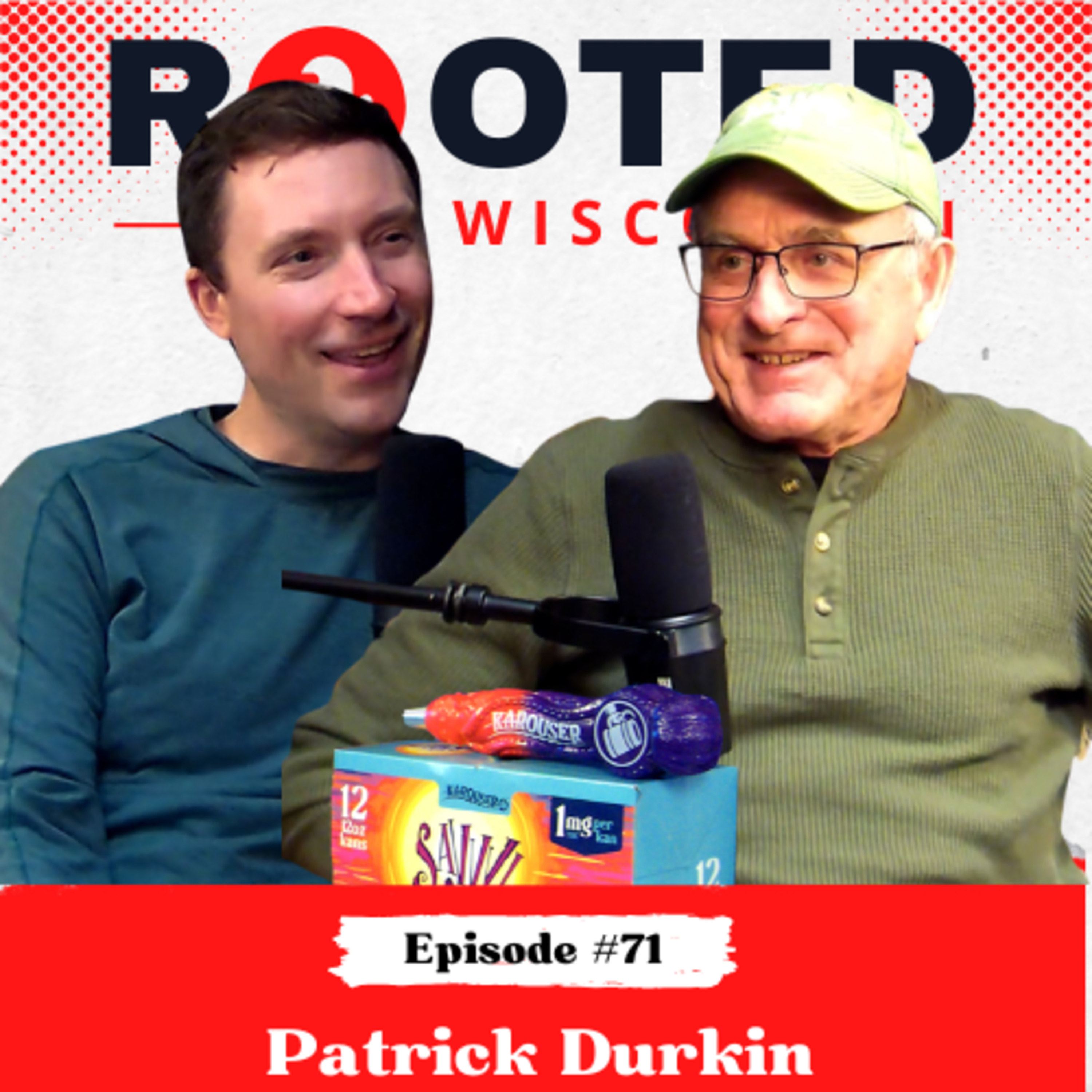


Patrick Durkin of Eau Claire, Wisconsin, is an award-winning outdoor writer, newspaper columnist, and general outdoors reporter. He has been MeatEater's wildlife research contributor since June 2018, and writes frequently for national archery and hunting magazines. Durkin also provides editing services for books and magazines, and served as contributing editor/writer for the Archery Trade Association from September 2001 through January 2021.
In this episode, we talk about about Pat's time in the Navy, many years in the newspaper biz and editing Deer and Deer Hunting magazine, the power of words, creativity, Pat weaves in some great quotes and stories from life, and MUCH more.
https://www.patrickdurkinoutdoors.com/
As always, a massive shout out to our sponsors at:
Karouser - NA social bevvies delivered to your door
https://www.karouser.com/
Epic Mortgage – Your partner in homebuying, empowering communities and supporting home ownership
https://www.yourepiclender.com/
Genuine Lynn – Custom apparel, decorative engravings, and one of a kind pieces where Lynn brings your vision to life!
https://genuinelynn.com/
0:00 What's up friends, welcome back to Rooted Wisconsin. Appreciate you for clicking another episode. Grateful to have you here. Today's episode is with Patrick Durkin, outdoor writer based in Eau Claire, WI. Fantastic career, really fascinating conversation. Long time writer for the Green Bay Press Gazette, Deer and Deer Hunting magazine and current Meat Eater contributor. Patrick has a really cool career and just a really cool take on the craft of writing and just overall reflecting on life. Excellent conversation and I'm excited to share it with you. Big shout out to our sponsors at Carouser NA. Beverages delivered right to your door. Epic mortgage people centered human centered mortgage services and genuine Lin custom apparel and one-of-a-kind trinkets.
0:48 If you appreciate what we do on the show. If you dig the episode support our sponsors. That's the best way to support us along with clicking follow and subscribe after you enjoy the episode with Patrick do just that hit that subscribe button. Thanks again for being here. Here we go Patrick Durkin. Reached out to me a few years ago and I still writing in the press because I can't remember what I wrote, what column it was, but he reached out and said something. And then next thing you know, I was up there doing a fishing law fishing trip with him.
1:45 Just floating down the, the, I think it's like the West Branch, the Chippewa way up in, up in Sora County and having a good day. And his wife was teaching a course that day at some local school. I think it's basket weaving or some kind of thing with local locally grown fibres and branches and stuff. So my wife, I dropped her off at the at the class and John and I went fishing the late in the day, Brendan Penney paddled down in their canoe, met up with us and we finished the rest of the trip that way. And we've been friends. That's been like 10-11 years ago now. So yeah. That's awesome. Yeah. I love John.
2:26 He's such a good guy. He's one. One of my favorite parts about John is talking with him with those glasses that snap together. They'll come together and they'll be a part. They'll come together and they'll be a part 30 times in your conversation. I love it, but he's just such a good guy. Yeah, that's cool. And he loves debating. I, I go, I don't debate on Facebook as my the practice I try to follow as a writer is that, you know, Samuel Johnson, that he's this great English author and philosopher from back in the 1700s. I keep recording his on my on my desk. It says no man but a blockhead ever wrote wrote except for money. No man but I could ever wrote except for money. So I urge my find myself writing for free in any kind of format. I start thinking you're throwing away what little, little worse you have.
3:20 Yeah. And you're always giving it away on Facebook and whatever. And so I when I go on Facebook, I just do friendly stuff, family stuff, friend stuff. I don't do politics. I don't divert myself as stay on on that, on those things where you don't get paid. Yeah, As soon as I start having to think about something, well, now you're thinking, you know, this is what I do for a living. Yeah, absolutely. And it's like anything else that I think, you know, that comes in life where we all have areas of specialty. Yeah. And then, you know, it's easy to let whatever be the, the lines of friendship or the lines of communication or wanting to help somebody blur the lines between, OK, this is like, I have it, this skill, this thing that I can make.
4:13 But then, you know, it's, you get that elbow shake and it's like, Hey, can you, can you give me a hand or. Oh, I get that a lot, Yeah. Especially I talked about it on on the Meat Eater podcast a few years ago was one thing I was always good at from my early days in newspapers was writing obituaries OK for for calm people, important calm people who had died and if if somebody like a former mayor or whatever it might be, if someone died, they'd a jerk. That was my assignment for the morning, to do a basically glorified obituary about the guy. Yeah. And so like, as even to this day, I still, I get to ask the writing obituaries for family and friends and stuff and those those I give away.
5:02 But I did. I got contracted one time from that Meat Eater podcast where I family down in Illinois in the Chicago area, a famous architect down there died. And I get this phone call one day and they said, hey, I heard you in the Meat Eater podcast and Steve talking about your respect for a good obituary and would you write our fathers? And I'm kind of thinking I don't have time for this. Yeah, as if as this part ready to blow it off. My younger brother who's who's much more business savvy than me. He says, well, ask him how much they they'll pay you for it. Just ask him, oh, good idea. He says in this tell me your rates.
5:43 And he said, chances are if this guy's an architect, they probably have money and they they don't even blink it. Whatever you're, whatever you pitch, just make it your standard pitch. So I did, didn't, didn't faze him. I said sure don't, Don't pay that. Nice. And you thought it was going to be a hey, can you do this for 50 bucks type too? Yeah. Well, you know, that's for I'm I'm something else 70 and I often get haunted by this comment my dad made to me years ago. God this was nice. I'm my 20s, I remember being shocked by something and that somebody had done and some public figure.
6:24 I couldn't believe they did, did whatever they did. My dad looks at me and says, you know, Pat, in these days, you got to realize not everyone thinks like you. And I've never forgotten that, that I have a naive feel, you know, feel for people. And I, I often tell people too these days, and I've learned my wife that if she doesn't, if she doesn't like someone or has suspicions about someone, I perk up and pay attention because. She has the gauge on it. She is much better about siding people up in the moment. And combine that with the ease of like not putting the amount of value on your own work that you do on others.
7:07 That's a natural thing for a lot of people. So you're coming like why would anybody give me 5 grand to do this thing, you know? Even though this is what you do for a living, yeah, it's still you always fight with. That's a powerful quote though. I'd I'd one of my kind of core pieces of what I live by is a similar sentiment. It's just that I might be wrong and I got it from a song. I got it from a song by a guy named Paul Thorne, and he kind of frames it through the land around lens around religion for his song. There's a couple other things, but in life, I think it's a great way to approach light because I, I have a tendency of the things that I, especially when I was younger, I had a tendency of the things that I hold dear and truly believe, you know, we fight for those things and I think that's important to do.
7:57 But at the same time, tunnel vision comes in really easily and it's my way or the highway and I'm right. And the kind of that steadfast thing. And I don't know, as I've gotten older and, you know, hopefully developed as a human, I I try to take that lens more often about just, you know, truly seeing what the other side could be, whether that's somebody I agree with, agree or disagree with, you know, whatever politically, socially, fiscally, whatever, whatever. I try to see the other side. And I think that's really valuable info. Yeah. How long ago was it? You think your dad told you that? I can pretty much pinpoint it down as being, I'm pretty sure I'm still in the Navy. So it was probably back in the late 70s, so about 45 years ago. That's amazing.
8:44 Yeah, yeah. And, and, and I think to this day, I'm still kind of that way. I, I guess they, I, I, I, I watch my wife quite often in certain situations and think, well, what's her take on this? And ask her, you know, because a lot of times she won't say anything about, I ask her about, you know, it becomes those kind of things because she'd think she defers to me that, well, this is your, these are people you're working with, you know, you should know. And she's not going to contradict something that I feel, you know, like I'm comfortable with it. Yeah, until it comes to point where she knows I'm getting ambivalent about something. And she'll say, well, you know.
9:31 That's awesome. Are are you? This is something I think about quite frequently too. Are you and your wife do you? Complimentary personalities, would you say? Yeah. Because, you know, one of the little observations I, I've made a number of times, because it's just something that hit me one time. You know, you, I read this, I read the book years ago during my Navy years. I read that, read that War and Peace book. Yeah. And I don't remember much about it, but I do remember one part. And there were, they're just talking about this one couple that got married and they've been along in the marriage far enough to where they were finishing each other's sentences. And I thought when my wife finishes one of my sentences, I'd say she has about a 99% chance of getting it wrong.
10:20 You know, we don't think alike. You know, when I'm saying something, she'll start assuming she knows what I'm about to say and gets it wrong. She'll finish my thought for me. And that's not what I was going to say. Yeah. And but I think that's so like, when I hear her terms like soul mate, those kind of things, I think I'm not sure we fit that fit in that category. I think ours just have, we have, we have a certain respect for each other that playoff each other strengths and weaknesses and it works for us. But you know, when I hear people saying that they never fight with their wife and that kind of thing, I think that's not us. But you know, it's never it never it never the fights never override the the underlying love. You know that you but yes, think sometimes God, we just do not think alike in some ways.
11:13 But then another thing, though, I think more important things, I think, like politics view much in in lockstep there, but we come from, you know, different backgrounds. You know, she's from New Jersey, I'm from Madison. And so some, some things that overlap, but other things, no, they don't. Different religions, everything you know, so. I think, I think that's a tremendous strength, to be honest with you. I, I, my wife and I are similar. We think about the world and see the world in a different way. And similarly, you know, you know, either side, me finishing her sentences or her finishing my sentences, it wouldn't happen.
11:53 You know, neither of us would know it, but we, I I love that you mentioned the underlying respect because that obviously has to be there. But it, it's similar to life, right? Like the best teams have a diverse blend of talent. Oh, yeah, yeah. And our talent is very diverse. She looks at the world most of the time, like outside of like being a teacher or a podcaster, if somebody asks her what I do, she's like, I don't really. I don't think she thinks about it. I don't think she knows. And like a lot of my interests in hers don't overlap. But what what does overlap is the, you know, the love and appreciation for each other and the the kind of awareness of the situation that's really important. And when you contrast that with, you know, you'll see, you know, people, couples, husband and wife that have similar interests where they, you know, their thing is the same and they do it all together.
12:58 And I don't know, I, I envision a lot of things with that. You know, it seems like the ego pull would come into that more frequently, where is like, if two people like, complement each other, it's like you do what you do. I'm going to try to put you on the highest mountain that I can. I do what I do. You put me on the highest mountain you can. And we come together to create this force. I don't know. It's valuable. Yeah. How long have you been married? It'll be it was just 45 years back in back in December, yeah. Proof is in the pudding, right? Yeah, that's awesome. And it's, you know, some of those things, I, I, I, I always, I, I find it fun to talk, talk and think about the way different people go through life and how that contrasts with mine.
13:42 And like, I've always, I've always been faithful. It's just not something that I just know it'd be such a sign of disrespect. Oh, yeah. And just so and bring so much grief. I think, God, that just wouldn't be worth it. And plus you'd kill me, you know? Yeah, yeah. I couldn't imagine the burden that you would bear. I can't either. I, I and I. And then at the same time, I remember one time back when Tiger Woods merits fall apart and this cool work of mine was saying he's a reprehensible human being. He really condemned what what Tiger had done, the infidelity he'd committed.
14:26 I said, on the other hand, it's easy. I have I have AI like Mark Twain and Mark Twain has these great, just wonderful quotes you always and I always envy. And one of them was the weakest of all weak things is a virtue that hasn't been tested in the fire. And I always think it's easy for me to be judgmental of people like Tiger Woods, these very handsome, striking individuals. I can't imagine what gets thrown at them. I mean, the temptations that come in front of them were a normal looking 5 foot eight guy like me. That's not my life. I don't have people, you know, bowing to me and and trying to seduce me and all that kind of stuff. It's never happened in my life, but I look at guys like him. He's I'd say they're, they're famous, They're everyone knows who they are and they walk to an airport. Can you imagine what their life is? It's not even the same kind of experience we have. So I have a hard time getting all judgmental about because I think we don't know what they have turned down and pursued and those kind of things.
15:36 I don't know that life and I mean, look at different errors that people live through. I I remember reading about England in World War 2, when the husband go off to war and the wife would be left behind. They knew even in London, living in London, they could die tomorrow too. And so there was a lot of people that just when their husbands and wives were not, when they weren't together, they slept around and 'cause they, this might be it for them and who knows what kind of torment they're living, you know, being apart from each other like that. And so I used to have a hard time judging that. I think I've read about it.
16:17 I find it kind of, wow, that's interesting. But that's what the extent to my action on it. I'm not going to act on that wall. They did it. 100% agree. Absolutely. That's a that's a really unique example for me because Tiger Woods was one of my childhood year olds and I I really looked up to him and, and I feel the same way about it. I couldn't, I couldn't envision myself doing it. But you don't know everything else that comes into that situation. I have to assume that when you meet your, the person you decide to marry after you achieve a certain level of success, there has to be a constant watch out and probably a lot of reality about more or more of a transactional scenario than a just committed, respectful scenario. And I, I didn't have anything when I met my wife. So I know that.
17:11 I know that it's not that, you know, And I have to assume that that affects how you navigate life too. And then there's a whole other thing of like, for someone to be the best in the world at something, you're wired differently. And that has to come into play in your social relationships, too. It's funny that him and Kobe Bryant and really not so much Brett Favre. Mine was more Aaron Rodgers, who is so far lived a straight and narrow for the most part. And but like when you think of the the prior 3, they're pretty big scandals now. Brett's went a different direction and I'm glad I wasn't as connected to him as I was with with with Kobe and Tiger. Like, I, I started playing golf at 11:10 or 11 years old because of Tiger Woods and just thinking how cool he was and seeing him change the game of golf.
18:02 And then all this stuff comes out and I remember being in your exact seat feeling your exact same way. Like, that's kind of a bummer. I couldn't do it. But I, he's a golfer and a, and a human, you know, separately. And I remember that was a huge thing when it came out, everybody was throwing blades. Right Oh yeah, I I see. Like for me, my big lifelong heroes been John Kennedy and and then when it when it came out that, you know, he was basically ran like a frat horse at times. You know, I'm running around on his wife and but I and I realized, well, you know, it's a different era, different mores, different things he grew up in.
18:49 And look at all these famous people in in history, Franklin Roosevelt, Thomas Jefferson, awful lot infidelity in that. And again, I, I another thing I quote that comes to mind is Henry Kissinger when he was famous back in the 60s and 70s. He was not a handsome man by any means. I don't feel you can picture him at all. But but he he made a comment one time that power is the greatest aphrodisiac. Yeah. And I thought, yeah, we sit here and get all judgmental, these people. But I think my take away, my bottom line is on those kind of things is, you know, if they're human and if there's judging to be done, I'm not going to do it.
19:33 You know, I think that's. I'm not the judge and jury. I'm not in a position here to offer a whole lot of anything that that they would ever care about. Yeah, yeah. I doubt those guys, they knew who I was. They wouldn't care, you know, and but, but I don't respect those sides of their personalities or on their life. On their hand, I look at the way they loved words, the way they could put craft words together and express ideas. I mean, for God's sake, this country's had some wonderful people, smart people that could craft, you know, the Declaration of Independence and could, could deliver a speech like the the one that Kennedy gave when he was inaugurated, the one he gave when we we decided to go to the moon. I watched those guys speak and I think. Oh my God, what talents, you know, I just envy it how how good they were on, on on the podium great orators have. Always fascinated.
20:33 Me, yeah. And I, so I think, well, they're human. They also have their bad sides. And I think we all have things we could work on. Yes, we all live in the glass house, the proverbial glass house. That's a great segue, man. Let's talk about where your passion starts in the writing. Where, how did, how did you realize that that was going to be something that you enjoyed and wanted to do? I, I kind of came by it realizations were I was going in the, in the Navy back in 1975 and I was set on a, the thing I wanted to do was my idea at the time, I wanted to be a firefighter. My dad was a firefighter.
21:16 His dad was a firefighter on the mass and mass and fire department. And so I thought, well, that's what I want to do. So I, I went down and I knew in that era, the best chance for a guy, a white guy with no affirmative action thing, that kind of thing. You have to find a way to get on a equal footing. So if one of those jobs, the best way for a guy like me was to to the military. And so I joined the Navy because they had this great, it's called a hull maintenance technician. They taught you firefighting, they taught you damage control. They also taught you lots of great trades like carpentry, sheet metal work, pipe work, welding, all these kind of great skills. And so I thought, man, I come on the Navy, I'm going to have all these great skills and be able to get in the fire department. I'll have all that background and a dad. Meanwhile, I was looking at the same stuff that brought home from the recruiter.
22:14 And he was a big guy on public service. And so he, he was, he'd been, he'd been in the Army, he'd been in the Coast Guard Reserve for years. Anyway, he's looking all my material. He says the Navy has a journalism program and he's reading the Vice. You know, as good as you write, you shouldn't look into that. He recommended that to you? Yeah. He recommended that to me and I, and I, like most 19 year olds, didn't listen to him. I went into the Navy, got to look all the damage controls training and all, all this firefighting work and dad's point being a firefighter, this was his career. He knew when it comes to hiring someone, they wouldn't care what you did in the Navy. So do this for yourself.
22:59 You know, once you have the Navy background, that's all you need to get a fire department job. They aren't going to look and see that you were trained in firefighting and damage control. You know, just say you're in the Navy. And he said the Navy teaches everyone basic firefighting and they do, you know, it's a ship. A ship, you know, gets hit, has a fire. You're not going to run outside and get away from it. You know, you got stay there and deal with it. So anyway, I didn't listen to Dad. I went in the Navy, did all the Navy jobs I had and then that. But in the meantime, I was always writing home. I, I wrote some letters. I even got to the point where I bought myself a manual typewriter is much faster, much faster than write letters on typewriter than the longhand. And in the process, I start getting feedback from friends and and aunts, uncles, grandmothers, that kind of thing.
23:53 And I kept hearing as descriptive, as as descriptive as you write, you should go into journalism when you get out. And I heard that enough times. I finally started to realize that Dad had been right, that he had a pretty good insight into me. And so when I got out in the Navy, I was still applying for firefighter jobs, but I thought, I'm going to try college for a semester again, see how I do. And at the end of the semester, I'm, I'm doing OK. I'll probably stay and get my degree, then worry about my, my first job, you know, But by the time I got out of college three years later, because I, I had some college before I went in that time I got out of college, I was doing well enough in journalism between writing and copy editing, where I stayed in journalism. And it was funny.
24:42 Years later, it's Dad. Dad's idea was that at that time, by the time I got out of the Navy, David, that was a massive Fire Chief, you know, the guy who hires firefighters. So I would have had an in, you know. Yeah, I had the Navy background. I was a top student in college. I had almost a straight A average. But when I came back out of college and so I really had an in. But I decided, well, I like this enough for him to make it a career. And so I stayed in journalism, got hired at the Oshkosh newspaper and went from there, The deer and deer hunting magazine up in Appleton at the time. And by the time Dad was off the fire department, I was in a career. And years went by and I remember when he was, he was still alive till, till, let's see, nine years ago, almost 8 1/2 years ago, when, when dad was probably in his mid 80s, I said to him, you know, if I'd listen to you, I'd have been retired 10 years ago with a pension.
25:46 And here I am still working, you know. Yeah. Then I think, well, this is must be what I do because I'm, I'm 70 now. I'm still working and I but I but I think I wasn't the last people to really realize I had a talent in writing that that was good enough to where I can make a living at it. And I have, you know, so, but I've always been a big reader. And from the time I was in in, I remember in second grade being in, I still remember our second grade teacher, Carolyn White. She had every student in the class and had a little rocket ship and there's a little mural across the front of the class.
26:29 And I had like the the stratospheres, different things that rocket could go up through. And so like we all had a little rocket ship. Every time you completed a book, your rocket ship would go up that wall a little bit. And I still remember to this day. So this is like 1962. You know, to this day, I can still Remember Me, Sue Mcginnity and Lisa Eckert were the top three students for reading books. And we're we're just fighting each other to go up that wall before the other one could. Yeah. And I, and I think to this day, I still have a lot of those kids books from my childhood, you know, like Davy Crockett books and Hardy Boy books, those kind of things.
27:11 And, and I just really realized, well, you know, I was a sickly kid, so I spent a lot of time sitting in bed reading. And I think that just kind of helped shaped who I became, you know, this idea, you know, there's, there's always something to be learned. There's always different perspectives to to glean. And I always read, I always read non fiction more than fiction and just always had an interest in history and all these kind of things that helped me as a journalist later in life where I could, you know, just recall things I'd read. And but I've never that I was never the smartest kid in the class, but I was always, you know, at least good enough to hold my own, you know, and sometimes in your writing, pull stuff out of your head that you had from books you'd read years before that helped shaped how you look at things and give you examples of things that you you kind of pulled into your your writing.
28:06 And it's just always, to me, kind of been a fun part of my work that I can still think of things that I read as a kid that informed my thinking, you know, decades later. What a blessing to find it. Oh yeah. You know, especially after a nudge in the direction and you still kind of went down the path. It was. It was really, it kind of tells you too, though. Your life can go in lots of different directions. Yeah, really easily. And, and I'm sure if I would have gone and followed the path that I had when I was 19, that I had in mind, I didn't pray, had pray, had a good career, I still think I could have done it.
28:47 I think I had the right temperament for that. That's one of the reasons my dad pushed me into it, because he knew I didn't have a fear of heights. I didn't have a fear of the kind of things that some people deal with and any thought for firefighting, that I had the right personality for it. And this, from what he observed, and it's one thing I learned too, is when you're a kid, you know, you don't have any respect for what your parents do. At least I didn't. I didn't really appreciate what Dad has was accomplishing it in his life was until I was, you know, an adult myself and really start seeing some different things I had navigated, started to really understand that guy.
29:28 He had his faults too, but God, he was a sharp guy and never, never finished high school, got his GED and went on to become the mass and Fire Chief, You know, So you think, yeah, if you're motivated and you have that perseverance and the intelligence and the talents, who knows where you can take that, you know? But it still, it still comes back to you and, and what you do with it, other people can't do it for you and they can get your get your foot in the door. But once you're in there, you better not make them look bad, you know so. Yeah, yeah. I mean, well, especially in your in the career you ended up choosing, right. The the proof is so immediate and in the pudding, you know? You're being yeah, that's one thing. I one thing I always respected about that is it's being evaluated every day, you know, every, every time you write something.
30:18 And that's why I still lay advice to give people who I mean, talk to classes about those journalism classes or English classes, classes, freelancing seminars and stuff. Now you have to give every article you write your best shot. And sometimes your best shots going to be not what you like, but forgiving the time constraints might be or whatever it might be, or the, OR the, the topic, you still owe it to your readers to give it your best shot every time because you never know which thing they're going to going to read and from their opinion of you. And I can, and I also know too, that you can't dwell on negative, negative feedback from people either.
31:03 I mean, I get plenty of that people who don't like a take I have on something, an opinion I'll offer on something. They're not afraid of telling you what they think. And that's well and good. And that's, you know, and that's, and that's really that the, the, the ethic I, I have is that this is, this is the United States of America. They're entitled to share their opinion and they're the one reading the newspapers. They don't like it or the magazine or they listen to a podcast. They're entitled to their opinion of you and, and what you say. And you can't fault them for that. I mean, I might not like it. I'd when people say I, I invite criticism, I think I don't want to invite it. I yeah, I'm going to get it whether I want it or not, you know?
31:49 Yeah. Yeah, and there's a, there's a probably an interesting. Well, there is because I mean, like you said it, it goes to a lot of creative realms. But there there's a They're not saying your writing sucks, they're saying they think your opinion sucks. They told me that too though. Really. What? What the leg do they have to stand on? You know the keyboard warriors saying, right? Well, that's that's what you take. You take can't. Believe you Zilac for comma. It's, it's, it is interesting. One of the one of the things I remember being fascinated by him as a young reporter down in Oshkosh.
32:32 That's probably like in my late 20s. And, you know, and I remember covering school board meetings and City Council meetings and seeing, you know, they have these, they have these every City Council, every school board, they always have, they open the meetings usually with public input. And that's resources board in the DNR, whatever it might be. They usually have a public forum. And that was literally the first time in my life I remember being just, you know, being naive that an adult would stand in front of a public body and talk nonsense and be so convinced that their nonsense has, has, has credibility. And I just think, what world do these people live in? You know, and I just, I remember being just so shocked by people standing up like that in a, in a public setting and making a fool of themselves and not realizing they just made a fool of themselves.
33:30 So there's a really strong connection there to something you said earlier about the the debate and comment section on social media. It is flabbergasting how many people will read most of it. A lot of Times Now today's it's not even the the article. They'll read the headline of an article and develop this staunch opinion about something and just be comfortable shouting from the rooftops. And like anybody who read the actual article reads it and like you're an. Idiot. I could. I hadn't. I had an article just recently, like every time I write something that goes on my own website or goes on themeateater.com or goes into a a newspaper like Wisconsin Doctor News and other people that care.
34:16 My column I post links to to that stuff. And I wrote a column just recently about chronic waste disease in Wisconsin and how it's, it's interesting how our, our counties with the absolute best deer habitat are also the colonies with the worst CWD problems. And I put a lot of time into that article. A lot of, I only call it research. I call homework because research I, I was seeing a scientist and all that kind of stuff, but you're following a certain program to, and then peer review all the things that involve research. I look at my stuff as more or less more, it's more like homework where I'm reading up on stuff and interviewing people. I remember writing this article really investing a lot of time into the the facts behind it and putting it out there. And then you put a link on Facebook and I tell you, Brad, what I think about when I see it. The comments that start coming in is basically all I did was told them a chunk of meat that you on, you know, by saying here, go read my column.
35:25 Here's a link to it. They don't bother with that. They just go straight to that chunk of meat about the headline and just start chewing up. And after the first comment or two, it just evolves into this pit. They just start ending this picture, these dogs on this pit fighting. And it's just like they who who Pat Durkin who's that into the into the responding to my my original post yeah. 100 comments later, 200 comments later, they're just turning each other apart. I'm running a part of the. Finger dance later piece, Yeah. And that happens so often. I think, God, no, that's that's where it where it gets frustrating.
36:06 Sometimes you want to provide information for folks to chew on, you know, to think about. You realize so many though, they have their, they have their mind made-up and they are going to be swayed. And so then it's easy in those cases that to, to get discouraged. But I'd also believe in the idea that you never, you never know who's reading your stuff. That's one of my long, lifelong lessons. And that you'd like to think that. Well, yeah, the ones you're hearing from in that Facebook forum, there's probably many more people out there who are not like that who actually did read the column. And then they're busy too, though you can't split some note to wait into that mess and get the middle of that. They just.
36:51 Well, a lot of them are sitting there, they actually read the article and they're sitting there doing the same thing. We are looking at the comments and being like, look at this Jackass. It doesn't even pay to talk to this person. And, and that's certainly happens. I mean, it happens with the podcast too. I, I, my mission is long form content. I think there's a lot of value in it. At the same time, our attention span is compressed and social media amplifies those fringes that are willing to hop in the comments section and like they that provides them a platform. But the vast like there's a whole other group out there that's taking in the full form content, getting something out of it and then making it theirs.
37:34 And that's the logical people that you meet walking around town all day. Because if not, if that didn't exist, we would walk around town and our personal communication would resemble social media communication. And really those two worlds don't resemble each other. And that's important, man. And I think, I don't know, I, I spent some thought time on that about like how that is part of the, you know, de evolution of our society in a way of amplifying that as opposed to critical thinking and curiosity and all these things that are so valuable. Yeah, yeah, I, I the things I lament a lot with the development of social media and the Internet, all those kinds of things that came along by halfway through my career was when I was a kid. One of the things I still value is I was a newspaper carrier. I delivered newspapers for like 3 years on the bicycle and, and I'd say in the neighborhood I lived in, in the West side of Madison.
38:36 I bet you that newspaper that I delivered the Capital Times in the afternoons in the State Journal on Sunday mornings. I bet you it was probably 60 to 70% of the people living in that area got the paper. I didn't, I didn't bypass too many homes. Most homes cut the paper. And so they're all, they're all reading kind of from the same information source. And then there's good local news. I mean, they covered papers, covered the schools, City Council, county board, all these kind of things that are, are, are the community now look today and I think there's no local coverage, at least not much, not enough for most of us to really know what's going on down in in City Hall, in the schools and those kind of things.
39:21 And really, what are these issues? And most people think, think the only thing we talked about is budgets. And there's so many things that communities should be aware of. And those forums are now taking place. The social media is the medium. It's happening. But the the path to gaining knowledge isn't the same for the user journey. It's it's that it's like people see the headline, read the comments, then if they get to the point where they're in their curiosity is peaked, then they go to the article. Yeah, let's flip that. You know, let's reverse that. Yeah, that's a good point is it's like, you know, ready fire, aim. Yeah.
40:03 And. Exactly. And but then, you know, on the other hand, there are, you do know, like we were talking about, there are people, I like to think most people because when I, when I look at the feedback I've gotten over the years, I'd still say 8090% of my feedback is positive. You know, I, I hear from some real nasty people and, and some of these nasty people stay after you for years. They just never let up. And, but I, I, I like to think too, that it's my very little Nuggets I got from my dad. I like to tell a story. Dad was like I say, the Fire Chief of Madison. Before that he was the union president for the local fart farted firefighters. So he saw from both angles, you know, the management, administration and also the the rank and file. He always kept his name in the phone book. His address in his name is always in the phone book. And so sometimes you got these angry phone calls at home and my mom didn't like it.
41:03 My grandmother who lived with us, she kind of rolled with it and she was proud of her son and she didn't get too blown away by it. But dad always kept his name in the phone book. And I asked him one time years later, because I always thought it was kind of an interesting thing that you didn't you didn't have to have your name in the phone book back then. You could pay a little fee and they'd keep it out. I asked him why did why did you always keep your name in the phone book? And I thought just get get like AI don't know cut that by ants. But he had thought about it and he said he always, every time he had that thought of taking his name out of the phone book, he'd tell himself, you know this, the people of Madison pay my wages.
41:45 Therefore they should have a right to. If they don't like something I'm I've said or done, they can call my home and yell at me, leave a message, if nothing else. And when he came into his days as a union guy and then the chief physician, newspapers and radio, TV, we're always calling the house looking for interviews and reactions. And he never took his name out of the phone book. He called him back. And I learned a few tricks from him. I asked him, well, you know, when he became chief, what was that like? He said, well, if they called me and caught me after I read the question, I'd say I'm really in the middle of something right now. What do you want to know? I'll get back in a couple minutes. And they'd, they'd tell him what the topic was and they'd come up with a few ideas and then call him back.
42:30 That was, that was, that was clever. You know, that's smart. You know, you know, you know, if you cannot, cannot, if you don't have to act and react in the moment, why just give it a little thought 1st. And then because I like for me, even being asked a simple question, how many times I'd see it differently if I had a chance to flex it first all the time. Most of us aren't that great off the off the cuff, you know, Some people are, but most of us aren't. Especially in those emotionally charged situations that he's facing. You know what's fascinating about that though? Along with this conversation, as I bet there was times along that journey that when that phone rang, he left the conversation with a different perspective. Whether it was a package delivered effectively or not, there was probably things he found along the way that he wouldn't have thought about, wouldn't have done, wouldn't have considered if he didn't get those phone calls. And we're missing a lot of that.
43:25 You know, we get these echo chambers of the I'm right, I'm right, I'm right, I'm right. And then, you know, we turn off the comments, right? Or like, that's kind of where I am with social media. I very rarely go through the comments. Right, like when I was telling you about earlier, I know I only scanned me a third of them because it's got like, it's just so repetitive and just mind numbing, you know, And I, I don't, I don't, I don't know how people live like that. And I, I like to, I, I always, I always like to quote. And then the little things I wrote on my typed out and printed off and put stuck on my desktop was a line from Kris Kristofferson to beat the devil, the song to beat the devil. And basically you got, you got to hope that someone out there cares, You know, that, you know, if you spend your time talking to people and thinking they all don't care. No, you guys think that some of them do care. And she keeps saying it.
44:28 You keep putting information out there hoping that someone's going to care. And I think, I think a lot more people care than me than we think, you know, So I, that's why I keep keep your mind myself those days when I'm just feeling beaten down and not making any headway with a certain amount of information I'm trying to provide. And, and for much of my career now, it's funny for me, I look back and think I've been writing about chronic waste disease and deer for 25 years now. And I think, what did I write about the 1st 1819 years of my career, You know, jeez. Yeah. How did that, how did that door open? Was that a was that a Well, deer? And deer hunting was a big portion of your career, right? Yeah, about 11 years.
45:13 Yeah. How did that door open? Is that a? Was that a collision of interests? Or definitely OK. Yeah. My, my, when I stood off newspapers, it was I started working in the sports department in Oshkosh in 1982. I was still in college at UW Oshkosh. But I, I knew because I, I, I thought at the time, if I could get in one aspect of journalism, it would eventually be outdoor writing. And I really liked the idea of being an outdoor writer for a newspaper in the Milwaukee Journal. I grew up reading a grip reading this, the State Journal in Madison, Milwaukee Journal. I had outdoor writers and, but time I was in my, you know, college age, mid 20s.
45:57 I really thought that's what I'd really like to do. And I knew this from my hanging out in that at the Ashcast newspaper that the way you get into the outdoor page in most newspapers was to the sports department. The sports editors typically control the outdoor page. They, they dictate how many, how big the outdoor page was and how much space they gave it. And so I knew that's where I had to get, get in front of sports editors to get their attention. So I my early days, like when I was still in college and then my first two years at the newspaper in Oshkosh, I worked in the sports department and anyone who knew me thought that's kind of laughable because I my interest in sports are basically the Packers and Badger hockey. I didn't, I played baseball as a kid. I wasn't too bad at it, but I didn't know how to keep a box score and or how to how to how to score, play all things that baseball nuts and all that stuff. I didn't know anything about basketball and but yet I thought one good thing about journalism school, it teaches you that if you're a good reporter and you take your craft seriously, you can cover anything.
47:10 At least, you know, get through it. And so, like daily newspapers, you know, you get thrown in almost any kind of story when you walk and, you know, you might think you know what you're going to do that morning, but you don't. If something happens and off you go on. You're covering a fire, covering a bad car accident. Who knows what it might be. So it's really a good training and sports in the sports test was really good training because you spend your Friday nights taking box scores from high school, local high schools and writing, then quit writing up a quick description of the game. And you do that over and over again and you get pretty good at that kind of stuff. But I but I knew for the long run I couldn't do do sports writing for a living.
47:53 It just wasn't my passion, but I knew if I kept keep pecking away at this, they'll give me occasional cracks in an outdoor outdoor story. And so that's what I started doing. But about a year or two into my full time work, a dash crash. They let me have the outdoor page. Well, then I went nuts. Just spent I really gave them a lot of free time making sure I had good articles in the outdoor page into my main job was elsewhere. I covered the school board down there and that kind of stuff. And I covered because I went I went from sports to to the local school board and then I became the weekend editor and had a few real embarrassing moments doing that. One of my favorite stories that I can tell you, Brad, was I was on, I was on the desk the night of the big stock market crash in 1987.
48:43 And the AP wire, the Socio Press wire used to come in on different feeds into your computer. And I was kind of new at the jobs, so I didn't know there was one wire stream that came in that had everything in it that I didn't have to go through and pick all these different streams coming in Somehow that wasn't trained into me. So I missed, I missed the stock market crash. It was like the one night I never watched TV that night I was in a hurry, sat down and got working on the getting that newspaper out the next day. And I always remember how I next Saturday morning when the paper came out, I remember walking into the Menards in Oshkosh and they had in those days they had newspaper racks. I remember walking past the Milwaukee Journal, Milwaukee Sentinel newspaper rack and big, bold headlines about the stock market, stock market crash.
49:40 And I thought, I'm going to be fired today because I didn't didn't have it in the paper. Yeah. And when I went to work I worked on, I didn't get called. My boss didn't call me. But when I showed up for work Tuesday morning, she called me in their office and she knew I knew I'd messed up. And she said what happened? She was she was giving me the chance to save my butt, basically. I told her I dismissed it. I didn't try to lie my way out of it. And I said I missed it. And I said I haven't slept. I haven't slept for the last two days. I felt so stupid, you know, and then and so I described what happened that night and where she called in my, my other boss and explained what happened. And he said, don't you know that if you do this and do that, that feed will always be there with all the new, not just the ones I was I was pulling down and pulling stories off didn't have the stock market crash, you know. So anyway, that was my my roommate. Well, that's all I thought.
50:45 The biggest embarrassment in my life. Oh yeah. For a for a career. Humongous, they at least, at least they took the situation and probably reflected on it and said, OK, we should have taught where this comes from, you know? And, and, and then there's a fancy price. I thought I I knew that right, because they, they had given me training, but for some reason I didn't, didn't know that little aspect of it. So. You didn't get fired though. No, no, I, I got chewed up pretty good and just basically made, made clear that, you know, there's just some things you don't do. And one of the things you don't do is you don't miss the Evening News because in those days there's 33 news channels and I, if I just watch the Evening News like I had done every Friday night until then, then that it didn't. And even just probably just the 10 minutes, right, catch the police cells if there's anything you're going to have to. Cover but but I think those kind of things, they're good experience to live through and even losing a job, those kind of things are good things to live through because you you learn that you move on and you, you, no one has time for it. No one, no one wants to hear your sob stories and then then when you get out of a situation like missing the biggest story of the year, basically, yeah, you bear quite you have to try to BS your way through that one.
52:07 Good luck. I I I don't have that skill. Yeah, I lost a toenail off my thing. I had to go to the ER. Yeah. Oh, I feel that. As a teacher, I feel that the the stories crafted are great. And that's I, I think it was, if there's one piece of advice, I always keep remind myself is don't make an excuse. Yeah, just don't, you know, because no one respects it. And Ian, if it's true, it's just not going to land. Probably, you know, is there's just, you know, I think that's one of those hard, hard realities. Life that doesn't matter what it takes, you get the job done. You get the job done, You start shoveling and do it. You know what?
52:50 It's yeah. Yeah, or, you know, the, the flip side of the coin is you decide that the job isn't worth the effort or it can't be done because life happens. You know, there's all stuff around you. But yeah, when when you say that this is what you're going to do, doesn't matter if there's a great excuse or not, it still doesn't get done at the end of the day. Yeah, and you, and a lot of it does come down to your own individual talents and interests and ethic and whatever it might be. And you know, I, I, I just like to think that if we all give it our best shot every moment we have that it will make a difference at some point.
53:32 And I, I never had in my career, I've never had a five year plan. Those can I hear those kind of things. I think God, you know, the only plan I've ever had is that you have to be ready when the door opens to go through it. And so the only thing you do is just come into work every day and work your butt off. Give that person whoever is paying you, you know they're what they're what the full worth. And if it's if it's beyond what they're paying you is probably go that direction and underperform. You know, these I'm gonna, I'm gonna had a freelance guy one time told me that if they pay him $200, they get a $200 article. If they pay them $500, they get a $500 article. And I always think that's too much thinking.
54:14 Just give me your best shot every time, you know? Yeah, and then the the next one ends up being $1000 article because you did. Yeah, yeah, because you know, again, you don't know who's reading it. It could be your next employer and they might remember that one shoddy piece of writing you did one time, and they'll never forget that. That I kind of had a good impression of him until I read that, you know, You know, so. Yeah. How does what does that look like as a writer? Because I was listening to, I can't remember who the interview was with recently. I feel like it was a Rogan episode, but I can't remember the person. But he was a writer and I vividly remember him saying that the Max he can write is about 3 hours a day. Wow.
54:56 And and then the rest of his day, what like talking about what putting intention on your job. He would purposely do things in his life that he knew would breed creativity from him for the other five hours, because three hours a day you got a bunch of time to fill. But he would intentionally do things other than right because it he knew it would recharge his creative batteries. So what is what is working hard quote UN quote look like for you as a writer? Well, that, that, that, that to me is always interesting because there are different ways, different disciplines and writing that are so, so different. Like when it comes to real creativity, I think my one of my stories I always, always think is more indicative of a newspaper guy's approach is do you remember Andy Rooney? He's he was he was on CBS for many years. Yeah, he gets his little commenters at the very end of 60 Minutes.
55:58 But his background was newspaper, newspaper writing journalism. You know, he was a correspondent and Stars in Stripes during World War 2A real accomplished A reporter, that guy. Remember him? I remember him saying at 60 minutes one time how the average or maybe he wrote, maybe it was in this column because he wrote, he also wrote a newspaper column for, for decades. But at some point he he wrote this column, I think, I think it was a column where he said the typical news story goes like this. A reporter shows up for work. He's walking past the editor's desk and editor says, hey, I have an 8 inch hole to fill on Page 3 on. Give me, give me 8 inches on last night's school board meeting, for example, he says. And that doesn't have to be very good. Just fill that hole, you know, and, and that's why it's, it's an expression now that's kind of lost in time, you know, filling the hole, you know, and that's always one of my little things is don't just fill the hole, make it good, you know, make it something that's worthwhile and that it can be clipped out and put it on a refrigerator.
57:02 Maybe, you know, you know, people do that kind of stuff. They always clip out. That's always a high compliment for me. If I'd walk into some building in the DNR and sees somebody posted my column and some tacked it to their cubicle, you know that that was a mean. What higher price can you have? Yeah, we're going up and then deer shack some place and find a small crinkles up deer and deer hunting magazine article stuck on the on the wall. And my friend Doug Durin down in southwestern Wisconsin, you walk in his farmhouse. There's, there's lots of the old Green Bay Press Gazette pages, you know, stuck to his wall, 'cause I think his, I think his sister lives up in this region.
57:43 So she'd see these newspaper pages for him when I write about hunting down there. And so that, that for me was a big, that's still a high compliment into my walk into Doug's, you know, farmhouse and see and see those things still hang in there from, you know, 15 years ago. That's I, I, I take pride in that. But to get back to your, your question, one thing great about newspapers and that that background was you just knew there's no time for writer's block and you had to crank up something before 11 O clock in the morning and lose your job. Basically, if you, if you fail and don't deliver, you're not going to be there very long. So you, you, it's funny how when there's a gun to your head, you will produce, you produce, you know, and, and if you can't, you're not going to last long in newspapers. And a lot of people don't.
58:34 A lot of people didn't, I mean, they learned in, in college that they, that this wasn't for them. They were the more, I think, more creative type writers and stuff. They don't, they don't, I don't work well in that environment. But then I think I know my limitations. I, I can't write fiction and I, I can, I think I do pretty good writing, reporting on stuff and analyzing stuff. And, but that's not really on creative writing. But I think too, I think where my creativity comes in, if there is any, is that I like to think that I write clearly and, and that's easy to follow my writing. And if I I, I, I remember reading one time that this nun used to teach writing and that when I clap one of her comments, I'll never forget her saying, if you have to read a sentence more than once to understand it, it's not a good sentence.
59:27 Yeah. And that's when I read something is wonderful, things like Faulkner Road or something. I think I can't follow this. Word mosaics, yeah. I can't follow it. So I think I'm just not smart enough to follow that kind of writing. And so therefore I would say I can't write like that. And, and nothing. There's a lot, not many people out there. You can probably read it either. So yeah. Yeah, funny story about Doug. I I had a day scheduled to Doug to come on the podcast and he thought it was going to be a virtual interview, so I said I only do in person, man. So we're going to schedule it down the road, sure. But yeah, I'm hoping to have a chat with him too. God.
1:00:09 He's a former history teacher. Know if you knew that? No, I didn't know that. You taught history years ago. OK. So that's his back. Maybe that'll be the extra carrot I dangle. I got to get him to drive the, you know, the four hours over, right? But those kind of things are all those little human connections like that. Yeah. But yeah, I, I listened. I like to listen to like I'm. I'm on the Meat Eater podcast. Steve has a lot of book authors. Yeah. And, and I always think I've never written that kind of book, you know where I mean, I've written a couple, I've written 1 hunting book where I basically did most the writing for a guy and it was his name on the book and my name, you know?
1:00:50 You're a ghost writer, Yeah. It was more or less a ghost writer. I mean, so I've done that. I've done some compilations and but my latest complimation at compilation I did was just for some family members of my my late friend Tom Haberline. I haunted from his deer shack for like 25 years almost. So I wrote a lot of columns based on the hunter on there or something that Everline said that inspired me to write something. And so I had a lot of articles I wrote about about the shack, about the hunting there and about Heberline and his ideas and stuff that I when he died, I, we actually buried him.
1:01:32 We did a green burial. So I wrote about that, you know, burying this kind of middle of winter up and up outside the shack up in Aston County. And you know, it's it's it's an interesting experience and I hope I conveyed that in my article. And except, but because I I do, it's one thing that when it comes to creativity and stuff, and I could go about doing it. The one thing I do know about, I'm writing good strong stuff is that if you got to write it while it's fresh, while you're still hurting, you know, and you need to have a little reflection, just a couple days if you have it, if you have that luxury. But in newspaper writing especially, which is kind of going by the wayside, there was never time for reflection.
1:02:15 And I always respect these guys who can cover a Packer game, whatever might be, and crank out something, a deadline that's actually readable the next morning. You know, it's, it's not, not many people can do that. It's I and I, I just really try to respect the people's talents, you know, and not get jealous of them. Just respect what they do and they can do it better than I can. And like in the, this is a tangent, but in the hunting and fishing world, there's a lot of, lot of competitive flexing that goes on. Guys really like to, if, if you shoot a big buck, you're going to have a ton of critics backstabbing you saying, you know, geez, you know, he didn't do that or he did something wrong and always find some way to try and drag you down.
1:03:04 You catch a big fish and always, God, that's a lot petty stuff that goes on. And I honestly, I've just never really cared. I'd, I'd go fishing with guys And I, I think it's because I had that journalism background and being in the boats with a lot of different fishermen and hunting from a lot of different deer camps over the years. You realize real quickly there's a lot of guys out there who are much better hunters and much better anglers than I'll ever be. And I don't have a problem with this. Just realize when I get around them, I think, boy, this is their passion. They're good at it. I mean, they, they out fish me any, any way you can think of, they'll out fish me.
1:03:49 And I still prove to myself pretty regularly, you know, keep my wife out fishing and friend who guides will take us fishing out in this area and we'll go back later in that day, fish those same spots and strike out, you know, or not, that's his money, whoever might be at. But it is you start realizing and appreciating when we all have our talents. And this guy that's that's his his primary thing in life, I think sometimes is fishing or hunting. And and it's dominates their their world. Yeah. And and mine, I think I've tried to relay Dom. I think my thing that dominates my world is my my reporting and writing.
1:04:32 And I'm still doing it. I could have retired now, you know, five years ago and it's not I'm not. But I find interesting these days, though, as I realize I'm not as productive as I was 510 and 15 years ago. Sure. You know, I'm, I've slowed down and I think it's because I think it's because I'm just slowing down, you know, physically and mentally and, you know, time's creeping up on me now. Sure. And I again, though I don't dwell on it. I just think this is life, you know? And I, I try, I keep doing what I'm doing. And yeah, I. Well, motivation probably shifts a little bit too, right, Because it, it comes to a point when you, there's, there's a, a mind barrier that you cross there when you're doing it for you and not for anybody else.
1:05:19 And that changes your motivation. Yeah, you know, it's, it's not paying the health insurance, it's not doing this. You do it because you care about the product. And that's a whole different ball. Game yeah. And I and I still the one thing that's constant is that desire to do it right. Do it do it do the best chance of best shot every time. And I, I think my problem so much these days is I get into AI, get into a column. I I get into a article for like for for meat eater and I want to be good. You know, and I. And at the same time I'm trying to tell myself, you know, you've earned some evenings off. Yeah, you've earned some weekends off because, you know, from for decades. I didn't take money much time off.
1:06:01 You know, I really, I really cranked it for for years, especially as a freelancer and also as a full timer at as a staff magazines and newspapers, because I always had a tremendous. I always had a work ethic and I still do. I I still, I still think there's value in the work ethic, you know, real value. And people who don't have that and they and they say, well, you know, my family's more important to this more important than I. My view is always. Well, I'm hope. I hope I'm teaching my kids a work ethic too. You know that nothing, nothing comes easy. And if it comes easy, while you may you have your your maybe you have the means we just don't have to maybe maybe come from a wealthy family. You inherited something.
1:06:50 That's not something that I I know of anything of personally. Got lucky, yeah? Yeah, got lucky. I spend a lot of time thinking about that because I live on both sides of the aisle in in that realm. I I'm so driven at times to a detriment, right? Like it's just like. I I relate. Yeah. I don't take the time to reflect and probably make some decisions that wouldn't have been made if I would have been a bit more patient or something like that. But I constantly am pushing the ball forward at the same time. And this really changed when I became a dad. The the family thing is what shifted my mind a little bit where like I try to collide the two worlds when I can to provide that image of and I constant my little dude's only four and a half. So like he's getting used to taking in the world, but I try to instill these things about like right now he's in this big go fish thing.
1:07:47 He's got this go fish pack of cards he loves and he could play it all day long. So immediately when I come home from work or something, it's daddy, can we play? Can you play with me? And sometimes it's yes, sometimes it's no. But when it's no, it's the conversation of, OK, all these other things have to happen in life too, buddy, and there's stuff to do. So I really want to see you. I know we haven't seen each other all day. Will you come cook dinner with me? And then we do something together and shift the frame? Very good. So I wrestle with this because it's I've grown to the point where, and I don't know if groan's even the right word. I've gotten to the point. But like kind of where I sit today is I just try to be really cognizant of where I put my attention. And then wherever I make that decision to that gets it. And it gets that same drive, that same motivation that comes from, oh, I'm doing this to make a dollar or I'm doing this to make a difference.
1:08:50 It it it gets the same motivation. So the work, like the intention or motivation around it doesn't change throughout the day. It's like I wake up, I wake up like a golden retriever, man. I'm I'm ready to go in the morning. So from when I wake up in the morning to the time that I give myself an hour before bed to wind down, anything that I decide to do in that is going to get that same tenacity, that same thing, but I've, I've and I'm still not there. I don't, I don't know how to identify the areas correctly. You know what I mean? Like up or or like proportionately. And I work on it constantly. I don't know, it's something that's on my mind a lot. Yeah, I like, I know my daughters would. I have three daughters.
1:09:35 They're all like basically late 30s, early 40s now and they have their own kids and I have 9 grandkids and I they, they parent differently from what? From the way my wife and I parented, but I'd like to think that I, I was, I was strict as a parent with their kids, but I like to think they, they always knew. They always knew I loved them. I don't think I if they'd ever doubted that I'd be because I'd be hurt and surprised to hear that they sometimes wondered about that because I boy, I loved them. I, I loved having kids around when the hardest moments for my life was when our oldest daughter got to be once the high school graduation. And it wasn't just the fact that she individually was going off to college.
1:10:30 Now graduating high school soon off to college is the idea that this part of my life is now winding down. You know, next year it'll be Ellie. Two years after that will be Carson and then all three of them be gone. And just that awareness that all sudden that big part of my life that so on so vitally important and so much something I really loved. I loved having the kids around. I mean, just they might not have thought that some days, but I really, yeah, man, I loved it. I, I just, it was fun. I get, I can still picture some little things in my head. Images of them walking down the driveway in the winter, braced against the snow.
1:11:11 They go off the go off the school bus, you know, anything. They're just little kids, you know, basically. And now they're young, you know, young mothers. And but I, but I, I think, I think as, as, as people, we never stop struggling with all these different conflicts and obligations we have. So let me ask you this as a person who will be in your seat in 14 years, that's why I struggle with with where to put the time and energy because I know I'm going to have that feeling someday. I I, I have it sometimes already right where like the little in like nuances of what they do happens for a while and then it's gone yeah, it's gone forever.
1:11:54 So I, I feel it already and I get a wave of emotion every time. And let's put it plainly like this, if you looked back on it being driven like that and working a lot, would you change any? Probably not. Yeah, probably not when I hear one. I used to hear a lot people would say to me, you know, when you end up on your deathbed someday, you're not going to say, Gee, I wish I would have worked a lot harder. Yeah, that kind of sentiment. Nothing. I don't know. I might have. I might because.
1:12:38 Because I think. I think it's because I don't, I, I, I'm so lucky, you know, I, I have a career based on something that just fits me naturally. You know, it wasn't like, like I said earlier, I wasn't something I ever felt myself being pulled in that direction. I didn't see it coming. I was the last person to see it coming. But once I was in it, it was never easy. I never found it. I never found it easy. But I do do find that's kind of who I am. You know, I, I was just a great line that John Prine that the singer-songwriter had of many, many great lines. But he has this one flying. I guess I have to work it out in a song. You know, that he has these thoughts, he's going to work him out in a song.
1:13:25 And I think that's kind of the way I am about writing. I think I kind of think I know about something. I have a decent feel for it, but I have to work this one out, you know, and I don't realize know what I really think about a certain issue until I actually sit down and write it. And then by time does a few hours go by, I have much better feel for. OK, I guess that's what I think about it. You know that. But man, going into it, you don't always know that, that. But I at least I'd like to think that I don't just throw stuff out there before I think about it. Yeah, I, I think when you do that too often, you come across as a, as ABS Yep, BS, Sir. And I don't want that.
1:14:09 And then because I, I think because I, I, I one thing I realized, really realized about myself is I'm not the smartest guy in the room. I'm seldom the smartest guy in the room. I've I've worked a lot of people in my life, interviewed a lot of people in my life, realized these are really smart people that just catch things much faster than I do. Yeah, the other, but they have their weaknesses too, because everyone does. But you realize there's some people who just really are smarter than us. I to go back to on John Kennedy when I hear some of the things that he's just set off the cuff and his brother Robert the things they could see off the cuff in front of a big room of people.
1:14:54 I think these are smart people. I don't think I can I don't think I can match that. You know, amazed because they they had came from money and had experiences we don't have like on they would go like John can go off and visit part different parts of the world when he was a young man and learned these different cultures and what matters to them, learn some more of their histories. And then I think he, I think he and his brother Robert both times and went went around parts of the world with this Douglas at the great justice in that era. You can imagine how many of us have an opportunity to to tour with a Supreme Court Justice experience. That's nothing that most of us have, you know, and it's why. So again, I, I try to think, well, I don't have that background, but I do have what I, what I have and I'm, I think I've capitalized and, and profited from the, the few talents I have.
1:15:51 Control what you can. Control, right, right. And just not be, you know, the, the, the biggest thing that I see so many people hanging up on and it preoccupies the way they go through life is envy, envy what other people have and they're jealous of what other people have. I think that is so destructive. And yeah, I always think if you just put a little time in the working on these things you can control and the things that really do interest you, you'd be so much happier just going down working for a political campaign if you're don't like the way our world is going right now. But do something construct like go down and hand out leaflets or do something at campaign headquarters.
1:16:36 Do something to to make yourself useful, you know, not just to yourself, but to other people. Yeah, instead of getting stuck in that hole. Of envy, Yeah. Because, yeah, envy. Envy's just. Oh, it's, it's so destructive. Yeah, especially when it gets to jealousy, like there there's a certain amount of placing on a pedestal that I think can be good for, for direction. Yeah. For aspirational stuff, yeah. But when it gets to the point of when it's like, oh, you have that, why don't I have that? That's so destructive and. Then I, I, I just, I don't know what to tell people when I can see it, when I can see that is what's motivating them, you know, I just, you know what, what, what will you achieve by spending all this time worrying about whether or not that guy really got that buck? Honestly, unless, you know, because it's usually things that some people really dwell on are so trivial. Yeah, you know, just I can't imagine anything more trivial in some of things that they hang up on. And then it gets to the non trivial though. And that's where the adage comes into play of there's no, there's no bank vault behind the hearse.
1:17:47 That's where it comes in because you didn't do it for the dollars, right? You did it for the output. And that's a completely different shift. And that's where I think like, if lack of motivation is the thing, I think that's one of the main drivers, is that there's no connection to actually being passionate about what you're trying to achieve. It's all just about the achievement. And once that comes into play, it's going to affect the product anyway because then you get to this thing of like, he'll do whatever you do it. It's wild. And we had a so there's been a Kris Kristofferson and a John Prine so far. I have a feeling we have very similar music tastes that this is going. But mine kind of atrophied.
1:18:32 But I, I I the only modern singer, younger singer that I listen to a lot, not a lot. But when I run, when do things where I just can listen to music be like Lady Gaga because I think it's because I Can't Sing. And I listen to her sing. And I think I've seen her sing everything from Christmas carols to her own stuff and Julie Andrews song and music type songs from The Sound of Music. And I think what a talent the range she has in that voice from this real just almost a guttural sound sometimes to just any note type of talent to think holy Christ. I pop on Adele once in a while too because of that. I think she's amazing.
1:19:23 You ever see that read with Lady Gaga when they're at the they're doing a table read for A Star Is Born When she did that movie with Bradley Cooper. It's amazing, man. Like she's in a table read with actors, producers, all people, other people working on the movie and she sings this song and every head at the table is just awestruck. And that has to be like, it's I love those moments in life when you come across the scenario where it's like a person that can do what virtually nobody else can, right? It's amazing. I have two that knowing your music tastes Now I have two current people that I one person is I think. Equivalent with people like Brian and Christopherson of one of the best songwriters of all time. His name is Jason Isbel.
1:20:08 I listen to him all the time. You know Isbel I? Don't know his work, but I know I know the name. Oh man, unbelievable. And then the other one is the record in the player right now. His name is Tyler Childers. Oh sure, I know that name. But people, actually, first time I saw Tyler was over by you in Eau Claire at Blue Ox. Oh really? He was at Blue Ox and I got to watch his show with my arms on the stage and then he was just coming up and now he sells out arenas around the world. But 2 masters with the pen and and and that's what draws me into. Music is similar to your work. It's it's the words and the story tool. Doug Durin always amazed me with all the different artists he listens to, knows their work. Yeah, I, I, I'm usually the of the of the where I know the name.
1:20:58 I couldn't tell you what they're, what they sing. Well, it sounds like you're a songwriter guy though, right? Like if you mentioned Christopher, like Pryan and stuff. I I locked on the Gordon Lightfoot and John Prine at a early adulthood, basically late, late teens at that time period back in the early 70s. I still listen to those guys are both dead and I I still listen to them and I'm I marvel at the talent that that especially Prine. I think the things that he, the songs and stories he came up with, I just just love them. Yes, I love the words. I love the word play. The way you could take trite sayings and make a song and I'm trite sayings and the neck has a whole different meaning.
1:21:40 Just an incredible mind. Yeah, that's when I wish I could pick around in for a little while and see. Oh, God, yeah. Yeah. There's, I love this video. There's a video of him and Kacey Musgrave. She's a oh, sure country artisan. She plays her song. She wrote a song called I Smoke Weed with John Prine. Yeah. And she sing. She got a chance to sing it to him on stage and just watching his satisfaction in that moment. Can you imagine? I love it, man. I, I love it and like it's there's nothing else well earned, right? That's when your intention is just in the process. How reflective and and great in that situation where you're sitting here singing, OK, here's A next generation musician coming up and she wrote a song about this about me and I, I don't know, burn one with John Prine, like watching her sing it to him. Well, it's it's charming, yeah.
1:22:35 Yeah, it's a dear. I've watched interviewed of Gordon Lightfoot late in his life and he was talking about some of his favorite songs and stuff from me and someone suggested I think some. I can't remember how how it played out but someone suggested for loving me his song for loving me it. Was a big. Peter Paul Mary made made it a huge hit back in the early 60s and Lightfoot says I hate that because he because he is an old man now and he realized he said something like how could I have written something that would hurt someone so bad because you wrote you basically wrote it off of his first marriage and you know that that's what you get for loving me.
1:23:20 Just, you know, throw it in her face. You know, just he was just brutal, you know, a brutal treatment of his first wife where he was out cheating on her and watch it get for love of me. And but he got could be late in his life and he went never played the song again, you know, but he was still playing it, you know, like 25 years ago. But at some point in his old age, he hadn't. He had his regrets. And I loved reading some of his late interviews in life because really realizing that guy had a lot going for him in life, almost threw it away in a few few cases. And and then but then talked about it courageously late in life about his some of his regrets. And because, you know, I think you think you really realize it's not nice to do these things to people in the moment. You might think you're justified because you're mad or they didn't that made you mad.
1:24:11 But why do you really want to for them that bad in in such a public way? That's the fascinating thing about that career path. Someone that does it their whole life, like, man, 20 year old me is a hell of a lot different than almost 40 year old me. And someone especially a songwriter who often times, you know, they're baring their soul, whether it's a story that they're telling adjacently or like directly about them. There's a visible song like that too. It's called Cover Me Up. And he's sober now, but he obviously wasn't at the time. And it's a, it's a song about, you know, doing things that he didn't want to at the time or didn't control and a real song about it. The song's unbelievable.
1:24:54 But I, I've seen a couple times where he's a little bit more reluctant to play it now. And I think it's probably because of a similar thing, right? Like, like we grow as an individual. And when your whole life has been creating from your perception of the world, that perception shifts so much that it's like, a lot of times it's not, oh, I'm just tired of playing this song. I've been doing it for 20 years. It's that story isn't me. Yeah, anymore. It'd be hard. Yeah. Yeah. It's fascinating, man. It's it's, you know, you talk about creativity though. And As for I think the singer songwriters, I always think about all, all those notes are out there.
1:25:36 All those notes are have always been there. But some people can take that, take that knowledge of music, make songs of all those different notes a different song that's never been done before. It'd be similar, but never quite the same. Then put lyrics to it and make it work. And thank God there's a lot of talent coming in. The one in the one location. Yeah, in one mind, you know, it's just that's something I don't possess. Our next guest is musicians. Oh, really cool. She's from Madison too. One thing I want to talk about before we wrap up though. How did, how did the mediator work start? How did that door open for you? We talked about walking through open doors. How did that door open? That again goes back to my friendship.
1:26:16 Friendship with Doug. I'm Doug Durin. Doug back. Doug started reaching out to me. I'd seen the late 2000s, like 2007 and eight. That time period. He'd always invite me to come down deer hunting because he knew I haunted nearby on my uncle's farm, My aunt and uncle at a farm nearby and I was always busy and always I always already had a place to hunt. So I was never in a big hurry to to get get over there. Eventually through e-mail and stuff we had in the fixed changes where we, I just felt like, jeez, let's just go down there and hunt with the guy someday. Seems like a decent guy. We didn't always agree and stuff and we still don't sometimes you like any good friendship.
1:26:59 You sometimes just go what the heck? You got to have it, yeah. Yeah, well, I think too that it's like a marriage, you know, like a good friendship. You have your ups and downs and you understand that, that you don't want everything to be if everything's seamless, you really don't have a, a friendship. You have, I don't know what you have, you know, it's just, it's more, yeah, it's more, it's more superficial, you know, But, yeah. But Doug, Doug kept inviting me down and finally went down there and hunted with him for a day. And I actually end up killing a deer the first time I started hunting on his farm, had a fun time, drag me out. His buddies came out and helped stuff and, and then we stayed in touch and then, like, and we just changed stuff back and forth. And he'd even come to my defense sometimes in these readers forums in the Press Gazette, you know, because it's online back by then, back in the 2000s.
1:27:49 Yeah. And people be beaten on me about something. And Doug would jump in there and think, oh, thanks, Doug, because I want to take time to go in there and argue with these guys. Yeah. But. Well, then about a year after I first met Doug, he said, Hey, would you be interested in coming down? It was a back in the days that the old holiday hunt after Christmas. And it was he said I'm a writer coming in from from over in. He's from Michigan, but he lives in New York now. Told me Steve's name, Steve Rinella's name. I said no, sure. I don't know who he was. But then I, it hit me after I was down there talking to Steve and it hit me that I know this guy because my wife at one time in the, in the year previous to that had said, Hey, there's going to be a guy on. It was on National Public Radio interview with Steve Rinella. I can't remember who interviewed him, but they had him on. And I, I went into the, when the, when the program came on, I was skeptical from the start because I thought so often in my life, in my career, I've heard hunters get on a nice platform like that and really not do a good job. Absolutely.
1:29:04 You know, and just not really do hunting put I I I think a real realistic, heartfelt view of hunting and and perspective on hunting. Lava's defensive simple not stuff that I could respect. So I went into a skeptical, but then as this guy talked and answered questions, boy, I, I started paying attention. I thought, this guy's good. This guy's good. And by the time it was over, I thanked my wife. I said thanks for letting me know about this. I'd never really listened to it if you hadn't said that. And I realized that's the guy sitting across the room for me right now.
1:29:46 And it was just really, geez, you know, I, I realized sometimes I, I overlooked the obvious, you know, it's right there in front of me. And this guy, even after he made that big impression on me on the radio, I still didn't go and look him up and really dig into his stuff and realize he'd written some really good books already and done other stuff and wasn't like my dog zested to make this connection or became more immediate. Then I went back and read Steve's books. That time was American Buffalo and the Scavengers Guide to Old Cuisine. I like the his first book, the cute French cuisine, but a little bit better. But they're both so good.
1:30:28 Anyway, so Steve then became familiar with with my work and we did every now and then he'd call and ask me, well, who's a good contact at this magazine or whatever it might be or on this topic he had. And one to me asked me about how many deer do they figure are in North America now or something like that? And I'm always, my guess was like about 30 million. And I said, I think it's about 30 million is a is a best estimate. But let me double check. And he said something like, I thought, you just know that all hand because he knew I did a lot of whitetail writing. Yeah, stories about whitetails. And I said I'd I'm pretty sure I said before I tell someone and say something, I like to kind of verify it.
1:31:16 That was that ended up being that just like 25 years ago or 15 years ago now. So that's probably, it probably would hold up as a decent estimate. But anyway, we, we had those exchanges every now and then wasn't a lot, but just enough to where he's aware of my work. And then as meat eaters start growing, I think it's around 2018, they pretty much did the, the full relaunch of Meat Eater, the Meat Eater brand and made it into what it now is. And at the time, we're recording a podcast, this is back in March 2018. And we're in between podcasts, but we're going to do 2 of them. And meant before we start the second one, he says, oh, before we start, he just just out of the blue says, do you want to do some writing for us?
1:32:06 Because we're going to start doing this. He explained a little bit about what he was working on to get this thing. He had some people approached him to start this. We're investing in him in creating the some media company. He said, yeah, yeah, like to have you write for us. And I and I, I can tell you Brad, at the moment I was not looking for extra work. You know, I was really tapped out. I I had commitments in so many different places and I was already working, you know, 67 year works, work weeks all the time. But I was smart enough in the moment to just say yes. And, and I remember when I said yes, I was thinking to myself, I could tell at that time, this guy's going somewhere. And I thought, you don't say no to Steve Rinella. For a guy in my position.
1:32:59 I thought you get a chance to work for Steve Rinella, work with him, whatever it might be, you'd take it, you know. And I was, I think I was old enough by that time too, though, that I didn't want a full time job anywhere. I just wanted to keep freelancing and I think he probably don't want a guy my age as a as an employee, you know, it's just a reality of life that you need to be in your 60s and they aren't looking to hire you full time anymore, you know, Anyway, so that's why I got is basically on that chain of events. One of those things that I will often say that just like a good friendship or or a good marriage, you don't get through overnight. You know, you don't just, you can't force those things.
1:33:40 If you force those things, you, you're trying to have end up in trouble. And I never, I never forced myself on Steve. And I think maybe he appreciated that, that I wasn't always chasing after him, trying to get in in his good graces. He probably also appreciates a writer's writer, right? I think he, I think he probably knew that, yeah, Because he, I think he, I think he knew you've had enough of my stuff by that time that just knew I was serious about my craft and took the stuff seriously. And I was going to just write something for the sake of writing it and just to make a buck, you know. And I is that I don't God, there's, there's lots of ways you can make, make a living in writing, But I boy, if you don't, if you're not true to yourself.
1:34:22 The one thing I really like about people and readers is that the people who matter get it. They know they they things sniff out the BS real quickly and when they talk about things like what animals they pick up on our vibe and they understanding. I think animals do. People are getting better at it, right? Yeah, you can. You can snow a few people, but most people see through it pretty quick. Yeah, and that happens all the time in the hunting industry. I'm a huge outdoorsman and I've never been called into much of the outdoor content because of the facade that it creates and it paints these pictures and his ego driven and is like all about inches in bucks and pounds and fish and stuff. And none of it ever resonated with me. I was lucky enough to grow up in a house where outdoor activity was normal, you know, and, and I grew to love it because I love doing it.
1:35:21 And like, when I hear your story about hearing Steve on NPR the first time, I firmly believe that that's why it's grown to the place it has because it when this is a great full circle moment to end the episode on it. It is about the thing. And I'm sure that's what drew him to your work, too. I mean, everything I've read from yours, from from you is the same. It it's about the, it's not about more clicks and it's not about a great thumbnail with a huge grip and grin picture or something. It's about the actual thing. And that's I, I, I don't know. I think that's why meat eaters blossomed.
1:36:03 Yeah, girl, know what it has? I've I've said many times to Steve and about Steve that I think he's the best thing we've seen in my career to represent hunting. Yeah. There's just there's none. There's none. There's no one even close, in my opinion, agree. He he has that depth and that caring interest. Plus he has a just a sharp sense of humor, just a way he can convey his interest and stuff and, and make people laugh at the same time and provide that rich mix of intelligence and humor. It's a rare quality And and he you know, he had he takes a lot of abuse and he just keeps on doing it.
1:36:47 And I I look at the guys he has frowning him and they're much the same way. You know, like I always laugh at. I get a real charge of the Spencer Neuhearth. They got this the media trivia show, because when Steve's on the show and and arguing with Spencer about a question, he's beating that crap out of Spencer. Sometimes if this this humor and is attacking and and Spencer just doesn't say a word, just moves on. You know, I was and I, I think there's, there's one thing that drives someone like me nuts is someone who just kind of listens and is moves on. Unchanged. So those kind of things, it gives that real human connection that I think I I have a Kathleen Parker is a she's not retired, but she's a great columnist in the Washington Post for many years.
1:37:36 But whenever the little quotes that has clipped it out and some, you know, in the end, all that matters is human connection. Yeah. And I really, I, I believe in that, you know, that we can have all these different arguments and stuff, but boy, when you find some people around you that you connect with God, that's priceless. Absolutely. And I, you can't force it. And it has to come naturally. And I just feel lucky that in the short time that I've known Steve based was that short time, 15 years, my career. I realized now I was winding down. And I make these parallels quite often. I I came under running late in my my life and start running till I was like 51 years old. Then I ran my first marathon when I was 55 and I was when I tear for years.
1:38:26 I was running marathons and then as I got in the last few years, I've had some some health issues. So I can't run at this time anyway, I can't run marathons, but I want to again. But what what I find fun about it is one thing about running. And if you're running regularly and you're out there and these days, these apps, running apps, you're always seeing your results, how fast you've ran this race or that race or that workout, whatever might be. And what I started to realize about a decade ago was I'm documenting my decline because running in those apps, it's off putting it all in numbers and you're running just as hard as you ever have, but you're slowing down and you're slowing down and you're slowing down. And at first, when I started running, I was always going up and I was finding like, well, I know I'm going to hit this point somewhere where it starts coming down because I knew enough about running that age eventually catches up with you and you'll start slowing down where how good of shape you're in. And, and so like now I'm at that at that stage and I start realizing, well, you know, physically, I've documented it mentally and motivationally, it's much harder to, to, to document that.
1:39:46 But I, I remember one time reading about John Prine and he said how and as youth and as youth, he was first writing songs. He could take a break on his postal route and crank out a he'd write out a song. And one day he wrote about, he talked about how he wrote like 4 songs in one day, one time. And he's in his kind of latches. I can't do that anymore. That's kind of where I'm at in my career. I think that was first writing for Meat Eater. I was cranking out, you know, 2000 word feature articles every every three weeks. This is back about 8 years ago, nine years ago. And I realized I could probably still do it if there's a gun to my head, but there's no longer a gun to my head.
1:40:34 And so I'm not as productive as I used to be. I still like to think I'm as good as I ever was with the finished product. There's there's not as many finished products. Just not cranking them out like I used to. Yeah, but I still, I'm. But I'm still too stubborn to quit, you know, so. Well, for the sake of the readers, I hope you don't for a significant amount of time. I, I hope the the decline is extremely gradual because I appreciate your content, a great job. And you're another one that shines the right kind of light on the outdoor industry and considers what I look at it as the quote UN quote, right way, right or a good way. So I appreciate that.
1:41:15 I hope the decline is slow and gradual for you. I I do too because you know another Andy Rooney quote, Andy Rooney when he turned 80, he, he wrote, you know, I never thought I'd live to be 80, but now that I'm here, I'm in no hurry to leave. I love that. And then later in life, a few years after that, my I, I come from long lived people on both sides of my, both parents families. My, my uncle Rolly Roland Frank lived down at Cross Plains, Wisconsin and then and Middleton, WI. But Uncle Rolly, right before he turned, right before he reached 90, we're asking a reunion or something. He says to me, how do you put it? You know, Pat, you know, who wants to live to be 90? And I said, don't really know.
1:42:06 And he says anyone who's 89. Isn't that the? Truth. I thought, Oh yeah, you know, you, you might be all my start griping about old age and the aches and pains, that kind of stuff. And I think Uncle Rosie and I, people in my life, they're all pretty good about realizing that they don't bitch. They didn't bitch too much about the aches and pains of old age because they realized what a blessing it was. Every day is a gift. Yeah, that. And that's, that's something I often talk about these days is I try not to bitch about my aches and pains because I have them. Because I think in my lifetime, I've seen some really, really good people die way too early and just never, ever had a life I've been able to live. You know, as far as this longevity, I think about all these talented people like like Mozart, 37 years old and he's in the ground, you know, for God's sake. That's not fair.
1:43:05 You know, I look at all these people like JFKRFK even, I've lived even Lincoln now, because, you know, I think he was in his mid 60s when he died saying all these really good people, just way beyond our, our level didn't make it. You know, they, they got robbed of so many, so many good years of productivity for who knows what they could have done in that in that lifetime. Who knows what, how else they could have changed the world. Right. Yeah, yeah, yeah. Well, it's it's I keep that in mind and let's not act like you're somehow and anyone wants to hear you whining about arthritis.
1:43:45 Yeah, because I look at my I look at my fingers and I see the arthritis in them. And I think, well, some of that's probably self-inflicted from a lifetime on a keyboard. And I look at I can feel certain things in my feet that aren't normal because that's because I ran many. I ran to flex and act like I'm not flexing is I ran 32 marathons. 32 you've done. Yeah, I, I, I ran 32 marathons over a period of 16 years. That's bonkers. I I, yeah, it's, it's, it's a, it's an illness, you know, but it, it, it made parts of my feet a little numb.
1:44:27 I, I, I can, when I'm feeling around my feet, I can tell there's certain areas of my feet that aren't, aren't normal anymore. But I think, well, on the other hand, as, as a I, I, I broke, I broke my left fibula one time holding out elk meat and I took a, took a tumble and snapped the fibula. And when I was getting treated, then a couple months later, I was talking to this, this doctor, they call him, they call his leg doctors orthopedics or something. But anyway, I asked his doctor what he thought about running and its impact on your joints. And he says it's much easier to replace the knees and is a heart. And I I I believe that.
1:45:11 Whole hearted you. Know geez, you, you keep that heart pumping, you know you can, you can, you might you might hang around, might hang around, hang around along while in any way. Good for the old upstairs. Too Yeah, it it is all those kind of things that keep the blood flowing and and keep just thinking that's reading and and and at at night before you go to bed or whatever it might be if things you guys stay engaged on. And I go, I go to the gym like at least four or five times a week getting a treadmill and crank away at it. And I can't run a marathon right now, but damn, I want to, you know, and I as I ran, I ran two of them in three years ago when I was 67.
1:45:53 And I still, it's still fun to feel like competitive slowly, even though you're feeling you're finishing way behind the elites of the world, you know, and I was never anywhere near really high end stuff, but I was, I was competitive. I, I qualified for Boston twice in my age group and, and I took great pleasure in that and great pride in that. And then, but in the process of a fun thing about that, it helps you appreciate how much these these people, what they can do when you when you know how hard it was to get where you where you got to at the speed you were working at.
1:46:35 You look at what they're doing. And I think, oh, for God's sake, these are these are marvelous human beings. You know, the specimens. And like watching any kids are on a baseball, every kind of any kids are on a football, you watch Aaron Rodgers or Jordan Love or Brett Favre. And what always amazes me is they don't wind up and throat this flick it. You know it's the best to watch that. God, they just flick it. And I, I remember one time that I got to tell you the story when I was I was still a young, young parent back like 1994, December 94, where Don Tampa and our vacation, family vacation coincided with the Packers playing the Buccaneers.
1:47:18 So I got, I got 5 tickets and, and this is the Buccaneers and they weren't very good back in 1994. And so there's plenty of tickets available. So I got tickets on them like the 3540 yard line and only about 20 rolls up. And I'll never forget 5 was in the end zone. He threw a pass down on the field about at least a 50 yard line that sterling sharp it and end up being sharps last game for his neck in that game. Never played again but I still remember seeing 5 uncorked that ball from the end zone and it shoots past us at about 3540 yard line at head height just in front of us. And you watch that ball, it hardly had a trajectory just like a laser. And I remember just going wow, and never really on TV and never really understood what kind of physical strength, arm strength that guy had to do that.
1:48:14 You know, nothing. So often we watch these games, watch these people doing these miraculous things, and we don't really appreciate because we're singing on TV and whatever you you don't, you don't really make that that human connection again, how talented some of these people are, you know. And so that's why is one of my little things that weave into my writing isn't in my thought process is that we can't all be Brett Favre and what's what there's fishing or hunting. There are Brett fires in the fishing world. There are Brett fires and hunting world. I'm not one of them. Yeah, I had Dan on a while back. Dan in fault. Oh, yeah. Yeah. Talk to him about hunting.
1:48:54 Talk about knowing there's levels to a game, you know, of scouting deer. Oh, yeah. Yeah. But that's good, man. Anything in life, it's great to know there's something out there that could humble you in a heart. Yeah. And these that's what I find so interesting about hunters and fisherman tube, but hunters I know more than that. Do the anglers you meet these guys that they can get on a a deer, they get be all scouting and placing a tree stand and they see things and feels things that I'm not getting it. And I don't know why they put that stand there. I want to put that stand there, but boy, they do it enough times and that they consistently do better than I do. I think, I wish I, I wish I had that talent. 100% I went to one of his scouting workshops a while back after I had him on the podcast and just the places he showed in his thought process was amazing.
1:49:48 Yeah, it's great. Yeah, it it and it's, you know, I, I've heard Steve quote me a few times and it always flattered me when he quotes something I, I point out. But back in my deer and deer hunting days, this is back in the 1990s primarily I've worked a little bit into the 2000, but pretty much the 1990s. But I met a lot of guys when I was editor of Deer and Deer Hunting magazine who were. This is where I really got that full appreciation for how good some of these guys are. But was always, I thought ironic in some, not all, not all cases, but in some cases who I can still picture in my mind who I'm thinking of. I talked to these guys and that asked him what I thought was a real basic question like, well, what kind of tree was that that you're up in? Because, you know, because there's different trees have different branch configurations and sometimes that background helps.
1:50:39 Yeah, break up your line and whatever. So I thought maybe there's something where they're looking at this particular kind of tree species, a tree. And, and I said they can, they can tell you how high they were in that tree. They couldn't tell you what country it was. And I also was kind of interested in they'd be up in that tree stand and didn't didn't know what kind of tree they're sitting in. Yeah. And I thought, well, I was just obviously, obviously that kind of tree wasn't that wasn't the final piece the puzzle. Right, it was something else. Something. Else that they have more for them. Yeah, that I appreciate your time. You bet. Thank you for coming. It was great chatting and hopefully we can start one of those, one of those roller coaster ride of a friendship from here.
1:51:25 So I appreciate you. Good talking to you too.