
Keagan Keddell - Capturing Memories, Chasing Perfection, Honkers & Ramblin' - Episode #87
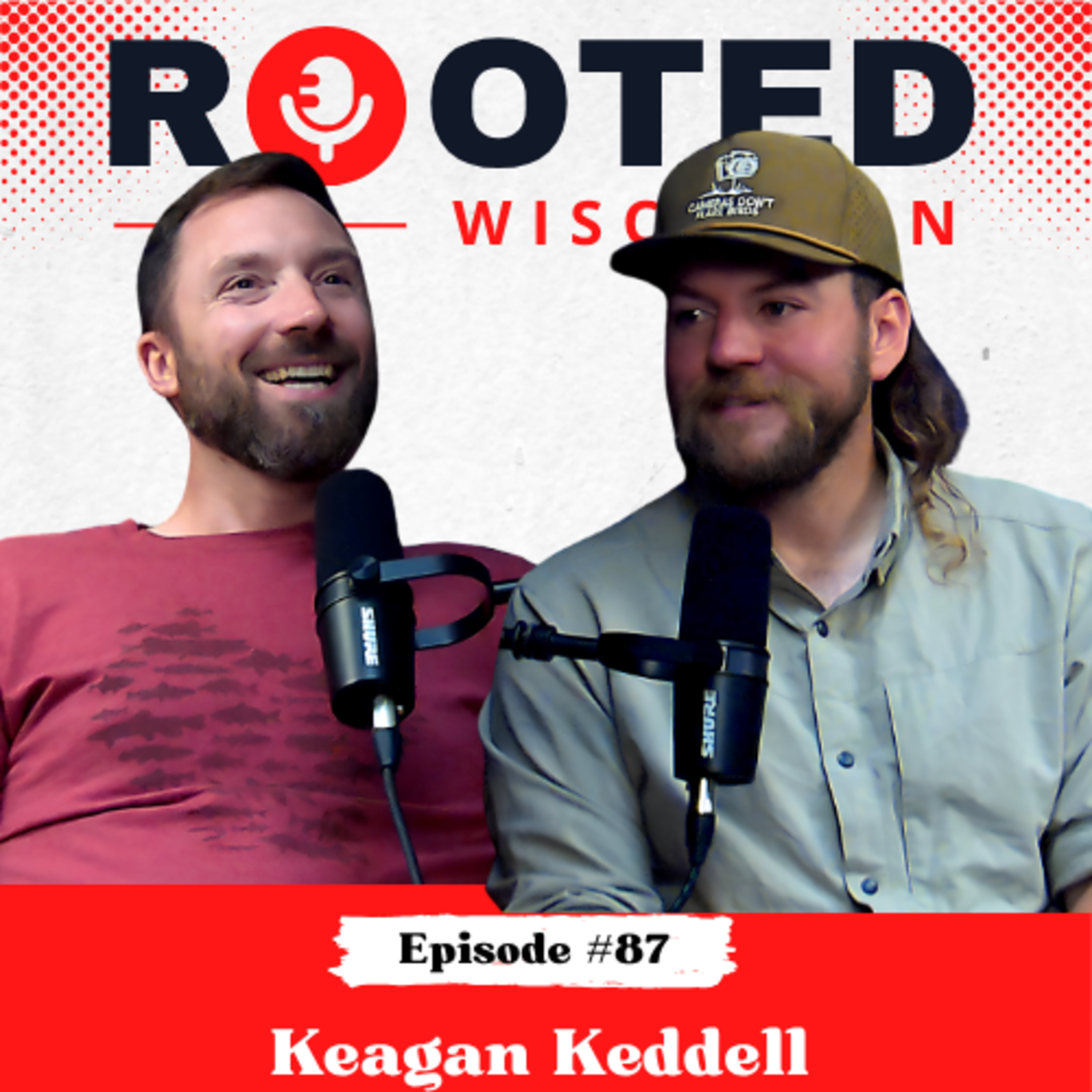


Keagan Keddell is a wildlife photographer, filmmaker, and outdoor guide behind WildlifePhotogMedia. Known for his keen eye, relentless drive, and willingness to do the hard stuff, Keagan travels from the wilds of Alaska to the remote marshes of Mexico documenting high-stakes hunts, conservation stories, and the beautiful and unpredictable nature of the outdoors.
In this episode, we discuss life behind the camera, the art of storytelling, the benefits of saying yes and the importance of persistence, Keegan's waterfowl hunting roots and fondness of Wisconsin Deer Camp culture, early career guiding on Lake Michigan and in Alaska, what it takes to capture the wild in its truest form, and MUCH more.
https://www.instagram.com/wildlifephotogmedia/
https://www.camerasdontflarebirds.com/
Big shout out to our sponsors:
Epic Mortgage – Your partner in homebuying, empowering communities, and supporting home ownership!
https://www.yourepiclender.com/rootedwisconsin
Nic Nac - CLEAN and TRANSPARENT, Nicotine PERFECTED. Use code "Wisconsin" for 20% off your order at:
https://www.nicnac.com/
[0:00] Cold open
Keagan Keddell: What do you mean? "I don't want to make a film about trapping beavers in Arkansas"? Sounds awesome. Let's go.
[0:20] Pre-show: clean-ingredient nicotine brands
Brad Zima: Is that Lone all right? [verify brand name] I sent a message to them. I'm all about clean ingredients, so their stuff really stuck out to me. Do you dig them?
Keagan: Yeah, they're super good dudes. The two guys who started it were a couple of years out of college. They started it in college, basically wanting clean supplements and clean eating and everything. Then they looked into Zyn and saw there are 30-some ingredients in it, so they made this with six. They basically made it for themselves, and all their buddies were like, "Dude, these are rad." So they started this whole company. I shoot some photos for them and got connected. It's probably been a year, year and a half now.
Brad: Good stuff. The guy I was in contact with there was in Chicago — their marketing guy, another young dude. I added him on LinkedIn, because when I was working out the agreement with Nic Nac [verify brand name], which has very similar clean ingredients —
Keagan: They're really good.
Brad: Oh, you've had them?
Keagan: Yeah.
Brad: Nice. So lozenge instead of pouch — that's the main difference. I was already using Nic Nac, but the Lone marketing stuff had stuck out to me, maybe some content you actually shot. Their affiliate program was going through some bumps, and the communication was a little rocky at times, and I got closer with the folks at Nic Nac quicker. But same delivery method, same end goal.
Keagan: They're new, they're starting out, and they're trying a bunch of different things, so they're growing quick.
Brad: They're Texas-based, right?
Keagan: Yeah, they're in Texas. The pouches I still have are the old ones that were manufactured in China. At the beginning of February, China shut down nicotine manufacturing. They got a call from their supplier that said, "You have 24 hours to get this shit out of our warehouse, or it's getting seized by the Communist Party of China."
Brad: Damn. A day.
Keagan: So they had to find some sketchy transporter to get it from the warehouse to the docks and onto a boat. They never got tracking and didn't know if they were getting it. All this was going on just as they were switching to moist pouches and had met with a facility in California to manufacture them — and their shipment was lost. When I met up with them in Nashville during the NWTF convention, they were partying because they'd just heard the shipment had made it to customs.
Brad: That's not a gig I envy, man. I love the mission of it, but I don't envy that dude's day-to-day. The headaches and the anxiety and the pressure that come with it.
Keagan: It's not for me. I'm not that responsible, and I don't keep track of shit.
[3:22] "Ramblin' Man" and redefining responsibility
Brad: Well, that's a cool place to start. When "Ramblin' Man" by the Allman Brothers comes on, you've got to get a little tingle down your spine. Seems pretty representative.
Keagan: That one's resonated for a long time.
Brad: Responsibility is a subjective term, right? To get where you are and accomplish what you've accomplished, I'm sure you're responsible — just in your own way.
Keagan: I have a unique way of being responsible, as they say, but it definitely doesn't fit the traditional mold. I can't imagine my grandparents, from their generation, looking at me and going, "Yeah, that guy's really responsible." I'm not working for the union or at a mill. I'm just gypsying around in whatever random 20-year-old vehicle I happen to have at the time and making the most of it.
Brad: Even that concept has really shifted over the years. For my folks, it was work at a job for 30 years and maintain that stability, and that was quote-unquote success. Now, if you want to make more money in a corporate environment, or anywhere you're working for somebody else, and five years go by and you're not at the next spot you want to be, people jump ship. So even responsibility has shifted.
[4:54] From fishing guide to filmmaker
Brad: What I want to start with is that doing what you do comes with a ton of sacrifices. Some are obvious, like personal sacrifices. But one of the more interesting angles: you started off as a guide, right? A fishing guide.
Keagan: I started guiding out of high school, working on charter boats out of Sturgeon Bay. I grew up in southern Door County, and one of my dad's really good buddies needed a first mate. My first trip was actually the day of our high school graduation. I was late, and they almost didn't let me walk. Obviously that wasn't super great, but in hindsight it's very fitting.
Brad: A good setup for the rest of your life and what it turned into. And the sacrifice that comes with guiding is probably similar to what you do now. It probably started as a passion for the outdoors, and now you sacrifice doing the thing to be behind the camera and capture it. Is that fair?
Keagan: There are a lot of similarities between guiding and filming hunts or outdoor activities in general. I guided from 2013 to 2021, basically full time and year-round, depending on the season. All the work ethic, the way you have to handle people in the activity, coaching people through things — teaching them how to cast, how to catch a fish, how to shoot — all of that prepared me really well to film hunts.
I got so much joy out of helping somebody do those things and being part of it that me physically doing it didn't really matter. Take Alaska, when I was guiding fly fishing up there: teaching somebody how to cast a fly rod and then watching them catch a rainbow. Giving them that experience meant more to me than doing it myself. Over the years, I kind of stopped fishing and hunting personally. Part of that was just that I'd spent so much time doing it that it wasn't as much fun alone as it was giving that experience to somebody else. Whether it was their first fish or their thousandth fish didn't make much difference. Giving them that trip meant so much more.
Same thing with filming: being able to tell that story and show things off. When I guided in Kansas and shot photos down there, that's really where I started doing it for a living. I was making money selling photos from the trip to our clients. I'd give them a gallery, and they'd call me a week later and say, "I didn't realize that happened." They're so focused on what we're doing that they don't see everything else going on in the blind, or the different birds coming in. They're there with their grandpa and their son — three generations — and I'm able to shoot those photos, help that experience along and give them those memories. Those were really the drivers of what made me so passionate about doing this in the outdoors.
[8:24] Telling the story others can't see
Brad: That's fascinating. Even before we started recording, we were talking about finding your gift. You don't look at it as a sacrifice. You get satisfaction from the trip, just not the way most people would, by harvesting the animal. It's the whole wraparound of creating the memory.
Keagan: I've grown to look at the world differently than most people, and I get to tell the story of how I see it — to show it to the people who were there, or to people who will never experience something like that. I really got into photography because I grew up in a very small town, a very small community, and most of those people will never see a fraction of the things I've been spoiled to see.
If I can show those photos and tell that story in an image or a video, rather than trying to explain what five months of living in Alaska is like — I can show them what a bear looks like at 40 yards. I can show them the colors on a Dolly Varden in the fall. I can show them what the mountains look like covered in snow, or the termination dust from the first couple of snows of the year [verify against audio]. If I tell you that in words, you're not going to get it the same way.
That was the driver for getting into photography, and then I got addicted to it very quickly. It was the combination of: How do I capture these moments? How do I show them to people who may or may not have the opportunity to do this? And how do I keep getting invited to do cool shit with people I'd never get to have those experiences with otherwise — and definitely not in those places?
[10:26] The real sacrifice of life on the road
Keagan: So the work itself isn't the sacrifice. The sacrifice is that I spent 300 days a year on the road for several years. I missed weddings, I missed birthdays, I missed some funerals. I missed all the things I would have been able to do with friends and family if I'd stayed here. The upside is that the value I get out of my life has dramatically increased from where it would have been if I'd stayed. So the sacrifice kind of becomes a wash in the end. It's a bummer, but with the opportunities I've had, I don't look at it as a sacrifice anymore. The first couple of years were hard, but we're eight years into traveling for a living. I joke now that I'm on the road 350 days a year. I come home as much as I can, but it's pretty much just deer season or a couple of days here and there.
Brad: Those were the obvious sacrifices I was talking about. If you're a musician or anything where you're on the road, those sacrifices are tough. But the juice is worth the squeeze in different ways for a lot of folks. And many people find a way to have satisfaction in the work and still have the important stuff as a traveling person — the right people around you, the friends and family unit.
[11:58] Alaska, Kodiak and 1,600 feet
Brad: I completely get what you're saying, though. I didn't before I went to Alaska. I have a cousin who's a badass dude, and he followed a similar path. After he graduated, he went to guide in Alaska for a summer, at Tikchik, I think it's called.
Keagan: That's funny. The first place I guided was about 10 miles from that lodge.
Brad: Oh, really? Nice. Same thing — he went out there and found the beauty in it. He's a huge outdoorsman, so he stayed. He's been there about 15 years now. I got to benefit from that. He lived in Homer for a while and had access to all kinds of cool stuff. One of those things was on Kodiak Island: he knew a guy with a bunkhouse-style cabin. So I got to do a blacktail hunt there that was way more comfortable than most people's Kodiak hunts. We spike camped more than half the trip, but there were two or three nights where we got to come back to a heated cabin.
Keagan: That's a big difference for morale.
Brad: Absolutely. You can dry your stuff out from all the rain. I've had very few feelings in my life like getting up to 1,600 feet of elevation there and just looking out. I have my visual memory of it, and we took a few pictures — not a ton, but some of my favorite pictures. I got to go with him and his dad, two family members I'm really close with. That's what resonates hearing you tell your story. I wish we'd had a fourth person with a camera capturing the entire thing. I still lie in bed and think about that landscape. The fact that you get to bring that to life for people is amazing.
Keagan: It's cool. 1,600 feet doesn't sound like a lot to most people. What they don't realize is that in Alaska, 1,600 feet is from sea level essentially straight up, and then you look out over the ocean or turn around and look out over the island. It's a whole different experience than it would seem to somebody who hasn't been there. Alaska is so dramatic everywhere you are that 1,600 feet is a lot. It happens fast, it's steep, and it's freaking gorgeous.
Brad: It's the gnarliest thing I've ever done in my life, for sure. And he does it year-round. I was texting him this morning to see where he's going, because you coming on reminded me of him. He's got a couple of different hunts planned this year, and I envy getting to do it over and over. Especially with non-outdoors folks, I think a great way to connect is to talk about satisfaction from the struggle. Hard stuff makes me happy, and I think it does for a lot of people. And like you said, it's immediate. You're not hiking 20 miles to gain 1,600 feet. You hike a couple of miles and it's straight up, and you're sliding down in pouring rain. It's gnarly but beautiful.
Keagan: There are places up there where, in half a mile, we've gone up and down 1,800 feet.
Brad: That's crazy to think about. There's a badass Remi Warren solo hunt — I can't remember if it was on Kodiak — that looked just like that. That whole area was thick alder going straight up until you get to the top. That same cousin writes a blog now called the Pack Out Chronicles [verify name], with these gnarly stories. He went to Tajikistan sheep hunting —
Keagan: Sheep and goat?
Brad: Yeah, he's an everything guy now. Just reading the story can put you in the moment, and then you add the element you bring — video footage that lives on forever from these things you can remember. That's invaluable.
Keagan: It's rad. It's also really great for me, because I can look back on those photos and remember moments that get forgotten in the chaos of always moving on to the next thing. I flip through photos and go, "Oh yeah, we did that. That was sick." I remember the people, the stories, the moments and the critters we got to see.
[16:46] Who hires an outdoor filmmaker
Brad: So who are those people? I know you used to work in TV production. Do people hire you to come along on a hunt and capture it? What leads to the scenarios you follow and film?
Keagan: It changes. I'd love to say year to year, but it seems like every few months the main bulk of my clients changes. I spent several years filming TV shows, and I'll do a little of that this fall. But a lot of it is brands — Montana Knife Company or Kifaru, companies like that that need content — or individual people sponsored by those companies who are making films. I've shot some stuff for Outdoor Life, including an elk hunt in Wyoming last year. Some of it's random people who are sponsored by this company or need to do this for that. But a lot of it is just content for different companies in different facets.
I've shot some films for podcasts that sent people out. We did one with the guys from a hunting podcast [verify podcast name] — they went out to Oregon and did a blacktail hunt. Lyndon, who organized all of that, is from Oregon, and I'm going to film a hunt with him in Idaho this year chasing mountain lions. Everything evolves based on a phone call or a conversation: somebody says, "Hey, we need somebody. Who do you know?" And I'm like, "Why? I can do that one." I also do a lot for outfitters, especially in the waterfowl world. All these outfitters need social media content, so I go film dogs and ducks and cool stuff happening and put it all together.
[18:59] Photos vs. video
Brad: It's awesome that the landscape has evolved along with your career. Was that premeditated? Did you see content becoming more and more driven by social media, and how content is captured and shared shifting with people's needs? Or did you just fall in love with the camera and that came along with it?
Keagan: It was kind of coincidental. Obviously we grew up watching hunting TV shows on Sunday mornings, and then YouTube started popping off, and we watched that evolution. But when I bought a camera, I bought it to take photos, and I spent a couple of years just shooting photos. As Instagram and social media changed, video became more prevalent and became a necessary evil. I say evil because I'd much rather just shoot photos, but that's not what people want. Everybody wants video, and there's so much video out there that I understood I had to learn how to do it, and then I really pushed to get good at it.
I have that version of — whatever you want to call it — once I find a little passion in something, I have to make it my life. That evolved into working for a production company for a short period to learn as much as I possibly could, and then having the opportunity to spend six to eight months straight with a camera in my hand every single day in all these different environments. Either you get really good at it or you don't do it anymore. That's back to the sacrifice thing: I did nothing but guide for a while, and then I did nothing but film. You get really good really fast because there are so many reps every single day. Then you look at it on the computer: "Oh, that sucked. OK, do this differently." Watch YouTube videos, listen to podcasts, read up on the principles of photography and videography, put it all together and hope for the best. Once you figure it out, it's easy to expand on it.
Brad: Tell me more about that. I've heard so many people in your space say the same thing — given the choice, it would be photos all the way, and video is the necessary evil. For you, why do photos stand out more than video?
Keagan: There's a romance in telling a story in a fraction of a second. A photo's shutter speed is 1/50th or 1/2,000th of a second, right? Capturing that one moment that tells an entire story and evokes emotion — shows that this was a really hard ordeal, or that these people are happy or sad. Especially with animals: taking a photo of a dog and having somebody look at it and feel like they're there, in that moment, and that the dog is speaking to them, when in reality it's just a photo of a dog. There's something about it that makes you feel special when that comes out.
Video can do the same thing, but there are so many parts that go into it, and you're not evoking that same emotion in a 10-second video. You're doing it over a full story. Being able to tell the full story is really neat. But taking one frame and having that one frame mean so much — or putting it on the wall and having people come into the house and go, "Holy cow," every single time. You don't do that with video.
Brad: That's interesting, and the story is almost different. I can almost equate it to songwriting, because a photo leaves some of it up to the imagination of the viewer.
Keagan: Yeah. They make it their story.
Brad: You mentioned dogs. When I scroll your Instagram, one picture that sticks out near the top is, I think, a black lab. Beautiful shot — a dog's essence. When I look at that picture, I see my chocolate lab that I lost a few years ago. I get to write that a little bit. When you watch a video, it's almost like you're just watching the story that happened. You don't write it as much. Is that what you mean?
Keagan: With video, as I'm shooting and editing and doing the whole process, I'm telling you a story that I want you to understand. With a photo, there are things I'm doing that make you see it a certain way, through framing and perspective. But you're correct: so much is open to interpretation and feeling. Fifteen people aren't going to look at a photo and tell the same story. That's the magic behind it.
Brad: That's beautiful. Would you describe the photo side as more artistic than the video side?
Keagan: In certain ways, yeah. That one would probably get a lot of argument, because there's so much work that goes into video. But part of it, too, is that photography was my first love. I fell in love with taking pictures and capturing those moments. It's very similar to Canada goose hunting being my favorite waterfowl hunting. That's what I first fell in love with, up in Sturgeon Bay with my dad, sitting in layout blinds next to him and really learning how to hunt waterfowl. I can go all these other places, but if there's a bunch of honkers in a field, that's what I want to be doing.
[25:24] Wisconsin deer camp traditions
Brad: There's something to be said for that, and it aligns with looking at a picture and telling your own story — reminiscing on the high points of life. It's funny: you mentioned earlier that you don't come home very much, but deer season was one of the exceptions. People who have experienced the Wisconsin deer hunting tradition would understand that. But someone listening from somewhere else might think, "You don't go home for Christmas, but you go home for deer hunting?" It's harkening back to poignant moments in life that really created who you are. Whether it's video, photo or whatever, if it involves those things, it's going to captivate us. It does me, and it seems like it does you.
Keagan: For sure. Rifle deer season in Wisconsin — we have generations of people getting together to celebrate that nine-day gun deer season. That's what I grew up doing. My whole life was going to deer camp. We have a cabin up in Mellen, just south of Ashland. My great-grandparents and great-uncles built it, and it was finished the year Kennedy was assassinated. Every single year since then, part of my family has been there deer hunting.
Now most of them are gone. They were pretty young when they built it, and over the last 50 years everybody got older. We've watched a lot of those old boys pass away in the last few years; it's kind of the end of that era. But growing up, it was, "We're getting ready for deer season," or, "We're going up in February to cut wood for next deer season," or, "We're going up in September to build a new buck pole or a new shed for deer season." You're always thinking about it, and those nine days are so special. Coming home with my dad and doing that is one of the things you just don't miss. Or at least you get home for part of it. You do what you can. And I know a lot of people do the exact same thing — plan their vacation time around deer season so they can spend it with their family or buddies and still have that deer camp.
[28:03] Duck camps down South
Brad: I think I've missed one opening day, and it was a really weird feeling. As far as the physical act, I don't really care for gun hunting — I like bow hunting a lot more because it's a little more natural — but the tradition is really cool and important. And that brings up a cool question. You've seen a lot of different stuff across the country, all kinds of outdoor pursuits. Have you come across anything that rivals that culturally — masses of people in a region coming together around one outdoor activity?
Keagan: Not directly like the Wisconsin gun deer camp. I don't think anything really has that many people coming together for that one time. Somebody from some goofy place is going to argue with me about that.
Brad: Good, let them argue. More people will see it.
Keagan: Elk season and deer season out West run a lot longer, so you don't really get that "we're here for this" feeling in the big game world. I've seen it in Arizona, where people really come together for elk season in certain parts of the state, because tags are hard to get and people are supportive. In Colorado or Montana, you're not getting some random stranger telling you where they saw an elk because they just want somebody to get one.
The waterfowl world is where you really see it. Culturally, duck season down South is very similar to how we orient around deer season here. They have big duck camps, opening day is a big deal, and with the first few cold fronts of the year, everybody's together. There are giant parties in all these towns celebrating duck season. It differs by state and time of year, but everybody down South is thinking about duck hunting. Yes, we have a ton of duck hunters in Wisconsin, even though southerners forget people duck hunt in the North. But that's probably the closest thing to our Wisconsin deer camps that I've seen and been part of.
Brad: That's interesting. I'm not familiar with the waterfowl world. One of my dad's friends took me out when I was young, and I enjoyed the activity, but I never really enjoyed eating ducks that much. And as soon as fall rolled around, my brain was always on bow hunting. I never took enough of a break to try anything else, and by proxy that shapes what you're interested in watching. I never would have known that, but I'm glad it exists for other people. That camaraderie — what Wisconsin gun deer season means — has been one of the most impactful things in my life. I'm glad other people get to experience it through the lens of other things.
Keagan: Everybody's going to have their version of hunting camp. But the generational hunting camps Wisconsin is known for, which we're seeing fade from what they were in their heyday — nothing competes with that to that degree. Every town in this state was built around it. Every bar was where you registered your deer and sat and talked about it and waited for your buddy to show up so you could see his. We'd go from camp to camp visiting the families and sit down and play cards with three or four generations of family members who have all hunted that piece of ground forever. It would be very hard for somebody who hasn't experienced it to truly understand that those nine days are the world here. You could throw away the rest of the year. Thanksgiving's in there, so it counts.
[32:23] Registering deer and what kids will miss
Brad: It's a holiday. I've thought about the registering-deer thing. I get why we don't have to register deer in person anymore — it would be super antiquated to drive to a gas station. But I feel like there's a loss in there somewhere. Do you remember being a kid and getting your first few deer, how proud you were in the vehicle while Dad drove you to register it? You get out with your chest puffed up with a 90-pound doe in the truck, and you're the happiest kid in the world. It's weird to think my kid probably won't experience that feeling. Maybe we'll take a ride around town — but I live in Green Bay, so that might even be weird, putting the tailgate down and letting the head hang out so he can be proud of it. That pride isn't going away, but it's going to look different for future generations. It's one of those strange things I think about at 11 at night.
Keagan: It's funny — I've never thought about this before, but that's kind of what social media has become. The community of people celebrating your deer is now doing it through the internet, not in person anymore.
Brad: That sucks.
Keagan: Which is kind of what the whole rest of the world is becoming. It's neat to still be able to help people celebrate and give congratulations. But sitting there in person with some old-timer giving you a pat on the back meant a lot more, and I think this generation of kids is going to miss out on that. I'm sure at some point it'll swing back around as people go back to chasing that feeling.
Brad: The classic pendulum. We never get too far in one direction. And I say "sucks" in jest, because there's a lot of great connection that happens on social media. We've talked about this a lot on the podcast with a variety of guests. It's the same reason I turn down people who ask to do the podcast virtually — super kindly, "Thanks, but no thanks." I want to be in the room with you. I'm kind of an energy guy, a little woo-woo, and I think there's something about being in someone's presence when something happens, especially a poignant moment. Shooting a deer is a heavy topic, especially your first couple. It feels really weird to do. It's great to take the picture, put it online and have everybody say, "Attaboy, junior." But it's different to have the guy walk up to the truck while you're registering your deer and say, "Nice buck, kid." It's a different vibe.
Keagan: It's an interesting thing to miss out on. The bright side is there are still a lot of buck poles. In Door County especially, there are five or six bars with big buck contests, so you still get some of that.
[36:17] Bonds forged in the outdoors
Brad: Humans will find a way to create it. People are yearning for connection in so many ways, and I see us on an awesome trajectory, because we lost that for a while — especially in weird times like COVID, when everybody was so disconnected. I think that flipped a switch in a lot of people's brains: "Wait a second, I value time with other people, and I value these traditions." What better way to share that than through outdoor activities? You learn so much about yourself and other people when you do that stuff.
Keagan: The bond you get from sharing a hunt or a fishing trip with somebody, even over a couple of days — those become lifelong friendships immediately, in a way that would never happen in regular society just spending a couple of days at work with somebody. You go through that struggle and that process, you harvest an animal, butcher it and put everything in the freezer, and you've now done so much with somebody. Some of my best friends now are people I've spent two or three days with. It's crazy how close you become.
Brad: That's one thing I wanted to ask you about. You have the proximity to do that so much more often than the quote-unquote normal person — and I say that in a positive way. You're not the normal guy.
Keagan: I know I'm not normal, and that's perfectly fine. I've been aware of that for a long time.
Brad: That thing you get to do is the envy of me, at least. As long as I can remember, I've wanted deeper-than-surface connection with people. I want to know the real person — what's under there, what makes them tick, what they're thinking and how we see the world differently. Some of it's selfish, because I get to learn from people and pluck out what I want to take with me. You get to do that with so many people. You must have an exponential network of people whose true selves you've gotten to know. That has to bring some satisfaction.
Keagan: It's super cool. It was one of my favorite parts of guiding, and it's the same now. Take Alaska: the lodges we guided at were very expensive, $10,000 to $15,000 per person per week. So you get either people who saved for several years for a once-in-a-lifetime trip, or people who are CEOs of giant corporations or started a law firm. We had one guy who was a Packer, drafted by Lombardi in Lombardi's last year here. He was a lineman from California who did concrete work in the summers, because players didn't make enough for a whole year's salary back then. Now his company basically does all the curbs and gutters for Los Angeles. He started this huge corporation just to make enough money to come back and play football.
You pick things up from people like that, or from people who have traveled the world, and you absorb a little information in every conversation. You learn so much on such a broad scale so quickly that it almost feels like cheating. I know so much more about the world, or I go do specific things because somebody eight years ago said, "If you ever get to Idaho, you should go see this place." The joke has always been that I could throw a dart at a map and know somebody close by. If something ever happens, I've got a buddy in that state or an old client who would help me out. You get spoiled quickly by that exposure to information and experiences, and then you can translate it into whatever you're doing that day. Somebody says, "I live in this town," and I'm like, "Oh yeah, I've driven through there a few times." It's wild.
[40:48] Living out of a Suburban
Keagan: It's also super nice to have when your truck breaks down while you're driving across Idaho.
Brad: I bet that happens a lot. That's part of the weighing we started with today — weighing that against the traditional things you miss. I don't know that one is better or worse. It's just different, and you get to make of it what you want.
Keagan: For my personality and how I've evolved, it's very fitting. People who do this for a living have little differences, but it seems like everybody has the same kind of mindset. Yeah, it would be awesome to have bought a house 10 years ago, to have a family, play slow-pitch softball with my buddies and go fishing with my dad more often. But with the things I've gotten to do, there's nothing to say other than that I'm so fortunate and so spoiled, to the point where you almost feel like you don't deserve it.
But a tremendous amount of work has gone into making it work. We joke about fixing my vehicles in random parts of the country. I can't tell you how many states I've broken down in and fixed it in an O'Reilly or NAPA parking lot — just went in and bought whatever tool I didn't have. You go, "All right, this happened. Now what do we do? We figure it out."
That's part of why I started living in my vehicles. I bought my first Suburban in Montana. We were on an elk hunt in Montana and heading to Utah. I'd driven a buddy's truck out there — a guy I was working with — and they needed to go to a different part of Utah than I was going to. So I drove to Billings, bought a truck for $2,200 and drove it to Utah the next day.
Brad: That's the best.
Keagan: Eventually it was, "I'll just rip all the seats out and build a platform so I can put a bed up on it with drawers underneath." That evolved into a little kitchen, and that evolved into about four years of living out of various Suburbans. It was necessity: "OK, we'll roll with it. This works. This is what I'm doing right now." I wanted to spend three or four weeks out on a ranch, so before Starlink came out, I bought a second phone so I'd always have internet to upload photos. Then I needed solar panels and inverters to keep my drones, camera gear and laptop charged. It's all these little things: here's a problem, let's go fix it.
I have a background in construction. I went to NWTC for cabinetry.
Brad: I saw that.
Keagan: You take those little things over the years and keep evolving. Now I'm in a position where it feels like I've done just about everything, and I know I haven't, which is good, because I need to do more new stuff. You take all your life experiences, whatever avenue you're in, and go, "OK, now we're doing this. Here's that problem. I know how to do that, or I know somebody who knows how. Let's call them." Figure it out and keep rolling. The way my life works, I'm always on the go. I don't have time to waste sitting and figuring it out. You just have to do it, get over it, move on to the next thing, pack in as much as you can and see what happens next.
[44:15] Saying yes before you're ready
Brad: That's a perfect segue into something else I wanted to talk about: problem solving, and the value of stepping outside your comfort zone and saying yes. I saw a funny clip — I can't remember which podcast it was from — of you telling the story of the first whitetail you filmed. Was it for Lee and Tiffany?
Keagan: It was for a big show, yeah.
Brad: I thought that was hilarious, because it's the thing that makes people miss so many opportunities: not feeling ready, or not giving themselves enough credit for what they can figure out when things hit the fan. The CliffsNotes version is that after the hunt, I think while you were taking the trophy shot, you told them it was the first whitetail you'd ever filmed, and I'm sure they recoiled in terror.
Keagan: A little bit. They asked to see that footage real fast after that.
Brad: I bet. I thought it was great, because you don't need to sell yourself short, and you don't need to tell everybody your shortcomings. Say you can do it, believe in yourself, give it a shot and figure it out as you go. That was a perfect embodiment of it.
Keagan: They were a little taken aback. But that first season filming for them was my first mule deer, my first elk, my first antelope, my first whitetail. I just did it. Saying yes to hard, uncomfortable things is the only way you get to do the things you want to do. If you're afraid and keep kicking the can down the road saying, "I'm not ready yet," you don't get anywhere. Obviously, if you're not qualified to do something, don't just do it.
Brad: There is a line.
Keagan: But I never would have gone to Alaska otherwise. I ran a construction company here in Door County out of college, and the goal was to pay for a cabinet shop. I wanted to build furniture, so I went to NWTC, and I was still guiding. Then I had a client out on the ice who was talking about Alaska, and I just said, "Yeah, I want to go." I found a guide school in Montana, that guide school hired me for one of their lodges in Alaska, and I dropped everything and said yes.
That's fueled so many wild things in my life. Ninety percent of the people I'm close to now and love are people I met because I said yes to that, and yes to this, and yes to that. None of those were comfortable decisions. Bombing down the road in a $2,000 truck with $60,000 of camera gear isn't comfortable, but you just do it, roll with it and don't worry about it. If there's something you can't do that you want to do, you figure out how, or you learn enough and do the other things enough to get yourself into those situations. Then being uncomfortable comes very easily.
Living in that constant "I don't know if we can pull this off" state becomes the norm, which is wild, because then normal, easy stuff becomes boring really fast. So you're chasing the next thing and the next thing. But it makes life so much more fun. You're around cool people doing cool stuff, and that's the whole thing I want to do. I just want to do cool stuff with cool people, in whatever facet. I don't care if it's duck hunting or deer or elk or flying in a helicopter across Alaska. People call me to come film something, and I'm like, "Hell yeah," and they say, "Oh, I didn't think you'd want to do this." And I'm like, "What do you mean? 'I don't want to make a film about trapping beavers in Arkansas'? Sounds awesome. Let's go." Say yes to things and go do them. There's no reason to sit around and wish about it.
[48:45] Discomfort is a muscle
Brad: Is the willingness innate in you? Because some people go their whole lives knowing that and still don't do it. Did those decisions come naturally, or did you learn progressively about the benefits of discomfort and pushing your own boundaries?
Keagan: I think I just figured it out over time and realized it. It wasn't something I was thinking about. It was, "I want to go do cool stuff. OK, that sounds cool. How do we go do that?" I guess it was probably in there somewhere, but I literally didn't think about it until right now.
Brad: That's why I asked, man — because of that last thing you said. The people I see who are best at it — and it is a skill — who are very comfortable being uncomfortable and willing to say, "I think I can do this," and go after it, don't even know they're that type of person. I didn't really know I was that type of person until my wife kept pointing it out. She likes comfort and knowing what's coming next, and she tells me my ideas are crazy all the time. And I'm like, "Without these crazy ideas, what would I be doing?" Nothing against working at a bank, but that doesn't sound fun to me. So I'm going to make the sacrifices to do it. I never thought about it that way until it was pointed out. I've been with my wife for over a decade, and since we started having this recurring conversation about the next thing on my brain, I've started looking for it in other people.
I've landed on a couple of things. One, I think it's a huge precursor to success, whatever success looks like to that person. You put it plainly: without doing those things, you're not going to get where you want to go. Deeper than that, I've tried to figure out why some people are comfortable with it and some aren't. When I talk to someone who is more reserved in their decision-making, looking for safety and comfort, and I try to understand the underlying emotions, I can't imagine thinking like that.
Keagan: Not at all. It blows my mind.
Brad: I still have no idea, and I guess that's why I bring it up. I don't want to say "like I do," because a lot of people think this way. But is there a trick to it? With all the people you've come across, can it be a learned skill?
Keagan: I don't see how it wouldn't be a learned skill for people who don't already have it. And when you do have it, you're constantly learning how to be better at it, because you're always forcing yourself into situations where you don't have a choice.
Brad: Like a muscle.
Keagan: Yeah. It's the same with you starting this podcast. You said you're 84, 86 episodes in, something like that.
Brad: Something like that, yeah.
Keagan: Episodes one through five were probably really uncomfortable, figuring things out. Now you're in it, figuring out how to film it and how to do different things better, and you just say yes to the next interview, the next person. I'm sure you've had people on whom you looked up to forever, and that was probably nerve-racking — getting them in the room and having that conversation, wanting to do the best job you could. Having all those reps of being uncomfortable makes what would have been uncomfortable a couple of years ago really easy. Then you're on to the next uncomfortable thing, but you have all that history of saying yes to hard opportunities backing you up.
For me, after all the times I said yes to things when people said, "Dude, you're nuts," everything's easy now. Deciding to drive across the country to film something for three days is no big deal. Coming out of high school, a four-hour drive across the state was a big thing. This afternoon, when we're done, I'm going to drive 11 hours to Nebraska, and it's not a big deal anymore. You just get in and do it.
I came back from Alaska five weeks ago after a couple of months up there. I flew to Wisconsin, built a boathouse for one of my dad's buddies in a couple of days, drove to southern Wisconsin to a trade show and met my girlfriend. Then we went to shows in Des Moines, Memphis and Kansas City, then I did a shoot back in Tennessee, and now I'm here. I only came up because I had a shoot in northern Wisconsin last week with some buddies. I just say, "Yeah, OK, we'll make it work," burn down the road, figure it out and do whatever it takes to pull it off in the time we have. You just get better at saying yes and being uncomfortable, and then those things aren't uncomfortable anymore.
Brad: That's awesome. There's so much in that, and the proof is in the pudding: we worked out doing this episode 12 hours ago.
Keagan: Which is the best.
Brad: I guess we both live in that zone. That's really valuable to me, especially for students. I've been looking for a way to verbalize this, because I see it in my everyday life: a 20-year-old who's hesitant to send a LinkedIn message to their dream employer. Who cares if the person reads it and doesn't respond? At least you did what you could. I see all these mental barriers that don't need to exist. And that's a way I can share the message: discomfort is like a muscle. It gets easier the more you do it. I love that, and I've never thought about it like that. That's one of the gems I'm taking from this conversation, and it's going to help me and hopefully the people I talk with. You can't just tell somebody, "Just do it." They're not doing it already for a reason. I have to give them an explanation, and that one makes a ton of sense. It's like going to the gym.
[56:28] The relentless pursuit of perfection
Brad: It's funny how stuff like this comes up — why didn't I think of it like that? It's like the momentum thing Rogan talks about: the value of starting something, and how it gets easier as you go. The second part is that when you have this frame of mind, as we both seem to, there are inevitably mess-ups all along the way.
Keagan: Countless.
Brad: And as hard as we are on ourselves, because we want things to be perfect, you can't dwell on it or let it stop you from saying the next yes, or doing the next thing people look at as wild. How do you get over the failures?
Keagan: Well, I'm my own worst critic — it's an overused phrase, but I get it. I hate 98% of the work I've put out. It's not perfect, it's not good enough, it's not tack-sharp, it's not framed right, or in video there's some shake, or it didn't turn out how I saw it in my head. It's wrong, it's bad. So now how do I make it better? How do I make it perfect, and how do I chase that version of perfection? A few times I've gotten it, where I'm like, "Holy cow, this is perfect." And then I don't want to say I lose interest, but it's, "OK, I did that. Now what's the next thing I can learn and do better?"
That's probably super unhealthy. If a therapist heard this, they'd probably say, "Whoa, dude, you need some help." But it's what got me into the position I'm in as quickly as I got here. My photography and videography aren't talent. It's literally just self-hate, until I figured out how to make the work good enough that I was OK with it and could give somebody a photo I was at least confident in. Now it's pushing that: How do I tell better stories? How do I evoke more emotion? How do I take it to another level and keep chasing better and better?
It was the same with guiding. I went to Alaska to be a fly fishing guide with the experience of catching trout in a couple of rivers, which I wasn't very good at, or catching bluegill on bass poppers in open water. I was not a fly fisherman when I went to guide fly fishing. I was bad at it. So I got around people who were really good at it, watched them cast, listened to them and asked why they did things, and pretty soon I was very proficient. It's that "I'm not good enough. OK, how do we get better? What do we learn and absorb?" Watch YouTube, read books, listen to podcasts, whatever it is, until we're above average at the very least. Then I know I can go into a situation at least at that level, and every day it's, "How do you upgrade this?" until it's finally at the level where I'm happy with it.
Brad: So it's the pursuit of perfection. Hating 98% of your work is wild. I should put a qualifier on that, though. I've always been able to say, "OK, that was a mess-up," and move on, and I'm grateful for that. I don't dwell on it much.
Keagan: Me either. It doesn't pay. I don't have enough time.
Brad: Exactly. If you're thinking about the next thing, the other thing already happened.
Keagan: We're done. Moving on. It is what it is.
Brad: We're going to keep this train rolling. But that's the drive. That's what made Michael Jordan Michael Jordan, and Tiger Woods Tiger Woods, and Aaron Rodgers Aaron Rodgers — the relentless pursuit of perfection, whether it's healthy or not.
Keagan: It seems like the times I become happy with what I'm doing are when I become complacent. Then I'm not pushing that boundary, I'm not continually learning, I'm not leading my own competition in my head, and I stay at the same level until I realize, "No, we need to get better." Every day it's: How do we get better? How do we do more? What's the next thing that fuels my fire? That level of self-hate, or whatever you want to call it, is like embers I can keep feeding to keep running. That's why there are years I film in 35 states. I keep pushing, figure out how to do it all faster and more efficiently, and then I can fit more in, do more work for clients and spend more time with people I want to spend time with. It's why I'm sitting here. I was home for about 36 hours and didn't really have time to do this, but I can fit it in because I've figured out how to get better at these things and maximize the little time I have.
[1:02:23] Is there an end to the drive?
Brad: One last piece before we move on. I don't know exactly how to ask it, but I think it's an important question. Do you see a path to satisfaction — a path that lets you keep operating the way you do without being so incredibly hard on yourself? Is there a way to balance those waters? Do you even feel there's a need to? Or do the positives far outweigh the negatives?
Keagan: I'm sure many people would feel there's a need to balance it, but to me it's irrelevant. There isn't an end to it. It's about figuring out how to keep enjoying what we're doing. I get to do some really cool stuff. I'm super spoiled to elk hunt in some of the places I do and see as much of Alaska as I have. It's about still making those things as fun as they should be and still appreciating them — not getting disappointed and mad because a project didn't work out the way I wanted. Staying happy and satisfied, and making those things as much fun as they should be in the moment, if that makes sense.
Brad: I think so. As long as you're working toward something you want, that's what's satisfying. The rest is the cost of admission.
Keagan: Basically, yeah.
Brad: That makes sense. I ask because I can never see an end to it either. I don't know what it feels like to be 80, but if I'm fortunate enough to get there, I feel like I'm going to figure out where my mental limit is and then push it a little farther. You know when someone says, "I told my dad not to walk down the stairs anymore," and then Dad falls down the stairs? That's definitely going to be me. If there's a boundary or obstacle between me and something I want to do, I'm going to find a way around it, and I feel like I'll go out that way. It's just going to be what it is. I can't see it being anything else.
It's nice to talk with people who look at things in similar ways, because it's somewhat validating, and there are moments of questioning. I have an epic story about my first notable guest. People ask me, "Who's your favorite guest?" and I don't have one; everyone is special in their own way. But my first notable guest was Wayne Larrivee.
Keagan: Yeah, dude.
Brad: It was awesome. He went in depth on every stop of his career and how he worked his way up in broadcasting, similar to this — practicing calling hockey games into his own tape recorder in a little booth, I think at the Boston Garden. Awesome episode. I framed it terribly. I didn't know anything about videography, so he's talking from the short side of the screen with a bunch of room behind his head for much of the episode. And my mind went straight to, "OK, this will be better next time. I learned something, and I get to do it differently."
Keagan: It's ever-changing. It's great. You reinvent the wheel every single time: How can we make this a little better? "Oh, I screwed that up. OK, don't do that again. We know this doesn't work. Let's figure out how it does work and keep going." If you dwell on everything that went wrong — as long as you learn from it, it's just another lesson, and it's almost irrelevant that it happened. If you're learning from it, it's a good thing. The 80-year-old man doesn't know all these things because he read a book one day. He screwed up a lot of things in his life, and that's why he can diagnose a car or build a house or whatever. As long as you keep learning lessons and keep going — take the ups and downs, the wins and losses, and use them moving forward — it's all good.
[1:07:50] "Cameras Don't Flare Birds"
Brad: I've got to ask: what does your hat mean? "Cameras Don't Flare Birds." Is that easy to understand for a waterfowl hunter? Is that why I don't get it?
Keagan: It's very easy to understand for anybody who has ever filmed a hunt or had a hunt filmed. I started this company as a joke to mess with all the outfitters who pay me to come film them, because they inevitably blame the camera guy when stuff isn't working. Most of the time it's not our fault. There are some instances where yes, it is, but 95% of the time it's just how bird hunting works. Birds come in and clients stick their faces up, or the blind's not covered, or the decoys aren't working. Birds flare all year long, but when the camera guy is in the blind, he's the new thing, so he inevitably gets the blame.
Brad: The easy scapegoat. So what does it mean to flare a bird? They're coming into the set and then fly away?
Keagan: When they come in, they'll turn and backpedal. That's called flaring. Maybe they don't like something about the decoys, the wind switched, somebody moved in the blind, or a call was done wrong. It's the same thing as a deer spooking.
Brad: All I'm thinking of is a deer winding me. That's classic. I love that.
Keagan: It's fun, especially at trade shows like Delta Waterfowl or Ducks Unlimited [verify against audio], where there are so many people in the industry and half of them are camera guys or have been filmed. They see the hat, and there's always the argument: the camera guys say, "Good point," and the outfitters or TV personalities say, "Cameras do flare birds."
Brad: Did you ever have anybody get super mad at you — like you're guiding somebody and they blame you in a mean or vindictive way, or get mad about your existence?
Keagan: That happens once in a while. Most of the time it's not earned. I think back to Alaska and guys who'd say, "I want to catch a 30-inch trout, and this is a 29. It's not good enough." Or people who just want to argue because they think they know better, and I'm like, "Dude, I live here. I don't know what you want me to do. Maybe if you listened to how I'm telling you to cast, or set the hook the right way, we'd catch the fish." And yeah, sometimes you screw stuff up and people get mad, or you miss a kill shot on something. There are justifiable times I've been yelled at, and plenty of times where it's, "Hey buddy, that's your fault." But most of the time it's fine.
[1:11:04] Trout fishing and mousing
Brad: The 30-inch fish thing is ridiculous. Let me go set one in the stream and you try to catch that one. When you were based in Wisconsin growing up, did you get into inland trout at all?
Keagan: A little bit. My dad was really big into it, so I grew up doing it, and we did a good bit of it together. I did a lot in the steelhead streams up in Door County, and we fished a good bit up north by our cabin in Mellen, on the Bad River. My dad and I trout fished there throughout my youth.
Brad: That's become the thing for me. I'm about four years in, and I'm just starting to feel like I have it figured out a little. So what's next? I'm going to start mousing pretty soon.
Keagan: Oh, I bet. It's the best.
Brad: I haven't done it yet. I'm to the point where I know some streams well enough that I'll feel comfortable doing it — I know where I can get to places relatively safely. It's not the safest thing in the world, but I can't wait. That's the next progression. I caught my first fish I'd consider a tank this year, so now it's, "What's the next thing?" Mousing seems to be the way to get most of them. It was a late-in-life passion for me. I was a bass fisherman for a long time. I bought a little V-bottom tin boat that I was always fixing, and I chased bass. But when there are too many problems to solve, I'll push away, and having a boat was one of them. I didn't need a boat in my life. I'll find other ways to do it.
And I genuinely like how many miles I have to put in to trout fish well. I get to see so much. I got pretty bored sitting out in a boat — it's water, you see the shore. Identifying what's under there on a lake is cool, but I love being in nature I can immerse myself in, and I never felt that way fishing from a boat. Different strokes for different folks. But trout fishing — I'm completely addicted.
Keagan: There are so many different things that go into trout fishing, especially on a fly. It doesn't matter if you spin or fly fish; do your thing. But with trout specifically, there's so much to pay attention to in figuring out what that trout wants to eat. You're looking at water temps and clarity, at what bug is hatching, where it's hatching and where in the water column they might be feeding on it. Then you're looking at different parts of the river and different times of day to figure out where that fish will be hiding. Under the bank? In this food funnel or that one? You're processing all that information with every step you take up the river. Why wouldn't that be fun for those of us who like constant chaos and figuring things out? It has everything. For me it was always such an appreciation for everything going on around you. Instead of focusing on one thing, you're looking at everything and making decisions based on all of it.
Brad: Absolutely. And the adjacent stuff. One of my favorite times is when does are having their fawns, and they always seem to bed right next to the stream. I run into so many baby fawns along the stream. That has nothing to do with fishing, but the experience calls to me because there's more stimulation around it. One cool thing about mousing, from what I've read, is that I'll have to cast not only in different places than I'm used to, but in weird places where I'd never think I'd catch a big trout. Have you moused?
Keagan: A little bit.
Brad: I was going to try to pick up a little expertise.
Keagan: I haven't done it here. We did in Alaska. Alaska was wild, because there were certain rivers we'd only mouse — there were so many trout in them. You learn a different way to get the fly to do what you want. You're not swinging a fly downstream. You cast down so you can drag it up and over, like a mouse swimming across. You get it tight into the banks where you wouldn't necessarily swing a leech through the same water, or even have it fall off the grass and into the water. You pick the river apart a little differently, so it becomes a lot more fun.
Brad: And you do it blind, which is super cool. I can't wait. It's going to be a lot of headaches and I'm going to fall a lot, but it's going to be cool.
[1:16:16] Social media as a tool
Brad: Let's talk about social media a little. I've seen some heavy opinions in your space from different creatives, people taking strong stances on, say, Instagram as a photographer. Is it good or bad, or both, like most of life? You're passionate about telling the story, and you do a great job of it on Instagram. I love your captions. That's one of the things that stood out about your content, because I'm a sucker for storytelling and what it does for a connector and a teacher. What's your take on the environment in general? Does it do justice to the content you make?
Keagan: I think it comes down to why you're using social media. For me, initially it was, "This is my portfolio. These are the best examples of what I can do for a client or for myself." Then it evolved into, "These are the cool things I want to put out and share." There's no other place to share that. I'm not carrying around a photo book and showing it to strangers, but I can put it on the internet, and if people want to look at it, sick.
From the creative side, especially now compared with several years ago, the opportunity to be seen, get your work out there and potentially get clients is so much higher that social media becomes the necessary evil. Put your best foot forward and show people what you can do. The things you post are the things you'll potentially be hired for, or somebody will bring you along on an adventure because they want that.
I'm in a transition point in where and how I want to do things. I'd like to do a lot more longer-form work and finally spend some of that time with friends and family I haven't been able to see over the last several years. So social media doesn't matter as much to me now, because I don't care if somebody sees it, and that's not the style of stuff I'm going to put out. I want it to be for me, because it's my portfolio. It's a representation of who I am.
That's why I have a couple of different accounts. On my personal one, I just post photos I think are rad — landscapes, a critter, a helicopter, whatever I think is cool. That's not stuff that's going to get me work. My business wildlife page is where the goal is to get work, and it's evolving the way I'm evolving, toward longer-form things. Engagement is nice, but I don't care how many people click on it. I'm not using that part to make money. If I were using social media to make money, I probably wouldn't post most of what I do, because it doesn't perform the way the algorithm wants.
Once in a while I'll go through phases, especially with TikTok, where I'll farm stuff just to see what hits and why. Last spring, I had a call with Meta, and they told me exactly what they needed to optimize for the algorithm. I did it for about three months just to see whether it was viable, and I could make money doing it. It was just reusing stuff I'd shot in the past and stuff I thought was cool — some full pieces, some clips — and playing with it. So how I appreciate and use it depends on what time of my life I'm in.
Brad: You see it as a tool, and it depends on what intention you use it with — like a multipurpose tool. That's cool, getting into the Meta creator fund or whatever they call it, where they decide you're valuable enough that they pay you instead of you paying them. That's an interesting dichotomy. And that's how I look at it too. In a lot of places in life it's easy to pluck out the negative, especially on social, where the negative gets clicks because of how our brains are wired. I guess it goes back to what we were talking about earlier: what's happened has happened. Look ahead. What can you do next to make it the best?
[1:21:44] Guiding photographers around brown bears
Brad: One more thing before we get into the lighter questions. You've got some gnarly bear pictures on your Instagram. Have you ever had an encounter where you felt actually unsafe around bears?
Keagan: Thankfully, we've never had any super negative interactions. A lot of those photos came out of Katmai National Park. My third and fourth years guiding up there, I was also guiding photographers specifically for bears. We were constantly going into situations where, if that's the goal, we're going to be close to bears. How close can we safely be to take cool photos? You're paying so much attention to what they're doing, how you're interpreting their actions, demeanor and body language, and looking for other bears that might upset this one. You're learning which sows with cubs you can skirt around and which ones need a much wider berth.
The only couple of times I've almost been hurt were bears chasing bears. One fall day, we were hopping up onto the riverbank out of the river, and two boars came ripping past us — as close as you are to me — flying full tilt, one getting chased. We've also had close encounters walking up through brush on bears that were asleep and didn't know we were there.
A lot of it is keeping clients calm. My demeanor has to keep them calm, so that when they freak out, I'm still steady. A lot of times I'll talk to the bear like it's a little kid: "Hey, buddy." Or if it's a sow, "Oh, you're looking awful good today." That keeps my clients settled, because it's kind of funny. While they're freaking out, I'm talking to the bear like it's a little kid. I'm not trying to undermine the situation; it's little stuff like that to make everybody who isn't comfortable more comfortable. Then I can talk to them very calmly: "Hey, you guys are going to turn around nice and slow and walk forward. I'll watch the bear. You watch forward and watch your footing so you don't fall."
We had so many bear interactions and never had a problem. But it's that reps thing again. Day one or two around bears, it's, "Oh." Then you spend five months every single day looking for bears and being around them, and you get really comfortable really quick — while not forgetting that the thing could kill you any time it chooses to.
Brad: I can't wait to see someday how my physiology — my physical body and my mental body — reacts to being super close to a grizzly. On Kodiak, I didn't even see one. Here's why I wonder: on our first day hunting on Kodiak, we got a buck, and that was one of the nights we went back to the cabin. Then we spike camped for quite a while. As we were coming back down at the end of the trip, we found the kill dragged down into the thick alder brush, half eaten. Like I said, my cousin's a really gnarly dude who has seen some stuff, and he started doing the talking thing, really loud. And my body didn't react the way I expected. I'm a pretty calm, cool customer, but my heart rate spiked, and I was nervous.
So I can't wait to see how I respond when that interaction happens. Will I be able to contain myself, or will I be the client ready to mess my pants? I'll never get the reps; I don't see that happening with the trajectory I'm on. It's not that I'm scared, exactly. I want to learn. I want to see.
Keagan: And they're so darn cool. Being around bears, observing them, learning them and getting their little personalities — it's similar to cattle or horses, if you've ever been around them. They all have their own personalities and mannerisms. Once you learn that about an individual bear, it becomes so interesting. We'd have photographers lined up, and I'd see a particular bear walking down the river and say, "OK, that rock sticking up out of the river — he's going to set his left foot on it, peek his head up, extend and look out. Be ready. Set your focus, set your exposure, don't get distracted." And it would do that every time. People would say, "Oh my God, how did you know it was going to do that?" And I'd say, "I've watched this bear do it 37 times." After about the fourth time, I'd figured it out.
Brad: That's what you're there for. That's why you're getting paid.
Keagan: It's just fun. I loved getting to do that. If I didn't care about making money, I never would have stopped.
Brad: I bet so much cool stuff happens with that. I should clarify for listeners: I mean brown bears. I've been around a ton of black bears and never once felt uncomfortable. I'll never forget my first experience. When I was about 12, a sow and three cubs walked directly under the tiny little deer stand I was sitting in. Even then, I don't remember being scared. One, I had a gun. But two, she definitely knew I was there. She was 10 feet below me — I wasn't in a big tall blind — and she looked at me and smelled me, and at no point did I think this thing wanted to harm me. It was one of the most beautiful things I've ever seen. But that comes back to reps. I've been around plenty of black bears, but brown bears are a little more gnarly to me.
Keagan: They're also huge. The biggest one in Katmai when I was there was 1,600 pounds.
Brad: That's crazy to think about. Was that a harvested bear?
Keagan: They did scans with some fancy technology that could get the weight, size and measurements of the bears, just to monitor and keep track of them and learn about them.
Brad: Sixteen hundred pounds is bonkers.
Keagan: When he'd stand up and scratch, even from several hundred yards away, you'd go, "Holy cow, that's a big boy."
[1:29:02] Henning's Mediterranean Sunset Cheddar
Brad: That's badass. Well, let's have some cheese. I have some easier-hitting questions for you today. I'm going to start trying to tailor the cheese to the guest when possible. This is Mediterranean Sunset Cheddar from Henning's Cheese. When I saw the word "sunset," I thought about photography — what cooler thing to take a picture of than things happening at sunset?
Keagan: You're going to be super bummed: I don't eat cheese. I was punished for leaving the greatest state in the union to travel for a living. I got a really nasty stomach bug my first year in Alaska, and now I can't eat cheese.
Brad: No way. That's a bummer.
Keagan: It doesn't matter if you eat it or not. It's ironic for everybody I meet: "Oh, you're from Wisconsin and you can't eat cheese? That's a bummer."
Brad: So you got a stomach bug?
Keagan: Our water system failed my first year up there. We pumped all our water out of the river, and the UV filter went out but said it was still working, so a bunch of us got sick.
Brad: Dang. Do you know what kind of stomach bug it was?
Keagan: Something similar to giardia. I usually just say giardia, even though it's technically not. And now it's a whole litany of fun stomach issues.
Brad: That's a bummer. I usually UV-treat my water too — the classic one where you put it in the bottle through a screen and swirl it around for a while. I can't remember how I'd know if it's working. Jeez. Well, I'll eat enough for both of us.
Keagan: Not concerned about it.
[1:30:57] Lightning round: Wisconsin critters, landscapes and coming home
Brad: So, thinking back to Wisconsin: what's your favorite Wisconsin critter to photograph?
Keagan: That's kind of a hard one. Part of me wants to say loons, because we had a bunch of them up here a couple of weeks ago. But it would probably still end up being mallards or geese — waterfowl. Partly because it's something I get to experience around the country, and my love for it came from here. When I get to come home, especially in springtime when they're running around with little ones, I get to do something I already do year-round and have fallen in love with photographing.
Brad: That's what we were talking about earlier: you reminisce back to the things in life that were impactful for you. I'd love to tell you this cheese is terrible, but it's —
Keagan: Oh, I bet it's delicious. The description sounded fantastic.
Brad: There are Greek Kalamata olives in it and a few other things. Seriously one of the best cheeses I've had in the wild.
Keagan: Mediterranean anything is delicious.
Brad: For real. There's a food truck in Northeast Wisconsin called In Euro Dreams [verify name], and it's wild. Most food trucks post where they're going to be on social media, but I never know where this one will be. I'm always pumped when it's there. I guess it's good enough that people just come and get it; they don't have to do all the other stuff. I had it yesterday.
Keagan: I love Mediterranean food too.
Brad: OK: you're sleeping in your truck for the 17th day in a row, you're super tired, and you lie down in bed. What do you miss about Wisconsin?
Keagan: It's remarkable — I didn't appreciate how great this state was until I started traveling and seeing the rest of the world. We're very fortunate to have the best, or near the best, of just about everything. You have the giant forests of the Northwoods, farmland in the rest of the state, the texture and terrain in the west, and essentially two oceans with the Great Lakes. All our hunting is incredible. Our fisheries are incredible. Our lakes are all beautiful. Even the stained ones that look dirty compared with crystal-clear lakes are still gorgeous next to a lot of the country, where everything's muddy and murky and you can't see more than a couple of inches into the water column. On Green Bay or Lake Michigan, growing up salmon fishing and running boats, you'd see fish in 25 feet of water. It's crazy. So it's not so much that I miss things about here. It's that I appreciate how great this state is, and how great living here has been, when I'm gone.
Brad: It's easy to take for granted. There's the grass-is-always-greener mentality; that's an adage for a reason. That's an awesome answer, and it's like you knew my next question: what's your favorite Wisconsin geographic region?
Keagan: That's super hard, because there are so many places in this state. Especially when I come home after being gone and drive through southern Wisconsin back up to Door County, I'm like, "God, I forgot how beautiful this place is." But the answer inevitably has to be northern Wisconsin, specifically where our cabin is. That's the place where, if you're ever having a rough time, you picture it and feel better — the big white pines and how that river runs through there. It's always been home to me, even though it's not where I grew up.
Brad: I just learned about white pines — a fascinating tree. I'm probably going to botch this because it's not committed to memory yet, so correct me if you know about it. You know how the limbs are kind of funky? I read that they grow in a specific way because of the prevailing wind, more than other trees, so you'll see the limbs skewed in the direction of the prevailing wind. Have you ever heard that?
Keagan: I haven't heard that part, but I have heard that pines grow twisted to have strength against the wind. Sometimes you'll see the bark come off and the whole trunk is twisted. So it makes a lot of sense that the branches would do something similar for strength.
Brad: I've never really thought about that part, but it's true. I used to chop a lot of firewood when I lived in the U.P. We had an outdoor wood boiler, so I cut a lot of wood and learned more about wood than I ever knew for a couple of years. Last one: say you get to the point where you decide it's time to do more of the physical act yourself. You get the itch to hunt or fish more, or you reach a place in your career where you can take a breath and do something for you. What Wisconsin outdoor activity would you choose?
Keagan: Honestly, all of it. I've told so many stories about hunting and fishing memories here to clients in faraway places that coming back to do those things again would be special. Obviously gun deer season — I'm coming back for that. But bow hunting again, or bow hunting some of the islands on the Mississippi, which I've always wanted to do. Chasing fish or ducks on Lake Superior, which I haven't gotten to do yet. Going back to the steelhead rivers I grew up fishing in the spring, and some of the little lakes I spent so many hours on. Even salmon fishing on Lake Michigan — that was the biggest foundation of my whole guiding career and what led me to all of this. I'd love to jump back on the charter boats and run some trips, just to do it again and remember why I fell in love with all of this in the first place.
Brad: That's the best. One of my good friends has a couple of spots down in the Driftless, and one of his places is really close to the Mississippi River. He shoots some tanks — the bucks are so big it's crazy. It was awesome chatting with you, man.
Keagan: Yeah, man. I'm glad it worked out.
Brad: I appreciate you taking the time. I'm glad I caught you during your 36 hours in Wisconsin.
Keagan: No kidding.
Brad: Happy ramblin', man.
Keagan: Hopefully we'll get to do it again one of these days.
Brad: Oh, yeah.