
Dr. John Utrie - Psychedelic Therapy, Cluster Headaches & Improving Lives - Ep#55
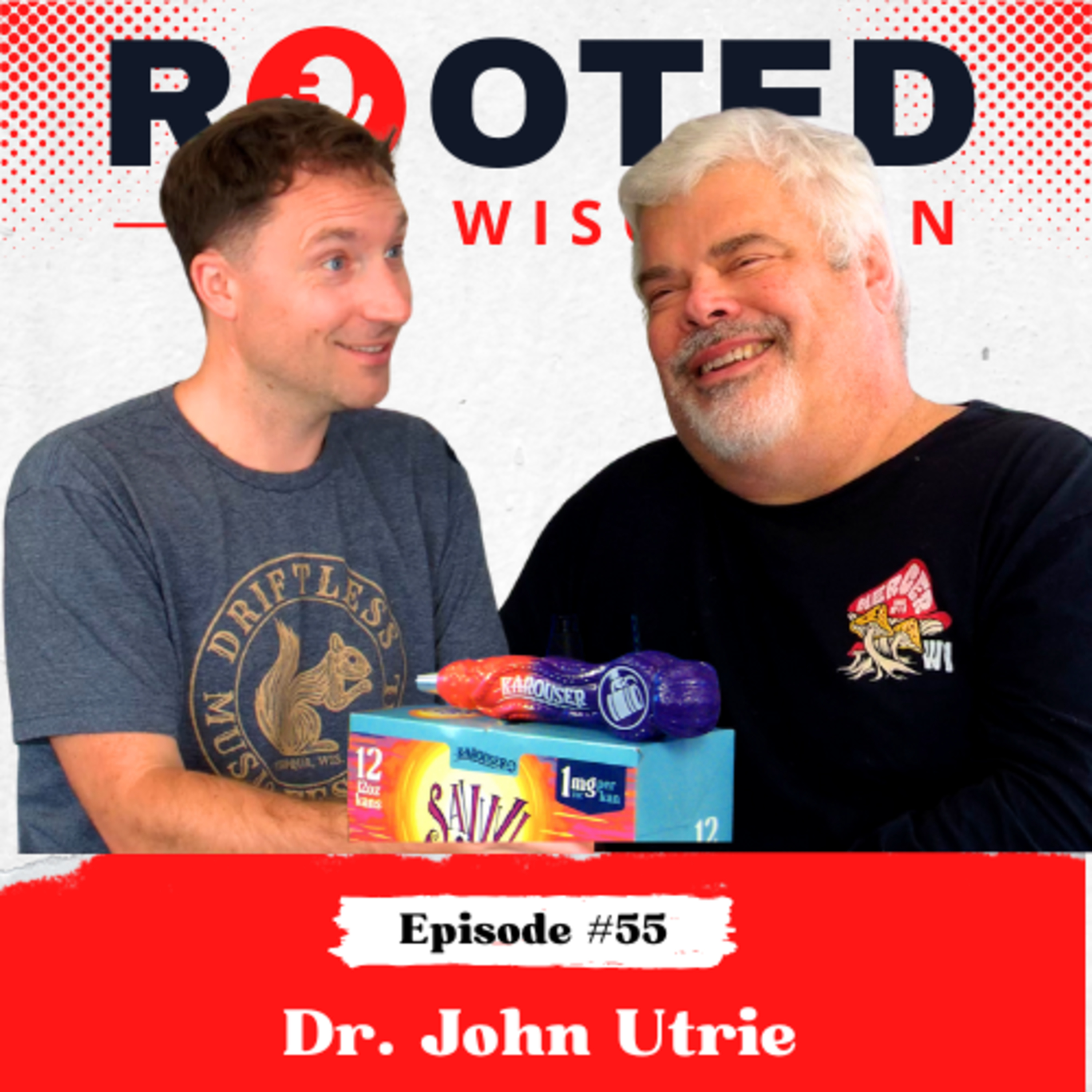


Dr. John Utrie is a retired urogynecologist/pelvic surgeon who suffered for decades with the debilitating effects of cluster headaches (also known as suicide headaches). Pushed to the brink of deciding if live was worth living having to deal with the excruciating pain and agitation that comes with cluster headaches, John was down to a decision, leave this life by his own hand or try something illegal after years of "walking the straight and narrow". Ultimately, after much research and deliberation, he chose the latter. Today John has become an informed advocate of the potential of psychedelic therapy, used in a clinical way, to better society.
In this episode, Brad and John discuss the debilitating effects of suicide headaches, his vast knowledge around psychedelics and experience with psychedelic therapy, the societal transformation we are witnessing with the growing acceptance of the value of psychedelics, the shifting of view that comes with their use, how NONE of us are omnipotent, and how one of the benefits of psychedelic therapy for him is finding the realization that "life is worth living and you don't have to dismiss yourself by your own hand".
Of course, a HUGE shoutout to our sponsor at @Karouser . They keep these episodes coming. If you dig what we do, please support them!
0:00 What's up friends? Welcome back to Rooted Wisconsin. Appreciate you for clicking another episode. Grateful to have you here. Today's episode is with Doctor John Utree, retired pelvic surgeon who used psychedelic therapy, primarily psilocybin, to mitigate the effects of and manage cluster headaches. I didn't know a ton about cluster headaches before our conversation, and I learned a lot. They're also called suicide headaches, and that moniker was all too real for John at one time, where he made the conscious decision to stay here with us on Earth instead of maybe going to the next realm or another realm. That's a heavy, heavy topic to get into. So we discussed that why they're called suicide headaches and some of the effects that happen when they become active.
0:46 We talk about some great, great research that's happened throughout the years on the correlation between psychedelic therapy and mitigating cluster headache effects. And we talk about psychedelics more as a whole too, and how the lens of our society is shifting to see the betterment that can come out of society with psychedelic use. John continually speaks through the lens of in a clinical setting and when you listen to you know me, when you listen to Huberman, anybody who's talking about psychedelic therapy, that's a definitely an important caveat to consider in the conversation. But whether it's ibogaine in Texas, MDMA therapy, LSD therapy, psilocybin and and mushroom therapy, all the way to a friend of a friend of mine getting quote UN quote, prescribed a vape pen of DMT, which is wild in such a good way, as long as, you know, taken care of and and used correctly. I see such great things coming to society because of this. And we talked about all that and a whole lot more. John admittedly says the first, you know, portion of his life, his formative years were on the straight and narrow. He was a medical doctor, surgeon and was against a lot of the things that ultimately he ended up developing A favorable opinion towards as psychedelics.
2:15 And I think one of the most poignant things or one of the most memorable things that he said was that one of the biggest benefits of his psychedelic therapy was that it made him realize the world is worth sticking around for and you don't have to dismiss yourself by your own hand. That is heavy, my friends, Heavy. Let's get into the episode. Before we do that, a massive shout out to our sponsors at Carouser. Talk about impacting society positively. They're trying to do that and give you a replacement for alcohol in your life. If you thought about drinking less, if sometimes you wake up the next day and wish you hadn't drank, try out Carouser. They are putting an awesome beverage out there and giving you an option that can maintain your lifestyle but not have all those I'll gotten effects of alcohol. Shout out to Carouser.
3:08 Use the code RW20 until Halloween for 20% off your Carouser orders. And without further ado, let's get into it, Doctor. John Utree Right now what I hear, I, I see kind of psychedelics and psilocybin getting a lot of publicity in the kind of depression area with the treatment I'm, I'm talking about. And I, I've listened to a few podcasts, I've done some reading about that area and I find it fascinating your case that we talked about. I hadn't heard about it all with the with the cluster headaches and and that. So I don't know if it's where we start or where we end, but I know that that's what intrigued me about your.
3:48 Well, you know, I think talking about the a medical application as opposed to a psychological mental health kind of explanation makes a lot of sense because people can latch on to that. You know, some, you know, everyone's kind of had a headache for the most part. And it's interesting too, as the approval process has gone forward and looking at this and studying it through different normal government channels and things like that, having a medical condition going alongside it helps shepherd it through the various approval processes. Because, you know, at the end of the day, we want any intervention that a person have to be safe and effective and we don't want people to be exploited by it.
4:37 And I think that that lens that you have is pretty unique, right, because of your history and your past and your career. Well, you know, I, I, you know, I'm sitting here as an, as an older guy who is, you know, past retirement age now, who pretty much told the straight and normal was straight and narrow my entire life. And about 30 years ago, I got plagued with this horrible headache condition called cluster headaches. And cluster headaches have been described as suicide headaches because there's a very disproportionate number of people who are afflicted by them who end up taking their own lives because the, the pain is basically unmanageable. And they're, they're very distinct. They, they, they're at one side of the head. They're usually behind the eye.
5:22 It, it feels like someone's driving a spike through your head. The attacks can last anywhere from 15 minutes to three hours and are completely disabling. They're also different because people tend to move. Around a lot. Because they're agitated, they they're not photosensitive like a typical migraine headache. The headaches are thought to be mitigated or arise in a part of the brain called the hypothalamus. And and because of that, we see them come in seasonal episodic route. So typically folks who have cluster headaches like myself will start having them around the fall equinox when the daylight and sun in the night time I was about equal. And then they'll they'll extend towards the spring equinox and then sometimes they'll fall off and and a cycle can last anywhere from a month.
6:20 To a year. And the the attacks come generally at night, so they'll wake you up from a dead sleep at the same time every night and sometimes multiple times, like in my case, 1333430, sometimes during the day, like clockwork. Like that. Exactly like clockwork. Wow. And they're sometimes called alarm clock headaches as well. But you know, at the end of the day, you know that it's the kind of thing that you actively plan to end your own life. Because it's they're so horrible. And I had gotten to that point about 10 years ago where there was an active plan in place.
7:00 It was just your quality of life is just so shocked and you basically stick around for the people that you love and it's just not worth it anymore. And then I saw a National Geographic special. And this is actually available on YouTube if you Google National Geographic and cluster headaches of a gentleman from Texas who I've come to meet and his they call him Hollywood now because he was on National Geographic. And what they were talking about at that time was that he was growing his own psychedelic mushrooms and he was using the mushrooms and they would abort the headache cycle. So that he was having much more.
7:42 It, it, it, it, it took away his suicidal ideation and it also took away the problem of the headaches. And then so the question is, where the heck did this guy get the idea to do this? And as it turns out, if you remember the dawn of the Internet, back when we used to just type line code to go. And Netscape was basically a line code without any kind of graphic user interface. Well, back then we, I can't remember what the chat rooms were called, but they had little discussion groups, right? And you'd go forward and there was a group of people with cluster headaches at that time who were discussing it. And this guy chirped in and said, you know, I took some LSD and my cluster headache cycle didn't come this year. And so everybody called bullshit on this.
8:24 And but then they started to look at it and sure as heck, they started using some LSD and people were reporting good results that their headaches were going away. And so the problem, of course, is getting real LSD is problematic. And someone's like, well, you know, mushrooms work the same way in the same receptor. They work on a specific serotonin receptor and let's give it a try. So they tried mushrooms and, and, and, and, and this, the person who made the report was from Scotland and they have a special kind of mushroom in Scotland and it's called a Trinity and it's a psychedelic mushroom with psilocybin in it, which is one of the active ingredients. And they were reporting some success. So within this underground group that we're talking to each other, people started to spread the word that these that these these plants with psychedelic properties or what are now what we call classic psychedelics, which means they engage a serotonin receptor.
9:37 It's specifically a A5 HTA receptor. There's all kinds of numbers and that's not important, but there's basically that's, that's a mescaline, LSD and silicon or psilocybin. And the, and people were playing, you know, within their, they, they became a self help group called cluster Busters. And cluster Busters is a not-for-profit. And they have a conference every year where people get together and everyone's saying this works. We really need to prove that it works because like everything else, everyone can speculate on what works and what doesn't work. But you really need proof. And, and, and unless you're involved in science, you, you, you really need to have a control group and you have so you, so you know that it's actually working. And it's not just the power of your brain, because the power of our brains is enormous.
10:28 And at that point, it's citizen science. Right. That's exactly what the actually, that's where the, the the term came out of. They're they're, they're kind of the genesis of that term citizen science. Because what happened was there was a guy named Andrew Sewell at Yale and they got his ear after going, you know, they went to Harvard and to all the Ivy League schools and said, this is what we're seeing. Would you be interested in doing it? And they wanted to go to high integrity schools and Sewell, who was in the psychiatry department, sent out a questionnaire and got a response of a couple 100 people, which is pretty amazing for a questionnaire. And it showed that of the people who use these things, the psychedelics, that they were able to better manage their headaches and in many cases completely wipe them out.
11:16 So that's, So what Cluster Buster's does is part of their mission is support people who have this headache disorder with conventional treatments, make them aware of how to access conventional treatments because because it's a rare disorder, so not many physicians know actually how to help. And then for people who are interested in pursuing the psychedelic aspect of it, it helps them. So rolling back to where I started rambling here, the I'm like, well, you know, maybe I can break some rules, you know what whatever society says, because if the choice is not being here or trying something illegal seems like a reasonable thing to do. So then I started to do some reading and you know, you go back into the late 50s, early 60s when psychedelics came on the scene with Timothy Leary at Harvard and things like that. There was a lot of exciting research going on in psychedelics.
12:18 The Bill, who started Alcoholics Anonymous, actually attributed his soberiety to the use of LSD. Which now is being proven. Right and right. And a lot of that came out of Canada and he wanted to make it part of the program. But the board of Alcoholic Anonymous, wisely, I think, said that's not really the image we want to portray. And, you know, we don't want to compromise sobriety. But the reality is that the psychedelics themselves are not addictive at all. And then the the other things that were happening is that, you know, people were feeling one with themselves and and unified around the world. You get this feeling of, you know, we're all included in the world together and it creates a little bit of liberalisation of people. But you know, there's a lot of Seminole books that came out of that era that I read because, you know, it's with myself wanting to have an empiric background and having an evidence based background for things and doing something that I was contemplating doing something. I was extraordinarily uncomfortable doing because I grew up in the Nancy Reagan era.
13:24 This is your brain on drugs. I did lots and lots of reading. And once you get past the mid 60s, everything after that is derivative of everything that was written before that. So there's really no new information until recently. And so after about three years of thinking about this, you end up sourcing some material in what otherwise would be a legal environment and. You give it a try and you know, and then it changes your life and I think a lot of people report that. In many different ways that that stifling that 567 decades of stifling of new information is such a bummer. What you think about what would happen is, you know, you had it's a classic case of things going off the rails and then over paternalistic behavior by certain groups and misused by other groups, right.
14:20 So you think about the summer of love and 60s, what was going on, Vietnam was going on. You had this very authoritarian government kind of thing. You know, it was the rise of the Richard Nixon kind of mentality of, of control. And you, and you have to remember that the Stone was part of that back in the day and Roger Stone and, and what was happening, you know, when you really look back at it is you're having all these folks who wanted to make the world a better place. And and then you had this charismatic leader, Timothy Leary, who was painting outside the lines. You had people with a certain amount of wealth promoting these things, but then it went off the rails because it got out into the ecosystem and before we understood exactly what was going on it, it was a party drug. Kind of like what happened to MDMA, you know, a decade. Or two later.
15:13 But then, you know, the reality is while the Summer of Love was going on, there were hundreds of legitimate research programs going on. Throughout the world, looking at the use of LSD specifically in the treatment of mental illness and trauma and things like that. And then when the powers that be led by, you know, Nixon ET all decided that this was a threat to independent threat was a, a threat to the status quo. All of a sudden you took these non addictive substances that really had no history of harm when used properly under proper supervision and put them in category one of drugs, which means it has no medical use and it's addictive and totally wiped out people's research programs that have been incredibly promising up until that point in time.
16:15 Shut them down overnight and so then we've had two or three decades of lost. Opportunity. But now we're so bothered by, you know, treatment resistant depression, anxiety and post traumatic stress disorder and moral injury. That people are rediscovering these medications, drugs, whatever you want to call them in a way to help improve people's lives, but you end up in a situation where the wheels can still come off the train because when if it leaks out into, you know, the general. Public without proper understanding and taking shortcuts. You know, if you do Cliff Notes on drugs, that's a bad thing. Absolutely.
17:02 Yeah. So there's a lot of things in there that I want to talk about. 1 is that concept and the overall supervision And actually just of note, bringing up that the peer reviewed research now that's coming out with the level of efficacy between it and like SSR is and the positive benefits that are finally being proven in a clinical setting are great. And I want to emphasize that clinical setting piece and I want to see what your experience was because you mentioned supervision in there. And I know that a lot of that research is not your prototypical psychedelic trip or journey that people talk about where you go to a music festival. It's eyes closed like dark, and certain types of music even are being used, but in a clinical fashion that is repeated and used.
17:57 What was your experience at the time that you started diving into it for your cluster headaches? What was the clinical setting like? Was it similar where you were? They say that right now everything I've heard, like Huberman and everybody talking about it is eyes closed for at least like 90% of the journey and a specific cadence of music and stuff. What was yours like? Well, just to back up 'cause I'll get into that in a second, but, you know, music is critical. And if you look at the things that Huberman says and then that predates him as Terence McKenna, who was kind of like a this Celtic God and this charismatic Irishman talking about, you know, these experiences and a much more entertaining sort of way.
18:40 So Huberman is pretty dour when it comes to by comparison, but but fantastic information. It all boils down to set and setting. So if you look back at the original things that kind of got this started, there's a book called The Psychedelic Experience, which is kind of a primer for learning how to go on a trip. And it's based on the Tibetan Book of the Dead. And it was published by Timothy Leary while he was still at Harvard, along with a guy named Alperin who became Ram Dass and who has recently passed away. But it's basically these are the things you need to go because these sort of.
19:21 Substances. Are amplifiers, so if you go into something anxiety ridden or with something negative on your mind, that's going to get amplified. If you go in with with a positive intention, wanting something to go good, you're going to be able to work through that. Now, some of this is dose related and some of it isn't, but you and you then you have to be in a safe place. So I can't speak at all to the recreational side of it because I can't imagine putting myself in that position because it, it would be very non therapeutic and quite recreational. And I, I don't condemn that, but I, I would certainly never condone that, especially with a young brain that's still making neural connections.
20:10 And by that I'm saying below the age of 25. Another very important. Piece yeah this is you know the the you know this isn't fun and games this is about making yourself better so having said that what we've learned about treatment resistant things I depression and anxiety and trauma is that what these substances do is they lower the threshold for intervention. That means that you're inside, your intrinsic resistance is lowered and it allows for you to do the hard work necessary to resolve those problems. And generally you need someone to help get you through that. And so unfortunately, because we live in 144 character society, people want the short easy answers and that's not the case.
21:00 So when you even when you look at something like ketamine, which is not a true psychedelic, but legal and very accessible now to folks, or you look at psilocybin or LSD or MDMA, all of which are being actively studied now. It's not just taking the medicine and getting better. It's doing the work generally guided by a therapist. And when you the most published work in this area is on death and dying and end of life anxiety. And, and that was done at Johns Hopkins and led by a guy named Roland Griffin. And Doctor Griffin did this amazing study of people who were in Hospice situations who were just, they couldn't have a smooth death because their anxiety was so bad. And they set up a protocol where somewhere two people would sit with the person with a blindfold on. And they had curated music, a lot of it was classical. And they would let the person have the experience. Without intervening in that experience by making them talk and then having them integrate the experience afterwards. And there were no participants that didn't benefit from that. They had mystical experiences.
22:28 They were, I think they gained an understanding about how we're composed of energy, which is a whole nother discussion, but and how that they can see beyond their existence at that point in time, which I think gave them great comfort. But that was kind of the genesis of the kickoff of modern use of these substances with the death and dying angle of it. And then it went into the other things we talked about before. And in that protocol was exactly what I was Speaking of, the blindfolding. And it's virtually, some people say different things, but I think like just letting go is 1 and virtually that opens the door.
23:09 And then that critical piece at the end of it's not always there's so much during the experience, especially in that time when the anxiety is high. It's being guided through afterwards and after the experience is done then a lot of the work happens, right? Absolutely. If you do these things without integrating them and if you do them without intention, you're not going to get the benefits. You might have a fantastic time or you might have a horror show on your hands, but the reality, you know, so if you talk about people at Burning Man who may or may not be doing certain things, the reality is that that is not a situation where you are doing work to improve yourself. You're, you're there to have fun. Now, are they mutually exclusive? No.
23:54 But if you're going to choose something from society as a whole, I would advocate for helping people who we can't help because modern medicine is horrible at depression. It's horrible at anxiety. We've proven that we can't take care of moral injury or PTSD effective way, and as a matter of fact, up until recently, the leading funder of psychedelic research is the US Army to help our servicemen and women help understand how to best help them when they come back from the service they've given us. Have you like been aware of that? What's going on in Texas right now? All of that stuff. I'm not. I'm trying to remember. I always forget the name of this.
24:34 I always want to say Ivermectin, but that was the that was the COVID thing. But there's in Texas. Former Rick Governor, Governor Rick Perry. Yeah, started. I can't remember the name of the drug right now. You know it. I'm familiar with what you're talking about, Rick Perry. So there's an organization called the Multidisciplinary Association of Psychedelic Studies, and they're kind of a clearing house, and they've been working the last several years on making MDMA, which is ecstasy, as a street name to be available for counseling. And they've done some clinical trials with it. And they were expecting FDA approval, but there was some problems with their study design, according to the FDA, and they got declined.
25:19 And so they're resubmitting. But they put on this meeting, and it used to be every six years and now it's every other year. In the last two meetings, which have been in Denver, and the last one being June of this year, Rick Perry shows up. So here's a bunch of old hippies, a bunch of people who are anthropologists studying because a lot of these are plant medicines that come from, you know, South American or African, places like that. But here's Rick Perry running around in his ultra conservative unabashedly saying this stuff is so. Important for our veterans, and he's a strong advocate, so you can see people with different political points of view on the spectrum coming together because they recognize the importance of this for the people who serve us and protect us.
26:03 Absolutely, yeah. And he has come around an MDMA too, which is fascinating. I, I can't remember the other one. What's fascinating about it is about five years ago now, I was going to a different type of academic conference and I spoke with a guy from Texas on the plane that was a lobbyist. And he was tight with Rick Perry. And at that time, he was telling me how he was starting. Maybe it was. Yeah, it was about five years ago. He was telling me how he was starting to come around to psychedelics and research. And I was fascinated by the conversation. I said OK, this is the direction this is going to go then. But you it only takes a family member, right? And actually or a friend, you know, you know, we we and, and we're doing this in Wisconsin.
26:44 Wisconsin has some very strange laws about certain things and they were enacted because of a family member of a legislator having an adverse experience. And so everyone got encumbered with the legislation this person thought was right because of their individual circumstance. So not a big fan of that, but I'm a big fan of anybody who's going to say we need to find effective ways to treat problems that we're can't take care of. And depression, anxiety, trauma, we're terrible at and we know I won't say unequivocally, but as close as you can get without saying it, that these things went properly administered in the right setting, setting, do things that we've never been able to do for folks before. Absolutely.
27:32 And that's what made me think of that as a lot of his championing of the cause was through the lens of helping our veterans. Exactly. And it's to me, it's great whatever route gets us to helping the most amount of people. Like we need to have these conversations and it needs to gain this momentum in the society we live in to have these proof of cause. Well, we have to have the conversation and then we have to, we have to look at things when they're when they're inconsistent, right? Because, you know, you know, when we mentioned before the tipping points and I was kind of criticizing the the Nixon thing and their motivations for doing things. You remember that was a time when Art Linkletter's daughter had died and he made it a big mission that it was blamed on the use of a psychedelic for doing that, when in fact there were other mitigating factors involved in that situation that led to her loss.
28:19 But he as a parent, as we all would be so incredibly struck with the horror of losing the child, made it his mission to attack one thing. And so he was instrumental in the public attitude about that because of the bully pulp that he held. Okay, I'm unfamiliar with that. I don't know. About that at all? Art Linkletter had that popular talk show kind of thing, that kind of the pre Oprah, pre Phil Donahue era of. Things. Yeah, I'm vaguely familiar with that. Yeah, I'm. Trying to think of, you know, there was a number of different, you know, it's kind of Johnny Carson starting out era kind of thing. But he had a young daughter who had allegedly taken some psychedelic of some sort and had jumped off the top of a building and lost her life.
29:05 And the grief spurred him on to attack and blame the drugs for that. But if you look at other points of view on it, it seemed that there were other mitigating factors going on that contributed, making it no less tragic. But it it, it had huge influence over the public as they were accepting the fact that we were going to legislate these things that out of availability. And you know, of course, the problem with that is when you make something illegal, there's always going to be a market for it. And so like now in society with this resurgence of ideas about micro dosing psychedelics and things like that, people don't know what they're getting.
29:51 And people are making, you know, stuff in bathtubs and they don't know what they're doing or they're watching a YouTube video on how to make this. And you have no quality control. You have no dosing control. You have kids taking stuff they think is one thing and then they end up frying their brain and then it's it's not good. Yeah, absolutely. In a lot of different that it comes back to that story of that like in that scenario, it is a person with a story that has legs with a platform and it can weave us in different ways, but often times the right answer somewhere in the middle, right? Well, it has to be in the middle, right? We just, we haven't had much compromise in our world.
30:35 We need a little bit of compromise because because none of us are omnipotent and none of us have the right answer. And we should be respectful enough to list other people's points of view as long as they can make a cogent argument. Exactly. Yeah, because there's certainly realms that don't, right. But I think that's one of the one of the things, one of the many things that drew me into our conversation is how you took me through your story. You went from a staunch rallying against of something like this to being pushed to a not even proverbial to a real life Cliff that open your mind to a different way of looking at things, right? Well, it was more than that.
31:23 I think the I like the life Cliff comment because that's actually very accurate and it's visually exactly where I was. It took me from a tolerant person of people who chose to do mind altering things. So, you know, I mean, you know, I all grew up with people getting high at the bus stop smoking nickel bags or the swim team from Madison coming back from Hawaii with since 1,000,000 or what, you know, I mean, but nothing I would partake in myself because A, no interest and, and B fear because I, I, you know, I, I believe the rhetoric and the propaganda that was spewed out.
32:07 And so when I was faced with a decision about whether this is something you should look at, look into or not, or something you should try or consider or not that pushed against, you know, my mores and, and how I was raised. And so, and, and it required me to have an open discussion with lots of different people about their thoughts and their experiences with things. And when you actually end up having the experience, and there's no doubt it shifts your point of view. And I would say I went from, you know, a person tolerant of other people doing other things and being more conservative than not to being on the other side of that line of, you know, towards being more liberal or not because you really get an appreciation of we're all in this together. You get this kind of unity kind of feeling. The one of the characteristics of a psychedelic experience is unity.
33:11 One of the other characteristics is called ineffability, which means you can't describe it. And that's really true. You can't. You can't express to somebody why it feels good to hug that tree, but it does, and you remember it. Yeah, absolutely. Yeah, some of the stories that are coming out of DMT are wild about that. I, I know a person that that's even in clinical settings now, I know a person who was quote UN quote prescribed. I don't know if you even really call it that, but given through a practicing counsel, not a not a counselor. I I don't know what it would be, but he, he ended up waiting regardless.
33:51 In his hands. He has a pen, a vape pen of DMT today. Yeah. I'm a little dry here, I'm going to try to please. Let's have one together. All right, I'm with you So. What is this stuff? Anyway, so corral micro dosed THC beverage. Cheers my friend, I appreciate the conversation. OK, so you. That's pretty tasty. It is. It's delicious yeah, 0 calories, vitamins, so. Good. I, I, I, I I'm going to just speculate on your friend. OK, OK. Colorado has some very liberalized laws about plant medicine and but you can't sell it. So if you went to Colorado to buy mushrooms, you couldn't buy them. If you went to buy DMT, which is derived from plant, you couldn't buy or if you wanted the DMT from Toad, which is another popular thing.
34:46 And so, but what you can do is you can talk to a person who's an expert and they, and pay them for a consultation and they can gift you the material that they can think is best for you. So that's, I think that that's the, the, the mechanism that may be at play there. Which is why I had a hard time finding the words for it. The you know, so it, you know, it's, it's a little end run about a well-intentioned set of rules. DMT also does fit into that classic psychedelic category. You know, the advantage of DMT is that it's very short. I mean, I think that they like the executives launcher. It's got some sort of a moniker like that because it's a, it's a less than 15 minute experience for most people. Although some people will live multiple lifetimes during the experience, which is why psilocybin or silicon with mushrooms or LSD is so challenging because it's a 6 to 8 hour experience with the sillosin or psilocybin. Sillosin is the active ingredient of psilocybin when it's processed through the liver. And then LSD is a 12 hour experience. Well, if you can't go to a counselor or a mental health professional and what their hourly rate would be, I mean, it's just impractical, right?
36:12 And it's similar with MDMA, you know, with the MDMA studies, you know, you basically camp a person out for 4 to 8 hours or they spend overnight at your house. So it becomes an access problem. And you know, you, you, you know to be able to afford it. But even with. The research that's impacting the research because they use search. Or when you have to have the time to do it, right. Research is is funded, but it's not that well funded and right, you know, so that you know, you have to be able to take someone and make sure they're safe. And you know, generally speaking, you want them either with someone that night or spending the night in your guest room if you were going to offer that kind of a counseling service. And this is what happens in Oregon, for instance. And I suppose it going to dark places that certain people talk about, but the going back to the DMT, the DMT is inhaled because if it gets into your stomach, it gets broken down by the enzymes in your stomach.
37:12 And but the active ingredient DMT is also what's the active ingredient in Hiawasca. The difference is that with Hiawasca, they mix another root that inhibits the enzyme that breaks down the DMT. And so that's why they have these long experiences with those substances. DMT has been called the spirit molecule because it naturally occurs in our brain. It's speculated that it's in the pineal gland, which is a a midline organ in the brain. It actually is not part of neurologic tissue. It comes from the roof of the mouth embryologically and migrates up. So it's a little bit separate.
37:56 There was, throughout history it's been thought of as the seed of the soul and that the experience, the near death experiences that people discuss are actually DMT released from your body endogenously, meaning you made it yourself. So when you supplement it. People have remarkably weird stories, don't they? Elves. The the lizard, The lizard people, yeah. But but they're remarkably similar if you talk to people in Africa who use ibogaine and what's like that, or if you talk to people in Peru. That's what I was trying to think of earlier, John. It was ibogaine. That's what they're using in Texas. Yeah, well, ibogaine. The big claim to fame with ibogaine is that it has the ability to knockout cravings for opiates. Yes, and.
38:44 Which is unique to everything else that we know. At like an 80 percent, 90% clip. Right, because I know we're shifting gears here, but the problem with opiate addiction is that it's not a psychological addiction, it's an actual physiologic addiction. The opiate grabs on to a receptor in the brain called the MU receptor, MU and it and that. And that's where the addiction comes because it's a physiologic change in that receptor. And to reverse that is very difficult because the body loves that binding that goes on. And what Ibogaine does is it knocks out that binding and takes away the craving almost instantaneously.
39:29 And, and there's nothing else that does that. So if you can get someone who has an opiate addiction, Ibogaine in, in one of the clinics, because they're available in Mexico. And I think there's some experimental clinics the, as long as they don't go back into an atmosphere, that environment that triggers them, they have to work with the psychological dependence on it out of habit, just like smokers do, but without the addictive physical draw that you have to have it. And so that's the wonderful thing about ibogaine. Now ibogaine comes from a. Root in Africa and it's used much like ayahuasca is in Peru and South America. And it's different though, you know? They use it to see their ancestors. And it's more violent than ayahuasca is, and it lasts longer.
40:23 It can last three days. So if you can imagine being lost in space for a couple hours on mushrooms or a whole day on ayahuasca, you can't imagine what it'd be like to be lost for three days, wondering afterwards what you were doing on Ivy. And so it's not a, it's a challenging experience, but you know, I mean, the recidivism with opiate addiction and the impact on society and, and individuals is immeasurable. And so it's certainly worth looking at. Yeah, absolutely. Yeah. And that three days like you have to imagine, can feel like 300 you. Know well you.
41:04 Know. You know, it's interesting because if you're having a psychedelic experience and, and, and, and you've had a long dose, time bends and folds. And so people will look at their watches after having lived their entire life and two minutes have gone by. Right. And to circle it back, that's a really common DMT thing, right? That's a That 15 minutes you were talking about often feels like a lifetime. Yeah, you lived a whole lifetime and you came back into it. So, you know, maybe this conversation is somebody's DMT trip. Right. Yeah, That's when it starts getting fun to conjecture. Yeah. Yeah. You know, I want to take us back a little bit because there was a piece that I've been interested to hear about and you mentioned it very briefly 10 minutes ago or so.
41:50 You talked about having the discussions with the people around you when you decided to start doing these things. What was what was that like for you? Do you remember those? Were those conversations difficult? Were they life altering? You're very, you're so well spoken and you know so much about it now. At that time it was probably your knowledge of, even if it was probably pretty fledgling. How did you work through that in conversations with the people around you saying this is the stuff I'm going to use? Well, that's not what I said. I said, you know, I'm thinking about doing this. What do you think? You know, And you know, and you know, my background is as a physician and my, and so my friend group is physicians for a large group for a large part. And I was very surprised with the open mindedness of some of that of most of the people.
42:46 But you know, a lot of these people, you know, I was, you know, I'd ask for help in trying to manage the headaches over time. And they understood what was going on. And we all learned in medical school, you know, how difficult these headaches are. And so the only there were a couple people that, you know, kind of fit into the ultra conservative realm, both philosophically and probably religiously too. But not to cast aspersions on that. But but, you know, even my parents supported me. OK. And that's kind of along the lines I was. Thinking, you know, you know, it's like, yeah, and I have a lot of brothers and sisters and, you know, the ones I knew would support me, I told, and the ones that I knew wouldn't support me, I wouldn't talk to about it.
43:34 But you don't ask a question you don't want the answer to, right? Familiar. But, but, but, you know, like I said, you know, it was a long ramp up to, to, to, to do that. And then, you know, then you wanted to do it in a way that, you know, it didn't put you at any kind of risk, so you had to create a situation where you weren't going to create a legal risk for things because that can be very disruptive, too. Yeah, yeah. And at that point had how open were you about the place in life that you had gotten to, about being really close to deciding to take a different path and not be? Here anymore, that was just that was kept within me. That was within you, OK, that that in itself had to be so transformative to experience that. How long would you say you experienced those thoughts and feelings before you got this end possibility? Oh, years.
44:36 Wow. I mean, it just escalated because it became increasingly hopeless. Yeah. And, you know, the, you know, as a professional person, you identify yourself by your profession and you take enormous pride in the privilege of taking care of people. And if that's being challenged or you don't feel you can do that effectively, that basically takes your identity. Absolutely. And so I can feel it on the edges. You know, I've, you know, I'm a very fortunate person in that I have a incredible family that it's kind of its own ecosystem that, you know, allows for discussions about things and created a foundation where I could cope with it.
45:26 So I had resources, but most people don't have that depth of resource. And when you get to these support groups, which I became very active in, like the cluster Buster's I mentioned earlier, you see a whole range of people who have never been able to work or have well, like an airline pilot who can no longer fly because if you got an attack while you were flying, that would be a problem. Or that your partner could no longer put up with the enormous amount of agony you were in. And if you watch the video on National Geographic and Cluster Headache, you'll see what I'm talking about. Because what's there is not an exaggeration and it's hard to watch.
46:11 Yeah. And even while you were describing it earlier, I was kind of picturing that in my mind. It's almost I, I put myself in like my shoes if I was going through that or anybody. I thought about living through the lens of Wisconsin waking up three times a night on specific times. This happens when there's less sunlight. So there's already this kind of downward trajectory of overall feeling about positivity and that combined with the physical pain that you were like all three of those combined you. It's, I don't want to say it's easy to imagine how you get to that point, but it had to be so miserable.
46:52 But it's a weird thing though, you know, because the pain comes on like a bolt of lightning. So you wake up from a dead sleep in this excruciating pain. One of the primary treatments for the headache itself, you know well, while it's acute or happening is to breathe oxygen. So you have to breathe 100% oxygen at a very high flow rate through a mask with special kind of mask. And another treatment is to inject yourself with Imitrex, which is a common migraine medication. And the, the problem with the Imitrex is if you use it too much and, and it's designed for migraines so that it's, you know, they don't recommend using that more than just like 5 or 6 * a month.
47:42 But if you use it too much, then the headaches that come back are even worse and they're called rebound headaches. So you can't, and, and it has effects on the cardiovascular system and on the ability of the gut to move nutrients through it. So you get constipated and trouble emptying your stomach. So there's a lot of problems with the medication solution. The oxygen works good, but you got to walk around with a tank and a mask on. So, you know, you look like, you know, you know, it's a little bit unusual, but you know, I keep oxygen in my car, I keep oxygen in my office, I keep oxygen in my house, in my parents house. It's all strategically placed because if I don't have it and I get an attack because, you know, the mushrooms historically had helped, but it's not something you can do all the time and you have to have backup plans.
48:41 And, but interestingly, until about 5 years ago, the government insurance would not pay for oxygen for cluster headaches. And so because they wouldn't pay for oxygen for people who needed oxygen really and CMS, which is Center for Medicare and Medicaid, you know, had a negative went went to prove it. And so people had to use welding oxygen, which is very similar. It's just not you can't be guaranteed there's not oil in it. It's. Just a minor issue. But through organizations like Cluster Busters and the National Headache Society, you know, I was part of a group that a small part of a group that went to Washington, the lobby for a few years and finally got approved. So that, and the reason that's important is because other insurance companies follow what CMS says. So if the government says they'll cover something, other insurance companies have to cover it. But if the government says they're not going to cover something, other insurance companies don't have to cover it.
49:48 So you need the precedent of the government saying it's there. So we had a representative at the time, Mike Gallagher, who was very helpful and I spoke to and the and it's now approved. And myself having now being on Medicare, I did have to jump through some hoops, but I was glad I did the work years ago. I'd be back to sucking welding oxygen otherwise. So you did that for a while, You got the welding? Well, it's weird because the headache is you can't describe how horrible it is and but when it melts, you can feel the blood. What happens is the the vein dial or the artery dilates in a closed space in your head.
50:34 And So what the oxygen does is it causes it to constrict the same as the injections cause it to constrict. And so as that constriction occurs, you feel the pain melt away and then you're back to normal. You go back and you just live your life because you have no choice right now. And, and just to emphasize the pain, there was a a survey that more than 1000 people with cluster headaches did, comparing their pain and the IT beat childbirth, it beat kidney stones, it beat it beat gout attacks. And it and five people in the survey said that the gunshot wounds they had were less painful than the cluster headaches.
51:18 And, and the three people who lost limbs said it and, and, and you have to remember that most of these things are one or two time events, right children where, where people with cluster headaches are getting them, you know, one to five times a day. And it's an exquisite pain that I'll use that word ineffable that we talked about before. You can't describe where it's at, and you don't really want anyone to really appreciate it because no matter how much you hate someone, you really don't want to wish that on anybody. It's sometimes you find yourself laughing inconsolably because it's like.
51:59 What was God thinking? Yeah. Why does this exist? Or how did my energy beams get crossed? Or, you know, it's, it's it's it's very fascinating that you have to be analytic about it and you have to smile a little bit, otherwise you'd make other options. Yeah, absolutely. And you kind of started into one thing I was going to ask you today that I that we didn't get to in our last conversation. If they were that, it doesn't sound like they're gone for good. No, I, you know, it's very interesting. We talked about sentence setting and how they can be amplifiers and when you go through certain life events or a certain point in your life, you have to be very careful about what you do. So it's not something that I could do right now based on other life events.
52:52 And, and so you have to go through it. But, and then I started to think about it because there are some studies going on at Yale. I talked about Andrew Sewell earlier who did this study, and there's a young neurologist there named Emmanuel Schindler who is doing studies looking at psilocybin and cluster headaches in a more controlled traditional scientific model. And it's showing that the headache reduction, there's a lot of headache reduction. So the people go from maybe 5 or 7 a week to maybe 3 a week based on the use of the intervention, which in this case was psilocybin that she studied. She's interestingly showing it a little bit in migraine headaches too now, because there's a lot more people with migraine headaches.
53:44 But having said that, what it did more than anything else is it improved my attitude. So you just think about self emulation anymore. It made you realize that the world is worth sticking in as long as you're allowed to, so you don't have to dismiss yourself by your own hand. OK, that's fascinating, man. And and the other thing it does, it smooths you out like nothing you can imagine. Yeah. Yeah. Well, that oneness you were talking about earlier is a feeling that's pretty powerful in a lot of different ways. And then when I talked about the maps, the neuroscience now is explaining why these things work, which is fascinating.
54:32 They're looking at how the drug interacts with the receptor in the brain and why the why the effects last beyond the acute phase of sensor by changing the shape of the way the receptor looks with the molecule. So it acts as a binding agent. And This is why things last, why people's moods change and they last for six months or a year or until they can reset themselves. It's because so we have biochemical or organic chemistry explanations for why these work. A lot of this stuff was done at the University of Wisconsin, by the way. Yeah, I know. It's awesome. It really has. Who would think Wisconsin's a leader in psychedelic research? But some, some incredible people down there. And then the another thing we've learned, and there's a there's a researcher named Robin Carhartt Harris who came from London and now he's at University of California, San Francisco. And he has some amazing theories that he can prove with neuroimaging about how the brain interacts on these substances and how it helps us explain, you know, if if we're depressed and we're constantly going down the same path in our brain, we get a rut in our brain or we get a canal in our brain. And what happens is that when you take these psychedelics is that rut or that canal goes away and it smooths the path out and then you can make a different path. OK, now that's.
56:05 Rod strokes, but he calls it cannulization for canal cannalization. But that's one thing and then the other thing is that the psychedelics interrupt our ability to inhibit information around us. So anyone who's had a psychedelic experiences gets this pixelization of the world or all this different energy things moving around in the world. And, and then if you look at Huxley's talking about a reducing valve and you know how we use our brain to filter out the wrong information so we can see reality as that valve allows us to. But it's, but the reality is that when you take these medications, it turns that valve off. And then when you look at the neuroimaging of what the brain's doing, it goes from having two hemispheres to talking to each other everywhere, and it explains what we're observing in real life with people who are excited about these things. Yeah, absolutely.
57:06 And that's part of it's awesome that that that. So that's where I start to get confused what you were talking about way earlier about when someone like Robin Carhartt Harris gets very deep into how it's changing the brain and how it lasts and stuff. I often times I'll like, I listen to a 2 hour conversation and you know, a lot of the times I was scratching my head trying to keep up. You know, I wish I could digest it all at one time. Well, there's a movie that hasn't quite been released yet, and I'll give it to you to share with your audience when the links are available, that it's narrated and use animations to explain exactly the things we're talking about in a way that's refreshingly accessible to everybody.
57:54 Awesome. But because it makes sense, you know, if someone you know, if you go to someone and they want to sell you something or they want you to do some sort of a treatment or whatever, but they can't give you a good reason why, you know that. Trust me, I'm a doctor thing, you know, if you should be able to explain to anybody why something works in simple enough terms that they understand it, right. And, and, and Carhartt Harris can do that. Yeah. And that's one of the most amazing things about him, you know, Plus he's got that Brit accent, so. Yeah, he's pleasurable to listen to. Yeah, his pleasure. So the episode I listened to him on Huberman and it's a, it's a nice change of pace because I mean, Huberman spent two hours talking about psilocybin by himself, which I thought was amazing, just talking to a screen for two hours. But I found that fascinating.
58:41 But then Robin Carhartt Harris was able to, yeah, bring it into. Yeah, even when you he's written a number of papers on the entropic brain which talks about the tendency of things to dissociate and to re mingle with each other. His latest corollary of that is the cannalization idea and how psychedelics eliminate cannibalization and allow kind of refresh starter to smooth things out to start over. But the important thing is it gives us a good explanation that's backed by science and imaging of how these things are working. So we know it's not our imagination, but it can still be our imagination. But at least there's data to back it up. It goes, it goes back way earlier in our conversation when and all of these things to the vast majority of people who have done them are unexplainable and it brings some explanation to it, right?
59:31 Well, I think you, you can't explain the experience, but you can explain why the experience is occurring. OK, sure. Yeah. And you have to have that because you have to know who and who should not be doing these things. You know, we go back, you know, if you have any kind of mental illness that hasn't been looked at, you need to avoid this kind of stuff. And until you get to someone who has some experience with that to see if it's appropriate or not, you know, in, in our community, we have some, a whole variation of different ketamine providers because ketamine is accessible and legal and, and has some similar data on depression and anxiety treatment. But you have to be able to do that safely and be able to navigate that kind of experience with help from somebody. So you shouldn't be doing these things on your own, which is unfortunate because you can, there's a number of companies out of Canada and elsewhere where you can call and get ketamine mailed to you.
1:00:28 And if you're doing it by yourself, you're probably not going to get the result you're looking for. You may get a short term resolved, and there are always exceptions to the rule, but for the vast majority of people, you need someone to help you do the work. Yeah. And I think maybe that's a good place to kind of wrap up our conversation today. John, I, I appreciate your ability to, I mean, put it into words and become, it seems like you've become an advocate here. And is that I'm guessing that's why you agreed to come on the podcast, right? You want to share? Yeah, I mean the, you know, as I said, you know, I, I, I retired from the practice of medicine for unrelated reasons.
1:01:16 And as I had eyed that in my lens and, you know, moving forward, I recognize the importance of these substances and helping our veterans and people with trauma. And it's the kind of place where you have you need to bring. What I hope is common sense understanding and not A1 size fits all application to it. And I developed a relationship with an anthropologist in Milwaukee who works with veterans and she's worked very hard at. Making their lives better and always was inspiring to me. So the intent down the road is to a, if someone dismisses it out of hand, say, wait, let's talk about this and let's give it some understanding before you go and cast aspersions on it.
1:02:05 And then secondly, to to support interventions that are going to help people who are in this area. And it's interesting too, because I met another person kind of halfway between here and Milwaukee who works with first responders. And I hadn't appreciated the gravity that of the trauma or first responders have when they come on accident scenes. You know, they deal with domestic issues and issues that were children are affected. You know, and these folks are, I think they're kind of forgotten heroes because they're just so profoundly impacted by what they have to witness and try to fix. And then they have to do with the frustration of people not wanting the truth or dealing with it in a way that's going to be effective to protect the next generation. Yep, There's some conversations going with that too. Rogan just had a guy on recently from New Jersey, I think he was. He's really interesting.
1:02:59 He's a cop and a counsellor and he's become very invested in using psychedelics to help first responders specifically. And that's this person that I, that, that actually sought me out because we were at the same meeting in Denver about psychedelic science and she saw my name on the program. And so we, we met and we talked and I, she opened my eyes because, you know, she was an EMT and she saw what's happened to her colleagues. And so now she has a healing center. But again, access becomes a problem, right, Because stuff is not cheap because of the time of the people you need to help you with. So we have to have systems in place that are either self help like veterans do a lot of times, or staffed by volunteers or having some sort of a stage way to keep it safe and keep it effective. Because although I'm sure people have great time at Music Fest and EMD and whatever else, like I said, it's not something I could imagine having a positive experience with from a therapeutic standpoint by doing that. Yeah, yeah.
1:04:08 And that that whole thing is why I think it's so important what you're doing and willing to do. I I'm really early in, you can tell by in conversation, I'm really early in my journey about learning about this stuff, but it's something that I I believe is really important with what I've learned so far. Yeah, and I hope good conversations continue and people make their opinions based on information that's real and understanding what the big picture is, because just because you're not suffering doesn't mean the person next to you isn't. Exactly. Yeah, Seeing life through maybe a little bit different lens outside of your own right, which there might be some ways to help that with. Good way then.
1:04:54 Anyway, good drink.