
Dan Lawrence - Effective Leadership, Losing an Airman, and Karouser - Ep#54
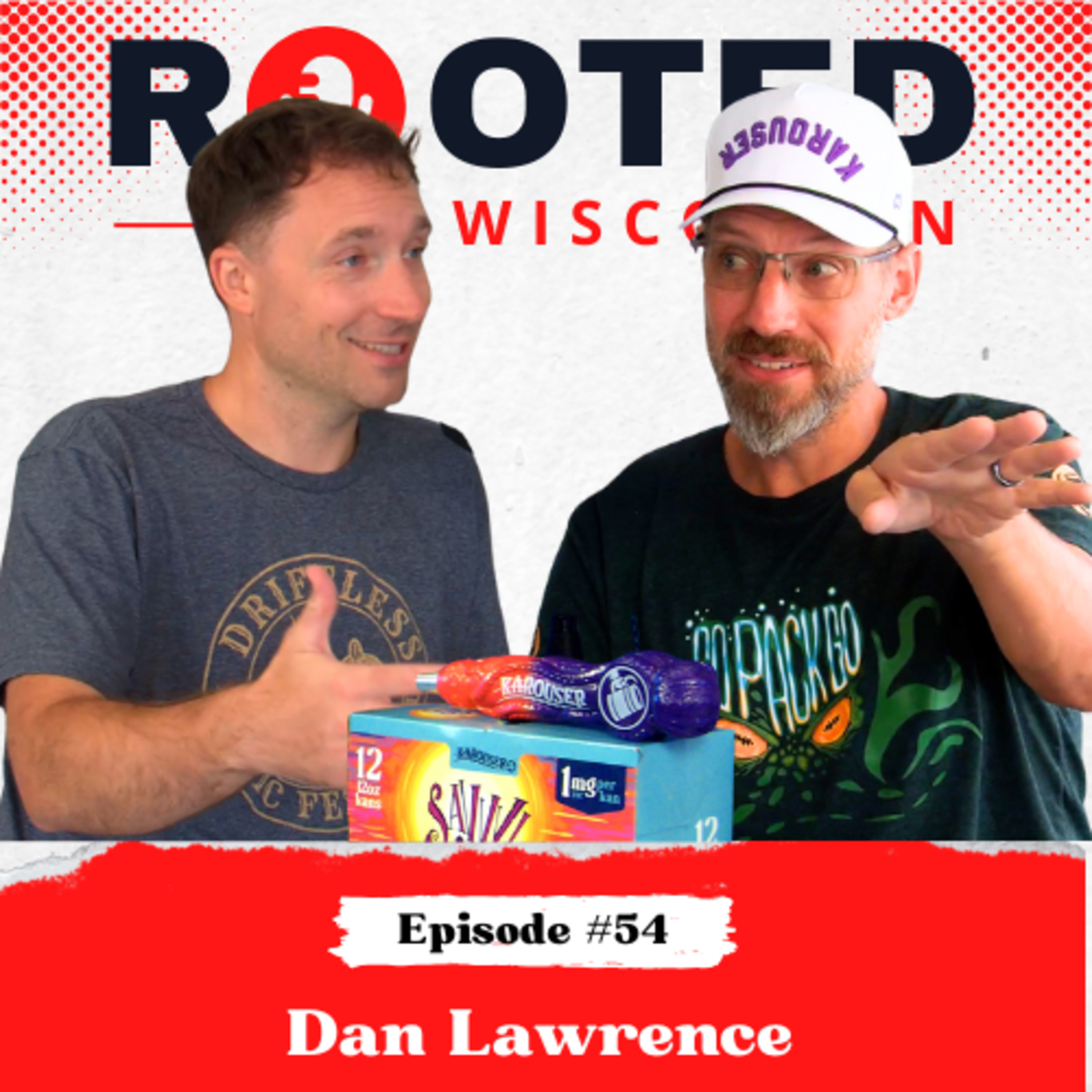


Dan Lawrence is a successful founder, entrepreneur, and Unites States Air Force veteran. Following his honorable discharge, Dan started a successful career in the private sector, quickly leading a national lighting and electrical contractor from $11mil in sales to over $46mil in the span of six years. Feeling his value to the organization was outweighing the benefits he was receiving, Dan bet on himself and founded TLL Lighting, which ultimately became TLL Solutions, which supports brick and mortar construction projects for big box retailers. With TLL thriving, Dan has now also founded another passion project, Karouser, bringing to market a N/A lifestyle drink option for those seeking a healthier alternative to alcohol.
In this episode, Dan and Brad discuss what goes into effective (and ineffective) leadership, his moving story of taking a stand against Air Force Leadership and ultimately forecasting the senseless loss of an Airman (shining a spotlight on the disparity between those leadership qualities), and his motivation to start Karouser with another thriving and lucrative business already in place.
https://www.karouser.com/https://www.linkedin.com/in/daniel-lawrence-71315123/
As always, a HUGE shoutout to our sponsor Karouser. They keep these episodes coming! Dan is a driving force in our partnership and I'm excited to share some of his story via our platform.
0:00 What's up friends, welcome back to Rooted Wisconsin. Appreciate you for clicking another episode. Grateful to have you here. If you've got your video on you can tell I'm starting to get a little excited about both season, but I don't usually take it too serious until November. So we've got a couple episodes of Rooted Wisconsin before we get there. Today's is with Dan Lawrence, Leader, Founder and Commander and Reef of our partner Carouser. And really excited to share some of Dan's story because he has a couple stops that I think are really fun to hear and talk about. Really helpful. To hear and talk about. And we talk a lot about leadership, which I think helps everyone with it. When effective leaders are in place, I think that helps most things that come into contact with it. One story, though, is about his time in the military. Dan spent many years in the US Air Force, and I didn't bring this up in conversation, but it's something I've thought about our service members a lot because we often think about the commitment and dedication it takes to do that, enter our our be a service member and Rep and protect and serve our country. But I think there's a layer of it that goes a little bit more unnoticed.
1:10 And we all know like you deploy, you move around the country, you some, you actually give some of your freedom away like I feel to serve our country and protect our freedom, which I'm really grateful for. On top of it, though, there's this layer of commitment where if I want to quit my job tomorrow, I can and I can find a new job. Our service members, once they sign on the dotted line for that contract. You know it's. Four years, it's it's eight years, it's working towards 20 to to retire where they they can't just up and quit if they want. And Dan hit a crossroads in his career where he was really uncomfortable with an upcoming deployment. And I'm going to let him tell the entire story. But he definitely swam upstream in that instance. And the results were sad and surprising and growth filled in a bunch of different things.
2:10 And like I said, I'm going to let him tell the story, but that's a layer of commitment that goes unnoticed where civilians, most of us can quit our job tomorrow, start a new one, find a different one and it'll be fine. Our service members don't always have that opportunity. And remember, sometimes it's life and death. It's pretty wild when you when you get to that layer of commitment. So there's a there's appreciation that lives there that's is good to share. And his story specifically is unique, I guess I would say. Listen to listen to the whole. Episode to check it out. We talk about that we talk about leadership, of course we talk about starting Carouser a little bit and a whole lot more.
2:53 As always huge shout out to our sponsor carouser. They keep these episodes coming, so make sure you click like on their Instagram, follow Facebook wherever you are on socials. And once you listen to this whole episode, you dig Dan's story. You say I want to try Carouser. We've got a discount code for you, RW20RW20 for 20% off anything on the Carouser store that's active until Halloween. So take advantage, Check out the episode Try out Carouser RW20 for 20% off your Carouser orders from hit now until Halloween. Without further ado, though, let's hear Dan's story. Dan Lawrence. So have the ways we try to lift our neighbors. Where did the love go?
3:52 Where did the talk? And we need some help to make this. A lot of things I'm excited to talk about. Absolutely. It's been, it's been nice getting to know you when you guys reached out. You know, there's obviously this, anytime you enter into a new engagement, there's this feeling out period. 100%. And I know you and I are cut from a similar cloth where relational aspects of things matter a lot. And we probably both entered into the scenario feeling each other out, man. Like, what's what's going to happen? What are we going to do? And I'm really excited about where it's developed to getting one of the main things that was just the breath of fresh air and ultimately why I decided to just come all in with you was golfing and then going to dinner and getting to know, you know, Dan Lawrence, the person, not the business owner, not the the aspirational stuff that you have, but just you in in general.
4:53 And I shared this with you last night, but it's probably a cool place to start. I think one thing that's really telling about a lot of people is how people they lead follow them. And I think that's really telling watching you and your environment, man, with your people and how they respect you, follow you, believe in what what you do. And that was the same thing that I got the day from golfing and going out to dinner is I guess that the the brass tacks of it is just the authenticity of it, which I really appreciate. And what I don't know what it what do you feel about that? Where does that authenticity come from? Has it always been that?
5:41 Yeah, I mean, honestly, I think so. I realized at a young age, like we all struggle. Yeah, right. Like we're all human and you know, there's, there's masks that we, we put on and there's different roles we play. Like, right, you're a, you're a son, you're a brother, you're a husband, you're a worker, right? You're a friend. And there's different masks that we all put on and we all have struggles, right? And there's, especially in today's day and age, everything is, there's so much focus on division and, and fighting against one another. But really realizing that as we all share the same human condition and some people are better at masking it than others, and some people are better at switching roles or playing roles than others.
6:23 But what I realize is I don't want to waste time. And if I'm putting on a facade, you know, there's times, I know there's times for it, but I really want deep personal relationship. Like, let's, let's get in the mud. Let me show you the I'm messed up, man. Like I'm broken, like I got a lot of flaws. Like I'm not going to waste energy. It's kind of like I look at like lies only lead to more lies typically, right? And so and the energy, what lie did I tell? How do I keep my story together? How do I not get caught, right? And there's just so much energy that's wasted and time that's wasted and, and missed opportunities because you, you're either believing someone else's lie or you're worried about telling your own lie. But versus just like, Hey, what if we just say, Hey, this is, this is me, this is my stuff, same as probably your stuff or on a similar scale, Why don't we stop wasting time and let's just be real with one another 'cause then you can solve problems so much faster, right?
7:26 You can make connections so much faster. And so I really have had that, you know, and I always said to me when I was younger, I was like, you people either love me or hate me. I'm a very polarizing individual because I just really don't have time for the BS. Like, let's no man, I'm broken, you know, I got issues. Here they are. Here's where I'm weak. Here's what I'm not so good at, you know, here's what I need help with. But here's where I'm really strong, you know, and then, and I feel like when you're open and honest, people are like, well, yeah, I'm struggling too. Then then their walls can come down, right? And then we can have a real, like we talked about a relationship. How do you build that long term relationship, a meaningful, impactful long term relationship? Because we only have so many hours in a day and you can't be that deep with every human being you meet, right? So there's a there's a time challenge there. So I feel like too like, OK, let me, we're not all meant to resonate 100% with each other.
8:23 So if I'm able to be authentic and take down my walls and share who I am, then then I'm going to attract the people that naturally, that I'm naturally gonna mesh with better. And I think it just leads to an overall more enjoyable, more adventurous life and more free. I think the freedom. I don't have to pretend. You don't need to pretend. Here we are, dude. Let's figure it out. I was a terrible dad. I was a terrible dad there. Totally failed. I feel terrible about how I failed there. Yeah, I can relate, man. I was terrible to add, you know, and so and then, oh, you did the same thing. How can we help each other? How can Let's talk through that? Like where did what? Why did we fail where, you know? So I very much have believed that from a very young age, for whatever reason.
9:04 I don't know why. Yeah, that's where a lot of growth happens. And that identifying, I mean, one, that's something you've talked about. You've talked to me about that, about being one of your strengths as identifying other strengths. And I, I think there's a really interesting point of conversation in that that I've thought of in passing, but I've never completely put the two and two together like that, where that, that is very true and resonates that a lot of authenticity stems from the like comfort and saying this is me, you know, and I've never, you know, of course those two things connect, but I've never thought about it in that way. Because often times, you know, even if you don't go all the way to outright lies, there's people that, you know, put on a show or whatever it is. And, and I don't know, that's often from a place of maybe a lot of different reasons, right, Inferiority, whatever it might be.
10:02 But it's you know that when you can ultimately get to that comfort, it's like, OK, here I am. And let's do it from a leadership perspective. The thing that will kill, in my opinion, one of the biggest killers of an effective leader, is insecurity. Oh yeah, yeah, absolutely. Right, because then they make decisions based on their their own insecurities. So they won't admit failure to their team. They won't admit when we're So I ran basic training, my favorite job. It's probably it's probably my favorite job in my life is running basic training. And I've run weeks and weeks and weeks and weeks in different classes of basic training. I absolutely loved it. What blue and you could see really bad trainers and you could see really good trainers, but like, and I was hard.
10:44 I was my goal was always to be the person they least wanted to be reprimanded by, but the person they most wanted to be praised by. And basic training is a little different. Like I call basic training is a very pure leadership laboratory. Combat is the next like combat is the that is that is the pinnacle combat. That is, that is where leadership is true and tested and there is no BS. I mean, it is, it's like a time for it. No, no. And so that's where it's in its purest leadership is, in my opinion, in its purest form or the, the, the beauty of a strong leader. That's where it's going to rise and show. And I, I really believe basic training is a similar environment. There's still some, some BS that happens, you know, with certain things. But my point with that is when I screwed up in basic training because I make mistakes, you know, I'm still a human being. You know, I'm a captain at the time and I'm running base training and I have a lot more experience. I've already been in combat.
11:37 I know a lot more. I know more than any of the basics there. But I can still screw up. I can still think. I saw something one of the one of the the basic trainees did and they and they didn't do it and I got on them for it. And so and I was again, I was very hard on them. But when I would make a mistake, I would sit up there in front of all of my basics and say, I own this. I punished you guys for something I did a mistake I made. That is not OK. So I am going to apply the same punishment to myself that I that I applied to you. And so then I would just go out there and I'd do whatever 50 push ups and I would do the 50 push ups. People are afraid to admit they're leaders are a lot of leaders are afraid to admit they're wrong because they feel like, because they're insecure with who they are.
12:22 And so they think I, if I admit that I'm wrong, that's going to make me a weaker leader. No, no, no, no, no. That's how. You're a human being, you're going to make a bad decision. You're and a lot of times you don't know the right as a leader, you don't know what the right decision is. You're picking what you think is the best course of action at that point in time. And you got to be able to, you know, if it's the wrong course, you got to be able to switch course. You got to be able. That was a bad decision. We're moving on. Let's switch gears. But when you're that, when you're honest about your mistakes and you, you own your mistakes with the people that you're leading, it doesn't make them go, oh, he's a weak, he doesn't really know. I'm not sure I can follow that person. It has the opposite effect. He's like, hey, he's owning his stuff.
13:05 He's being accountable. If he can hold himself accountable, I can hold myself accountable. I actually trust him more because he's willing to admit when he's wrong, not just admit when he's wrong. He's willing to own it. And he's not full of crap. What he says to me when he's talking to me, he lives it. And that breeds that, that what do you see? I think in my team, because there's so much trust and they know that I've made so many mistakes and they know that. And they know that I'll own my mistakes. And they know they'll hear from me when they make a mistake too. But at the same time, it's all like, OK, all right, how do we move on? How do we let's solve it, let's learn from it, let's fix it and let's go on.
13:46 But it builds that trust. And I think that's that's that insecurity, like I said, is probably the biggest pitfall to, to leadership or where you find weakest leaders. It's going to be an insecurity piece. Absolutely, yeah. And then there's a couple layers to that where it could be insecurity about your own ideas, or it could be insecurity or even about like those people just talking a little bit of shit about you because you're wrong. Whatever, right? You know, sure, I was wrong. Go talk about it. It doesn't. Matter. Absolutely. Yep. Let me tell you another comment. I was more wrong. Yeah, right. Let's talk about that. You think that was bad? That way worse than that? Absolutely. I love that. Yeah. So I think that paired with another thing that I've noticed is it can really wrap up your your leadership. The other thing I've noticed is your keen ability and willingness to make a decision and say this is how it is and move.
14:36 Forward. With it and you do that very quickly and I, I think I hope you'll share the story from your military time of where you voiced your opinion about some things that you thought were going to go wrong and it was an unpopular opinion and you ended up getting what I what I don't know what the military is. Someone overrode your decision and said this is how we're going to do and how to can you tell that story? And then can you encapsulate how it's, I'm, I'm guessing this is me presuming that it that ingrained that in you even more that you're willing to say this is a hill that I'm going to die on because this matters. I'm right, you know, it's. Funny because you've got there's actually a couple different questions there, a couple different plans to go. So the story to share is a very long one is and you've heard, you know, you've heard it before. I've never shared it.
15:26 I mean, I, I everyone processes trauma differently, especially in combat, And so a very common way is to not talk about it, keep it inside. I've always been, again, just with who I am. Like, no, here's here's what went down. Like here's and, and it helps me to share and to talk about it. And so I like to preface kind of, you know, everyone deals with the grief, everyone deals with trauma in a little bit different manner. So you've always been pretty open with it? You've always been pretty open. OK, good. Yeah. Totally. Now there was an article I did and I I spoke about it when I went to squadron officer school after coming back from my last deployment from Afghanistan. This was, I deployed twice, once in 2003, once in 2004, both to Kandahar and Afghanistan.
16:12 I was a combat search and rescue pilot with the HH 60 platform, the Blackhawk. It's very interesting because we're trained. The whole reason we exist as a unit is to rescue downed fighter pilots or downed pilots. And you know, but yeah, you have about a four hour window, you got about a four window if a pilot goes down. Like there was an F117 pilot that was shot down in Kosovo. My squadron commander in pilot training, Chad Franks ended becoming a general, actually rescued that F117 pilot with, you know, as a, as a 60 pilot for the Air Force Special Forces. If you get to those pilots within 4 hours, you have a good likelihood of bringing them home. If you don't get to them within 4 hours, you're probably not going to get to them.
16:52 So that's, that's our, we have a very niche mission, very, very specific, very surgical mission. Well, the problem with that is when we have the air dominance that we have, like in Desert Storm, I mean didn't have a ton of downed pilots. When you think about Desert Storm or just any of the conflicts that we've had, there's not a lot of downed pilots with the F117. And I think there's an F16 guy, you hear a couple, there's an F18 guy. And I know we picked some guys up, I think during OIF, not my, not me, but my squadron. But it's like, imagine you're playing for an NFL football team like the Packers and all you do is practice. You're so niche.
17:34 Your role is so niche. If every if you're if you're dominating, like you never need the punter. Let's just say you score on every single drive. You never punt. That was our unit where punters, right? We're there for a very niche or very, very real, very powerful, very important mission. When someone goes down, no one goes down, there's nothing to do, right? There's very little to do. And so you train and train and train and you're training at that elite a level, but you never get to apply your trade, you never get to practice, you never actually get to kick in a game or, you know, and so that was kind of an over what I say is coming into the community, that was a prevailing pressure that existed on the community. Like this need to like, we want to be a part like all this is happening. 911's happened.
18:23 We want to defend our country. That's why we signed up. We want to be in the game. We want to be helping. And so Afghanistan, OEF opened up so many opportunities for our unit because there was so much going on. We were we, you know, our unit was boots on the ground very, very early in the conflict. And we were doing a lot of really guys getting Silver Stars left and right, really crazy missions, like really intense missions, really meaningful missions, right? And wow, we're part of the game, we're in it and we're we're excelling like we are, we're a great punter like we're you know, this is, you know, and so the whole community see we are important. Like you can see us now as the conflict went on again, we're more and more control. And so then we start taking on different missions that we weren't training for.
19:11 And so it created. So when we would stateside, like we're spinning up to go to Afghanistan, I'm all of my training sorties are fighting radar threats, trying to defeat, you know, these these radar guided surface to air missiles. There's no functioning radar in Afghanistan. I don't have a role in chasing me down with it with that can would eat a helicopter alive. It doesn't exist, you know, and we're flying at night, you know, you know, we're not flying during the day. So just the threats that we're fighting and training didn't equate to the threats that we were actually the missions we were taking, we were very different than what we were trained to.
19:53 So we ended up doing a lot of medevac mission, essentially the the worst it was ironically the the Army helicopter pilots probably have. They have thousands of hours of helicopter time 'cause they, they're Warrant Officer programmed to do things differently. We're doing all these additional duties. Our primary job isn't necessarily flying, which is, which was eye opening for me and very frustrating. Yeah, it's crazy. It's truly crazy. So I'm a young copilot, maybe I have 500 hours and I'm in the, you know, I'm in the, the left seat, the pilot, the ACS in the right seat. And maybe he has 1500 hours. Whereas an Army pilot, they got 5000 in one seat, maybe 10,000 in the other seat. The missions they're saying we're not going to go on, we're raising our hand for like, oh, wait a minute, yeah, 15,000 hours of combined time versus 1500 hours of combined time. They're saying no, why are we saying yes? And when combat search and rescue, you have to launch right now, you have 4 hours you got to launch. So literally, So when we get a call, I'm in a tent. You know you, we're all in our tent. We're doing whatever we're doing. We're we're on call.
21:00 So we're in uniform, we're waiting and a call comes in. The aircraft commander runs to the top, the tactical operation center. They're getting debriefed on what the mission is. I grab my shit and I'm running to the helicopter. I go through all the checks, I get the helicopter, I got the blades, I got the engines running. I got the blades turning. I got everything ready to go. Pilot jumps in. I'm taxiing us. You know the the PJ, the pair rescue PJS are in the back. We got the gun or the flight engineer. They're on the back. Aircrafts, aircrafts all dialed in and we're getting off the ground. I have no idea why we've launched. You don't even know why you went. That's a clue. Wild. No clue. That's crazy. I. Have no clue where we're going. I have no clue why we're going. I have no clue what we're doing. I have no clue. And you're captain? At this time, I'm a captain, but I'm a copilot at this time. And so, so then as we're taking off, as we take off and we get in route, like the, because of the aircraft commanders putting the route in the system.
21:48 And, and so I'm just kind of flying and, and then he back briefs us all on what's going on and what we're doing as we're, as we're flying. And so that's the, that's how we're trained. Well, for a four hour window, that's important when you're trying to get a down pilot and you get 4 hours. That's really, really important. If it's a medevac mission, you don't need to do that. There are cases where you get troops in contact. It might still be that sort of situation. But at this point in time, when I was there in Afghanistan, it was a lot of winning the hearts and minds. So we were doing a lot of picking up local Afghanis. Again, not there's nothing wrong with that. It's not a bad. Winning the hearts and the minds of the locals, correct? Yeah, they have a, you know, there was a conflict and maybe, you know, in the one mission, the mission that we launched on where we lost, lost a helicopter and lost someone was a local Afghani national.
22:35 They were having their first election, which is a big deal, or maybe it was their second. Any rate, it was a big deal. And the had a local Afghani was hired by the UN to be security forces for the people collecting the votes. So the Taliban and whatnot wouldn't, wouldn't kill him. The security officer accidentally discharged his weapon and shot the guy he's supposed to be protecting on accident, on accident in the middle of the freaking mountains. And by the way, the worst place on the planet for our helicopter to be is Afghanistan. I mean, there's maybe Korea, it would be worse. But I, I mean, from everything about it is designed to destroy our helicopter. It's just not we are underpowered. Our aircraft was designed to fly at a Max combat build on it, 16,825 lbs.
23:20 That's what the airframe is rated for engine for. We were operating at 22,000 lbs gross operating rate all the time. On every mission we'd come back and there'd be structural cracks in the frame. They'd have to take them to depot to come complete em resurface. So 6000 lbs over what the plane aircraft was designed consistently. So we wouldn't have at that density altitude, the temperatures, the high altitudes, the dust, we didn't have power. So we're essentially for trying. We're not really a landing, we're controlled crashing. It's not a good recipe, right? You don't have a lot of Oz. And that's the other thing too. You have, you're supposed to have escape routes and you just don't have them up in the mountains. You don't have the power for it. You're Browning out at crazy high altitudes.
24:01 The whole point of all that is we didn't train. We weren't training for all that. This is what we're going into. And so we were applying our tactics to a mission that didn't require those tactics. And we were very good at them, but they weren't necessarily what we really needed to be doing was taking a step back and say, whoa, whoa, whoa, what risk are we? What, what's the mission? Are we willing to risk 2 helicopters and six souls on board of each helicopter? Are we willing to risk 12 human lives for this mission? Who are we saving? What are we saving them for? Can we wait? Cause a lot of the missions, the Army was saying we can wait, they'll be fine, they'll make it till the morning. Bring in Chinooks, Siege 47, they got power for days, for days.
24:47 They don't have any of the problems that we have and they're just saying, hey, we're going to wait. We'll get them in the morning. OK, Why aren't we saying that? Right? But I go, no, we got we got these, we'll go. And after my first tour, we came close, you know, we had some real, real problems. And I was like, what are we doing as a leader? I'm thinking, one, we're not training the right way for this mission 1 is a different mission. We should be training differently. We don't need to be launching an alert mode if it's a down US pilot or we got troops in contact, OK all day. It's a local Afghani. It's a winning the hearts and minds or it's someone that's stabilized.
25:27 There's no conflict. Even if it's, you know, an Army guy or a Marine, hey, he's stable or, you know, he's here. We can, we can, he can be. The Army's saying they'll get him tomorrow and they have a confidence level that he's going to be OK. OK, we can accept that too. All right. We don't necessarily. There might be situations where we have to go, but most of the missions we don't. And if we're going to go, let's take our time, slow things down. Let's get everyone on board. Let's really think through how we're going to do this. Don't apply this we got to get him in four hours mentality and then OK, high altitude hovers in brownout conditions. That's a different animal. You know, we should not have spent any time training for radar threats because they were none. So really just after my first time, I'm like, and I was talking to a lot of the guys that were former Army pilots that are now Air Force pilots and they're like, dude, this is insane.
26:16 What we're doing is insane. I'm like, yeah, I feel it like I'm a young copilot. I'm scared shitless, you know, I don't know what I'm doing. I'm not trained for this and I'm about to die, you know, or we could die like I could. I could sense like this is this is scary shit, you know? And so we weren't getting shot at. I mean, we people would shoot at us, but I mean, there was no directed fire. You know, we're at night, we're low level. I mean, they couldn't see, they're shooting at sound most of the time, you know? So for me now, there were other missions after me that I know that in in before me where we were taking, we had aircraft take rounds and stuff like that. But the time I was there, we weren't experiencing that. So we'd get fired upon. But it wasn't anything that it's not like I was ever really worried. We almost got hit there.
26:58 You know, it wasn't. That wasn't the threat when I was there. It was self induced risk. You were worried. About correct. And so when I'm talking to these other Army pilots that are all like, dude, this is insane. Like I cannot believe we should not be doing this. And I'm like, so I'm looking and I'm thinking kind of naive in a, in a sense that I'm an office before I'm a pilot, I'm an officer, I'm a leader. I'm responsible for the lives on this aircraft. I'm responsible for this aircraft multi $1,000,000 government asset. And I'm responsible for, more importantly, I'm responsible for all these lives on board, these guys that I've lived with, that I trained with. And they're looking to me to lead them and my IT, I have a responsibility to do right by them and to lead them.
27:46 If I'm going to take them into harm's way, you'd better be for freaking good reason when we better be in the best position to win. If we're not, what the hell am I doing? Why am I there? And what has happened? And this happens everywhere. It's a corporation at the end of the day. It's a big, I mean, government, it's a big government corporation. People start worrying more about their careers, how they get promoted, how they move up the ranks. Squeaky wheels don't move up the ranks, right? We just don't. And so, but when I came back, I'm like, Hey, we can make this better. We can do this. We can, we need to train, we need to change our spin up training. We need to change this, we need to do this. We're operating in a different mission. We're operating in a different environment. You know, we can do better and we can protect our people and we can still do a mission.
28:34 We can still be important, but in a, in a, in a way that's more responsible and, and, and it makes more sense for our guys, our, our, our guys and girls that we're leading. And so I came back at all these ideas and I'm sharing all these ideas with leadership and I'm like, we need completely deaf ears. And again, it's part of it's that institutionalization, right? Just this is the way we've always done it. This is the way we're going to keep doing it. Who are you young copilot? You have $500. You don't know shit, don't tell it, you know, and that that pervasive mentality, you know, prevented us from really flexing. We needed to flex, we needed to adapt, we needed to change to to the environment.
29:21 And we didn't honestly, in my estimation, for because of political reasons or career career political reasons, right. It's just, or maybe it was too much work or I don't know, you know, there's a lot of reasons. But I kept saying, Hey, we need to change our spin up program and I'll, I'm like, I'll do the work. You know what I mean? I'll do the work, I'll take the sun and I was just poo poo, poo, poo poo pooed. And so then we go to our next deployment. I was paired with a pilot initially that I, I didn't trust their, their skills as a pilot. And I'm like, and then we go to spin up training and it's all the same shit. I'm going to go to the range and I'm going to try to defeat radar threats. It's not what's going to kill me over there.
30:03 You know, high altitude hovers and brownout conditions, brownout landings, going on missions I shouldn't, trying to land in places I shouldn't. That's what's going to kill me. That's what we need to be training for. What are we going to say no to? I want to know what we're really going to say no to. We should be saying no to a lot of these missions that we're taking. And, and I'm like, I got to the point where I just felt so convicted. I'm like, I we are going to lose a helicopter. We're going to crash. We're going to kill someone because we're so irresponsible with how we're doing this. And I go as an officer, as a leader. I can't, I can't allow that. I, I know that as a captain, as a young captain, I only have so much power, right? Which is very little.
30:48 But I need to be able to look myself in the mirror. If, if something goes wrong, I need to be able to say that I tried to stop it. I tried. And so I actually got to the point and I didn't sleep. I didn't really eat for like a week because I was so like, I cannot deploy. I cannot go on this deployment. And so I went in after about a week, I went in and I talked to the the squad commander was deployed. So I went and talked to the deputy commander and I said, I'm trading in my wings. I'm done. I'm not deploying, I'm not flying anymore. I cannot be a part of this. And he's like, oh, you know what? What?
31:32 Which is a wild conversation to have, right? Like, that's a wild thing to go up to. Nobody does that. Nobody does that. Yeah, Nobody does that. I had no idea that why I couldn't sleep, why I couldn't eat. Am I gonna, they're gonna just. They're gonna dishonorably discharge me. Are they? Am I gonna, they're OK. You're gonna go be a security force guy or you're gonna. We're gonna find the worst job in the military we can throw you. You're gonna be in, you know, freaking Iceland. No, Iceland's great. You're gonna be in Greenland or you're gonna be stuck somewhere where, you know, we're just gonna. Yeah, I had no idea what was gonna. I mean, from my perspective at that time, my life is over. Like I've worked my whole life to become a pilot. I've worked my whole life to get to this point and I'm at the pinnacle. You know, we're in the elite. You know, I am with I am on the mountaintop. He says some of the most there's there's more elite, but we're at we're on that area of ability.
32:19 You know, there's very few people that can do what we do. And I've made it. That's my dream my whole life. And now I'm just turning that in. Like really, I'm going to do this, You know, I'm going to blow my life up over this. And, and as a leader, yes, yes, that's what being a leader sometimes means. And so I saw and he's like the guy, the guy, the whole meeting just went. I was totally taken aback by how the meeting went, 'cause I'm expecting that to get dragged out and 'cause but I'm just thinking, oh man, the world's going to come crashing down. I learned something really leadership wise, really important here. But the commander looks at me, the deputy commander looks at me. He goes, what do I got to do to make you stay? I'm like, of all the scenarios I played out in my head, that was not one of them.
33:12 And I'm like, what? He said, wait, because he goes, well, let me, he goes at what? Why are you where you know, why are you saying this? Why are you coming here? Like, and I just laid out everything I just told you. I said we are. And I told him at point blank and they had a guy, they had the executive officer there taking notes. I said sure, we are going to crash a helicopter and we're going to kill someone for no reason. That's what's going to happen. And I go, I cannot, I go. I've tried to change it. I've tried to echo the my sentiments with there's other people that feel this way. This, this is not out of left field. There's sound reason here. You guys are not listening. We are not ready. We're still going to take missions we shouldn't take.
33:55 We're going to kill someone. We have to change the way we're doing things. And I said I can as it is today, I cannot be a part of it. I cannot as an officer, I cannot sign on to this any longer. So I'm out. And that's when he said, OK, well, I hear you. Changing all the things that I want to change is way harder for him than just Dan, what can I do for you to make you stay? And I was like, mind blown. And that's the leadership lesson you're talking about that you got there like how we evaluated that. Yeah, I think what I most people take the path of least resistance.
34:36 When you see bad leadership or you see bad organizations or you see things, it's because they don't want to do the hard thing when they could be risking their career. What I mean, and and a lot of times what happens, what happens when you're really good at what you do a lot of times is just your reward is getting more work all the time, right? Oh, you handled that great. I got another problem here, take this. And that's what was happening to me too, as I was doing a really good job and the things I was doing. So they just kept putting my work on me and I'm, I kind of took an office space mentality. I'm like, whoa, whoa, whoa, shouldn't you know I'm OK working. I have no problem working hard, but if all you're going to do is keep stacking more stuff on me, I'm and I'm watching people next to me that aren't working so hard having a lot easier life like. Well, you're well, you're feeling all these feelings.
35:17 Well, you're seeing all these things that you don't have trust or faith in the person making the decision that controls the outcome. Right, absolutely. So at some point in time, like I'm an idiot, like I'm if I see all this, why am I willingly being a participant in this? So I told him, I said, look, I said I'm honestly sure I was not expecting this response. Can I have 24 hours? I want to talk to my family. I want to talk to some people I trust. And, and then can I, can I come back to you in 24 hours? He said absolutely. So yeah, I talked to my family, talk to people that I trust in the community. And so I was like, OK, first, like, so I was on the lead bird. Halo 41 was the lead bird. I was slated to be on the aircraft commander in Halo 4.
35:59 Two was my best friend. And I'm not using names in any of these stories intentionally. He's my best friend. He's actually my best man at my wedding. I trusted him with my life and he was the aircraft commander. And I'm like, so OK, so first thing is I'm not flying with on that bird. I will only deploy with my with this guy is my aircraft commander. That's the only way I deploy is if I am his copilot, that's it. And he's like, OK, no problem. Except I said I go I'm I'm done with deploying. I'm done with fighting this version of war. Whatever we want to call what we're doing, I'm done with it. So I want to go at the time we had a, there was a base up in Reykjavik, Iceland.
36:41 I'm like, you know what, it's a good place. There's a great, it was a great base. There's a lot of really cool. You just learned a lot of you had a lot of cool different experiences and you learned a lot, a lot of water work. And I hadn't done any really water work with the helicopter. And like, I want to go to Reykjavik. And so I need to, I need to really be removed from what were the deployment cycle that we're on and the war, the way we're fighting this war. I need to be out of it and I try and like, I really want to go in the reserves now I'm kind of done because it would kill my, it really had killed my, my love of flying kind of died in Afghanistan, honestly. And so I was kind of feeling, well, maybe I just need to get out, you know, And I saw I was single at time. I saw what married families went through. And I'm like, I just don't want, I don't want to put a wife, my wife, my future wife.
37:30 I don't want to put her through that. I don't want to put my kids through this. So I was like, maybe I just need to get out like because family is important to me. I want to start a family, but I don't want them going through this. And so I'd ask, you know, he goes, well, I don't know if I can get you out because you have a 10 year. I have a 10 year commitment and I'd only been in well as I graduated 2000. So I'd only been in four years at this point. I still have six years on my commitment. It's a lot of money to trade in pilot and go through, go through everything that we've went through. And so he's like, I don't think I can do that because I can definitely get you. He goes, you do this tour, we'll get you to Iceland. We'll we'll do the PCs for you to Iceland. You'll fly with the aircraft commander of your choice. And he goes, OK, and he goes. He goes, will that solve the problem? I said OK, I'll go.
38:15 And he got you to weight balance the weight of everything you wanted to get ultimately to squash the issue. Right. Yeah. He, he took the path of losers just to make the issue go away 100%. And now whether or not he believed, you know me, what I was saying, you know, I, I don't whatever he believed or thought, obviously the, the biggest thing, especially 'cause he's deputy commander. So now there's a problem with the squadron commander's not there. So it's really like, there's that part of it too, like, OK, I, how do I just maybe push this off to where maybe the squadron commander when he gets back, let me just push, let me just kick this can down the road a little bit. So there, there could have been a little bit of that too, but it was, it was by far. Now he doesn't have to go to the base commander, the Wing Commander to say, Hey, I got a pilot that's turning in his wings. And then he has to answer all the questions. Why?
39:01 Because then he has to say, then they got to talk to me. Well, here's why. Let me tell you why. Let me tell you what we're doing all of a sudden now we got a spotlight on. I said maybe we don't want, we don't want to, you know, we want to keep our facade. Yep, absolutely. Right. So that's what that's what got me to, to say and go on the second deployment. You know, when, when we got there, we do a kind of a mock. You do a, a mock spin up or a mock like you get a, a fake call in. It's practice. Fake call comes in, we spin up, I go into a helicopter, we do the whole gambit.
39:41 And then we come in and debrief everything and just make sure we got before we go live, make sure that the crews or everyone's got everything down. And we launched and with the mission we launched on in that mock thing was it was a local Afghani. And I'll give you back. Sorry, there was a mission. I wasn't on this mission. We had guys launch through a 12 hour mission for a local Afghani woman who at the end of the day was constipated. We risked 2 helicopters, 12 lives, spent all that gas for a constipated woman and like, they weren't all that bad.
40:24 That was one case where it, and there's a whole, I won't go to the litany of reasons of what, how that happens. There's things that are, there's things on the ground that drive some of these that they make things sound bigger. Like we didn't know. We didn't know when we launched that it was just a constipated woman. They made it sound because they just want to get the problem. They kind of want to move the thing off their plate, right? So if I make it, if I make it sound worse, let me get this out of here then. And so that was and so that was some of the stuff. But we were learning that we we knew we couldn't trust everything that was coming down. So let's be a little bit smarter, right? Let's be a little bit anyway, So when on this mock up, we had launched again, it was a it was a for a kind of a local Afghani.
41:04 I think it was for a wounded person that was would have made it through the night. They were going to live anyway in the scenario and the place that we landed on was so high. And I'm like looking at the numbers, I'm like, we don't have the power for that landing. Like what? What was our thought process? Because again, I was the copilot. I wasn't there plotting out the mission or anything. I go, what was our thought process? How, how are we landing and we don't have the power. So no, it would have been a what I'll call a controlled crash essentially. So if that, if the landing goes perfectly fine, you're going to be OK. It was on a, it was on a kind of a Cliff. So the way you, you can't take off, you don't have the power. You have a power to kind of lift and drive yourself off the edge. Just drive off the Cliff.
41:51 And then gain your airspeed to go. That was it. That was our that was our plan. I'm like, what in the are we doing? Why are we launching on that mission? We have no business again, ACH 47 down, up out easy, you know, and so we actually had a huge fight. There was a huge I was and I was going, I was, I was aggressively, I was standing up, I was aggressively fighting majors and NCO senior NCOS. And when I remember there's a line from one of the NCOS like, well, my swords getting rusty, saying we need to keep fighting the fight, keep our swords sharp, you know, like your sword being rusty is a stupid reason to die, man. That's not the right reason to die. We, there's a balance that needs to be struck here. And it got so heated that actually the, the flight commander dismissed everyone.
42:44 It was just me and my pot, my aircraft commander and, and the flight lead, which was a new flight lead, by the way, was not the original flight lead that I said I would not fly with. So they actually got a different pilot in, which was good. And he's a, he's a great, great dude and a great pilot. But again, there was just that. This is how we do business, right? There's just that pervasive. This is the way we've done things. We don't want to rock the boat. This is why we're going to do things. You just need to listen. You need to follow. I'm a fucking officer. I got to lead at some point. I got to lead. And if my, my, everything in my being is telling me this is wrong, I'm not just going to stay quiet, I'm going to fight. And so kind of got hashed out, at any rate, literally a couple weeks later, we launched on a mission.
43:30 Same. And it was all the things we spent. We were in the, I don't know, we're in this, it's all mountains and there's just a big bowl. And we do what's called a high, low Recon. So you do a high Recon and this should take 15 minutes. 30 minutes at the absolute Max is what it should take. You do a high high Recon because every landing is different than a helicopter. Flying a helicopter is so much more difficult than flying an airplane. It's just crazy because conditions change. Every landing's different, every take off's different. You had to recalculate everything every single time. So we're you do a high Recon, you're circling, you're looking for escape routes, you know, you're looking for different obstacles, you're looking for the right approach angle. And am I going to do a steep approach, going to do a shallow approach, looking at all these different factors And then, OK, I think we have a plan from a high Recon. Then you drop down, do it, get close to the ground to a low Recon.
44:26 OK, how much slope is on the LZ? You know, is it are we going to have a brownout condition in the LZ? Just again, escape angles just re evaluating everywhere the winds coming out of. I want to make sure I'm coming, coming into the wind and now if I come in can I get out? How am I going to get out? And in all of that stuff it took us an hour, a full hour, 2 aircraft circling figure out how we were going to get in there. There was no way in there. There is and there was 1 riverbed that was an escape, potential escape, but it was just we should never have tried to land and it was again, it was for that local Afghani that security detail accidentally shot him in the arm who survived to the morning by the way. So we didn't need to launch.
45:17 So we do the Hilo Recon and flight lead has a plan. It is an interesting this is an interesting detail. Typically the two I was in the second bird. So typically 2 is the bird that would go in and there's a small detail. This is, it's interesting how these little details usually the we bring the PJ's bring blood, you know, because the guy's bleeding out. So they got to do blood transfusions and stuff like that. So for whatever reason, and I don't even know that I don't know what happened in the PJ with the PJ's or how it happened, but somehow the blood, all the blood ended up on the lead bird. So they had to go in, which again, is not how we typically not that it necessarily matters per SE, but it's just an interesting detail. It should have been us going should have been the second Halo 4 two should have been the one going in, but we didn't have the blood.
46:05 And that kind of came out through our high low Recon, like, oh, where's the blood? Oh, shoot, OK, well, lead, you got to go. And so lead started coming in and this is everything they they brown out. I mean, at high altitude, you know, 200 feet or plus and a brown out, essentially you're flying in a ping pong ball. You have no frame of reference. You can't you, your body's telling you you're swaying to the right or you're sinking or but you're not, you're doing the opposite. But you, you, so you get spatially disoriented. So you'll do things. That's how a lot of people die. You see people die, they don't have instrument training. It's because they get spatially disoriented. Well, when you're in a brown out, you're in a full dis spatial disorientation. You, you can't see anything.
46:46 So you have to fly total. You got a little 6 by 6 window. It's like a computer. It's a crosshairs circle and a square once giving you your, your position, once giving your velocity, once giving your acceleration. If you got them all stacked on top of each other, you're not moving, you're staying in the same place. But you could be, you know, you could, your velocity could be moving one way and then the circle could be rapidly going back the other way because you're changing your acceleration. And it's a different way to fly, to try to fly off a 6 by 6, you know, and it's an infrared screen. It's, it's, it's, you got to practice if you're not used to it. And again, it's, you don't want to land that way. It's not designed to land that way. But that's what they got browned out really bad and the, they hit the side of the mountain and they rolled down over 1000 feet.
47:35 The, the helicopter rolled. So now we spent the next we did 2 air refuelings, 2 ground refuelings. I was in the seat for 14 hours. It was a 14 hour. I was in the seat for 14 being my pilot and my we, we almost died. We tried get to extract them. We knew we couldn't land. We didn't have we didn't have the power to do a high altitude hover to try to, you know, to so we had a a hoist that we could try to pull him up 'cause we had critically the PJ was critically wounded. Our flight engineer was killed on impact on that on Halo 41. 21 year old kid and the PJ was was in serious.
48:25 The PJ was in serious condition. There was 2 PJS but the other one was OK. Is PJ Parachute? Para rescue man, people don't know who they are. They're bad ass Air Force special operators. I mean, they go through a two year pipeline 2 years before they're actually ready. The things they do, the things they can do and there's so many, there's some Paris that came off a off AC130 gunship and they fucking, I'll tell you what they, what they did is just amazing. I mean how they they came in and really saved this letter. Paris man's life. The ones of the ones that it. Crashed that. It crashed, yeah. So we come in, we come back around, we brown on it, 200 feet. We've already, we've thrown our guns off the side of the board, off the side of the air.
49:11 We had thrown all our ammunition off. To lighten up. To lighten up, to try to give us enough power. And So what happens is you have your rotor speed and you want your rotor speed at 100% RPM. The rotor is your wings. If a, if an, if an airplane's wings falls off, it falls straight down. If that rotor stops spinning, we fall straight down. Those are our wings. We're not taught when you, when you get into an underpowered situation, the rotor starts slowing down because it's trying to lift more than it's capable of lifting. So the rotor slows down, you get to pass a certain RPMS, you can't recover the the the fall and the momentum from that fall. It's called settling with power, but you can't overcome it. And so you will crash.
49:58 There's no other. You get to a point of no return there. You cannot recover and so our our engine chiclets, our engine temperatures are all redlining so and our our rotors dropping. Well, you're trying to get into a place that you can do the rescue. Right. OK. So we're in a brown on condition, can't see. We're 200 feet elevation above the mountains. Our wingman, our elite bird has just crashed my aircraft commanders flying the aircraft and he's trying to do the hover and I'm holding the, the collective, which this is the collective. This is what essentially it changes the angle of attack. It's what makes you go up and down in a helicopter. This what really where you consume your power is on this on the, on the collective.
50:45 If he pulls any more collective, he's going to slow that rotor down. We were, we were hitting 95% RPM again, I don't know, I've never been trained. How low can we go? I got lucky in the sense that I had asked that question to an old Army pilot Once Upon a time. And I go because we talked about it and I go, what's the when do I know what's the number? Because the pilots are big on numbers. What's the number? The go no go number. And he's like, dude, it's not published. Like there's no number out there. He goes, I would never go below 95% ever. When I go below 95% rotor RPM and I'm like, OK, that was my that was the one thing that stuck in my head. And so I saw 95 like we are not, you're not fucking pulling that collective anymore.
51:26 And I held it there and then now our engines are redlining. And so we have the throttles are up here, throttles are up here. So we can take them to lockout. What the lockout does is it gives you, it gives full power, but you, you fry the motors. I mean, you burn them up, you give it everything you got. It's taking all the limits off it. So you, you pull them down and you push them forward. That will give you a limit that will give you all the possible power those engines can create. It will make they will eat themselves to do it, but it'll get you out of a situation to where you can safely crash land or or safely land before the engines totally give out on you. So I'm waiting. I might have to go to lockout right? 95 S We're maxed out every so my hands, I can't.
52:08 We're trained if if the backender tells the pilot to stop doing something, the pilot gets three chances to make the correction. If they don't make the correction, then the Co pilot's job is to take the controls because the pilot spatially deed in that it's so powerful. The spatial disorientation is so powerful. So the back Enders start saying stop back, stop left, stop back, stop left and we're still I'm looking at the screen I'm holding here. I see our velocity and our accelerations both going backwards and I'm like AC stop back, stop left. And now at this point the back end is screaming at the top of his lungs.
52:48 Stop back, stop left. And I had to make a decision like if because I'm holding us at 95% RPM, our engines are still relying, we might have to go to contingency power. I'm not really in a place where I can take the controls because if I take the controls and he pulls up on maybe he pulls up on the collective, especially D, he panics. Now we are done. So there's a point in time, and I really had the time slowed down and I had this thought like I trust my aircraft commander, I will die with him. I will he will fix this like I trust him and to his credits, America commander's credit like he everything in his body was telling him to keep doing what he was doing.
53:33 And finally this I think it was the scream of the flight engineer, the final scream of the flight engineer and he did the right thing like he was totally spatially deed. He just slammed the stick forward to stop the back, the back left movement. He just went the exact opposite. He overrode everything in his body even though it felt like the wrong thing to do and jam the stick forward. He knows and in the after we found out that maybe we were a couple feet from our rotor impacting a mountain, I mean the tail rotor, when that happens, it's over for us. We sheared the hoist. We had nothing left at that point. And so we're like, and we made the right, we're like we're done as far as we'll provide, but we can't, we can't get in there, can't get to them, can't get to them. So now we start planning a ground X film. This is where.
54:19 So then an AC130 gunships called in to provide cast, you know, over we call them Sandy and it's overhead support. They're kind of they're able to do a lot of things now. The AC130 gunships is a phenomenal, phenomenal airframe. This is where the PGA comes in. So I think it was there was another PJ, the PGS. I think we're actually on a maybe an HC130, not there's, there's two, there's two, one 30s. So we needed to get medical help to the people that were injured because you know, the pilots injured, the Co pilots injured, the flight engineer's dead, the Gunners injured, the PJ's OK, one PJ's OK, the other PJ's critical. And so we got two pair of rescue men on HC 130 overhead. And then there's an AC130 that come on station for it to provide.
55:10 And they're really there to provide support. If enemies trying to come in to capture us, they're going to keep the enemy off of us or try to keep the enemy off of us. No better support than an AC130I mean what they can bring to bear what they they ended up. What ended up happened is that these two pair rescue men. I don't if it was wonder if it was just one or if it was 2, but they at night they do what's called a high, high altitude, low opening dive out of the aircraft. It's pitch black. We had no Illumina. There was no moon. There was no, we had zero. It was a 0 illumination night, which doesn't help anything. Night vision goggles, they're still, they still need light, some semblance of light. Otherwise they get all flickery and you can't really see anything. And they had some tools that help them, you know, paint the paint, the landing zone.
55:55 They jump from this AC, this HC 130 and, you know, pitch black. And as the story was told back to us from our crew, like literally the guy, the, the PJ, he's jumping down, lands 1-2 steps, disconnects his chute and is on his knees pulling out his medical pack right on top of the PJ that's injured. That's the precision. Landed right on. Top of him, right on top of him from I mean just clicks off his parachute and starts administering first aid to stabilize them. And then now we're spending the rest of the time we went through there was we had AAC 1:30 that bingoed out of fuel. They had to leave, brought in an A10A10 was doing an overhead support for us.
56:42 They ran out of fuel, brought in AF161 or 2F sixteens that came in until and then we go through everything to move them to get them out of that that area to where they can be rescued. And at the end of the day, it's now sunlight. We're off goggles. I think I had 12 hours on night vision goggles at on that mission. The we they bring in the Army, sun's up. They bring in the Army to Chinook comes in, doesn't do a high low Recon. He just comes on approach, drops loads everyone up out like it was nothing. And I'm just think I'm like, what in the hell are we doing here? Why are we here?
57:30 So that was and so it was a week. I had already, I had applied to get into the reserves even though they said it was probably going to happen. I had applied and the week before, maybe a few days before this mission, I had been denied to go into the reserves. Obviously when there's a crash like this and there's a death, there's a big safety investigation. At the time, I wasn't, I'm not thinking, I'm trying to blow people up. I'm not trying to blow up people's career. I'm not trying to, you know, I'm not trying to say, hey, I told you so I told you this was going to happen. And it's like, no, I'm like, I'm trying to keep my, my, I got people that we still have. We're, we're still early in our deployment. We still got another, you know, 6080 days that we're looking at.
58:10 And I got guys with kids, young kids that are wanting like, I'm leaving, I'm leaving. I can't be here. I can't be here. I got to try to keep them together. I need to get the people that are still here. I need to get them home alive, keep their heads in the game. So I'm not thinking anything political. I'm not thinking anything. Let me show you, I was right. You were wrong. I'm not thinking anything like that. So when the Safety Board comes, I just tell them what happened with the mission. I just give them all the facts. I don't say, hey, you know, we shouldn't have ever been on this mission. I don't bring up any of that. I told her this was going to. I didn't do any of that that because that wasn't where my head space was. A day after that interview from the Safety Investigation Board, I got an e-mail from personnel saying we've reconsidered your application for the reserves and you've been approved.
58:53 The path of least resistance. That's such a crazy story, man. That's such a crazy story. And you know how we LED into that. I, I think what existed in you and in that up to that point, like you had identified this error in your process and you were comfortable enough going against the grain of everybody else around you. Your, your people above you, the people below you who you feel like you, you're representing, comfortable with going against the grain and saying this is wrong. This is what's going to happen. And here's what I'm going to do about it. I'm going to turn in my wings, right And. The strongest thing I could do, that was the that was the most, that was the most power I had.
59:40 You identified what you could do and what you could do to the situation. So all of that speaks to that leadership capability. And then you go all through it. And then even how you end the scenario about how every other every single person in the world wouldn't be like I told your ass like this was going to happen, Like we should have been doing this in the. 1st place Hollywood, right? It would be people arrested. Yeah, yeah, yeah. It's off with their heads, you know? But I think the entire scenario, like when you told me that and you added some new parts this time that we didn't get a chance to talk to the first time, it speaks volumes to, I think what we started our conversation with, what your people seeing you, why you're an effective leader.
1:00:23 Eventually what we're going to talk about today, the fun stuff about what you're doing with carousing, all of those things, being able to identify, act upon then and then own the result. All three of those things, I think, are what part of the pieces or large part of the pieces that builds you into the effect of leader. You are right. This is, I mean, at the end of the day, I'm going to be wrong, you know, I'm, I'm going to be right at times. Right. In that scenario, you wish you were. Wrong. Exactly, exactly. But at the bottom line, whether or not I'm right or wrong isn't what carries the day. It's the trust factor. It's the it's the authenticity factor. The people that follow me or that work for me or one, they know that I, I will walk the walk. I'm not just talking.
1:01:16 I will put myself out there. Like even my company, you know, my, my main company, I've been up in the scissor lift doing the shittiest jobs we got for hours on end. I've been in there. I've been in one of my core principles of leadership is you need to be able to do any job you're asking somebody else to do. If you're not willing to do the job yourself or have done the job yourself, you have no business telling someone else to do that job. You need to know what you're telling them to do. You need to experience it. So when their life sucks and you're going to go make their life suck, you need to know how much suck they're in for. And you need to be able to look them in the eye and say, I know what I'm asking you to do. I've done it myself, here's why.
1:01:57 And sometimes you can say why, sometimes you can't. If I can't say why, I want to tell them why. And sometimes the answer is this sucks and you just got to do it because sometimes that's the way life is. And I've done, I've so many examples of doing that. And people and people are, they're like, all right, let's run through the wall because it's just truth. I'm just being honest with them. And I think that's why like, hey, I don't mind following someone who's going to be wrong because I know that he's being truthful with me. He's not trying to lead me if he makes a bad decision, he's not trying to screw me over. He's not trying. He's truly, he's doing what he thinks is best and he's being honest with us and we're OK. And I think you're OK.
1:02:39 I'm OK. I'm OK following someone that makes a mistake. I don't my. Oh, man, that sucked. Yeah, dude, I really screwed that decision. Hey, no worries, man. I got you. Like, you know, it's going to happen. And I think that that trust knowing that and and again, knowing too, that no, I'm not going to burn you if you are part of my team as a leader. This this is and this. I heard this from generals and it pissed me off. I was furious at squadron officer school. And he's like the general's like talks. You need to be thinking about what not just what your boss wants, but you need to be thinking about what your boss's boss wants. And I go bullshit. Yeah.
1:03:20 No way. Look down. You're a leader. Your job is to take care of the people you're leading. That's your that's what's important. That's where your focus is. And that's the problem with it's whether it's the military, whether it's corporation, the people trying to climb the ladders are always looking up. They're only thinking about what will help them get up the ladder. They're not thinking about the people they're stepping on underneath or whether it's helping them or hurting them. Those are the people. The people who win wars are are are the little guy. That's who wins wars. Their blood, their sacrifice. Those are the guys that win. Those are the guys and girls that win wars, period.
1:04:01 Dot take care of them and. Guess how they operate the best? It's when they're empowered and supported. It's not when they're authoritarianly directed. What to do? I have no. Desire with my team because I I've hired, I mean, I've very exceptionally gifted people that work for me, but I don't want to micromanage them. I want, I give them a vision. Here's what we're trying to get to surprise me with how you're going to execute that. There might be times where I know something specific and I'll give specifics. But really at this point, like it's just like you guys go when you need me to help remove an obstacle or if you need a reinforcement or you need a resource, tell me so I can make your job easier, so I can empower you to do your job.
1:04:49 I don't micromanage, I don't check in. I mean, I do check in, but I'm not like on top of them. Like what are you doing today? Where's how have you spent your hours? Like they work from home. I mean honestly I they could be working 3 hours a day I wouldn't know, but I'll I'll essentially. Space management. If they're doing what you want them to, who cares? I'll find out. If you're not doing your job, I'll find out. Yeah, you've delineated the value. You know what you want, need that person to bring to the table, right? And you afford them the opportunity to do it. And I think I have given them what I think is this is the number of hours it should take, you know, in a given work week. And I've, we've agreed on a salary and if you can figure out how to accomplish all the things I want you to accomplish and you can do it in half the time. Yeah.
1:05:32 And go golf. Yeah, absolutely. Whatever you want to do, as long as the job that I hired you to do is take care of and you found efficiencies and whatever you should, you should benefit from the efficiencies that you create. That was one of the things I learned in the corporate world that pissed me off was I could save. I saved Lockheed Martin $1,000,000 in six months and they didn't give a flip. You know I didn't benefit at all so well why should I keep busting my ass it. Lined your boss's boss's pockets, right is what happened. Yeah, and it made. Someone look good. I didn't benefit at all from it. I I had to put myself in for an award for that and I got at the end of the day, I got $50 after taxes great for saving 1,000,000 bucks for motivating. Let me let me dive into the next assignment for you. Yeah, it's something I struggle with so frequently. I I see it in so many capacities. It's and it's that look up concept you were talking about earlier where someone's trying to position themselves as doing the right things of making their boss's boss happy to try to get that next rung on the ladder.
1:06:33 But at what expense? Yeah, what? What is the expense of that? Often times, I mean, it's really easy to forecast you lose your innovators because if if an innovator is not empowered to innovate, guess what? They're going to go innovate somewhere else because that's what drives them. They want to be an innovator. So you're going to lose them in the first place? They don't want to be a number. Yeah, exactly. Like they they want to be empowered to do something they care about, which is clearly. And they should win if they're great at what they do, right. That's why with the, you know, the NFL or the the sports world, I'm they can do something that very few human beings on this planet can do, right? And they are putting their bodies out on the line.
1:07:14 Pay them. Yeah. You're making billions. Yeah. What are you doing? Yeah. It was just good. I mean, we, I think we, I mean, I think it's good that the players make as much as they did. They didn't noise. And well, talk about an example of exactly what you were just saying about the the the people on the ground make the product. Nobody is going to watch Jerry Jones do a press conference. People are going to watch Jordan Love lower his head like he did yesterday and get that first down and put his entire body at risk. Why she Micah Parsons, I mean, and again, I was just a Packer fan. Just overwhelmed with excitement. We just flashbacks to Reggie White and Brett Favre and I just Oh my God, this is great. And you know, we've always, I think hacker fans have always hungered for that splash.
1:07:56 Like, where's our splash? You know, and when the Niners signed McCaffrey, I'm like, Oh my gosh, that's such a boost, right? And you know, you see these big signings, like when are we going to have that big Reggie White signing again? And so but to watch at the game last night, you know, to see what Micah Parsons, apart from what he does individually, you can tell he has lifted. Energized. Everybody not just a defense like you could, but you could say like the motor on that guy, like the absolute tenacity. And it's just, it's just, it's a it's like it's infectious, right? And I'm like, gosh, like, how do you put a number on that? Yeah. Yeah. How do you quantify it? Absolutely. And I mean, that's to circle it in that's I struggle with that a lot when I when I see ineffective leadership that is climb in the rungs. But in reality, it's so inefficient and it it's doing more demoralizing than it is improvement of the. Scenario.
1:08:54 True leaders find out real early they want to be quieted. Someone's really trying to lead. There's usually going to be a lot of people squawking at them to toe the line. OK yeah. To not think outside, to not not make waves. Sure. You know, it's the and a leader needs to make waves. You know, always. I mean, that's not always. You don't make waves just to make waves. Well, with leadership comes hard decisions, and that makes waves regardless of which side you pick. Yeah, the right one. Everyone's gonna make waves. You're never gonna please everyone. Yeah. And again, as a leader, you don't always know that you're making the right choice. Yeah, I could be. I've made so many choices. I told people like, I don't know. Yeah, I go. Let's go this way.
1:09:35 And that's what to answer your earlier question, I mean, that's what I believe in decisiveness. The worst decision is indecision, right? George Patton, a good plan executed now is better than a perfect plan next week. And I get it's so funny and it's part of my ADHI think in my ADHD brain. Like I get to a point there's a video out there like Leroy Jenkins. I don't ever send them. I know my so funny, but they're all talking. This is silly Warcraft, World Warcraft. And they're talking, they're planning it. And then there's like, all right, guys, you Roy drinking. They just runs in the room. And I get that way. We can talk about this and talk about this and plan it and plan it. Just let's just get in there. Let's just mix it up. Let's see what, what are we dealing with?
1:10:16 I don't know. Let's get our hands dirty. Let's and and so I get to a point where I just can't talk anymore. Like we got to do like we let's, you know what? I don't know, we're going to go that direction. Let's go that direction. Let's, let's see if we get knocked on our ass and if we get knocked on our ass, we'll dust ourselves off, learn from it and pick a different direction. And that's I, I really believe in that. And I, I believe, I believe leadership is more art. Than science. Oh, absolutely right. Because each situation is unique. Yeah. And, and again, it's like there's so many great principles of leadership, right? You can read. There's, there's tons. I love Sun SU's principles. There's so many great principles. And there's, it's like there's so many great paint strokes. There's so many good techniques to be a musician.
1:10:58 So many good techniques. Yeah. That's not what makes them a musician, No. There's an art. They see something, they feel something. Their music or their art comes from some place you can't define. And I believe that's true for good leadership too. It comes from a place within the person that you can't. You can. You could. By adding technique and adding different strokes and increasing their tool bag, you will make a leader more effective and more powerful. But at the end of the day, it's it's ultimately an art. The the ability to, to vision cast, to see kind of forward to make those decisions, to be able to take it. There's something internal in that person that you cannot just replicate. It's not something you can teach. Yeah, the stuff that had you identify the procedural thing that was wrong and the the gall to move forward with that.
1:11:45 That stuff can't be taught. You can like I have a master's degree in leadership. I go in tomorrow and get a job and I start looking up two bosses and I have leadership principles. I know, right? None of them matter. Nope. Because you're not executing in a way that matters and and is going to be effective. And I do think, I mean, I think, I think really strong leaders are courageous. Hell yeah. Absolutely. You have to be. You have to be. You got to be. Because the other thing is you got to be willing to look down the barrel of a. Gun making a decision that you very well know could be wrong. Yeah, even like in a comment you could be making a decision that kills people. Yeah, you still got to. Make a decision there. You can't not make a choice. So to be able to to and own that, you carry that. That's on your shoulders. And that's the way I feel like with my when it was, whether it was the people in the helicopter or with my team, I'm responsible for them, their livelihoods, the paychecks they get feeds their families and they have dreams too. How do I help them achieve their dreams? Like if I'm really a leader, if I really care about them, it's not just about OK, making sure they got a paycheck. Are you happy with what you're doing? Where is your, are your, are you, where are you at in your family life?
1:12:50 Do you need time off where you know, and I tell my team all the time. I kind of like, I can't know what's inside of you all the time. Like I need you to communicate with me. If you're burnt out, you need to go tell me and you're going off the map. We'll, we'll figure it out. But I, I do need that communication back and forth, but it's that, that true desire to really care about the human beings that you'll even have the courage to, you know, to sit to bear it like I could, my decision could really screw these people over. I don't know. It's the right decision. I'm doing what I think is best and I'm, I'll stand tall whether it's the right decision or the wrong decision. And I'll live on it. I'll live or die by it. And, and if I'm wrong, I will admit I'm wrong. And if there's consequences and we got to deal with those consequences.
1:13:34 But I, I honestly believe the heart, the spirit of if you're trying to do the right thing, you really, truly are trying to do what's right by everybody. You're going to make mistakes. But at the end of the day, your heart, your spirit always goes before you. It always comes after you. And even if people get burned by you trying to make a decision, you're really trying to help people. I think maybe not in the moment, but I think years later down the road they go, I was trying, man. I really was trying. I wasn't trying to hurt you or hurt whatever, or I was in a really bad spot and I did make a bad decision and that's on me. And I'm really sorry how it affected you, but we're we're still human. We're all going to make mistakes. Yeah, that's so good. I haven't had a fun leadership conversation in a while. That's fun. I was looking, I was looking forward to that for a long time. I got a fun question.
1:14:17 Out of that though, to kind of. Change gears a little bit one that I've been waiting to ask you for the podcast. I thought about this. You gave me the opportunity to do some really fun marketing work for you and talking about your kind of I'm ready to dive into the weeds and do stuff. How hard was the 30 days for you that I asked for to like unveil the plant? Was it was it hard to wait to see what it was? No, you know, you know what? So this is and again I think. The way I one of the things I learned in the military and I love this and this is I try to hire people who are fire and forget. So a fire and forget munition is 1 where it gets lock as soon as you deploy the weapon you turn, you go the other direction.
1:14:59 You don't ever have to track what that weapons got it. What we were just talking about that weapons going to go do its job and. You can trust that that weapons going. To go do its job. Got it. OK, So that's what I look for in all my people. I want fire and forget weapons. I want people that I give a task, they go, I go, OK, you know, we we talk where, when it when it when will I know the return or when are we going to give me the feedback from the mission that you just went on? Yeah. So it's very fire. So like when you came? On to to help us out in the. Consulting role, it's like, OK, you know what we're trying to do. I don't know shit about marketing. I don't know anything about social media. I don't know anything about starting a beverage company.
1:15:40 I don't know anything about any of this, right? None of it. So I need people that do know something about it that I can trust. So then for me, and I'm going to make a lot of wrong decisions on this, but what I'm looking for is people I resonate with. In this case, you know, our relationship's a good example. I, I resonate with your energy. I resonate with the relationship piece. There's a trust that I gained from you very early. Like, OK, this guy's, he gets it. And I, I have a certain, no, I could be wrong. I only met you. Yeah, But you could put a good, have a really good facade. I don't know, but I'm gonna, I choose to trust you 100%. And that's one of the things I think as a leader, I always would tell my people this like, like when when you when you're a new leader coming in to lead a new group of people, right.
1:16:28 So many leaders make the mistake of thinking their authority, their, their, their, their rank or the title is their authority. No, no, no, no. That's not your authority. You might have you do get some authority from that. That's not what you lead with. It's the thing before you and after you were just talking about a couple minutes ago. That's right with your. Spirit, you have to, but you these people don't know. You that you're leading, it's your responsible and I really want leaders to hear this. It is your responsibility to earn their trust. None of them should give it to you automatically and nor should you expect it. If you do, you get a yes man, you get a yes man. You just, you don't build a team, right? There's no comfort level.
1:17:11 You got to go. And and I would say this like I want everyone on my team. I want you to hear me. I trust each and everyone of you 100%. Any one of you can burn me completely and and if you want to, you can. I will adjust and things will, there will be consequences accordingly. But I am putting all my trust in you. It is you if you, it is up to you to keep that trust. Be a good steward of it. Exactly. And if you don't, then we'll make moves. And we'll change things. But I don't expect any of you to trust me. I don't want you to trust me right now. I will earn your trust through my actions, through my decisions, through backing up, by doing what I say I will do by showing you that I and that is something that's so reversed. It's so done, so in, it's done so wrong in, in, in most leadership circles, it's they just go in with their title, CEO or general or whatever else.
1:18:08 Just start throwing the, the weight of that around thinking that's leadership. That's not leadership. You got to earn your trust. I don't care if you're a four-star general. I don't care if you're president of the United States. I don't care. You got to earn your people's trust. I worked in a scenario one time that brings something a really. Vivid example to me. I worked in a scenario one time, I won't say where, but why. The ultimate person who ran the office that I was working in was really beating around the Bush to tell me that he gave another person in the office an elevated title. He didn't change their role whatsoever, but he thought giving them. A title. Was going to upset me because I was I did a lot there like it was that scenario where I was doing a lot of things and I was getting rewarded with more work and he thought that. And I was like.
1:18:57 OK, person, I don't I could give a shit less about a title. Let's let's talk about this in eight months or six months. When my. Performance review comes up and let's talk about how my workload is adjusted, but my compensation isn't. I don't care what my title is. I know what I do here. I know what my value is. And I, I've, I've never forgot that. I've thought about it on and off sometimes about like he was so worried to tell me and he, he was not always the best at confrontation anyway. And that's a lot of, I mean a lot of people that are put in management positions or leadership positions. They hate confrontations they will avoid and being a leader is to confront early, early and often with him. He was the guy that would let it build up, build up until. It exploded and I'm like, whatever, man, I, I, I don't care about the title.
1:19:45 Like, you know, tell me this, tell me, let's strategize together. Let's build this thing and let's talk about what true, true value is. Alternative perceived value. You know, like that word on that thing doesn't mean a damn thing. And I'm like, I hate titles. That's why maybe my title for Carouser. I'm the commander. And reef titles are, and again, they're important. They are important for you know. Hierarchy and understanding. Where think how information flows and communication flows and all that stuff. So they they have value, but so many people chase titles too. You know, I'm the CEO that's great. You know whatever. Well, if and if that's what your aim for. If your aim is to be the.
1:20:25 CEO, if that's your goal and there's nothing else that comes along with it, you'll get to be CEO for about two years, right, Right. Yeah, Yeah. Or you're really not. I mean you're CEO and title only. And you know, then that's a lot of people out there. They're whatever they are entitled only figurehead. Yeah. And that's but yeah, to go back to your question about the 30. Days. That's why I like, you know. I had made it through our interactions. I had made a determination that I could trust that you were trustworthy. And I'm just going to let you be a professional. I don't know what you need. I don't know. I don't. I don't know anything about what you do. I need you to tell me what to do. And that's why essentially why you're coming on board. So you tell me how long it's going to take. So where for me that, you know, kind of the trust, but verify, you know, ask. OK, so how long do you need?
1:21:09 And you said, OK, I'll need this amount of time. And so until we get past that amount of time and there's no result or there's no feedback or I feel like things aren't happening, I'm, I'm not going to, I'm, I'm off doing other things. Yeah. I'm not even thinking about whatever it is you're working on. I felt your full faith in it. I, I was, I was wondering in that. Scenario I always think about and maybe it's it's my internal like patients come out like I get excited, excited doing a project like that. I'm like ready to get this going, but it takes time to make everything come to life, you know, and it's probably my internal thing coming up, but I'm like, boy, if I was in those shoes, I'd be impatient right now. I just want to get this thing moving and going, but I want to make sure we get some of that talk in today because ultimately that's how we came together right with a brand carouser, everything you stand for and why you started the company about low milligram micro dose specifically for me, obviously what resonates is alcohol replacement. You're doing some innovative things in a in a fledgling, but about to boom space.
1:22:09 It has to be so exciting. I don't, I don't know. That's not leading into a question, but it's. Just so you have to be. Having fun man. Like with finally you, you have another successful business for everybody that doesn't know, even another successful business that does great. This is where you've chosen to play put your passion. These are the these are your proverbial like these are your passion chips going to the center. I I envy that of that, that jump to just say, OK, we're taking a dive into this thing. It's got to be fun, man. Yeah, it's a combination of adrenaline and terror. Absolutely. Honestly, no. And and the passion part of it because it is something I, I vehement.
1:22:50 I mean, it just, it's every part of my my being knows this is a better way than alcohol. And you know, I quit drinking in 2023. Without going into too many detail, I mean, alcohol almost destroyed my family. And again, without going into the details area. So it's just, but in 2023, I knew for years I've been like, man, I got to stop. But I, you know, I'm in Wisconsinite. I grew up southern Wisconsin. You know, you start drinking at 14, right? And day drinking. Now I know the newer generations have grown up smart in a more smart than we grew up in the way we handled business. But you know, we handled business. It was to self medicate, right?
1:23:38 I mean, it was and and I mean, that's was a way of life, day drinking as a way of life, you know, but I do enjoy. But there's it's not all bad, right? I mean, the idea of just being able to grab a a couple cases and go be on a boat or go be on a beach or go be on a golf course and just hang out or watch sports all day and just be kicking them back and hanging out. And, and it's just again, I think part of like what, what makes, you know, going to Lambeau Field so special? And like, you know, other teams come in here, like, what are you guys? You're so nice to us. Like why? Hey, man, we just we're just, you know, really the true heart of it is just, hey, we're all in this life together. Let's have some fun. Let's kick back, let's relax, let's drink some beers and we're going to be good, you know, and I love that.
1:24:20 And so when I quit drinking one, I hate being a sober guy around everyone else who's drunk. No, I don't think anyone likes that. Yeah, drunk people are annoying. They are so annoying. I was one of the most annoying. And. And I just, I was like, I got to have something else that allows me to, to socialize, you know, and to still day drink and hang out and have, you know, I don't want to lose that aspect. But I can't do alcohol anymore. I cannot. I am, I am, I am done, hard done with alcohol. And you know, I just turned 50 and like, you know, as we get older, we don't metabolize alcohol. It's harder as we all know, the hangovers you just don't bounce back like you did when you're 20, like, you know, 2118. And so I marijuana has I didn't do marijuana in high school. I was in the military for 15 years, never did marijuana, then got out of the military, tried it for the first couple times hated all of my experiences.
1:25:20 I hate being stoned. I've only had maybe like 1 positive or two positive stoned experiences that I really like. Could say, OK, I kind of enjoyed that. And I made-up I was, you know, in my experimentation Phase, I was trying to roll a joint and I, it took me an hour and I just sad, pathetic excuse for whatever. It was a hard thing to do. It was terrible. I got like 1 little hit tiny little. Hit off it and. But it gave me this, this really mellow buzz and, and at this point, I mean, I was at the point where I was like, I'm done with marijuana. Like I'm this is my last kind of attempt to, to play with it. And this is many years ago. This is before I stopped drinking and, and I got this gentle, mellow buzz and I was just, I was so, you know, I was like, oh, I feel calm.
1:26:05 I kind of feel happy. I'm OK now, if this is marijuana, I can get on board with this. But how do I do this? Because I've done it many times and I've only experienced this one little time. And so, but that thought was always in the back of my mind. I wonder how I could replicate that. And then, you know, Fast forward to, you know, now gummies, now things are more legal. There's gummies out there now that, you know, it wasn't as big a deal back when I was first experimenting. So then I started saying, OK, I'm not drinking anymore. There were some gummies that if I broke it in half, you know it it was a 5 milligram gummy. If I cut it in half, OK, am I OK? So then I started melting them down and making beverages and I started doing micro dosing. At the time I didn't know what that was. I was like, which is a hilarious thing to start doing. I think it's so cool.
1:26:50 Like I'm just going to cut this in. Half melt it down, put it in a drink and really it's I mean truly September of 23 so I. Quit drinking in September, Officially stopped, you know, drinking alcohol in September of 23. At that time we had a, we had a, we're going to a Packer game. I was taking my, my team to a Packer game. And you know, everyone likes to drink and day drink. And we're going to be, we're going to be, it was a Thursday Night Football game against the Lions, which did not have the result we had last night, which was a brutal game, unfortunately. But I had brought all these growlers I had made of my own and it was 2 milligrams per 12 ounces drink. And I drink that all three days. That's all I drink. We'd be up at 10 in the morning. They would be, you know, start with Bloody Mary's, just like I always used to and then go into whatever, you know, drink day drinking, you know, Lane, they're going to choose. And I'm just drinking my 2 milligram drinks. And I, you know, I got to a, you know, a slightly buzzed, you know, slightly high state.
1:27:49 And it just, I just leveled off. I could drink till 3:00 in the morning and I would be about the same place. I was not sober, but I also was not, I was totally in control. I remember everything and I had, I wake up in the morning. I was the last man standing. I wake up in the morning, I have no hangover. I'm like, I'm not dehydrated. Maybe there's something here. And based on what alcohol done to my family, what it was doing to me physically, I was like, and this is really not healthy. This is really, I mean, I think the veil is really starting to come off alcohol a lot more. It is, it's a nasty, it's really nasty, like what it does to humans and how it really kicks down the door of your body. Like it, it is not playing with your system nicely in any form or fashion. It is just kicking the freaking door down and it's doing whatever the hell it wants.
1:28:36 And you were starting to realize, and I didn't realize how toxic and it doesn't last real long. But when the body processes alcohol, it creates some really toxic, a very, very toxic element. And it doesn't last very long in the system. It converts to something else, but it's a it's a very strong carcinogen. And so it's like it's it is. And you start realizing how bad this is. And now, OK, well, well, the body actually has an endocannabinoid system. Your body produces cannabinoids. It has receptors designed to receive cannabinoids. You know, this is coming out of a plant. Our body produces it. And it's like, OK, well, maybe this is a gentler substance, It may be a healthier substance. And we now we're finding out so many different medical benefits.
1:29:19 I have a son who's has very high special needs. He has seizures. Epilepsy is one of his conditions. He's a genetic disorder. And he, he, they're never going to fix him. He used to see seizures and we couldn't control him until he did medical marijuana. Then we were able to get him under control Pharma. He still does some pharma stuff. But at the end of the day, even with maxed out pharma, we were not controlling his seizures. But we started doing medical marijuana and we started to get some control of the seizures. OK. There's something there, you know, And we're starting to realize there's a lot of really powerful actions. And we don't understand this plan is so complex. But yeah. And that's where the micro dosing. So that's where the whole idea of this company came about was from that experience. I'm like, gosh, how much better would the world be? I just think about almost every of my major regrets in my life revolve around me being drunk.
1:30:10 I drink too much alcohol. Almost every single one of my biggest life regrets revolves around that. Like now you think about the drunk driving, you think about all the fights at sporting events or you know, all these kids when you get drunk and how people get and you think about the decisions like it's a completely different experience when you're doing THC and especially at the microdose level because again, you're always in control. You're not stoned, you're not where am I? You're paranoid with this stuff that doesn't exist because the body's processing it so quickly with the, the emulsion we're using. And you just, you just stay. You kind of, you can pick the high that you want and you can just stay there for hour and hour and hour and end.
1:30:51 You stop drinking an hour and a half to, you know, depending on how long you've been drinking, you know, in a couple hours, you don't feel it anymore. You're back to normal. And it's what I love about it. There's no hangover. There's no, that's one of the many things I love about it. But the world would be such a healthier place if today they just everyone stopped drinking alcohol, but they still wanted to drink. They stopped drinking alcohol and they just start drinking products like this. The world in undoubtedly would be a better place. Hundred yeah, IA 100% agree, right. And that's not even. Getting into like that is literally just alcohol versus a THC beverage. That's not even talking about vitamins, no calories, right? You know, the other thing, the electrolytes that we put in here. The electrolytes, yeah.
1:31:31 So we're trying to replenish the system trying to build. The system up as we're enjoying socially right instead of creating a poison and dumping them, that's leaching. Your system of nutrients and vitamins and everything else. Exactly. No, we're trying to pump them back into you. Yeah. Like, that's the fun part about it, right? That's what brings the passion. Learning about that stuff had to be like, like that's fun for yeah. I mean, I mean, honestly, the creative, the artist, the art side. Of me like I mean I love our cans the design we have a phenomenal Adam Turner I'll I'll throw his name out there. You can find him on Adam Turner visuals. Amazing, amazing talent and what I love about him. So talking about, you know, being a leader and and make, you know, taking some making some bold choices like he made he he's in a very successful graphic design, you know, space, but he's like, I want to be an artist. And so he made the leap.
1:32:23 He's trying to be a full time painter and that's not an easy way to make a living, but he's really going after it and he's starting, you know, he's starting to gain some traction and he's a very talented, very talented individual sculpting. He does. He's won championships for snow sculpting like at Breckenridge Co. His team won gold medal and he's really cool, really talented cat. So it's I love he's designed these, you know, and we've worked together, we've collaborated together to design these and making the flavors and, and there's so much to learn, right, Because I don't know anything about marketing. No, I did a lot of home brewing. I love cooking. So, you know, making stuff tastes good. That's part of that's kind of my art. So that part of it I'm good with. But you know, there's still a process, you know, to brew things, the pasteurization, you know, when you put in the flavouring, you know, everything you're doing, how you're creating the flavors, where you're sourcing things, the canning machine, which has been a night, the candy machine is a nightmare.
1:33:18 It's just there's so many moving pieces and parts in that damn thing and it's a lot to keep it dialed in. And we're learning all this stuff. So, you know, there's, there's a process of trial and error that you learn on all this stuff. And then again, the marketing thing, the social media thing, you know, now I think I have a great product. You know, I've made it look good. I've made it taste good. It does the things I say it's going to do. We're getting some really good feedback. Now how do I but really this market doesn't exist cause see I'm not making this drink for weed people that are into weed. That's not what this drink is designed for. I want I'm going after the 80% of the population that has probably has no interest in weed. They probably had a bad experience with it wrote it off or it's been illegal. This is all you know, federally legal. It's from hemp, it's not from marijuana. It's a whole another conversation. There's so much confusion about marijuana cannabis because of this is because there's and it is very complicated, but they've written it off and so I'm but I'm going after the 80% of the population that right now really maybe isn't as curious or doesn't really care is already written THC off. That's who I'm after because I want to replace Miller Lite Bud Light truly's white claws.
1:34:32 That's why. So we've made it affordable. You know, you can buy a 12 pack for $18, but we're creating a market that truly doesn't exist right now. There are people that are big into THC 'cause they were always into THC before. And if you look, most of the cans are 10 milligrams and up. Now there are some other niche ones that are smaller, but it's craft and they're really expensive. You can't day drink with a $40 a four pack or whatever the hell it is, you know, so it's wild. There's so many of those. I know, I know you look, you showed me that one site and it's. Like dude, this is 60. Bucks for a six pack man, but why would I? I'm not day drinking at 60 bucks a six pack. That's just not going to happen. So that's what we're trying to make this. And and I there's no one in America that's doing this right now. I know this is a billion dollar company. I don't know that we're going to be that billion dollar company, but this idea is a billion dollar idea. I have, I have.
1:35:22 But what I have to keep reminding myself of is enjoy the adventure. It's really not about the destination at the end of the day, because you can maybe achieve your destination, but what did you leave behind you? If you left nothing but burned villages and, you know, just devastated mountainside behind you, then you didn't. Doesn't matter what you, doesn't matter where you got, doesn't matter what you achieved. It wasn't worth it. You know the journey of, you know, the team that I got, you know? You know Jill's. Amazing and Kyle and and Jack who is our master Brewer and just and Mike who does helps me with operations and what we're learning and how much they're putting in and how much that's what matters that and right now, you know our sales, we're not, you know, because we're we're going into a new market.
1:36:10 So it's not like, you know, we're not, we're not dropping 100,012 packs a month. You know, that's not what we're selling right now. You know, we're trying to get our name out there and it's really one customer at a time. Well, how do you keep spending the money? How do you keep putting the work in when you're not getting the result? And that's the terror part of it is like, I believe we got something. I really truly do. I believe in this. And whether or not it ends up taking off, you know, and we end up being big, I'm always going to make this, if only for myself. I will be drinking this for the rest of my life. And that's the other thing. I, I love that I'm selling something that no, no, no, I'm not, I'm in, this is all I drink.
1:36:51 I, you've, we've played golf. I just was in Kauai. I played 36 holes of golf. I shot an 82. I was drinking, I was drinking cruisers, 2 milligrams, you know, in a per, you know, I probably had, I don't know, maybe 10 drinks each 18 somewhere around there, somewhere in that area. I shot an 82 the first round. I shot an 86 the second round. You were in Kauai. Kauai, Hawaii. Yeah. Oh, for my. 50th yeah, yeah. So, but I was carousing. I don't know why the whole time. I don't know why, but I I knew you were in Hawaii, but for some reason I didn't know. Kauai was in Hawaii. I feel silly. It's a different island. Yeah.
1:37:32 Which it turns out. I'd never been there before. It's my favorite island. It's me. It's it's amazing island, It's beautiful, it's peaceful. We put we golf the Prince, I think the Prince Makai golf course, just gorgeous on overlooking the ocean. It's it's amazing golf course. But again, I'm, if I had been drinking light beers, this Michelob Ultra, which is what I would have been drinking otherwise after 18 holes. I mean, I'm lucky to get through, you know where I'm at in 18. I couldn't have done 36. So you did 36? Yeah, 36 at the end of the day of Michelob ultras would have. Been wild. Yeah. And my brothers in law, they did a little bit of that. Which is why I whoop their ass every round. Yeah, I was gonna, I was gonna joke about that. The I was gonna joke about that earlier. When you said you were probably still got that guy this morning, there was probably still a couple people in the Airbnb house that woke up a little squinty eyed and a little pound in head.
1:38:22 Yep. And you were probably up, you know, a little tired because it was late night late, right? But yeah, not not hungover and. Don't have the? Cold sweats, not worrying about Oh my God throw up. I remember everything, You know, there's no oh, do I need to apologize? Maybe I should apologize for that, you know, or did I say that? You know, none of that, None of that exists here. And it's funny because even like, you know, my family too, it's like, you know, I could have had a couple Savvy's, you know, the 1kg or whatever and they have no idea. But you could, you knew if I had three beers. Oh, absolutely. Yeah, they can tell. Or like if you had a 5 milligram gummy.
1:39:02 Or a 10 milligram gummy and. You're around your your wife and kid. You're not you. Yeah, but you can drink the one, the twos and even the threes and you can stay you and you can stay present, but you can still take and you can take the edge off and if it something comes up, you can stop drinking and it's you're going to come right back down. That's the beauty of the nanotech of that is in our THC such small molecules body processes it really quick. It's not like eating a gummy where it just takes hours and hours. So you once that train leaves the station, you got to run it's course. You don't know how long that train's going to take this. You know how long the train's going to take. It's going to be. It's very repeatable. It's always the same. There's never a surprise. It's always the exact same.
1:39:43 And you get to be the conductor, man, I do. So now it's just a matter. Like I said, now it's just a matter of getting people to. Understand that this is a, a lifestyle alternative that's available to them, getting them to. And you think about, we've been drinking again since we were teenagers, right? You know what tequila's going to do to you. You know what bourbon's going to do to you. You know what vodka's going to do to you. You know how many beers, how many glasses of wine because you've, you've been drinking it your whole life. This. I think part of what people are a little bit nervous about is they haven't drank this. They don't know. That's why we do the 123 start with 1 milligram. I promise you, you are not going off the rails on one milligram. Drink them, drink 6, drink 8, drink 10. See how you feel.
1:40:26 You're going to be in control the whole time. Well, that didn't really feel much fine. Could not drink the two. Drink the three, you know, and you can mix and match them and all. And so, but people need to get that. They need to start trying it and getting that familiarity and that comfort level. And that's part of it is getting people to say, OK, I'm willing to try this now, even though I swore off THC because I had such a bad experience with the in college or wherever and see, OK, how do I, how do I respond to this? And again, it's inexpensive. So you're not risking financially, you're not making a big investment. It's 18 bucks for you can buy it truly for more, you know, than what we're selling this for.
1:41:06 And you just, you know, try it. And then over time you figure out and like right now, I know like really, I thought the savvy was my line. I really Sloop is the 2 milligram. I'm really digging the that is really my speed. If I want to go up, then I go to the three. We do have 10's and and 20 fives, but you and you can break those down. So what I'll do is I'll take, if I really want more, I'll take a 10 and I'll mix it with A1. And now I got, you know, 5 1/2 milligrams per drink. And so and I can come back down. I can go up, I can come back down. And it's just a matter of getting people willing to try that and to learn. OK, what's your drink? You know, OK, no, I can't. Gin and tonic will do this if I have three of them. OK, if I have 3 sloops at 2 milligrams, then I go to a savvy, you know, again, you can, you can truly, you know, create your own adventure if you will.
1:41:52 And it's a super controlled, you never have to worry about like with alcohol. Where's that magic drink? Oh, I shouldn't have had that 6th 1:00 because that, that 6th 1 turned me into 10. We all heard that back in the drinking days. Yeah, my best friend still has. Funny stories about how he would wait till I had a certain drank a certain amount of beers and that's when he would buy me a Jack Daniels. That's right. And that's going to put you over the line and then and it's going to be a fun night. Yeah, absolutely. So you don't remember anything? Exactly. Yeah, certainly. Don't miss it, my friend. No, I, I and I I. Mean I I should have quit I. It was on my heart to quit a lot longer, a lot earlier than I did. I should have. It would have been better for my family, certainly would have been better for me. I don't miss it, you know, I'll still have like there's certain, you know, and that's the other thing, I guess I think this part is there is a value to the social component of alcohol. Yeah, 100% the feeling of getting a martini in the glass that it's in and how that is or how many people are married today because they had an alcoholic beverage at one point, right.
1:42:53 Yeah, cuz. Talk to somebody. Yeah, you can just freeze. You up a little bit more. It is swing Lube kind of a thing, but that whole thing, you know, the process of making an old fashioned, you know, it's just there is a social and we are trying. I mean that's when we have our concoctions and that's what we're trying to make our lines about too, is that you can kind of do some mixology. You can we you know, you can make a carouser Rita, you want a Margarita, you want that same experience. You can do that with this and with THC. The new cart coolers, The new cart cooler essentially is a take off on Arnold. Palmer, right, But this is. Really cool because it's using Guayusa for its tea flavor, which is a has nootropic, has caffeine and so it's a mood enhancer. It's known the studies have proven it increases your focus.
1:43:35 It it's better energy for you. It's still caffeine, but it's a healthier. You don't get the jitters, you don't get the negative side effects. Like they've done studies with professional gamers where they, they're like hand eye coordination increases 15 to 18% and some crazy stuff like the the and that's what's in this. It's not just tea. It's actually giving you something back and it's a 2 milligrams and this is my new favorite drink. I don't, I prefer still drinks. This one has no carbonation, which because I you don't get as bloated, which I like too. But, and that's what I love. I know that what we're putting out there can really help people. It can, it can really help people that haven't maybe struggling with alcohol. They need to get a break. They need to break away from it or they just want to engage different socially, you know, women, you know, especially women age.
1:44:17 Alcohol is really, really rough on them. That's why Savvy exists. The whole Savvy line is designed for women because it is so difficult as we all age, we, we don't, we don't metabolize alcohol as well. And it, it's rougher on our systems. So that's why these, you know, these lines are designed. And I know from a flavour aspect and, and the things that we're trying to put back into it again, it's all about having, you know, a positive experience to be uplifted, you know, mood enhanced, kind of take the edge off, but not lose who you are and, and not lose control. Well, don't lose who you are, my friend. Keep. Keep leading. Keep forging.
1:44:58 Along I'm excited to come along for the. Ride and it. Was great having the chat man. I appreciate you coming on it was it was good to keep on deepening. So I appreciate you sharing some of your story with us. Absolutely. And thank you, man. I mean, this has been a great getting to know you and and. What you've done, what you've done for us and what you continue to do for us, it's just, it's we'll see. We don't know where it's going to end. But look, just enjoying the walk with you, man. Absolutely. Thanks, Dan.