
Christopher Kessenich - Arts Fishing Club, Songwriting, Bob Dylan, and Art vs Fishing - Ep#51
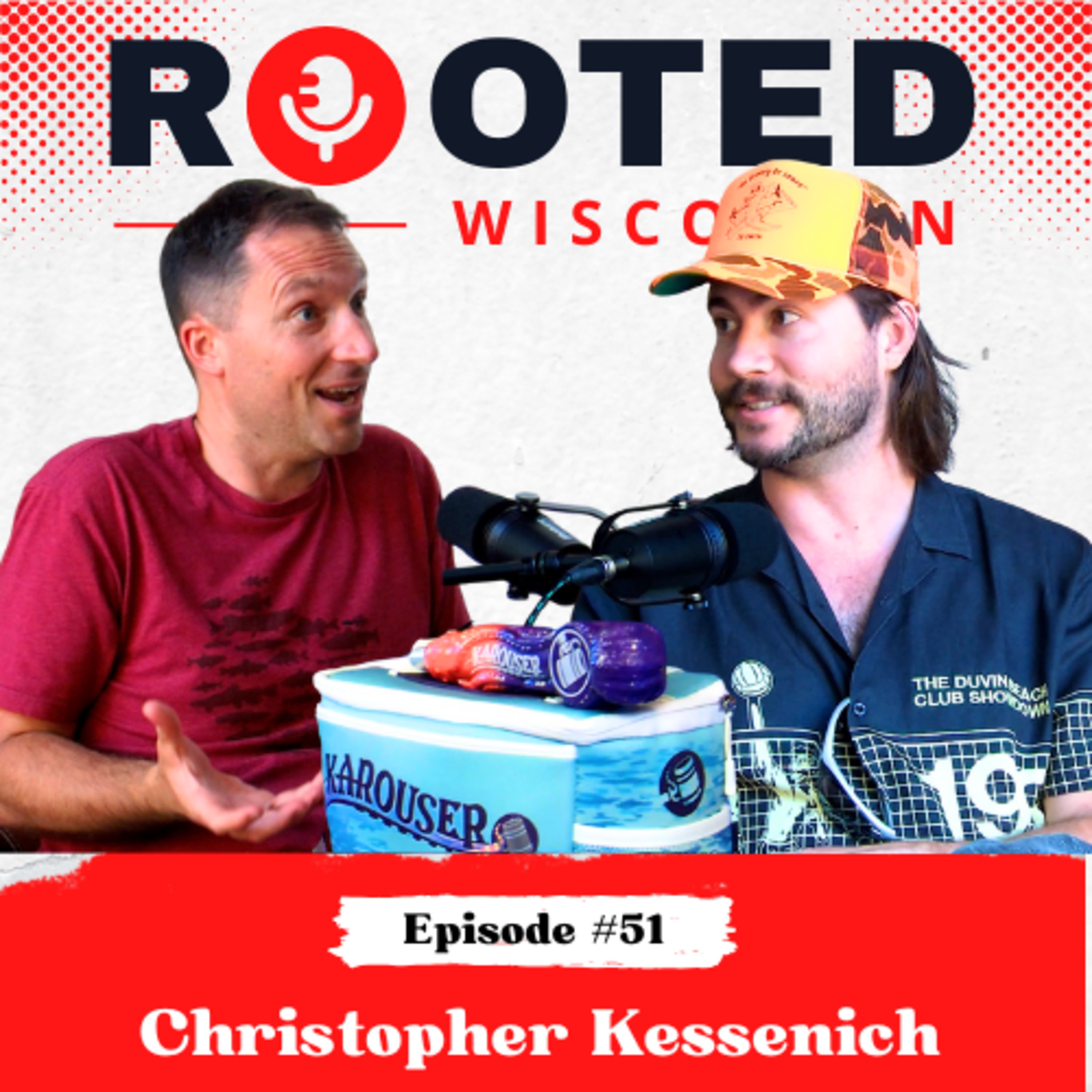


Arts Fishing Club is a Nashville-based indie-folk band known for their energetic live performances and heartfelt lyricism. Led by Christopher Kessenich (from Appleton Wisconsin), the band blends elements of rock, folk, and indie music. Their music captures a sense of adventure and camaraderie, reflecting themes of love, life, and the journey of chasing dreams. The band’s name is a tribute to Kessenich’s grandfathers and symbolizes perseverance and the joy of the journey rather than the end result—a philosophy that ties into the band’s approach to both music and life.In this episode, recorded in Northern Wisconsin at Christopher's family cabin, Brad and Christopher discuss the life of a touring musician, the evolution of Arts Fishing Club, songwriting and creativity, Bob Dylan and searching for diamonds, emotions and beliefs, and much, MUCH more. Another can't miss. As always, HUGE shoutout to our sponsors at Karouser and Riverside Pizzeria of Green Bay. They keep these episodes coming. If you dig our stuff, please support them!
https://karouser.com/
https://www.riverside-pizzeria.com/
0:00 What's up, friends? Welcome back to Rooted Wisconsin. Appreciate you for clicking another episode. Grateful to have you here. Today's episode is with Christopher Kessnick from Arts Fishing Club. Crossed paths with Christopher recently scheduled to get him on the podcast and had an awesome conversation. He invited me to his family's cabin in northern Wisconsin, which is where we did the episode. Really fun, really hospitable. His entire family was there on the way up. I talked to him on the phone and he's like, there's 30 kids here, so we're going to have to find a place that's quiet. But had a blast, man, And really fun to chat with him about the grind of being a musician and the creative process and growing an audience and the creative process and what it takes to devote your life to being a career musician, which is fascinating and surely not for the faint of heart.
0:47 They're definitely making a go of it, though. I got a chance to see him at Mile of Music a few weeks after I went down and went up and recorded the episode with them. Absolutely blew the doors off the audience and I wasn't surprised. You'll hear as I kick off the episode. I want to spoil the whole thing, but I plan to listen to about, you know, 30 minutes of Arts Fishing Club on the way up to record his episode. Didn't end up going that way for me in a good way. Check it out to see how long it lasted. But got this sick Arts Fishing Club hat, had an awesome conversation and I'm pumped up to share it with you. Shout out to our sponsors at Riverside Pizzeria of Green Bay and of course our new partners at Carouser. This is the second episode after we partnered with Carouser.
1:28 Big news coming with them in September. We're going to be tailgating at the Packer game on Thursday, September 11th. It's a veteran owned business. I'm going to get Dan, the owner and founder of Carouser on the podcast in a couple months and we're going to talk about his journey and it's fascinating, but come tailgate with us first. We're going to corrals all day. We want you there with us. We'll see you there on September 11th. But first today, enjoy the episode Christopher Kessnik. So have the ways we try to lift our neighbors.
2:13 Where did the world go? Where did the talk? And we need to help to make this all right. Man pumped up the chat. Yeah, dude. Stoked, stoked. So I. Got a little different way to start today. I'm I'm excited about this because I, I'm, I listen to pod. I like listening to podcasts a lot and drove 3 hours to come see you today. So I'm thinking the whole time I'm like, okay, I'm going to get a couple podcasts locked and loaded and I'm going to have something to pass the drive. That's when I listen to most. So I have a three-year old old at home and my type of work that I do, it doesn't bode well to listening to podcast. So as much as I like them, I have these pockets of where I can listen totally.
3:00 So I pop in today and I'm thinking for the first, you know, half hour of the driver. So I've been checking out some of your tunes. So I'm thinking first half hour of the drive I'm going to Arts Fishing Club and then the rest I'm going to podcast. So 3 hours in, dude, I pulled in. I was still listening to an arts fishing club. No way. Dead serious. Dang, yeah. So I had listened to some, I mean, since we connected on Instagram, kind of talked about getting you on the podcast. I, I checked out some songs and I, I dug the vibe from the beginning, but I didn't have time to like, take a deep dive into your catalog. Cool. And like I, the proof is in the pudding 3 hours later.
3:41 Wow, I listened the entire way. There's probably three songs I would say, or 4 songs that I listened to close to double digit times. Wow, on the way here. No way. Unbelievable you've gained a lifetime fan out of this. Thanks. Wow, that's amazing. Yeah, I was not expecting. Neither was I I was. I was expecting to listen to Lex Friedman. Yeah, yeah, yeah. Or something. And I3 hours and I it didn't. It didn't lose me. It's just banger after banger. And well, thanks. And I think I got like it kind of the bummer about it is I don't know where they landed in your catalog or your timeline. Sure. It was just what Spotify fed me because I started with the I think what a lot of people do Tupelo honey on on one 100% you jump on Spotify, you click 1. And I'm thinking, OK, my half hour will get me through these 10 and then I'll pop over to something else. And like, I never even considered it. I never thought about it.
4:38 And there's a lot of reasons to that, but one that I think is a great place to start our conversation is a lot of it resonated with me emotionally. So I'm a, I'm a lyrical listener to music. I listen to lyrics primarily. And that's kind of what draws me in and what keeps me. And there were several songs that resonated deeply with me on an on an emotional level in a just a, a vibe that connected. Yeah, in a in a great way. So kind of fanboy and to start the episode off. But hey, I dig it, man.
5:19 I really dig it. Wow. No, I mean, that is the most insanely cool compliment and just story. I wasn't expecting that at all. Yeah, no, I I'm honored to hear that. So thank you. Yeah. Yeah. So where does where does the songwriting start for you? Then where does? Where does? Where do those come from? Yeah. I mean, good question, doesn't? Ultimately, feel like you like me, you know it. Definitely, when you're like writing a song, there are times where it feels like it's. There will be times where you're writing. And I think you've probably heard a million interviews with other musicians talk about how it's all sudden just like, OK, where did that come from?
6:02 You know there's this. This period when you're in the flow state. And creating, I think where it yeah, you feel much more like a conduit then I guess then in kind of deliberate control like an an antenna. I mean, Rick Rubin talks about it how it's like, we're the. Ideas are all just floating in the. Ether and you know, artists or musicians or whatever are just kind of antenna. And if you don't it, it takes the conscious choice to like put in the work to finish and to grab that idea. But it's not really your idea.
6:43 And if you don't grab it right now, it's going to find another antenna and it's going to come down, which I think is a very cool, you know, Rick Rubin, he's he's made some cool records. And is a pretty cool. Insight into the creative process. So yeah, no, I, I feel often it's, it starts with me on an acoustic guitar in, you know, my bedroom or wherever, just messing around. And I'll start playing something on guitar that I like the way that it sounds. And then I'll sing just gibberish over it. And all of a sudden some weird random line will come out that's like, oh, that's kind of cool.
7:26 What what's that mean? And then you'd build the song from there, yeah. Yeah, I can't remember the artist, but I saw another like exact mirror of that recently where the the the thing was the pen that that was, it was the choice to pick up the pen. But then that same thing that you're talking about. Yep, controls the pen. It controls what comes out of it totally, and you're the medium. Totally. I wish I remembered who that was right now, because it's exactly what you're saying. Yeah, yeah. I mean, it's a pretty common. There's a lot of musicians that I think have talked about it in, in a sort of way and, and there's not only one way to write a song too, there's other ways that and there have been times where it's OK, I'm really being deliberate here.
8:11 And it doesn't feel like you're channeling anything and it, and it feels a lot more just like structured work or something like that. But yeah, no, there's, I think John Mayer has a has a fun interview where he talks about it a little bit too. Yeah, yeah. Cool. Well, yeah, hooked from from the beginning and. That's. What were were there? Any specific songs or anything that stuck out? Or there were. I wish this didn't happen today, that I could remember the names of them well. But there's a a cigarette something. Yeah, Cigarette. Phase. Yeah, Cigarette phase was really good. There's one that you talked about. The chorus is about loving everyone. The song's about loving everyone. Can't remember the name of it, but you have this. Say it.
9:00 With us all. With us all, yeah. And you have this visceral part in the third verse where you say it's embarrassing not to get it verbatim in front of you, but you say something like if you're the concept is if you're sending them to hell, burn me with them. Yeah, yeah. Dude. And is that the same song as the first verse do? Is it where it says talks about the father connecting with the son? Yeah. Exactly. Dude, that's one of those emotional things. Like, that's a central piece of my life right now and my being. And when like it brought this wave of emotion over me when you said look your son in the eye and tell him you love.
9:45 Him. Yeah, yeah. That means a lot. Well, thanks. Yeah, No, I appreciate it. Yeah, I I yeah, I don't know. I don't even know. But yeah, that song. That song, definitely. Feels like one of the more, I guess kind of important songs that I've written. It's called With Us All. Basically, within one week, I had three completely separate friends or people in my life tell me a very, very similar story about how their parents kind of disowned them or who they were. And for all three of them, it was just their sexual orientation. They were, you know, gay or bisexual. And all of their parents had been very, very, just devoutly religious.
10:35 And it's just weird because that's a, you know, those are kind of heavy conversations. And the fact that I had the exact same conversation with three people within one week was totally random. And each time, you know, it was kind of hitting me as like, oh, this emotional weight. And by the third time, I just like, went home and that song just fell out again. And and so it's that kind of that idea, that emotion, whatever it was, was kind of floating around me in the ether, I think. And yeah. And, and, and so that that song just kind of came out. And right away I was kind of, I was really angry when I was writing that song, kind of like pointing the finger of like, oh, like, don't be bigoted, you know? And, and it was a lot of kind of pointy language. And as I was working on it more and more, I just kind of felt more and more almost guilty of the sense of, gosh, it's so easy to point the finger, but how many times am I bigoted in my own way or like, you know, doing something where that's outside of my awareness?
11:48 And it's kind of like, it's just hard. It's it's hard to call people out without calling yourself out first. You know what I mean? A little bit. And and that's what I was trying to accomplish with that song was I wanted to both be like, hey, this isn't cool. It's not OK. But also I'm. Guilty of not being perfect either and like there is the whole point in the finger thing doesn't really work too too well in in my opinion. So it's, that's why the song is, you know, oh, I'm in love with us all, like with us all. And even, you know, yeah.
12:28 I thought you crafted it perfectly of sending that message because it's hard to do. And that's something in society right now that it's hard to do, where people have very staunch beliefs and it's hard to express those beliefs for some people at times while calling others in and being cool, saying like, you know, blind spots happen. We all have them, but doing it in a way that calls people in. I have a lot of friends on all sides of the aisle on different things. I think that's one of the reasons the song resonated with me a lot is because I I feel that way. I love us all. Everybody has worth and value in like your opinions come from a valid place most of the time except for the fringe, fringe society.
13:11 Then I think they get far more publicity because of things like social media and stuff. But like, for the most part, people's thoughts, opinions, beliefs come from a pretty solid place. And we just have to find a way to be able to do what you did in that song and really toe the line well of expressing something that you were passionate about and believed well, at the same time saying like, hey, it's cool that you believe what you do, but let's talk about it. Yeah, let's bring this up. I mean, master class And that that, that, that was one that really stuck out to me. What was another one that there's another one that talks about?
13:52 The part that sticks out of the song to me right now is about Ingest kind of talking about going to the voting booth and being a good American. Man, I'm trying to think. I think I know what you're talking. All right, I do know what you're talking about. Is it a deep cut? Is an arts fishing club it? Probably is. I mean, yeah, yeah. No, there, there's a. There's a lot. Of deep cuts at this point this. Conversation. I'm going to stand up this conversation. I'm going to. Get my phone? Sure. We'll cut that segment out because this is this is worthy of the conversation. Oh, Blue Ridge Skyline was really good. That was one of those bring you to a place in time songs that like I think a lot of people can relate to.
14:37 Is that the one? Is there something about being 23 years old in that, in that song, or is that? Different that's not that one that's that one is called rare into Rome that. Was rare into Rome. One of the first songs I've ever written was rare. Into Rome. Yeah, yeah. OK, so that one I wrote a song one time and I I don't want to like I'm not a musician of any kind, but I have I have written some songs in in the past and I wrote a song one time that has a line that's 27 years straight up raising hell. Sometimes I'm surprised I live to tell. And your your like, adage of being 23 and like the ability to put feeling and emotion and like where you were in that place in that sure was really good. And and then and that's such a that's an outside theme of the song because of the central theme is pretty obvious in the song, but I thought that was really nicely done too. Man, thanks.
15:32 Thank you. I'm so. Stoked that you're that you're digging the tunes. Yeah, I and like I said, it was completely, it was completely unexpected. I, I just wanted to be prepared enough for the podcast to talk with you because the podcast is about, I don't know how much you've listened, but it's about exploring the person. It's rarely like it's about what you do. We're going to talk about music today, but it's very out of the ordinary to come in and just like jump into exactly what you do because I want to know you as the person, not as your body of work. But in this this specific instance, your body of work had to be talked about first because just because of the happenstance of the drive and like hopping in and like, I don't know, I, I can't remember the last time I miss listened to music for three hours straight. It's especially from the same band. Totally.
16:21 Well, wow. No, I. You can't even. I can't even begin to. Express how much of a compliment and how much I appreciate that cause yeah, it can. It's it's not the most, it's not the easiest business in. Career. So it's a yeah, it's a wild one. That's probably something cool to talk about, ma'am. What is that like? What is it like to at the same point, you have to have this unwavering faith in yourself and belief in what you're doing and at, you know, you're always progressing and getting better, but at the same time doing what you do, you're constantly being judged and scrutinized for what you create. Oh yes, art. What's that like, dude? How do you deal with that? It.
17:06 It's funny, there was someone on. For the most part, it, you know, we're a small enough band at this point that I've never really had any huge issues with it. But there was there was someone the other day because we're posting like Tik Toks and social media, just trying to do the marketing thing and really trying to lean in. And someone made a comment on it that was just like on one or two went to multiple posts just to like talk like just to make fun of. And it was just like that was one of the first time I had experienced that where it's like, OK, you know, sure, if someone makes a comment on one post, but like to actively go on a multiple, like seek out other videos to then also tear down was just like a. Weird, I don't think I've.
17:57 I've I've been exposed to that. That was kind of like the first time where I was like, oh man, the Internet at some can can really have some dark energies to it at at some point. And I'm a sensitive guy. You know, I'm a, I'm very empathetic and I'm kind of a, you know, I was describing myself as. Either a golden retriever or like a. A a black lab type of energy where it's and I think a lot of people from Wisconsin are very golden retriever energy where it's like. Hey, everything's we love you. We love you like we're very positive people in Wisconsin. Where, you know, a lot of other people around the country and other cultures, like, you know, aren't as just like, hey, hey, how you doing?
18:46 Come grab a beer, you know, like as inviting. So yeah, it was just, it's interesting to be exposed to that because it's just so out of my nature. I I genuinely, it's very difficult for me to not like a person like it. It's really hard. And usually even if I don't like them, I'm like, oh, but they were probably just having a bad day or just like, oh, you know, oh, I probably just. Didn't get to know them good enough, you know. So yeah, it's it's. Interesting. But I think just like anything else, like, yeah, you accept that you're putting yourself out there and you just, yeah, the people are, there's going to be a bunch of people that don't like it.
19:28 There's going to be a bunch of people that talk shit. There's, you know, and you're just faced with the question, all right, do you still do it or do you want to hide from the couple people that might be haters? The Internet abyss. Yeah, exactly. So you just keep going. Nice yeah, yeah and like that can't so that yourself described image of yourself 1 you gave me an awesome clip there The root of Wisconsin talking about Wisconsin. That's gonna be a great clip. So thank you for that. But that came through like you can't write songs like you would like I was talking about earlier if you don't feel that way and, and feel in a way that's deep and, and meaningful and caring and.
20:15 That does go both ways, man. It does it you, you get that person that you know, no matter how much you realize that it's that's something inward on them, like it's probably nothing to do with you totally. No matter how much you realize that, there's still this little nagging brain worm that gets in and says, is it Like, is it, you know? Totally. It's tough. Yeah, no, just mean things are mean, like. Like there's no. You can't Unsee it. Like you can't. You can't. If you punch somebody, like even if it was kind of a joke, it's like they still get hit, like they still feel it, you know? So it is funny. But yeah, I don't know.
20:55 I mean, music overall, like Nashville is an incredibly, incredibly supportive community, which is really cool. The. More and more time I spend in Nashville just the more I'm blown away by how really special I I think. I think the you know, there might be like in decades. You know, looking back at the moment that Nashville's kind of having as a creative city right now, and people are going to look back as, wow, there was something really special going on there, which is cool. It's really awesome to be a part of. And just like the genuine bands aren't competitive in the sense of like we're all struggling because it's, you know, it's a it's a winner take all industry where it's like, you know, nothing's happening, nothing's happening, nothing's happening.
21:54 And then finally something's happening for you. And that's the, you know, one half a percent of people you know, but. Everybody is just. For the most part really just happy for each other and trying to. Help each other. Raise each other up. Which is really cool 'cause I've heard stories about LA and New York in like previous era eras where it was the creative scenes were way more cutthroat and competitive. And I don't feel that in Nashville at all. That was another cool song. Hollywood, right? Yeah, yeah, That was another cool song. Yeah, yeah, yeah. So let's turn back the clock a little bit, man.
22:35 Where? Where does that, like when did you start playing? And then when did you decide that that was that you were going to do it? When when when did you turn it into it? Yeah, I started playing. I mean, I took some guitar lessons in like 4th grade, my mom, I think, asked if I wanted to play an instrument or something. And then I took guitar lessons for maybe six months and then quit. And then I started picking it up again, I think 8th grade or. Freshman year of high school and just started teaching myself off YouTube mostly. And every now and again I would kind of ask and maybe I would get in some lessons for a little bit and but mostly was just teaching myself. And during that period, like, I'd gone to some shows or in middle school and I just remembered being in these massive shows and just thinking, you know, that this is just like the greatest party I've ever been to. And those people just decided to throw this party for all these people, you know, the people on stage. And I just remember that hitting me as I want to do that. But again, it's, you know, I grew up in Appleton, WI. Like there isn't being a professional musician is not a real choice.
24:03 You know what I mean? Like it's it's not, you've never heard of anyone that's ever done it professionally in the entire state at the time, essentially. I mean, there's a couple bands that you've been like, Oh yeah, I guess they're technically from here. But it's not like anyone that you're rubbing shoulders with in your community. So they almost feel like gods are like, you know, these chosen people or something that not real humans. And yeah, I, I kind of kept working behind the scenes because I just had this sense and belief that they were just people, you know, the people that I was seeing on stage and they just decided to work at it. And I'd played a bunch of sports and my family was a much more sports oriented family.
24:54 So I think I grasped the concept of I remember being really tiny and skinny and then. I went to football practice for two or three years. And then I was like jacked and in shape and like, so that that that experience of just a little bit of work every day towards something you can really transform yourself. And I think sports taught me that in a big, big way where I just was like, OK, well, you know, I, I'm going to be working until I'm 70 years old. I, I hope so. I got 50 years minimum.
25:36 Like to figure this out with the music. I just started betting on myself and just started working behind the scenes at it. And slowly but surely there would be people that gave me better and better kind of feedback and support. And I actually got to study for, for nine months. I, I lived for a year in Vienna, Austria. And I started playing on the street there when I was like 21, I think, and or 22. And I started making a lot of money playing on the street in Vienna. And that's where I really, that was where the shift happened of like, Oh no, no, no, I'm doing this. Once I started, you know, I would go out for an hour or two hours and I'd come back with two hundred 200 bucks. And I was like, OK, I'm making $100.00 an hour right now playing music.
26:32 And I know that I'm bad. I'm going to do this and that. And I just from then on have been pretty head down. That's where a lot of people cut their chops. There was a really interesting episode of Rogan recently with Charlie Crockett, and he was talking about cutting his chops on the subway, playing, playing music on the subway. But that has to be a thing. I remember I was in Nashville. I took a trip to Nashville in my early 20s and I saw I saw the Lost Dog St. band. At the time, I didn't know anything about them, and they were relatively unknown at that time. And cutting their chops on the street, like just literally going out playing for playing for cash. Yeah.
27:16 And I, I think did that was a transformative in the type of music you played. Like, did that advance you as a musician? Both like maybe not so much writing, but like in your performance style and how to captivate and pull in an audience. I think so. I think so a little bit. I think, I mean, honestly, shedding on stage like takes a long stage. It being on stage takes a long time of like slowly but surely like you get, you really do get better the more that you're on stage. I think for me it was more just like, OK, I'm practicing, I'm playing in my room for hours. It would be kind of nice to I'm I'm going to be doing it anyway. Let's just go out.
28:01 Go outside and do it and then I would like get paid money and I wasn't expecting to get paid money. I, I just thought, you know, I'm doing it anyway, might as well give it a chance of getting some money. And then when I people started giving me real money and like sitting and watching for a while, that's what made it click in my brain of like, oh, there's like, you know, there's something here. You, you got to do this and, and, and you, you don't realize how it's rare people. There's not that many people that play instruments or sing songs like, you know, you. You kind of forget.
28:42 Because I knew I was. Bad at the time, but it's, it's just, you know, I think it's shocking enough or whatever for a lot of people. They're just, if anyone has a guitar around, they're like, hey, play, you know, play, play. It's such a gift for people and and you kind of don't remember that at times because you have these ambitions and these things that you're interested in. So you you start to and you think of all the people that are doing it better than you. So you diminish yourself. But really it's it's just AI mean to sit around a campfire and sing songs with people. You know, even pre instruments is one of the most human things, human experiences. People love to be together making music and and be a part of music.
29:34 It's magic. So yeah, I don't know. That's a really interesting way to look at it man. I've never thought about it like that. I've played, I've played guitar, like I said for over, you know, I'm going on 25 years and it stays in my room. Right now my concerts happen for my 3 year old like me and him jam out. You know, but I'm sure he loves it. He's obsessed and and I'm sure your wife or you know, when you're playing, she doesn't not like it. You know what I mean? She throws in a request no and then. Exactly like and and it's interesting. It's it's not it's music has some special. Power to it, you know people love it. Yeah. So isn't that that's kind of something that Arts Fishing Club has grown into, right.
30:17 When you think about the combination of the party thing that you said, like this is a party that they decided to throw and the on stage presence. I feel like I in kind of my exploration, right when we started talking, I think I came across an article that kind of described your live show. I haven't got to see you live yet, but it's it's like high energy, captivating party. Like that's what you're going for, right? Yeah, yeah, to some degree it's it's. Definitely high energy party in the sense of like, you know, rock'n'roll music. Like communal like. Yeah, yeah, I think, yeah. I mean, we're a very inviting. We're definitely a very inviting. Band in the sense of like, yeah, IA lot of people you know will just say like they, I don't know how else to put it, but they, they felt very welcomed within the within the space or whatever.
31:16 Yeah, I don't. Know, I think there's a lot of joy. And a lot of passion that we have and that it, it comes through. And I think that that can be infectious at times. You know, it's, it's like talking to anyone that is super into what they do. Like even if it's Legos or something, you know, but they, when somebody goes off and they're just talking about it and they're super into it. You're like, Oh, I, I might not care about Legos at all, but it's fun listening to you talk about it because you can just see that person. You see that person and who they really are. And like some, they're exposing themselves and I think. I think in our live shows we we put our hearts on our sleeve. We leave it out there for sure.
31:59 There's there's something compelling and really calling in about passion when when someone's passionate about something, there's something that I think human nature calls us toward or draws us toward. But saying like it, you know, there's another thing that I've never thought about in that way, but it's so true that when someone's when you you like everybody can I think think of these scenarios where you were talking to someone where it got to something they were passionate about and then that person blossomed in front of them or like showed themselves totally. That's really cool. I've had man at just at the top of my mind in the last month or so.
32:45 I've had three of those that I can think of immediately were like person was kind of locked up and like 1 was even very aloof or like maybe having a bad day, just like not wanting to talk. And then we got to something that he was passionate about totally and flipped the script completely. Totally, totally changes people Yeah, think about it. They can be very, you know, just or bored, disinterested, you know, whatever. And there's, I mean, I've, we have a million and one small talk, conversations with people traveling on the road and stuff. And yeah, no, all of a sudden you get someone talking about something that they are into and it'll totally changed the conversation. Love that. Yeah. So let's let's jump a little bit. Where?
33:29 Like how'd you come up with the name? What? What is Arts Fishing Club? Like you probably forecasted this question, but I got to ask like where? Where did Arts Fishing Club come? From No, no worries. Well, so both. My grandfathers are named Arthur. So on my mom's side and my dad's side, and I come from 2 very big families. So both of my parents are from families of nine kids. So I've got like 31 aunts and uncles. And so like just these big, big, huge families that were I guess just huge in my life, like in terms of shaping who who I was and who I owe a lot to. And my first memories, both my grandfathers are them teaching me how to fish.
34:20 So that was just kind of like the, you know, something that existed. But when I was starting to play music for the first time, I was playing with my cousin and we were actually playing an open mic in Eagle River, actually Land O Lakes. That was the first open mic I ever did. And we needed a name for it. And he, my cousin, said, let's call it Arts Fishing Club because the year before that, we had gone on a fishing trip with my grandfather at the time. And we made these shirts with all the cousins that said Arts Fishing Club. And I obviously hated this name for the band because, you know, I thought it was kitschy. No one's going to take it seriously. Like I actually want to do music professionally. But I went to bed that night and as I was thinking about it, I realized, OK, not only is it an homage to that grandfather, it's very wild and coincidental that my other grandfather's also name art.
35:24 And my first memory with him is also him teaching me how to fish. And so that was cool, but still kind of like Hallmarky and then the more. That I sat with it too. It was like, well, you know. Music is our art and songwriting, and being a professional musician is exactly like fishing like. You if you go out. Fishing and the whole goal is, oh, I got to catch a big fish today like. You're going to be. Pretty miserable because it almost never happens that way. But if you go out with like the, oh, I've got an opportunity, like we're very intentionally going to go try and catch a big fish and every single cast you're like, this is it, you know, and then you come up empty handed. This is it empty handed?
36:21 This is it empty handed you, you keep doing that. And, and you it's, it's the reframing of just understanding that like, no, it's actually more about just being in the boat, going on an adventure with people that you love, maybe drinking some beers and but still actively working towards something and having this hope. Each cast is hope. And each song that you write is like, you know, it's hope. It's you might land a big fish, you might not, you might write a hit, but it's, it's about the action. So yeah, it's kind of a, it's a very convoluted name or description, but overall, it just felt like the name happened more than then I was intending. And it just felt like there were so many different layers of meaning that suddenly blossomed after my cousin suggested it, that I I loved it.
37:18 And I just thought it was unique. It's fun. It's interesting. You know, it's not. People definitely ask, what is that? Yeah. Yeah. Yeah, well, you picked up the pen, man and it wrote. Yeah, that's the, you know, there's something. There's a lot to that. That's that's. It is wild though that both grandfathers were named Arthur and that your first memory of both of them is fishing 100%. Yeah, yeah. Let's talk about that a little bit. So being a musician, you're on the road all the time. You live in Nashville. Now we're have we got the privilege of doing this in a beautiful place in northern Wisconsin right now. I have to imagine if I put myself in your shoes, there's times along that journey across the country, giving another piece of yourself to another crowd in another town that you transport yourself in your mind back to here. Yeah.
38:13 Oh, yeah, yeah, no, I love this place. I love northern Wisconsin. I mean, there is not. There's not many. Places. In the country that are as beautiful and peaceful as the lakes up here like I yeah I've I was so. Blown away. By how much I took Wisconsin Lake, the the the number of lakes in Wisconsin for granted. When I moved to Tennessee, I just assumed. I just thought that was life. I thought there was lakes everywhere, you know what I mean? And got to Tennessee and there's not. And then the lakes that there are are like man made and gross.
38:55 You know what I mean? Like not not what? We're used to we're. Man, and northern Wisconsin, I mean, just growing up, you could drive anywhere in direction for 10 or 15 minutes and you're going to start to run into some sort of lake. And it has an effect on the people. I I think it has a massive, massive effect on people. I feel the same way about trees man. I like whatever. Anytime I go somewhere where there aren't any trees or like it's shrubby, small like trees, I feel really weird. I feel like it's not where I belong, you know? It's a strange feeling, but. No, I get it. I get it. Yeah, yeah, I, I assume that has to happen. Does the What's the grind of the road like for a musician? It's it's so it's, it's very intense in the sense of you kind of fall into you fall into like just this. You're operating like you're, you're, which is nice in some senses because there's everything is very immediate. You're you're really living in the moment because that's all you have is the moment like everyday, all right, Like when you play a show and now we have to be there tomorrow. You're driving there like you're setting up. For today, like every single step of the way, OK, Like the day's over and now you're going to the hotel or wherever you're crashing and there's not a whole
40:29 lot of you don't have any room to think ahead or behind altogether that much. You're kind of just operating. Everything's like prescribed, you're saying and. Yeah, you're just really executing today like you're just executing today. I think that's the only way to kind of describe it. There's. Some comfort in that at times. Well, So what happens is when you get up, when we get off the road, I, if we've been out for two or three, anything longer than three weeks, I'll, I'll go through like a week long depression and not like a sad depression. I'm not sad, but it's you're in kind of like this fight or flight mode and you're in kind of fight mode the entire time where you're on and you don't have time for like deeper rest because you just have to keep executing. Where?
41:15 I'll come off the road and my body will just do like this total shift where, you know, just mundane things like texting people back or whatever, just like it feels like this mountain to climb, which is, which is depression, you know what I mean? Like the, the more clinical sense of it. And I think it does. It's just a reaction to the, the fact that you're on like this just incredible scale of just next task, next task, next task and 0 alone time. I mean, you're in a van with four to six people, depending on the tour and sharing rooms the entire time. So there will be, you know, a month worth of time where I've not been alone for more than an hour, and that's where you crash.
42:09 Yeah, man. Yeah. Yeah, that sounds wild, doesn't that, man, that makes something like that, that makes Willie Nelson's life to me seem unbelievable. Oh, yeah. You know, And maybe it's maybe there's a point out there like you, you that it's just it, it's keeping that wolf away. It's keeping that like maybe that's what keeps him going. Maybe it's just that he knows at the end, like a lot of things in life, if you if there's something at the end like that, the longer you put it off and put it away, the bigger the crash is going to be. Totally. Maybe it's to the point where you get 40 years in and that's it. Maybe it's just like there's no other way I'm going to go out this way doing it.
42:51 It's wild to think about. Yeah, yeah, yeah. And and you know, depression sounds like a negative word. It's not it's not actually like a, it's not a negative thing. It's just, it's the body reacting and, and like taking a deeper, it's like stored rest. Like it's because you know, if you're up for 12 hours, you got to sleep for 12 hours. And it's like when you're on tour, it's like you're up for three weeks. So your normal recharge time on a, on any given day would be just like the one day to recharge if you had a stimulating weekend or something. But it's like, Oh, no, no, now you had a stimulating like month.
43:32 You need a full week just to like rot in your room just to recover. Like, yeah. So it's, it's not, it's the yin and the Yang. It's not like a negative thing. It's it's just the, but it's been tremendously interesting to me because I've experienced it with my body so much how it's like, oh, this is like, I'm not sad. I'm not like I feel I mean interested in working and my body is just like Nope. Not today. You need like this deeper level of rest because you just had so much stimulation for so long And that that's the part for me that's been so interesting, is just the physicalness of it. Yeah, yeah, it's amazing how that stuff comes out. I think about that a lot.
44:20 Just health in general about how that ends up happening where you know, if you're going through a period where you are doing anything stressful or, or maybe something in life isn't going well or you have a lot of work to do that you want to get off your plate or whatever it is. It's amazing how much that mental stuff comes out physically, especially as I age, man, especially as I age and get older. Like it's, it's this, it's this wave you have to navigate really carefully because like that most of the time that stuff is very, it's, we care about it for a reason, right?
45:03 Like it's valid. There's a, there's something to that about why it's holding this pressure on us. But at the same time, you actually kind of going back to how we react to something like negativity on social media, how we process it, use it, and then adapt to it. And that's, I mean, that's probably a theme of being a musician in a lot of ways is adaptation, right? And being able comfort and analyzing why you're feeling a certain way, what needs to happen, whatever it is, and then recognizing what you need to do to move out of it or forward right totally. Yeah, yeah. Super interesting, man. Like it's funny, my my wife yearns for that. She need, my wife needs that downtime like her couch potato days.
45:52 So like a lot of people, I think my wife's a stay at home mom and God bless that because like that's a very tough job totally to do. And when she wants a mom day, like I know it's like, all right, Riv, we're we're going, we're going out and we're not going to be in the house today. And mom was going to have a bunch of snacks and she's. Going to watch TV? And then it's amazing how that person is different the next day. Like it's kind of like plugging yourself in totally. Yeah. So like do you do you have the opportunity to plan your schedule like that or does it have to come naturally? How does that even end up working out? Like say hypothetical scenario, say you got you can you can plug six months in a shows where you're cutting 5-6 shows a week and you're just burning the candle at both ends, getting it done.
46:43 Is that something where you say, well, make hey, well the sun shines, let's do it. Or can you plan in rest intentionally? Well. We've been more making hay where the sun shines in the sense of when we've been getting opportunities. I mean, we're still, we're a small. Band that's grinding and like just trying to like get our name out there. So we're pretty much taken most of the opportunities that are coming our way. I think this year we'll by the end of the year, we'll have played over 100 and some shows, which you know that's one every three days. And if you think of some holidays and you know, some holidays and a little bit of time off. It's all it's.
47:31 Travel to and from. Yeah, travel to and from like we're. Playing a lot this year. Especially for us where? We don't really have much of A team. We're pretty, pretty independent. We're building our team right now, but it's usually me trying to market the shows and me, you know, like it's it's a it's a heavy heavyweight and and there's also, you know, if you're a big famous band and you have this audience that is just going to show up, you know, if you book a show like we're not that yet We. Need to knock on the doors and let. All these town, you know these. It's like throwing a birthday. Party in a city that you've never been to in your entire life and you'd need to hope to get 200 people out.
48:16 And it's, it's hard, you know? What do you do? What are some of the things you do? So I'm marketing is close to me. I'm a marketer. What what do you do in that scenario? Like what do you outside of like I see your stuff on social media, but say you got a show in Santa Fe and you don't know a person there and you're 2 weeks out of the show and venue calls and says we're not selling tickets, Christopher. Yeah, we've been getting those. Calls. They're super fun. So what do you do, man? I mean you reach. Out to the venue, you ask them if there's anything more you can do. Sometimes there's ideas there. We run ads. So, you know, just like, you know, just traditional ads.
48:57 Yeah, like a paid Instagram. Ad exactly letting people know that's been very strong for us and then posting on social media, reaching out to. There's been other ways of just like. Reaching out to media outlets or finding people in the town and just Dming them and inviting people out. Like just straight up, hey, come on, we're playing, come, come out like I do. Hours and hours and hours. I probably sent in the past five years, I've probably sent 50,000 messages inviting people out to shows. Damn. Which is exhausting, but is also really cool too because, you know, some people won't respond, but some people will.
49:48 And then we'll get in these conversations and just chat. And then I'll meet them at the venue and they're like, oh hey, and we know each other a little bit because we've been chatting. So that's actually been something that has been just kind of a fun accidental thing for me that I think speaks to Arts Fishing Club as kind of an entity and just ethos and probably a very Wisconsin thing like. Hey, what's up? Come on. Yeah. Back to the Golden Retriever. Yeah. Exactly. How do you balance that man? Because that can being kind of like the person you described, that can probably even take a toll of like, like if I have like 10 unread texts, like I'm like, I got to get back to these people like that they matter to me. But like at that scale, that sounds impossible to me. Well, so I used to be that way for sure, where like I, I. Would never not be able to respond or like and now I mean I have.
50:51 I think on my phone 100 and. 56 unread messages. You just have to let it go. Yeah, like my emails like 10,000 like it's, it's, it's gone to like this place of oh, now the numbers don't even matter because they like don't even exist. And I don't, I don't mean that because I'm getting hit up by so many people. It's definitely not that. It's more just like. Throughout the I mean because. I'm active a little bit on e-mail e-mail is my worst one, but via text and then DMS it like there's also like 3 or 4 different just messaging platforms now that you have to somehow manage and you know, and then put TikTok in there like it, it's, it's a lot.
51:39 It's a lot and at all you just try your best. Smuddle your way through. It and try yeah, yeah, you try your best. Yeah, there has to be a tipping point. It's part of life that's back to that, I guess the navigating the things that are thrown at you. So something been in my mind all day. I'm complete completely going to change direction. Is that shirt like vintage? Is it from the year on it? It it's not it's not. I don't think so. At least it's cool. I got it recently. I. Was wondering if there's a story behind it. No, it was like a goodwill find in like a random city across the country or something. No no, it's perfect for the vacation. The up north vacation vibe. Yeah, I'm. Glad you like it. Yeah, man.
52:22 So how? Like how long has Arts Fishing Club been going? Like when did you start and how many years in are you right now? Yeah. I mean, I recorded an EP under the name Arts Fishing Club in 2015. So 10 years ago that was, you know, that was me. I had written 4 songs and I went to a studio in Nashville. I played the songs for the studio musicians and then they listened once or twice, cut their instruments and then two days later we had an EP.
53:03 So it's funny, that was the first ever recording I'd ever done of anything ever, you know. So I guess you know, that is the beginning of it. But it I would say it feels like the band is more like three or four years old. Like I would give it maybe 5 where it's like this group of guys now 'cause I'd always started this with the intention of being a band band, not just Christopher Kessnick's solo project. But I got into music late, you know, I, I didn't start. Most people played in middle school and high school and had high school bands and, and maybe like a college age band or whatever.
53:51 And I didn't start until I was out of college. That's when I started music. And I just had the sense of, well, I'm going to be working for the next 5050 years and I think I can probably figure this out with the next 10, you know, So it's, it's really funny with music, like everyone's, there's this perception that you have to have totally done it by the time that you're in your 20s. But it's like that doesn't really exist in the corporate world where it's like, if you're not the CEO by 30, like, oh, what you've, you've got no chances. Well, you got 40 more years, you know, of working like, I don't know.
54:40 So, and with that being said, there are different constraints and, you know, the travel and the lifestyle is pretty crazy. So I do, I do get some of it, but I always just thought that was an interesting the the amount of pressure that people had and just maybe a lack. I, I think I've experienced my interpretation of time is just different than most people's natural interpretation where I just see how much time I do have, where everyone seemed to focus on like running out of time. I was like, we got a lot of time here, like, and, and I, I work hard, I like, I like to do it.
55:22 So I just know that I'm going to get better year over year over year and at some point here it's going to start to work. Yeah, is my thought, my hope. But. Well, for me it's working already, man. I I think you're well on your way. You bring up something there that brings up another song lyric I want to talk about, though I can't remember which song it's in again. Sure. But there you have one you you rattle off about four different maybes, like maybe this, maybe that. And one is maybe that's why I don't play my songs or something like that. Oh yeah. Is that, was that introspective or is that written just to, you know, songwriting happens a lot of different ways.
56:04 It's not always about you, you know, But is that is that relevant to you? Was there a time that you had this catalog of music that you were like, I don't know if I can share it, I don't know if I can expose it or wear my heart on my sleeve? Yeah, yeah, that song's called Doug's Song. Doug's song. Yeah, lower case, which is interesting. It catches my eye, yeah. It's called Doug's Song, and yeah, I was in an introspective, introspective moment there. And maybe, maybe it's the reason I'm too afraid to share my, to share my songs, to play my songs, to record my songs. Maybe it's the reason I'm too afraid to. Record my songs is the line that you're referring to. And yeah, I think basically it's just that that hesitation that especially with music, I mean, songs are your diary entries.
56:59 They're your the IT, they're so complex because they're both these things that you like, care and love about on like a deeply personal and emotional way. But then also flip side, it's your career now. And so it's this commercial product thing too that you need to do well. For. You to eat and like to have. So it's the, the complexity of putting out music, especially in the beginning, like when you haven't done it yet, because there are these diary entries there, these things that like, are deeply, deeply personal and exposing yourself that way.
57:45 And, and then not getting feedback from people that they are into it or maybe feedback that they don't like it is just it, it's incredibly emotionally taxing and you need to like, figure that out. Over time, you start to realize like, Oh, you know, it, it becomes less and less and less a big deal And, and you, and you're able to just see the, the benefits, you know, the positive side side of, of sharing the music. But early on, there's so much fear tied into this hope of, oh, when I put out this song, I really wanted to do well because it's also tied to your career and like your stability as a adult.
58:40 Does that take any of the enjoyment out of it or has it for you? Yeah, it especially early, I think the more and more that. You do it, and the more that you put out the like, the less it affects. You OK And that's what's so cool about like a Bob Dylan is. And you start to and you start to get, oh, like this, this dude just quickly learned like, like he doesn't really give a shit about his songs. You know what I mean? Like, and and he does when he's writing it, he does he cares a lot. Clearly, you know, you can't make art in the way that he does if he doesn't actually care. But he just would make stuff and put it out and like, and then he doesn't care. There's lots of interviews, you know, of people talking, you know, taking some of his songs.
59:29 You know, Wagon Wheel was he had started that and he's like, oh, I don't care. I don't care at all that somebody else took that and finished it. I I was dumb. You know it doesn't matter it. There's a fascinating that same exact story with is Bull with Morgan Wall and covering cover me up. Yeah, same thing. He he he echoed the same thing because they're obviously 2 very different humans and very, very different humans. And he said that he he like how he thought about it was that once the song is out. In the world he's created, what he was going to create and wherever that thing goes is completely out of his control.
1:00:10 I've never thought about Dylan like that. But it's so. True, like you listen to Dylan's full catalog and which is massive and some songs are like man, well, this is kind of a dud for a for a legend like you, but at the same time I it's cool to think about. Well, and it it is the cool. It's the thing that's so liberating about him, is it? You know, his greatest hits is 40 songs, you know, but you But guess what, there's 900 that suck You you you know, and like he just focused on the writing and the creating and he didn't get tied up with all the other where early in early in your career and even right now, like for us, like. It's it's easy to get to put.
1:00:54 Weight on a song or an album like oh, we hope it does well. Oh, and it's like trying to continuously remember, like, oh wait, no, no, just make shit, put it out and move on. Make shit, put it out, move on. If if people like it, they like it. If they don't, they don't like. Kind of back to the beginning, Make sure you're picking up the pen and make sure stuff is coming, coming through. Yeah, that's fascinating. And it. And it's certainly true. Like one of my favorite artists of all time is Tom Petty, and he's got albums that I can't listen to. Yeah. That are junk. Totally. But he's like, but you know, the the diamonds outshine everything else. There's a reason, you know, talking about playing music with rib one one of his favorite ones right now in the past couple weeks, Like he always wants to hear tangled up in Blue. So he wants me to play tangled up in blue. Nice.
1:01:43 I think that's one of the greatest songs of all time. Oh, yeah. It's unbelievable. But then yeah. And man, I've never, I've never thought about that from an artist perspective about like, yeah, there's definitely going to be ones that that you you don't know aren't good when you put them out there. Because like, that's a great question actually. How in the writing process, how like are you attached to this idea? And how do you come to that point where you like, you've been working on it for so long that if you've kept going, it's a thing in your brain? Like you think this has some legs somewhere, but then you can't see past your own nose at times.
1:02:29 And then you let it go out into the into the earth without knowing. I guess I don't even know what my question is, but you get where I'm getting at. Like you don't know that it's good or bad, but you're so deep in the weeds on it that you're like, this is a thing now. Totally. I I guess that isn't a question. So it's a terrible interview thing, but. Yeah, no, I I think you're just describing the the fact that like, do you know if a song is good or not? Like as as you're creating it generally, not really. Every now and again you can kind of tell, OK, this one like hits a little different. But even still, it's usually the songs that I hate that people are are like that I don't really like as much that everybody else likes more.
1:03:14 And then the songs that you really love that you feel like you did like the coolest, best stuff that nobody is into at all. Like that's kind of always how it goes. There's an there's an episode of this podcast dude a few ago from when we're recording this. That's one of the coolest conversations that I had. The guy is super cool, but he's got like no social media or anything. He's got like 50 views. Exactly. The one where you're like that. Was the thing that was the one. This is why I'm doing. This, this is it 0 return, you know on that one, but then the one that you were like, you know. Totally phoned in was an accident or whatever like and you don't even really like it like that's the one that pops yeah that's that's kind of always how it seems to go but.
1:04:03 That's hilarious man. Well, I I definitely don't want to take up your whole vacation, but I appreciate you sitting down and chatting for a bit. Of course. Thank you so much. It's awesome get to know you. I hope the I hope the meteoric rise happens for you. Certainly gained 1 today. Hey, all right, that's all that matters. That's all that matters now I appreciate. It and I think you know you you you talk about where you're at right now kind of through that lens of and that's been a theme today. You. It's cool that you think about the glass half full long ways to go, but from what I see there are 10 musicians for everyone that are in your space that are hoping to get to where you are right now. 100% no.
1:04:46 And, and, and I do feel that way and, and I feel super grateful. I mean, we're, we're getting to tour the country and, and I've said this before, you know, two years ago we toured the whole country and it's like, OK, I, I, I had the feeling like, OK, if I died today, you know, this was two years ago like that. I accomplished my dream, you know, one of them, right? Like I have multiple, but that was the core level dream. I think of me in high school being in a band that toured, that hopping in our van with our trailer and touring and playing shows all the way across the country that people came to.
1:05:28 Like that is it at the core? That was the dream at the core. And like whether it's to 10,000 people or to 200 people or, you know, kind of these other like numbery factors, like you kind of can't control all that. Like some of it you can a little bit, but it also doesn't matter in some senses. I had this awareness that like we are doing the thing that we set out to do. So that's pretty cool. And I, and I do feel, I do feel extremely grateful for that. Like and I and I do if I, if I, if my, you know, knock on wood, if I lost both my arms and legs tomorrow and couldn't tour and and play music. Like I fully feel like I have accomplished the the dream to some degree.
1:06:25 And now I have more dreams that are stacking on top of it, which is even more fun. Super cool. That's a that's a great feather in the cap. What's What is the next dream? The next dream, I would say that is like it. It's our goal to headline Red Rocks at one point, so. We we feel. Very confident that we're going to do that and it's but it also it's going to be it's not easy either. Like that's a very it's both an extremely ambitious goal but also a very realistic goal that we fully plan on doing so it's it's really fun to like. And for years, you know, I was too scared to to verbalize stuff like that to.
1:07:08 You have to yeah, yeah. Because if if you don't, you're not giving yourself permission to go for it. And once you start to verbalize it, it's shocking how your brain starts to kick into OK, like now we just got to solve the problem. We got to get there. So yeah. I believe wholeheartedly in manifestation. Man, this podcast is going to pay for my Northwoods getaway. Nice, I love that. That's been I was I was on a written manifestation journal for a while. I wish I meditated was more strict about my meditation practice. But you have to, man. You have to let that because the same universe that writes that pen totally is the same universe that puts you in front of a person that changes your life, man, totally sign that wall under red rocks and you're going to do it. Yeah.
1:08:00 No, I appreciate it. Well, thanks so much. Thank you, Christopher Sweet. Yeah, it's good, good chatting.