Austin Skalecki - Songwriting, Letting IT Happen & Doing it Until He Dies - Episode #66
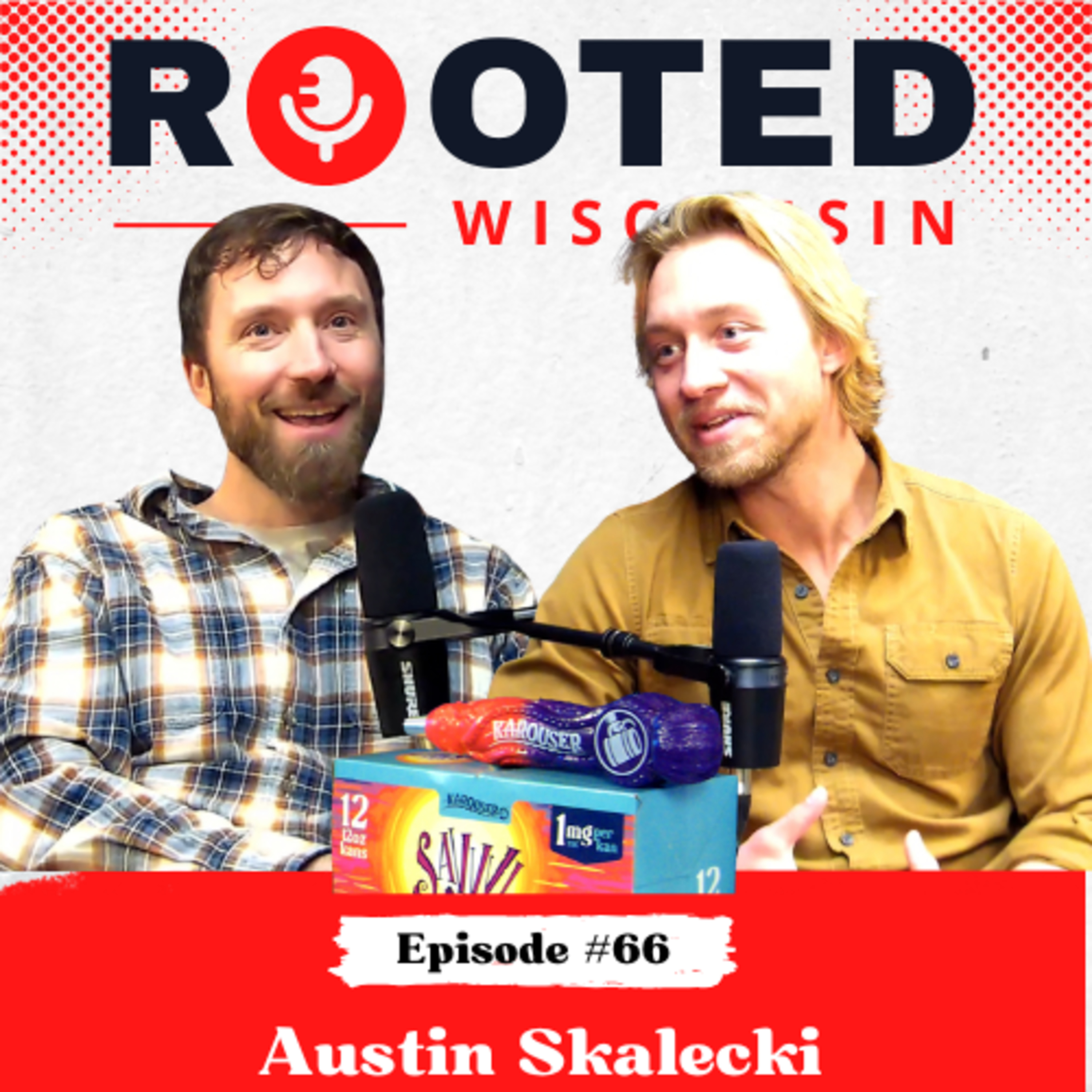


Austin Skalecki is a Wisconsin-based (Door County) songwriter whose music blends Americana, blues, and folk. Grounded in nostalgic, authentic storytelling, his songs capture the worn-in truths of everyday life—echoing the sounds and stories that linger long after the song ends.
In this episode, Austin and Brad talk about his music, the craft of songwriting, playing music until he's gone, travelling, the line between motivation and being forceful and letting things happen, and so much more thoughtful conversation.
As always, a massive shout out to our sponsors at:
Karouser - NA social bevvies delivered to your door🥂https://www.karouser.com/Epic Mortgage – Your partner in homebuying, empowering communities and supporting home ownership
https://www.yourepiclender.com/
Genuine Lynn – Custom apparel, decorative engravings, and one of a kind pieces where Lynn brings your vision to life!
https://genuinelynn.com/
0:00 What's up friends, Welcome back to Root of Wisconsin. Appreciate you for clicking another episode. Grateful to have you here. Today's episode was with Austin Skalecki, singer-songwriter, musician who resides in Door County, grew up in Appleton and is doing the music thing. Awesome dude, awesome conversation. Really reflective and reflective of him too. I have listened to Austin's music but it was the first time meeting and just a great conversation about his journey to being a musician. But also really in depth insights about songwriting and really the human element of music is Wisconsin roots and connection, traveling the country, being a musician and much much more.
0:49 As always, a huge out shout out to our sponsors at Carouser. Non alcoholic beverages delivered right to your door. If you're looking to limit drinking in your life, Carouser is an excellent step to doing that. Epic mortgage people centric mortgage services helping your next into your next home. Buying a house can be confusing. Let some folks who know what's going on help and genuine Lynn custom apparel and one-of-a-kind unique trinkets, great gifts, awesome custom apparel and even better customer service. Lynn is awesome. If you dig what we do, please support our sponsors. They keep these episodes coming. Without further ado, let's get into it. Austin Skalecki. this.
1:55 Austin Segalecki, what's up, man? Did I say it? Right, Skalecki, Skalecki. Yeah, yeah, it's a tough one, but. What's up, man? Not a whole lot, dude. It's just I'm enjoying the day. Yeah, I woke up, the sun was shining and I think it's, I think that's all it really matters. This time of year it's that's big man. I, I yearn for sun actually before the 1st guest today I spent some time just the the like you saw the windows when you came in. I just like stood there and just let the sun beat on my face like when it gets to like February, I just yearn for sun like I love winter yeah. I, I like cold weather. I love the reset. I like not having to mow the lawn and like, there's a lot of life tasks that go away in the winter, but the one thing that I just yearn for as winter drags on is just sunshine on my skin. Yeah, that it brings, it brings the mood up in every single way. It gives you more energy.
2:45 There's a lot to be said about it. It's like we're like being a plant, you know? Yeah, for real. I think, man, I think there's we could probably find a rabbit hole there. Like, there's a lot of connections of just like, like, I, I obviously it's necessary for our health, like with vitamin D and everything like that, but there's more to it, man. Like there's a reason our bodies yearn for it when we're huddled up for the winter for four months and have coats on and no sun. Yeah, we're all, we're all natural, just nature. It's just we're humans, but we're all one with everything around us, I think. Yeah, man. Yeah. Well, thanks for stopping in on on the way to a show tonight. On the way to a show. Yeah, this is a, it works out really well.
3:27 So heading to Stevens Point, as I was saying earlier, just stopped in with my buddy Rex over at Dorborn and is the first one I saw on the podcast here. So and we connected through that and that's kind of a big full circle day. Yeah, dude, absolutely. I'm pumped up to chat. What? Start there, man. What? What got you into music? What got me into it? Well, the guitar, you know, I, I started out as a just a guitar player for the longest time and more recently within the last, I don't know, 5-6 years, I'd say I started writing my own songs. And you know, I felt like I've always wanted to be a part of music and I want to do this until I, until I die, you know, I want to do this everyday and it's what I truly love. And, and so writing songs, I figured, you know, was the only way I could continue to do that until I die. You know, it's like I, that's the thing that moves me forward. You know, it's like if I were to play other music all the time that wasn't my own.
4:30 The thing that really drives me is, you know, creating community and finding stories along the way and all these towns, small towns and people I'll never see again. You know, maybe maybe you stumble into a little dive bar or something in the middle of Nevada and it's like no place you ever seen, you know, there's and he gets talking to somebody and then I get to share that story and move it along to the next town. And I find that to be really my my biggest mission and the thing that keeps me moving forward. So I guess it's developed throughout the years, you know, since the start, more just like focus on playing guitar. I love the Guns and Roses, you know, and now I'm more into like Jerry Jeff and Park and stuff like that.
5:10 So. Used to play some electric. Yeah, that's how I started so. Were you gigging as just a guitarist? Yeah, I was gigging since I was about 15 years old. I was in all those high school, high school bands. And yeah, it's cool. We did covers, but we also had some original stuff from the beginning. Nothing that I was in on writing necessarily. I mean, I wrote a guitar solo for one of them, so that was cool. But yeah, yeah, that's kind of my first glimpse. So right away, I guess you could say it was starting to do some our own music. So when did that? When did that switch man? When like what happened first? Was it you started writing and then you got into the songwriters or did you get into the songwriters music and be like, Dang, I want to make, this is the kind of jams I want to do? Yeah, I guess, you know, it kind of laid over with. I've always, I've always loved the creative process. Like even though when it was just guitar player, I was like, how does how does Slash come up with these things? And then I started getting into improvising and understanding that of how he's playing the guitar a little bit more. And then I was like, OK, well, I could do this. Lyrically, I've always loved guys like Johnny Cash and stuff. And I remember for the longest time I'd in like Senior High School, I'd be sitting in my basement and I'd watched that movie Walk the Line every single day of Senior Yard. And, you know, and I'd listened to the Live at Folsom Prison record.
6:29 And I found that how he was writing songs that really intrigued me, getting back to the roots of the music. And at the start of it all, I remember listening to to music and hearing the words. And so then I, I guess so since that point started developing into, you know, writing lyrics and telling stories again. And I want to say that was a big pivotal point in it all. It was a reconnecting with the whole thing. And, you know, it's now I get to do it as I grow up. And so that's, that's a really cool thing about is I'm looking back at stuff I did five years ago, like, wow, that was an interesting point of life.
7:11 Yeah. And it's totally different now. And I think that's the the really cool part of writing songs is now it's kind of like a time stamp. It's like journaling every day in his own sense. Absolutely, man. I remember right when you reached out after you'd saw you'd seen Rex's episode, I checked out some of your stuff at that time. And like a, a pivotal piece in all of your like public facing stuff is the storytelling aspect of, of songwriting. And that's like, that's what I listen to musically, man. Like like that's why I go to music. So I play guitar too, but it's never like, it's never about the best solo for me. It's never about like the, it's never about the actual like the physical music, the instrumental music. It's about the emotion and the time stamp and the, the conviction that people use with the written word. It, it's what keeps me coming.
8:06 Like there's a children's record on here right now. Like I listen to people that like, put that intention on their music and like, you can feel it. And I, I don't know, that's what moves me musically. And I, I know that like that's not everybody's taste, but that's what draws me into your stuff. And is, is that like that storytelling piece of it? How, how and why is that central to, to what you do? How'd you like decide that that was a focus area? Oh, well, I felt like that was, you know, I, I guess to the point of your saying is like that, you know, that's what you connected with. I've always connected with those, the storytelling. I always thought, you know, I wasn't, I'm not out here trying to be the best singer or the best guitar player, although I want to be good at them, but I'm not trying to be the best at that.
9:03 I want to be a good songwriter. Yeah. I want to connect with people on that level. That's really what drives me. And a really cool thing that I noticed was, you know, towns. And one of the first towns that I really connected with and wrote a song about was Trempello. And, you know, going back to that place, ever since I wrote that song, you know, there's something really special about that. And I noticed the the community we have built around it and, you know, and I didn't like try to do that. It just happened. I just wrote a song about it because it was connecting with me. You know, I did it about Dork County to, you know, a dozen another place to just really touch my soul.
9:45 So, and, you know, now we all get to share this with and it, it goes beyond me when it, when it comes to lyrics and it's like everybody is connecting and that's, that's all about music is like it's a shared experience. You know, even though I'm in the band, so is the audience, they're also in the band in their own way. So I, I really enjoy that, that connected piece. But you know, it's the part that really drives me is, you know, having that that idea to share something that's a little unique and moving it on in the next place and me going. Yeah, that that's the same outlet I search for. That's why I started the podcast, man. The podcast is all about connecting communities and and just humans because like we live in this 15 second like culture that like we develop all of our perceptions on this like glimpse of overall life, man. And I mean, in some ways a song is that, but it's not because I think it's really interesting to hear you say that the audience is in some way in the band.
10:46 I've never thought about it like that, But like each person is telling their own story in their mind with the story that you told, and it's going to be unique to every single person. Yeah, and that's something too. It's like everybody interprets it in their own way, so. And, you know, you write a song as the writer in one way, but someone else is going to totally put a spin on it that you might, you know, you never interpreted for or it to be that way. It's happened once. I don't remember the exact thing somebody said to me, but, you know, they asked me if I was like, I don't know, it's like a socialist or something. I was like, I don't know, I didn't think so. Odd. It's just I just wrote it was it was an early song.
11:27 It was like when I wrote called Poor Man off of my first EP ever. But yeah. And my, my whole intent was, you know, understanding what, what life was about, like just the basic nest of things. And you can see that in anybody. So it's like, you know, everybody's got something to share. So I'm always about that. You know, just talk to whoever. I think everybody's got something of value that they can share with you and, you know, find that and everybody you can talk to and you know, so go out of your way to do that. Go talk to the the dude who's who's playing guitar on street corner, you know, or just random person that's sitting next to you. Yeah, I, I love sparking conversation with people, you know what they got to say.
12:13 So, but yeah, anyways, I wrote that, wrote that song and somebody said something along the lines and but that was the idea of like, you know, it's totally not what I interpreted the song. Yeah, that was that was interesting. I. Thought you know what's cool about that, though, is like that's almost like in in your genre, man, that's like a feather in the cap or especially early on like that to have someone perceiving your things in that way, because that's a that's a pretty common narrative in your genre. What, whether it's accurate or not, that means that you are hitting that same nerve like I, I would have, I would have taken that as an extreme compliment, whether it was an accurate depiction or not. You know, that's a that's a good thing. Do you get into you watch Jesse Wells's stuff at all? Yeah, yeah.
12:59 See him quite a bit. He's always popping. He's getting big now. Yeah, he's, he's huge. Yeah, but like the same thing, you know, like often times. And that's part of that thing, right? It's like meaningful stuff. We want to put it in a box, but it it doesn't, it doesn't have to be that box. That was that receiver's box when you sent the message, like that individual person that asked you that, that's how they received it. But I think at a grander level and why I think it's a compliment and why I love your genre of music so much, is that it doesn't fit in that box, a box. It's not one specific thing.
13:42 It's like you just wrote something that means something, and then however what one person takes it, sure, it like Jesse's doing stuff that's very directly political, but even when it's not like people throughout the course of history that have walked that that path of folk singer-songwriter, they get placed in these ideological boxes that I don't think they always chose. No, they always intend for. It, yeah, it's the words, it's the story in the message that resonates. So that's cool. Man, that's a feather in the cap, I think. Yeah, it was, it was an interesting, but I mean, like there's, there's things in even like beyond the interpretation.
14:23 Sometimes I'm noticing with the with the music, like people feel like they have a connection with you that you never talked to before. Like they they feel like they're your best friend and then they tell you like some really deep secrets. So like, maybe I didn't want to hear that or like, why are you, why are you telling me that, you know? So yeah, there's some interesting stuff that comes along with it sometimes. But I, I like it. It's, it's a, it's a unique path of life. Yeah. And you get some interesting things that happen. Connection, connection like that in life, I think is super important because that that's when you get down to the talking about things that mean something and, and like connection in a way that is deeply ingrained as opposed to like, you know, there's someone in your neighborhood that you know, when you're cordial with and they seem super nice, but you never talk about things that matter. You know, you talk about, you know, how was your vacation or what's the weather?
15:23 What's this, what's that? But I don't know, it kind of breaks down that wall. Yeah, I agree with that. I'm kind of beyond all those conversations as much as I can. I like to get into the, you know, let's, let's just talk about like the, the uncomfortable stuff, like right away, you know? Yeah, let's let's get into it. Yeah, absolutely. It's fun to break get out of that zone for people and get them to go loose them up right away. Like just yeah, do it beyond that surface level. Just start and I I always like to ask people weird questions sometimes right off the RIP. One of my favorite ones that I learned I was. Going to say lay one on I'll. Go well, you know, like if you're meeting somebody out and you never talked to him before and you know, a lot of people will ask, you know what, what is, what is your name, where you're from?
16:10 I just, I don't know. Those are boring questions. And they start talking about their job and that never leads anywhere. I like to say one of my favorite things, you know, like introduce yourself and what's what did you have for dinner? I like that one. And people love talking about food and you know that that opens people up. It's like they don't expect it, you know, stuff like that. I mean, it works. Give it a try sometimes. Yeah, dude, you don't know what's hilarious about that is you're going to be episode in the 60s somewhere, probably 68 or something on the podcast. And I bet over 40 of those people I actually forgot to do with you today, which you just reminded me. But I asked them what they have for breakfast and that's how I do the sound check for the mics to make sure the levels are set.
16:51 Because exactly what you said like it's an easy answer, but you get start to get a glimpse of the human. It warms them up for conversation. Damn it, I wish I would ask you that question now knowing that. You do that gets people talking. It does, yeah. It and it loosens up the vibe. It can be intimidating sitting in front of cameras and lights and blah, blah, blah. And that's one of those things that starts to like get through the armor because we all wear this armor everyday. That's like it. We're protect full of those secrets for secrets in quotes for for some reason that it's like it's not it's not secret to anybody. Everybody has all of this stuff that goes on in their life and we can find these things that we connect over that you end up putting in your songs and it's awesome that you make an intention to get there quicker in in conversation.
17:42 That's that's so funny. You asked that question, dude, So let's try let's start to get there. I think I you brought up Door County earlier from Door County I. Grew up in Appleton, I live in Door County now. Oh, you grew up in OK? I didn't know that. OK. Yep. I think I saw something and maybe I'm maybe I'm mistaken here, but I think I saw something where you moved to Colorado for a while and then did you have this like, why did I leave Door County moment? Did I see that somewhere? Yeah, that was what how else that song started, OK. I mean, I always wanted to live out in Colorado, like the mountains. I love the mountains. And, you know, it's fun to go out there. I didn't know how long I'd be there, but it was like a month. And I was just like, why the hell did I leave you? Dark County.
18:27 Was it the first thing I thought night was? Was it like musical aspirations that drew you there or on top of the mountains and stuff like where you playing to music? Like telling you earlier, although being outside and I, I did, I did love playing music out in the mountains and I don't know, I kind of want to just try something new. I guess I've always been on the road and just travelling and doing that. So I also wanted a little bit of a different idea of life for a little bit, you know, and just sit back and not gig every night and do it somewhere new and just just try something. That's really why I wanted to go out there and yeah, it was great, but then I came back here. Was it a gradual thing or was there a thing when you were out there where you got that feeling of why did I leave Door County? Yeah, because everything is working out so great here. I love, I love the people here.
19:17 I love and even just Wisconsin, but I love the love the culture up there. And it's very similar. But you know, I get a little bit of everything. You get the coast out there, you know, just great community. You've always been. I mean, that's where I can do this full time. Like I have that community up there and there's there's a lot to love about it. So I guess, you know, I'd spend my summers up there and, you know, like May through October and then I would tend to travel in the winter a little more. So yeah, I was like, I should probably just move up there being gone. So I made my way back and couldn't be happier.
19:58 Nice dude. Yeah. So then like when that when that song came about, like that concept of like you wanted to come back, was that immediate or was that like a gradual thing that took some time to put in place or was like, all right, I'm heading back. I mean, it's pretty quick, honestly. Yeah, yeah. And. And the song came quick, too. Yes. Yeah. I knew. I knew I'd be coming back after about a month. Like, I I knew I wanted to finish out what I had went out to do there. And I'm really happy I went out. You know, it's like I did a whole record out there. I started my own radio show at a local radio station, brought in artists and. Oh, really cool.
20:43 Yeah. so-called it the Hippie Camper show. All right. I kind of. I always wanted to do it around sitting around a campfire and bringing artists in and, you know, other local artists and give them a platform to share their music and give me another side of the look. And I love performing and writing songs, but also, you know, I love helping people out, you know, too. And that's, I think that's fun. I, I enjoy hearing other people's story and songs. And I mean, to take that other side of it was always an intention. But anyways, I found an opportunity really early on there to do a radio show. How did that come about? I would I didn't have a job. So I was like, I was looking unlike this, I was calling next door or something and some lady put up say hey, we're looking for a ADJ at radio mid turn. And so I was like, that sounds fun. I need something to do right now. And so I got in and she says, well, it's all volunteer. And I was like, that's fine.
21:40 This sounds fun and and she says, well, do you want to start tomorrow? And I said, I guess so. I was like, I I went home and I started putting in like a, a playlist of all these. I tried to find artists that were up and coming. You get to pick all the tunes too. Yeah, yeah, You just, it was, it was really easy. Anyone who had music on you just, you know, you got to record it on the queue sheet and stuff. Yeah. So yeah, I got to pick up all these, you know, artists that I met through tours of going out to California and Colorado and Utah in the past, all like independent artists who maybe aren't huge and but I know they have great music and I love their stuff. So I give them a way to to put their songs on. And that was like kind of my first episode. And then later on, it's like I wanted to make the interview section.
22:28 So I'd do like half the show, I'd be playing music and then I'd have an artist come on for 30 minutes and we do a podcast little thing for them and then I'd have them play 3 songs and kind of hear their story. So I did it in the radio studio and I called it the Hippie Camper show. And I always had the intent to do it outdoors, but you know, everything is right here indoors, set up live on air. So along with that, it got me super into the local music scene, like like super quick. I go to open mics and I meet the artists in the area, they come on the show and then they're asking me to come on the show. And so just like that, you know, I was, I'm new pretty much the whole scene of like Avon and Eagle Co, just like that. And through there I met my buddy Skip who played mandolin, who introduced me to Joe Bianchi, who is running intern studio and and we end up recording record all because that radio show. I like it.
23:33 It was all because of that. Life's happenstance because you said yes in a moment that showed up and at that point it would have been super easy to say, man, that sounds really fun, but I also need to make some squeeze here too. Like it would have been easy to say that, but you turned it into an opportunity. Yeah, like, you never know what could come from it. And I, I enjoy doing that. You know, it's like I like giving back to the community, especially the music community. Yeah. And it's a great way to meet people, make some friends. Yeah, dude, that's awesome. I had a really fun, you might not even know this. I I worked in radio for a long time and I had a really cool opportunity to run a program, a station in a small market where like I, I got free rein to put on whatever tunes I want. Before that they were playing like the how would you even describe it?
24:22 Like well, actually when I got there they were playing like modern radio country and prior to that it was like that 70s and 80s kind of like pop vibe type thing. And I transitioned it to this like Americana focused. So at this time, like I was playing Childers before anybody heard them. I was playing is Bull before anybody heard them and like I couldn't believe the people in the small communities that listened like it. It was in a small city, but it had a huge signal. So it was like a large part of the UP in northern Wisconsin. I had the privilege to introduce to somebody like Tyler Chillers when he was coming to play at Blue Ox and nobody knew him.
25:08 And like, I couldn't believe the people that like even the connection that that made, like people from random communities that would come up and say, you know, I didn't know this type of music existed. It's rewarding in that sense, too. Yeah. It's like showing your friends, like when you find a really good artist and you send it to your friend, like, check this guy out. Yeah, but now you're doing that to, like, a bunch of people. Yeah. On the radio. Absolutely, man. Yeah, That's that's one of the few things I miss about work in radio is, is that that vibe? That's awesome, man. And it's isn't it weird, we talked about this on the podcast a lot. It's probably getting a little sale for people to listen to everyone. But like how life delivers you packages at you know, that just like if you choose to open them or not, some things can open doors. Like since I started the podcast, man, like just the other day actually, a former student of mine reached out and was like, I'm doing this cool thing with a bunch of nonprofits.
26:02 We're going to try to go live. I know you do the podcast. Do you want to MC this like local event? Like Co host this local live event with me on socials and highlight a bunch of nonprofits in the community? I was like, yes, absolutely I want to do that. Like how can we do it? How can we set it up? That doesn't happen if I don't decide to, you know, on a whim, buy a bunch of podcast equipment and just start talking with people you know. Yeah, it develops, but in really great ways. Well, my buddy always said to me once he says don't be too hungry. And I always like, ever since I started doing that things just they work out when you start doing what you want to do. Does that make sense? Yeah.
26:45 Yeah. And that was a really great piece of advice. And just, yeah, then the packages start getting delivered to you and you can take the opportunities, yeah, up on them or not. And the horses like if you're always running at something full speed, like you might Passover things or you might not have the same opportunities pop up, you'd be trying to almost guide it in your way that you think should be guided versus like, oh, this is how it's intended to to work out. Does that make sense? Absolutely, dude, yeah, packages, yeah, 100%. You come to learn, you know, sometimes it happens quickly, sometimes it takes a long time.
27:25 You come to learn that like how little control you actually have in life, you know, and that's a that's a line that's tough to find. I mean, I strive for that everyday to try to find like the line between having a vision and trying to bring it to life. But at the same time saying like, well, when this is supposed to happen, it will or if it's supposed to happen, it will. It's, I'm still working on that man. Like I, I certainly don't have the answer, but it's something I think about a lot because, you know, there is a flip side of the coin too. There's a flip side of the coin that like, OK, that mentality can very quickly lead to not walking in a direction at all. Totally.
28:11 And I. Got to stay motivated, yeah? Totally, yeah, 'cause to get those rewards, I think, I think it rewards like, you know, the universe rewards intention, but at the same time it doesn't reward force. You can't make it happen when you want it most of the time, but obviously nothing is, you know, complete. But yeah, man, that's a, that's a good, that's a good lesson. So did you, did you make changes in how you navigate life when you, when you like took that in and we're like, OK, yeah, don't. Yeah, maybe if I find myself thinking about it more than anything sometimes, you know, if I feel like I don't, it's almost like don't spread yourself too thin, too.
28:56 But how do I describe it? It's, I don't know, my buddy, it was my buddy Adam. He told me I was in California. You know, it takes a just like, take it as it comes, if that makes sense. Like you got to be motivated. You got to you got to set your intentions, to set your goals. And it's almost like work towards them, but don't overdo it. Does that make sense? And could always, it couldn't always lead to where or maybe you'd get disappointed or something. Work out the way you thought it was. That makes sense. I don't know. Life always takes different, different paths, I find, and it's always a great one if you let it come.
29:38 The way you're having fun with life and loving life. It always turns out the way it's supposed to. But yeah, I don't know. I found myself sometimes, you know, like taking a step back. That's what I'm trying to say from it all. Like I need to take a step back sometimes. And yeah, you know, I mean, not put myself right in front or put myself out there so hard at somebody or some opportunity or some situation because it's going to happen, but don't stress yourself out about it or maybe pushing too hard will get rid of that opportunity sometimes. Yeah, that's more of the intent I take. So I kind of find myself checking myself more than anything at times.
30:22 That's awesome, dude. Yeah, because tunnel vision and hyper focus can certainly happen really easy without us knowing it. And it's just like, especially when you lend towards that line of motivation, it's like, OK, this has got to be done. This got to be done. This got to be done just like one thing after another. And you know, you end up going a lot of wayward paths doing that too, which is inevitable in life. But still like that step back to see the whole picture, especially actually as as a musician, like it's such a unique thing to do because it's so it's such a visible goal that that you're trying to achieve, right? And that when we look, when we switch it around, look inward, there's a lot of feelings that come with that stuff like you, you know, you're aspiring to be this thing like you want to share this message. You have it.
31:14 And and that's the wild thing about music is that like, you can roll across somebody that nobody knows, you know, they got 500 followers on a social media platform or something, and then they blow your doors off with something they created. And it's like, OK, if that exists, it's not always just pure work and motivation that makes things happen. Because like, you know, a great example of this dude, another guy I had on the podcast, a buddy of mine named Chris owns 3 through 5 here downtown where he has a bunch of musicians play. And the first show I ever went to, man, right when I had him on the podcast, awesome show. We had a really talented artist who is like doesn't have a massive following, but he's got like some YouTube videos with like, you know, 50 thousand 75,000 views, which is huge for artists.
32:04 It's massive. And he put on this rockin show. It was awesome. Chris does a little after show thing where they'll play in a little more intimate setting. It gets to like 2:00 in the morning and mind you, like I'm not a 2:00 in the morning guy anymore. Like I don't make it to that time. So I'm like yawning. I'm ready to go home. It was an awesome night. And then another dude who runs The Who runs the sound for the the live shows, picks up a guitar and he's going to start playing. And I'm like, OK, well, I'm I'm here. I'm going to stay. Like I'm tired, but I'm going to stay. This dude just blows my doors off for an hour just playing solo acoustic songs that he had written and strike up a conversation with him.
32:47 He has some things recorded, but like, you know, in the early stages yet. And that's a prime example of that. Like this dude ran the sound all night. He's there. He works a normal job. He ends up playing at 2O clock in the morning for the 10 people that are still there listening. And I'm like, this is this. He's a monster. Like he's so good. And Fast forward to now, it's awesome. He just got his album done. He's going to be coming on next month or two months, but. What's his name? His name is DPM David Paul Martin. Oh yeah, I want to say right now I don't. Know who that is? Yeah. And dude, like out of nowhere, nothing I ever expected. Yeah, he's a sound guy.
33:31 Yeah, yeah, yeah. Yeah, I I always call him DPM, so I hope I'm getting his full name right. Yeah. He's he's awesome. Yeah. If we're thinking the same guy, he's he's amazing. So kill all incredibly talented. And it's like that thing exists across our landscape. And if everybody was trying to force it and it actually worked, like it would certainly work. Because if you're if you're a monster and you say, OK, somebody, you know, a certain amount of people, I'm sure you've run into this. A certain amount of people walk up to your show afterwards and they're like, you know, that was good, man. That was good. Like keep on, keep on doing what you're doing and you get that rejuvenation.
34:12 But like, at the same time, it's like, OK, yeah. But as humans, we want this, like, reward. It's like I put so much work and effort into this, you know? There's a lot of, there's a lot of emotion that comes with writing songs, too. Yeah. And you know that, you know, that's maybe some artists share it out, maybe some some do release it, some don't. But, you know, there's a lot of a lot of personal attachment to songs, you know, when they're coming from the heart. Yeah. So yeah, when you put it out there, maybe if nobody says anything about it, you know, I can, I can discourage some people. For sure. And that's, you know, if nobody does connect with it, that's OK. You know, as a artist, I've, I've come to enjoy that, like just enjoy writing songs, you know, like, as I said before, it was kind of like a journal to, to put something out there into the world.
35:02 You know, if people hook onto it, you know, that's, that's great. It's like throwing a message in a bottle out in the ocean and someone picks it up. People pick it up great. If not, like it feels good to get it out at the end of the day, you know? Yeah, that can be intimidating sometimes. Yeah. How did the Speaking of that like the craft of it? How did the craft of songwriting develop for you? Because like being a musician beforehand, or like a guitarist beforehand. Yeah. How did stepping into the craft of songwriting, like humble you motivate, you persuade you? Because like, songwriting is not an easy thing.
35:43 Like a lot of people. Like there's all a bunch of artists. I had one on the podcast talk about like this instance where like, you know, when you're a songwriter, it, it, it kind of pours out of you. Again, you don't force it. It kind of pours out of you. And sometimes you're like the medium, you know, like these ideas come and go and you create it, but there's also the craft piece of it. And how did, how quickly or not quickly has that come for you? And how did that change you as a musician? I guess early, early on, I was always very intrigued with the lyrics, you know, I because I didn't understand exactly how to do that yet. It always just seemed like a little bit of a task compared to playing guitars. Like I understood that more so so writing lyrics, you know, it started, you know, start diving into writers that I really enjoyed, like Johnny Cash and, you know, just simple chord progressions and he's saying what he's saying. And then you start seeing similarities between others and you're like, OK, at some point it just starts flowing out of you.
36:43 Like you do have to just say it. You know, if it, when you can get past that barrier of, oh, this isn't good enough or no one's going to like it, you know, you start just writing to write. It just flows out of you. Like you're writing stuff on paper. It feels good. It's like a it's like a medicine. Yeah. So then once, once you get to that point, I feel like it just becomes a lot easier because then you're just writing to write. And I think, you know, there was, there was a time a couple years ago and I started figuring that out. Just write about whatever you want to write about, say what's on your head and let it out. You know, songwriting became really easy. I would be writing a couple songs a week, you know, and then like right now I'm on a dry spell.
37:28 Like I got to re understand that goes in waves. So that's like lately I've been becoming too critical. But and then the, you know, just got to remind yourself it just let it out and through throughout more songwriting, I guess you said the craftsmanship of it all, you know, you start to learn little things like, you know, like those imperfect rhymes that you don't remember. They don't rhyme together like perfectly. I don't know how to say it like maybe like Wisconsin and begin, you know, they they run together trying to think of like an imperfect drive on the spot, but you know, what does it sound like?
38:12 And so like that's one of a craftsmanship thing that you would learn through doing it more and more. And then maybe you learn how to structure songs and like and rhyme schemes and you start to see these patterns between songs that you've done and other artists you look up to. And and then then that's when you start realizing, yeah, Johnny Cash had really simple progressions and like lyrics. And then you start realizing how he's structuring all that. And then that's where the masterpiece is, you know, it's like like this maybe there's not a single rhyme or like boy Named Sue and Bob Dylan. It's a lot in folk music. Like they just like, you know, there's no chorus. Yeah. Nothing that repeats itself. Yeah, like, yeah, you can do that. That's a song, you know, like, and then you have the the inverse of, you know, you could have a song, say 3 lines the whole time. And that's a song, you know, and, and I think folk music really helped me understand that it's just songs that people enjoyed singing just for the people. Like some of those, the simplest songs, like they connect with people, but people wrote them because they are feeling them in their heart and just let it out.
39:19 Yeah, at the end of the day. So that those are more like and then melody wise and trying to expand what you do sometimes, like as far as instrumentation, you know that it's all stuff you learn through doing more and more of it. You know that that's all the skill of like becoming a better songwriter. Maybe shorten the chorus or put the chorus up or you know, have have less than a verse or maybe shorten the second verse and things like that that you find, Oh, this works really well for me. I liked how I did this in the song previously. I want to pull that over and try something new. So I enjoy like that that puzzle piece to it too.
39:59 That's really fun. But that's more like the analytical side of it. And and then there's also. Just the creativeness and I find the creativeness is all like just in the words and letting it out and that's where to start. And I can go back and try to rework things maybe that didn't flow perfectly how I wanted it to. I'm not remembering it after the first time. I mean, I need to redo that so I can I can connect with it and remember it. I use that as a thing sometimes too, is like, OK, if I didn't not waking up singing it the next day or at least part of it, maybe, maybe I go on to something new. But instead of that intention, too, as a songwriter, I think it's important.
40:43 You know, some people say, oh, you got to wait for the inspiration to hit, you know, you do. But if you want to be writing songs a lot, you got to write songs. Yeah. So you got to. Yeah, you do. I think it's important to sit down and try to write something. You know, it doesn't have to turn into anything. But, you know, it's a muscle. You got to work it just like, just like going to the gym, going on runs, you know, if you want to build that up, you have to work on it. And you have to sit there in the morning with your coffee, maybe write, write a poem, write down 3 lines. But at least it did something for the day. Yeah. You know. Starts your momentum. You hit on exactly the contrast. I was getting it and you put it in perfect terms, like the the analytical side versus the creative side.
41:29 That's exactly what I was getting when I asked you that question I was picturing. So in my early 20s, I I wrote a handful of songs, less than 10 probably. And I had no idea of song structure. Like I don't even know how to read music. I I just play music by cord and ear. Like I don't know how to read music. I just bought a guitar when I was 14 and just started playing and I learned from YouTube. So like that, those songs like I can still, I'd have to remember like my chord progressions and everything, but I can still like remember them for the most part. But none of that was like, it was all just like things that I needed to get out of me. They were just like things that I felt compelled to create. I didn't want to be a musician.
42:12 I wasn't aspiring to play, you know, live shows or whatever, even though I ended up doing like some cover stuff. But those things need to come out. And then recently in my life, like within the Super recent, within the past like four months, I've had just this weird like itch to write things. So I I've, I've written like I've started like trying to figure out what that even looks like creatively for me right now. And I have this one that like was a cool idea. So I've done a couple of the classic like, oh, this is a cool line, like talking it into my phone so I don't forget it later and stuff. Yeah, yeah, that's right. That you do. And I had this one that I was like, this is, this could really be something.
42:54 It's an awesome concept. And I made the early mistake of like I reflected back on that first experience of the first set of songs I wrote. And I made the early mistake of like looking at learning more of the analytical side of like song structure, because this is a really unique one. It's actually one of it's a song that I don't envision having a chorus. Like it's just this, it's a refrain at the beginning of a bunch of verses and like, I looked at all this structure stuff, dude, and it killed me creatively. So it's still just lingering there because I started overthinking the analytical side before I finished telling the story, dude. Exactly. Yeah, yeah.
43:35 And it was brutal. So now it's just lingering in this weird like in between of like cool idea, but still nothing has come of it. Because I had this awesome creative motivation out of nowhere after, you know, 15 years of not even thinking about writing a song, 10 years read, I'm not even thinking about writing a song. I get hit by this thing. And then I have this awesome creative juice coming out where I'm humming a melody in my shower and I'm trying to figure out in my mind where I want to take it. And then I look up song structures, dude, and then just get completely intimidated because I don't know shit about any of them. Yeah, it's, you know, and that's what I think you can write a song that ever you want. The structures are just, you know, there's they're cool to mess around with and they're they're guidelines. But you know, and then eventually I feel like through doing it enough, you start to understand a structure. Maybe like build your own structure. That really was easy for you to just it's a structure, but you don't think of it as a structure. It's just the way you're writing songs like, oh, I want to go here next.
44:36 That's just what's just more of a habit. You know, it's the way I write songs, you know, you know, structures are good guidelines, but I don't think there's ever a right way to do it. It's however you want it to come out. You know, it's like the one I really learned that just from, like Todd Snyder. Yeah, he was. He was the guy like I, but I found him was like, wow, you can write whatever you want. Seriously. Yeah. I wouldn't have wrote as many songs about as I have now if it wasn't for him. Because you just that's how you do it. You're just saying what's on your head. But yeah, the structure things, I think it's secondary. Yeah. And it's fun to think about sometimes.
45:17 Sometimes you can think about it, but you don't have to, you know? Yeah, it's it's good to good to run with the creative juices when when they're flowing and you're feeling like writing something down, write it down. Yeah, yeah. So Lynn, let's let's pivot that to the aforementioned dry spell. You said about like that the the creative roller coaster of sometimes like, you know, if you're feeling something or like something's happening in life, it's like you got 10 ideas that are ready to boil out of you. And then sometimes you find yourself where it's like a little bit of a hole and there's like, where are these ideas?
45:58 Where do they come from? Yeah, that's huge. I think. I think they're there still. Yes, I'm sitting there thinking stuff. Like you get in your head all day and think about stuff. It's just like I said, sometimes you need to set that intention of writing it down. And, you know, I think that's where I where I've been lacking and that's why I don't have them all the time. But you know, I think, I think we're always, we're always writing songs, you know, no matter what we're doing in the day where there's always stuff coming in. It's just whether we're putting it down this time or not. I think that's the hardest part. Well, sometimes the intentions probably hard, right? Because I mean, being a gigging musician is not an easy gig.
46:39 It's like tiring, you know, You're probably on the road a lot. Yeah. And it's very easy to like anything we do in life, if you're, if you're tired mentally or physically, it takes more pushing stuff out of the way to get yourself out of the way to do things. And I have to assume that that happens to like, even though that's your main focus. Yeah. Like tonight you're, you're on a podcast at noon driving to point to do a show. Like you do that over and over and over again. There becomes these building blocks in your way that you have to decide to push out of the way and become really like motivated to even start pick up the pen. Right, Yeah, that's that's where that phone comes really nice. Yeah, do when you're driving down. The road yeah yeah, sometimes that that don't happen yeah yeah.
47:27 I know what you're saying though yeah and so yeah, definitely can can fill up with time but then you get tired but I. You're like force yourself to get tired and then sometimes ideas come differently. I when I get really tired, I, I just say whatever I get. It's almost like I've had a bunch of drinks in a sense where it's just like I'm very loose, like I'm not thinking straight. And you know, sometimes it's really good for songs like you just because you kind of let your guard down. You're thinking differently. So I, I find writing at night like late is, is great for me. Like that's, that's what works for me more often than not, you know, after a gig something. Then there's sometimes you're feeling that inspiration after the show too, like, as we were saying, like sometimes jump on that inspiration if it's there.
48:16 Sure, it's not always there, but sometimes. And yeah, early morning songs with some coffee, because coffee always gets the gets the mind working. That's the best time. Like just different feelings. Yeah. I've made different times of the day create different emotions and different feelings that come through songs. So depending on when you're writing them, different feelings going to come through. Yeah. That. Yeah. That's awesome. Yeah. It is super interesting. It's so unique to each person. It's so, it's so unique and personal and visceral and I think that's what makes it move people. Yeah, and everyone's got their own approach. That's that's the thing. So yeah, there's no right way to do it. Yeah, and there's a pretty common theme occurring where often times I think it's the block is self-imposed more than anything. Like you've mentioned it in a couple different angles in this conversation already of like it paraphrasing and to put it in like bold terms, it's like just get out of your own way. There's so many things that we build in our lives, like things that are in act actually a mountain for us to climb or push out of the way as it opposed to like just letting, well, letting it happen like you were getting that earlier, you know, central theme, man.
49:39 Yeah, Yeah. But yeah, I think we get distracted a lot in life too. Sure. You know, So there's, you know, there's there's little time constraints that people, you know, put on themselves. So that, I mean, I try to eliminate those the best I can, too. Sometimes, you know, I don't even own ATV in my office. Yeah. So I don't. Yeah. It's like the just it's one less thing, one less distraction take away from my downtime that I don't get too often anyways. And, you know, so it's one of those things, yeah, preference and you know, helps with, helps with things sometimes with like focusing it on writing a song maybe instead. Yeah. So.
50:20 That's awesome. How long, how long ago did you make that decision? When did you cut the TV cord or? Like stop playing video games and. Like or just like not. When did you decide not to have ATV? When I started playing guitar, yeah, yeah. It's just like I was, I was, I loved video games back in the day, you know, like high school and middle school. It's like I'd be spending hours on it, you know, And then I was like, yeah, I'm kind of wasting my time here. I should do something that actually worthwhile to myself personally, you know, it's and I thought guitar, I was liking guitar. So I would end up doing that for 7-8 hours a day for, for a year or two, you know, trying to learn.
51:02 And that's where all my time went. And then it's like, I don't know. I'd, I'd never especially today. I just, I don't like having ATV for some reason. It's just not what I enjoy. Yeah. I also think it's it's fun to have people over not have ATV because when you start talking to each other and have fun and throw a record on that's A and then you start talking about the record and you're looking at it with each other just yeah, eliminating distractions. I just like to. That was more the reason for it. You know, I want to go watch a football game or something, which I don't do too often anyways. Always. But you know, someone invites you over for the Super Bowl. Heck yeah, I'll go.
51:46 I'll come over and watch that. You want to go watch? Watch a game somewhere, watch a movie? Sure, I'll do that. Just choose not to have one at home. That's awesome, dude. So. I love that I I had a really cool conversation the other day. Actually it was with a student of mine. I think it was with a student of mine. I can't picture the conversation I normally can, but we were talking about this exact concept like distractions in life and reaching goals. Like was the premise of the conversation and he was a gamer and like my, my statement that ended up really resonating with him was like I, I used to play video games a lot too, like in, in college, like Call of Duty was like loved it.
52:29 Great game played a ton. Dude, it was super fun. I had a blast doing it. But I said like, the, the core of my message was that all all the hours that I spent playing Call of Duty, I don't remember my best kill streak, right, You know? But when I think about the things that happened in life that mattered, that's I have visceral memories of those things. The difference of that screams, doesn't it? Yeah, like, yeah. And it wasn't, it wasn't even just playing guitar for me. I just wanted to go hang out with my friends. I was like, let's go, let's go Ding Dong ditch our buddy, you know, let's let's go drive around and let's just be, let's just be dumb while we can. Like we're really young. Let's we should, we're alive.
53:13 Like, let's, let's do something outside. Let's get together and hang out and see what happens. You know, there was. There was that too. That's really, really important, dude. It's. Really important the man making like that realization in itself is a gift of just like, because I like, I could see the wheels start turning in his mind and like he he was talking about and. And he, he had played Call of Duty a lot throughout the years too. And he, and he thought about it and I could like see it on his face when he kind of became disappointed that like he's like, yeah, I, I can't remember my best kill streak either. And I'm like, I hate to be the bearer of bad news, but let's do something else, man.
54:01 I love it. Yeah. Because like, I don't know. That doesn't, it's really easy to naturally fall in those holes because they're like, there's, they're very popular for a reason, right? They can command our psychology and our attention. And there's a reason that like, it's super easy to just hop on a game and next thing you know, you're like 5 hours later, five hours later, that's five hours of your life gone. You're up until 2:00 AM when maybe you have to wake up at 7:00 tomorrow to do something important. So it's going to impact that. And did you take anything out of it that filled your cup as a human when you were doing it? Or was it just like you giggled a couple times because the the people that you were playing multiplayer with like said some funny stuff but didn't really matter, you know?
54:47 Right. Yeah. And sometimes, like, you're sitting on the mic and we'll get actually pissed at each other in real life, like the next day. It's like, why'd you do that, Scully? Like, dude, it was a game. It was a game. I don't know, but that's all Funny games, you know? It's like, you know, and then there's times like, hey, this is, it can be a past time in some sense, but it's good to have, you know, you're right. You got to, if you want to do something else, it's important and like you feel important too. You got to make the. You got to make that switch sometimes. For sure, dude. Yeah, I have one of those. I have a choice decision that people look at me cross eyed when I tell them I don't have either. I like, I haven't had a microwave in a house for probably 10 years.
55:28 Like I just, yeah, I just don't buy a microwave. It's very, I mean, I don't really truly know the reason. Like it's not like I set out this like perfect intention of like This is why I'm not going to have a microwave. But I just think they're weird. I think microwave is a weird thing. So I just, I just don't own one. And it's fun to talk about stuff like that, dude. Like these are the layers that we started our conversation with. Like do it man. I went without a microwave for like a little bit, and I noticed right away that I didn't, that I didn't have one. Did you? I don't, Yeah. I don't know. Yeah. That's impressive. Is there any, like, is there like a certain type of food that you particularly missed when you didn't have it or anything? Like, are you a popcorn guy or something? That it was like, Oh yeah, I love. Popcorn.
56:10 But I make it all. I'm like, I like, stir, stir crazy things. Uh huh. Yeah, I do that. OK. But no, I don't know. Just like the convenience. So just heat something up. Yeah, that's something that's cold. Yeah. I missed that. Yeah. It's it took my wife a while to. Stir on, you know. Yeah, it took my wife while to get on board because like most normal people, she had lived with a microwave and I was like, you know what, I just don't really want a microwave. And at the time, but like our kitchen was pretty small. There was no like normal place to put it was the first house we bought together. And I was like, you know, I just and I don't think we don't think we need one. So like the the prior owners had had one above the stove.
56:52 I took it out and just put a vent hood in and she went through that same thing for a while. She was just like, you know, I can't heat this up. Like this is so much easier with a microwave or whatever. So I had to navigate those like marital waters. But I don't know now, we just now it's like, you know, circling it back to the TV thing, You, you just exist. Without it, Yeah. And I eliminated the distraction. So it's like you, I, I find that it cleared my mind a lot and, you know, just, it made like going back, even back to the music now is like the, that's just what made everything better in my life, like becoming a songwriters. Like I was more focused on the now and being a human, like dialing and with your, your inner self and stuff. And that really helped the songwriting and just creating music and things.
57:44 So yeah, dude all tied into that too. Yeah. Do you get that same look when you tell people that you don't have that cross eyed look? Like what? You don't have ATV or I? Mean, yeah, like some people, yeah, but I don't know doesn't matter like try it yeah, Your your life's going to be a little better I think yeah. You'll be less angry or less distracted yeah. So. I have that. I have that relationship with social media in the phone too. Like I like, I'll catch myself allowing myself like wasting too much time on social, but like that's it's, it's two different outlets for me. It's two different outlets were like there I find some valuable time on social media. We're like you and I wouldn't be talking here today if it wasn't for social media.
58:32 So like there's there's a lot of valuable connectivity there. And I do my best to like train my algorithm, not to just give me the shit that like is going to just keep me coming back for meaningless reasons. But like at the same time, they very quickly understand what that stuff is for you and they'll feed it to you over and over and over again. So like without the without the motive or like the incentive or intention to be cognizant of that stuff, it's very easy to fall in a similar trap of like, you don't remember, you like out if you spend an hour scrolling through Tik Toks, like how many of those are you going to remember an hour from then?
59:15 It's not very many, dude. So like I walk this fine line of like trying to find connection and communicate and support people that like, because social media platforms are huge. I mean, you know, this is a musician. Like it's a huge part of becoming a musician now and then, growing your popularity, social, but at the same time there's a really quickly a Cliff that you can fall off, the same one that people use ATV for. Yeah, yeah. I think like as far as being a musician on social media, it's, you know, it's, it's really helpful to for people that use it to like stay in their mind, if that makes sense. Like I, I'm not one to put something up there all the time, but I think it is important to stay relevant in people's heads.
1:00:00 So it's like, yeah, you got post every now and then. You know, if there's like a streak where it's putting more content up, great. So it's not like a huge focus. I I've always been more of the I also think it's just as effective to have other means of communicating with people as a musician, right? You know, like I do like my, my e-mail list that gives me a direct relationship with people. People feel a little bit more personalized with me now. We can chat, they can e-mail me back. But I also know that, you know, they're getting the new music and the tour schedules sent right to them. And I find a lot more connection within that and honestly, better outcomes and setting up posters at the venues up in Door County.
1:00:50 And if I'm, if I'm near a venue that I'm playing out of town or maybe can send them some stuff, so digital posters and all that. But you know, yeah, it's, it's a fine line. I think they all work really great. I think it's where you put your efforts. Some it might work better than others. And I, I tend to not put over the top effort on socials, but I, but I like to stay relevant. You know, I think that's, I think that's important. You know, some people do get all their their information about you through there. Most people these days like the trajectory of a musician's career today. If you would have told that to people 50 years ago, that's what you had to do.
1:01:31 Like, it would be astounding, the difference, like the the contrast between those two things. Like, it used to be about creating that connection in a room with people and getting them to come see you and like, play their music. And it still is that, but now there used to be so much control about that with like the, the, the suits, you know, like in the back of the room, like this one's the guy. We're going to put our money behind this person. We're now it's like, no, Austin's the guy. Exactly. So it's all. Yeah, so that that's a real positive. I think like having the power in the creator's hands super important. And that's one of those positive outlets that it I agree.
1:02:13 So it has like this thing of, I mean, TV does too a little differently. But like, I don't know, I love. I mean, look at the look at the career of Zach Bryant. Like does Zach Bryant happened 50 years ago? Absolutely not. Like he doesn't have that song he's playing in the campfire, drenched in sweat when he's playing heading South that goes viral. And like, I don't know, there's way more people throughout the years that didn't didn't have the luck of like Jimi Hendrix of like blowing people's doors off and having somebody say, this is the dude we're going to put our resources behind now the resources are in your pocket, dude.
1:02:54 Yeah. And you're like from before you said, like, you know, there's that guy like that maybe has like 500 people on him. But, you know, he has that ability to expose himself to whoever he wants to know, you know? Exactly. You know, or a way that people can find him and, like, stay connected with him? Yeah. As soon as he moves the barriers out of the way that he's self imposing, yeah. Yeah, but yeah, and there's that too. It's like, you know, you could that, you know, it's creating community in your own way is really, I think at the end of it all, you know, that's like I said, like being folks here and travelling that's I want to create communities in different areas. So, you know, maybe not somebody that has like, like super viral on TikTok or whatever, maybe, but I have a core group within that. And the number might look smaller, but you know, I'm able to do this and people singing the words back to me. And at the end of the day, that's pretty damn cool. Yeah, dude.
1:03:59 So you know, that keeps my heart going in it. Yeah, you. Know people do appreciate the music and I get to see that tangibly physically in front of me so there's there's that too but. And one of those is just as fulfilling as 20,000 people that followed you on a social media because you made a a funny like video that had nothing to do with your music or something like. That Yeah, Yeah. So I don't know, like both relevant, yeah, but they both are just as rewarding in their own way, for sure. I agree with that. Yeah. Because that that is rewarding too. Yeah. You can't, definitely can't deny that, yeah. Yeah, I had.
1:04:40 Did you see that? I'm drawing a blank on her name right now. She's actually going to come on the podcast in a couple months. I'm excited. But did you see the girl? She's from Madison and she just like made that TikTok video. She changed the words to an Ella Ella Langley song. And it was like, she's from Wisconsin, I can tell by the way. And then she and then the second line was like, she goes, oh, oh, hey. And it was like this really funny thing, but like the power of that moment for her. Like I saw that video like a thousands of other people did, went to her page and then found this journey that she's on to coming to be a musician and wanting to do the the walk the path. And it's like you can't take the power of that away either, you know, It's awesome.
1:05:28 And it's just an outlet to hopefully have, you know, that one person singing back to you turns into 10, and then it turns into 1000. And then I can't even imagine the feeling of, you know, a good example of this. One of my favorite artists ever is Tom Petty. I love Tom Petty. Yeah, he's amazing. He's awesome. I got some Tom Petty lyrics on me and I've still never seen another show where like I saw Tom 8 or 9 times when he's alive and every single time you would go 30,000 people in the crowd singing every single word to every single song. I can't imagine what that would feel like as a human. I can't imagine being him on the stage. Oh yeah.
1:06:10 Yeah. It would be like that has to be every single day of your life is like a dream come true to know that like you moved that many people's lives, that they know all of these words that you wrote over and over and over again. Yeah, like when he's doing that, I'm sure like just everything just disappears. It has to be right? That time at least, you know, time he's up there doing that, yeah. You know, and that's got to be why a guy like Willie Nelson exists where he's still just trucking, man. Willie's awesome, yeah. And it has to be constantly chasing that feeling. I don't know. Yeah, I mean, yeah, there's that. I mean, like, it's definitely. You can't deny that.
1:06:52 Like that. That feels really good. Like you definitely crave that as a musician, especially being a performer and doing that in front of people. It's like, yeah, that's that makes performing that much more rewarding, you know? So that's a huge part of it. Yeah. But, you know, guys like that, you know, who do it till they die forever. Like, yeah, there's there's that motivation. But you know, there's probably so much more. You know, it's. And I feel that as a songwriter, that's why I feel like this would be my perspective on it. I've said I want to do this till I die. Said that earlier. Yeah. Yes, there's there's also just the the writing songs and putting your heart out there that feels good and people reciprocated just brings it up a level.
1:07:40 Yeah, yeah, absolutely, man, I. Don't know, maybe I feel like Willie would be a songwriter and say with Tom Petty, whether people are doing that or not, Yeah, at the end of the day. Like that's what you think they would resonate most personally with you think? I think whether people were singing the words back to them like they're, they're real songwriters, you know? Yeah. Like, they'd be writing songs like that whether they got hurt or not, and they'd be doing that till the day they die. Agree. Like, I don't know if just that in itself of the people singing it back, yeah, that's a huge bonus, but I don't think that would be the reason they do it. That makes sense. Completely agree.
1:08:22 Then because then if it, if it was like, I, I think, you know, you don't get to that stage if it is. And if you do, you don't do it till you're 90 because they're, the motivation is different. You know, like it, it's the same thing of like, there's this adage, I like you. I've heard countless people say this in my life of like, oh, like, give me that amount of money. You'd never see me again. You know, like talking about a professional athlete or a famous musician or something like, Oh, give me that. You'd never see me again. I've said it at times in my life, but and as I grow and reflect and learn and you know all of that stuff, I don't know how many times that's like an authentically true.
1:09:09 Thought yeah, because you keep going. Yeah. Following, you know, because I would, I would, you know, I want to write songs till I'm done because that's what drives me to wake up every day. Yeah, you know, it's, it's not the other stuff. What keeps me like motivated to do something every day is playing music. That's that's why I wake up like I would no matter what happens, I would still be doing this. I wouldn't, it's never going to leave me. It's like it's in, it's in the blood and the, the ability that, you know, I'm able to, to do this at this point in my life right now, you know, I'm able to do this for, you know, this is this is what I do is for a job, you know, that's just a blessing, you know, But yeah, I'm going to be doing it till the day I die, no matter what. I'll be writing songs and playing the guitar. And I think that passion is the true reward because like when you think of the audience in your words back that kind of that, I mean, the, the good feeling about that is the validation, right?
1:10:19 That you did something that resonated with a lot of people. You created a community, but really at its core, validation and like fiscal benefit are very closely tied right there. It's like it's not satisfaction. Satisfaction comes from the love of writing the songs and the love of doing it. And like you said it when you said like they'd be doing it either way, I think it's because that's where satisfaction is. Satisfaction is an invalid. It is in some ways invalidation, but it's like money, fame, like that type of thing is, is good.
1:11:07 But give that person $5,000,000 that says they're never going to see them again. Sure, they buy a couple things they want, quit their job, but then you wake up the next day, and then you wake up and it's like, OK, well, now what? You're going to do something that satisfies you, Truly. Yeah. Just makes it easier with a bunch of money. Yeah, yeah, definitely. Yeah. Yeah, at the end of the day, it's just like a picture of myself being like 8090 years old sitting on the porch with my guitar, telling, telling the stories. Or maybe hanging out with my buddies who also are doing the songwriting thing too, which still doing it, you know, because that's what, that's what we live for. Yeah.
1:11:58 So, yeah, because there comes a point where everything else, you know, at the end of the day, it doesn't matter. It's like, well, how do you get up every day? Like, what makes you, what makes you want to be alive? Because all that other stuff. Yeah. I really at the end of the day, when everything's done, you know, I don't think any of that matters. Really don't. Yeah. Because that's, that's not how we live as, as people even. It's all just, it's almost like this perceived thing of what we're told, you know, this is what's going to make you make you feel good, you know, And in short term, it might like gratification, instant gratification.
1:12:39 But yeah, it fades pretty quick. Real quick. Yeah, I just saw something the other day. How did they put it? It was like it was along the lines of the like the you've never seen a bank vault or a safe behind a hearse or whatever, man, I'm drawing a blank on. It's such a perfect connection to this, too. But whatever, we'll have to move on. So I don't sit here and stare at the ground for 10 minutes. But there's something that really like drove this. It was that concept. Oh, I remember what it was. It was like a like a pastor, priest or whatever that does like the like when someone's dying in the hospital bed, the final blessing or whatever they call it. And like they're, I can't remember verbatim, but their whole conversation was just about how they had done thousands of those in their lives. And the only thing like by a huge majority, the thing that people talked about was the people in their lives. It was never any of the other stuff. And doesn't that quickly for me, it brings me to this place of like comfort in a way, because all of that stuff that is really easy to chase and get lost in,
1:14:10 You just put it plainly, it doesn't matter. It doesn't matter as long as you have your basic needs met. And actually, it kind of aligns with the video game thing too. Like it, none of it matters. Truly. What matters is like the connection you made, the memories you have of your family and friends, like the the things you did that like gave you that true satisfaction. Yeah, that, like if there's things in life that I would stress me out the most, it's like, it would be like losing a close friend. Yeah, the that or just any kind of relationship, like maybe like you messed up and you, you hurt someone's feelings that you really care about people in general. You don't even have to be friends with them. Like, I don't know, I want to be, I want to be great with everybody.
1:15:02 You know, it's because, yeah, that it's life, Life at the end of the day and having those relationships and those are that's the most important thing, community. And you know, you know, if there is nothing you'd have, you'd have the people with you, you know, yeah, you'd probably go over to your, your buddy's house and like, oh, here's, here's some eggs or like from, from the local chickens or something. And I'll hear some potatoes from the garden, you know, and then we, it's all, it's all community based and just the people in your life that that you really care about. You know, I find that that is the, you know, the thing I think about most is how do I, how do we all boost each other up together? You know, that's that's really important. Yeah.
1:15:52 I mean, I could go on and on about it, but those people, people. Feel free, we got time. Creating good relationships, staying close to your friends, treating people well. Yeah. And I, you know, as I, as I get older, find that more important, you know, I mean, it's always been important, but starting to realize that is the most important part of it. But anything music and and life, that's that's what I find is the core of it all, I guess you could say. Do you? So when you think of that concept, kind of what you were just going through, that's one of the many reasons that I really love Wisconsin is that I think our culture promotes that or like supports that in a way of like being a community, I guess, for lack of a better term right now in my head. Do you think that had anything like, what was your experience like when you left Wisconsin compared to when you came back culturally being a person that searches for this? Maybe it wasn't so stark, but I've heard a lot of stories from people that left Wisconsin and like culturally, you know, walking down the street and like not making eye contact with people or like not having that same type of cultural connection did.
1:17:16 Did you notice that at all in your? Journey. I really love that about Wisconsin. That's my favorite part about the area. And I was the people who say like the Midwest nice, you know, yeah, it's real. It's real thing. But there's that bit. But yeah, hold on that. That was the biggest part that that drew me back was the culture here when I'm gone. You know, I think Wisconsin does that well, too. We got a bunch of like the Midwest is like small town to the next small town. It's like a couple miles in between versus like when I'm out in other places, sometimes it's like 50 miles to the next town. You know, that's, that's interesting. And so, yeah, that helps with community and culture and our families here.
1:18:02 A lot of traditions and that go beyond a family that we all share, you know, like, oh, sturgeon Spearing, you know, the, the cheese heads and cheese and all that good stuff. There's there's a lot of that here that and I guess I don't see it on a as big of a scale. Like I feel like you can go whole state and we all feel that together where it's just like other places I go. They have that, but it's only in that town, right. The next one over is his own thing. So yeah, I mean, I mean, you can, you can find it anywhere you go, but it's definitely like everywhere here. Like it's very widespread.
1:18:46 That's a good way to put it. I never thought about it like that through that lens, I guess of like, because when you think of those 50 miles in between towns, if they're bigger cities, like bigger cities have the same thing happen, but it's often by neighborhood. Like you'll have a neighborhood connectivity, which is great. We need that. But it's like, in some ways Wisconsin is 1 big neighborhood. Yeah, exactly. Stronger than some other places, yeah. And yeah, and like other places I've been, it's like, you know, more transient crowds out West, you know, just people move there when they're younger and you know, so it's like you get all these different cultures coming together, which is awesome. Love that, see all different ways of life. That's why I love going out there. But so like those, those family things that you got and those long history things like it's, it's within that 3-4 people maybe.
1:19:44 And just just theoretically it might be that. And then this other group has their own thing. So it's like all this coming together, which is like here, it's, it's more, there's a longer line back of it. Maybe that makes sense because the family's been here. A lot longer and sure, some senses, you know, but I mean, you get that everywhere you go wherever and there's family history and stuff. I go back, but seems older here. Yeah, I don't know, it's older in the States, but yeah, I love it out there too. The cultures are really fun. Like the, the communities are their own, their own thing.
1:20:25 You know, I, I connect a lot with the community and in Door County, you know, has, has its variations from the community in Milwaukee or across or Appleton Trumpolo, like that one really resonated with me and like super deeply. And then what there's also other ones like I really love places like like Ventura, CA. It's awesome place of like, I have so many friends there because like we all connect. We're on the same wavelength and good community there, great local community. But yeah, this place, I, I really do enjoy it here. And you know, I'm, I grew up with it. So it's that's what feels like home, too. Yeah, that's part of it, is that. Yeah, Absolutely.
1:21:11 Well, awesome, man. It was great chatting to you. Totally. Let's wrap it up. Wrap it up. When you wrote the song Up the River, were you thinking about a specific river? Oh, down the river was down the river. Sorry, the Mississippi River. OK, that's where I would say I lived in La Crosse for a while. It's like I always sit about, like sit in a Riverside Park with my guitar and think about where could that river go? I was dreaming about travelling it. So I got the gypsy blood. I think it's from there. It's like it'll be really cool. Just cross that river. You're out in another state. Pretty cool. Like I've been to like, just driven to another state before. So yeah, you get all these ideas and like, where could this take you? Where what people could I meet? Like, you can follow this all the way down to the ocean, you know?
1:21:57 So I, yeah, I wrote that just about dreaming about where life could go. You know, there's like stranger came up to me. So you've been looking down. But wait a minute. I wrote that part and like looking down because you're like stuck in a place and like thinking about what about all that's out there yet. So, yeah, that's how that's how that that one developed down the river. But yeah, I was thinking about the Mississippi River. That place always connect with me. Water in general. I love water. Me too, man. Particularly rivers. I love it. I named my son River. Yeah, yeah, I love it. There's something about it, man. Since I started trout fishing, it's become even more like tangible and deep.
1:22:44 But there's something about moving water that like the timelessness of it, the serenity of it, the the power of it. There's so many things that like man, like if anything's going on, lock me down next to a river, let me get, let me get my toes in, like catch a couple of trout and heaven on earth for me, man. Something special to it. Yeah, there is. Well, I appreciate the appreciate the conversation. On your good chat, really great, really great. Good luck with the show tonight. Good luck moving forward. Yeah, keep crushing, man. Right on you too.